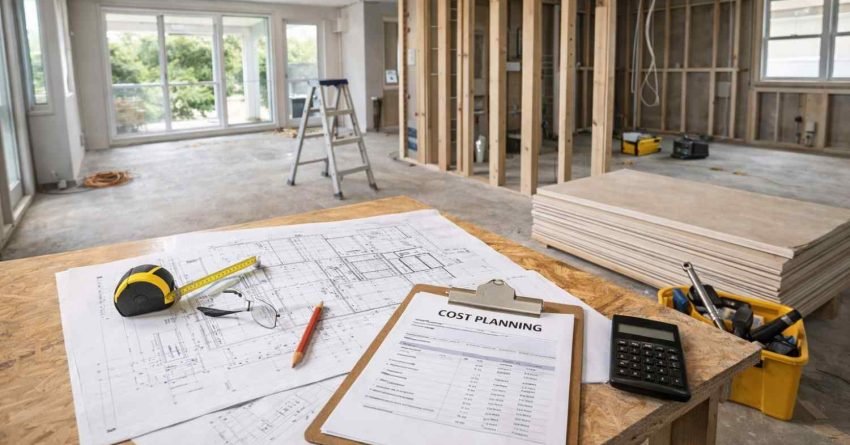
A whole home renovation transforms an existing residential property, upgrading its structure, layout and finishes into a home that meets your functional, aesthetic, and financial goals. Unlike single-room upgrades, it treats the property as a connected system where every decision affects every space.
For Sydney homeowners, first-time renovators, and property investors, understanding how renovation works and what it truly costs is the difference between a project that delivers lasting value and one that stalls, blows out, or disappoints.
We work through every dimension of whole home renovation in this guide: what it involves, how to plan and budget, what approvals you need, how to hire the right team, how to manage the build, and which upgrades deliver the strongest return.
What Is a Whole Home Renovation?
A whole home renovation involves upgrading or transforming most or all of a residential property in a single coordinated project. It treats the home as an integrated system addressing structure (plumbing, electrical, HVAC), layout, and finishes across multiple spaces simultaneously, rather than tackling one room at a time.
Renovations fall into two broad categories. Structural renovations involve changes to the building’s fabric, removing or adding walls, reconfiguring floor plans, extending the footprint, or adding a second storey. Cosmetic renovations update the appearance of existing spaces without altering the structure: new flooring, paint, fixtures, cabinetry, and finishes. Most whole home renovations combine both.
The scale varies significantly. A major renovation involves full structural reconfiguration, new wet areas, updated throughout, and complete interior finishes. A minor whole home renovation refreshes every room with new flooring, paint, lighting, and fixtures while leaving the structure intact. The scope you choose determines your budget, timeline, approval requirements, and the type of contractor you need.
Staged Renovation vs. Full Renovation
Renovating in stages means tackling one area or floor at a time, spreading cost and disruption across multiple years. A full renovation addresses the entire property in a single coordinated build, which typically costs less per square metre because trades are mobilised once and the project is managed as a single contract.
Staged renovations suit homeowners with tighter budgets or those who need to remain in the home throughout. Full renovations deliver a more cohesive result and avoid the disruption of repeated construction phases. The right approach depends on your budget, timeline, and tolerance for living on an active site.
Renovation vs. Knockdown-Rebuild: How to Decide
A knockdown-rebuild replaces the existing structure entirely with a new home on the same land. It suits properties where the existing structure is beyond economic repair, where the floor plan is fundamentally unsuitable, or where the land value significantly exceeds the building value.
Renovation is almost always the better choice when the existing structure is sound, when heritage or planning constraints prevent demolition, or when the cost of a new build exceeds what the market will support. In Sydney, a knockdown-rebuild typically costs $350,000 to $600,000+ for a standard home, often more than a comprehensive whole home renovation on the same site. We assess both options with every client before recommending a direction.

How to Plan a Whole Home Renovation
Effective planning is the single most important factor in whether a whole home renovation succeeds. Projects that begin construction without a clear brief, a realistic budget, and a resolved design consistently run over time and over budget, not because of bad luck, but because unresolved decisions become expensive variations once work has started.
Creating a Renovation Brief and Wish List
A renovation brief is a written document that defines what you want to achieve, what you need the home to do, and what your non-negotiables are. It covers the number of bedrooms and bathrooms required, how you use the home day-to-day, your aesthetic preferences, your budget range, and your timeline.
A clear brief allows architects, building designers, and builders to give you accurate proposals rather than generic estimates. Without one, every quote you receive is a guess.
Renovation Feasibility and Scope
Before committing to a design, a feasibility assessment determines whether your goals are achievable within your budget and site constraints. This involves reviewing the existing structure, identifying any heritage or planning overlays, understanding what approvals are required, and stress-testing your budget against realistic cost benchmarks.
Skipping this step is one of the most common reasons renovations stall mid-project. We always complete a feasibility review before any design work begins.
Renovation Design and Layout Decisions
Design decisions at the planning stage, particularly around layout, natural light, and spatial flow, have the greatest impact on the finished home and the lowest cost to change. Once construction begins, altering a floor plan becomes expensive.
Investing time in design resolution before work starts is always the more cost-effective approach. Every dollar spent resolving the design before contract saves multiples in variations during construction.
How Much Does a Whole Home Renovation Cost?
In Sydney, whole home renovations typically cost between $1,500 and $3,500 per square metre for mid-range finishes. A 200sqm home costs $300,000 to $500,000 at mid-range, with luxury projects exceeding $700,000. The exact figure depends on structural complexity, finish level, and site conditions.
Whole home renovation costs vary significantly depending on the size of the property, the scope of works, the quality of finishes, and the complexity of structural and work. High-end or architecturally designed projects regularly exceed $4,000 per square metre.
Cost Per Square Metre Benchmarks
A budget renovation focusing on cosmetic updates across a 200sqm footprint might come in at $150,000 to $250,000. A mid-range renovation with some structural changes and quality finishes sits at $300,000 to $500,000. Luxury renovations with premium finishes, structural reconfiguration, and custom joinery can exceed $700,000 for the same property.
These ranges are starting points. Your actual cost depends on the specific scope of works, the condition of the existing structure, and the trades required.
Budget vs. Luxury Renovation Costs
The gap between budget and luxury renovation costs is driven primarily by three factors: materials and finishes, the complexity of structural and work, and the level of design and project management involved. Budget renovations use off-the-shelf products, retain existing layouts, and minimise structural changes.
Luxury renovations involve custom joinery, premium stone, architectural detailing, and often significant structural reconfiguration. The labour cost difference between the two is smaller than most homeowners expect; it is the materials and design fees that drive the gap.
Hidden Costs and Contingency Planning
Hidden costs are one of the most common causes of budget blowouts in whole home renovations. These include asbestos removal, termite damage, outdated electrical or plumbing that must be upgraded to code, unexpected structural issues uncovered during demolition, and council fees associated with approvals.
A contingency budget of 10–15% of your total project cost is the industry standard for managing these risks. We build this into every budget we prepare.
Asbestos, Hazardous Materials, and Pre-Demolition Surveys
Properties built before 1990 in Sydney have a high likelihood of containing asbestos in wall sheeting, floor tiles, roof materials, or pipe lagging. A pre-demolition hazardous materials survey is required before any demolition work begins on these properties under NSW Work Health and Safety regulations.
Asbestos removal costs vary significantly depending on the type (friable vs. non-friable) and the volume involved. Friable asbestos removal, the more dangerous loose-fibre type, requires a licensed Class A removalist and can add $5,000 to $30,000+ to a project budget. We identify these risks during feasibility so they are costed before the contract is signed.
How to Finance a Renovation
Most homeowners fund whole home renovations through a combination of savings, home equity, and construction finance. Renovation loans, construction loans, and redraw facilities on existing mortgages are the most common structures.
Construction loans differ from standard home loans in one important way: funds are drawn down in stages tied to construction milestones rather than released as a lump sum. This means you only pay interest on the drawn amount during the build, which reduces holding costs. Lenders typically require a fixed-price building contract and council-approved plans before approving a construction loan, and most will lend up to 80% LVR of the post-renovation value.

Whole Home Renovation Checklist: Step-by-Step
A whole home renovation follows a predictable sequence. Understanding each step before you begin prevents the most common planning errors.
- Define your brief: document what you need the home to do, your budget range, and your non-negotiables before speaking to any designer or builder.
- Complete a feasibility assessment to confirm your goals are achievable within your budget and site constraints, including any heritage or planning overlays.
- Engage a designer or architect to develop concept plans, resolve the layout, and produce documentation sufficient for approval and tendering.
- Obtain approvals: lodge a CDC or DA depending on the scope of works; allow 4–16 weeks depending on the pathway.
- Tender to builders: obtain at least three fixed-price quotes from licensed builders with demonstrated renovation experience; compare scope, not just price.
- Sign a contract: review the fixed-price contract carefully, including variation, payment, and dispute resolution clauses, before signing.
- Manage the build: attend site meetings, review progress against the schedule, and document all variations in writing before work proceeds.
- Practical completion and handover: inspect the finished work against the contract scope, document any defects, and withhold final payment until all defects are rectified.
Whole Home Renovation Timeline
A whole home renovation in Sydney typically takes between 3 and 12 months from the start of construction, depending on the scope of works. Adding the pre-construction phase design, documentation, approvals, and contractor procurement, the total project duration from brief to handover is commonly 6 to 18 months.
Typical Phase Durations
The pre-construction phase covers design development, documentation, approvals, and tendering, typically 2 to 6 months. Demolition and structural work follows, typically 4 to 8 weeks for a standard home. Rough-in trades (plumbing, electrical, framing) run concurrently or sequentially over 4 to 8 weeks. Fit-out and finishes tiling, joinery, painting, fixtures typically take 6 to 12 weeks. Final inspections, defects rectification, and handover add 2 to 4 weeks.
What Causes Renovation Delays
The most common causes of renovation delays in Sydney are approval delays from council, material lead times (particularly for imported joinery, tiles, and appliances), subcontractor availability, and scope changes initiated during construction. Weather delays affect external works and can push internal trades back by weeks.
Building a realistic schedule with buffer time for each phase reduces the risk of cascading delays. We build explicit buffer periods into every programme we prepare.
Best Time of Year to Renovate
In Sydney, the most productive construction periods are autumn (March to May) and spring (September to November), when weather conditions are stable, and subcontractor availability is generally better than the peak summer and pre-Christmas periods. Starting a renovation in January or February can result in delays as trades return from leave and material suppliers reopen after the holiday period.
Renovation Permits and Approvals in Sydney
Most whole home renovations in Sydney require some form of planning or building approval before work can begin. The type of approval required depends on the scope of works, the property’s zoning, whether the property is heritage-listed or strata-titled, and the local council’s specific requirements.
When You Need Council Approval
Structural changes, including removing load-bearing walls, adding extensions, altering the roofline, or changing the external appearance of the building, typically require approval. Cosmetic renovations that do not affect the structure, external appearance, or may not require council approval, but a building certifier should always be consulted before assuming works are exempt.
We recommend getting a formal exemption opinion in writing before proceeding with any works you believe are exempt.
Complying Development Certificate vs. Development Application
In NSW, many residential renovations can be approved through a Complying Development Certificate (CDC), a faster, private certifier pathway that bypasses the council DA process. A CDC is available for works that meet the standard requirements under the State Environmental Planning Policy (Housing).
Works that do not meet these standards, or that involve heritage properties, require a Development Application (DA) lodged with the local council. DA timeframes in Sydney range from 40 to 120 days depending on the council and the complexity of the proposal.
Heritage Properties and Strata Renovations
Properties on the State Heritage Register or listed on a local heritage schedule face additional constraints on what can be altered, demolished, or added. Strata-titled properties require approval from the owners corporation before structural or external works can proceed, in addition to any council approvals.
Both pathways add time and cost to the approval process and should be factored into the project timeline from the outset. Heritage and strata approvals are not optional; proceeding without them exposes you to stop-work orders and significant rectification costs.

Hiring the Right Renovation Contractors
The contractor you choose to lead your whole home renovation has more influence over the outcome than almost any other decision you make. A skilled, experienced, and well-organised builder or project manager keeps your project on schedule, manages subcontractors effectively, and resolves problems before they become costly.
The wrong choice results in defects, delays, disputes, and significant financial loss.
Types of Renovation Contractors
Whole home renovations are typically led by one of three types of contractors: a licensed builder who manages the full project and all subcontractors directly; a project manager who coordinates multiple specialist trades on your behalf; or an owner-builder who takes on the legal responsibility for the project themselves. Each model has different cost structures, risk profiles, and suitability depending on the complexity of the renovation.
For most homeowners undertaking a whole home renovation, engaging a licensed builder with demonstrated experience in residential renovation rather than new construction is the lowest-risk approach. Renovation work involves a higher degree of uncertainty than new builds, and experienced renovation builders are better equipped to manage the unexpected.
Builder vs. Project Manager
A builder takes on contractual responsibility for the entire project, including all subcontractors and the quality of the finished work. A project manager coordinates trades on your behalf but may not carry the same contractual liability.
The distinction matters significantly when defects arise or when a subcontractor fails to perform. Understanding which model you are engaging and what protections your contract provides is essential before signing anything.
Owner-Builder Considerations
An owner-builder takes on full legal responsibility for the project, including compliance with the Building Code of Australia, WHS obligations, and the quality of all work performed. In NSW, an owner-builder permit is required for projects exceeding $10,000 in value, and the permit holder must complete an approved owner-builder course.
The financial saving is real; you avoid the builder’s margin, but the risk is significant. Most owner-builders underestimate the time required to coordinate trades, manage compliance, and resolve disputes. We see more cost blowouts on owner-builder projects than on any other delivery model.
Questions to Ask Before Hiring
Before engaging any contractor, verify their licence with the NSW Fair Trading register, request references from recent comparable projects, confirm they hold current home building compensation insurance, and review their contract carefully before signing. A fixed-price contract provides cost certainty; a cost-plus contract requires greater trust and oversight.
Choosing based on the lowest quote alone is a high-risk decision. Experience, references, and contract clarity matter more than price.
Managing Your Renovation Project
Even with a skilled builder in place, homeowners who stay actively engaged in their renovation achieve better outcomes than those who disengage entirely. Active engagement means understanding the contract, attending site meetings, reviewing progress against the schedule, and making decisions promptly when required.
Fixed Price vs. Cost Plus Contracts
A fixed-price contract locks in the total cost of the works at the time of signing, providing cost certainty. Variations changes to the scope of works after the contract is signed are priced separately and can add significantly to the final cost if not managed carefully.
A cost-plus contract charges the actual cost of labour and materials plus a margin for the builder. It offers more flexibility but less cost certainty, and requires the homeowner to trust the builder’s cost management. We recommend fixed-price contracts for most whole home renovations.
Renovation Payment Schedules
Renovation contracts in NSW typically include a progress payment schedule tied to construction milestones: deposit, frame stage, lock-up, fixing stage, and practical completion. Payments should only be made when the corresponding stage of work has been completed and inspected.
Never pay ahead of the schedule, and never make a final payment until all defects have been rectified and you are satisfied with the finished work.
Renovation Insurance During Construction
Standard home and contents insurance policies typically exclude or limit cover during active construction. Before work begins, confirm with your insurer whether your existing policy covers the renovation period and if not, arrange contract works insurance (also called construction insurance) to cover the structure, materials on site, and public liability.
Your builder should hold their own public liability insurance and, for projects over $20,000 in NSW, home building compensation (warranty) insurance. Verify both before signing the contract. Gaps in insurance coverage during a renovation are one of the most overlooked financial risks homeowners face.
Communication and Scope Management
Scope creep the gradual expansion of the project beyond the original contract is one of the most common causes of budget blowouts in whole home renovations. Every change to the scope of works should be documented in a formal variation, signed by both parties, and priced before the work proceeds.
Keeping a written record of all decisions, approvals, and communications protects both the homeowner and the builder if disputes arise.

Living During a Renovation
Deciding whether to stay in your home during a whole home renovation or move out temporarily is one of the most practical decisions you make in the planning phase. The right answer depends on the scope of work, the duration of the project, the presence of children or elderly family members, and your personal tolerance for disruption.
Staying On-Site vs. Moving Out
For major whole home renovations involving structural work, demolition, and extended periods without functional kitchens or bathrooms, moving out is almost always the better option. The cost of temporary accommodation is typically far less than the stress, safety risks, and productivity loss of living on an active construction site.
For smaller renovations or staged projects where one area of the home remains liveable, staying on-site may be manageable with clear boundaries and communication with the builder.
Managing Noise, Dust, and Disruption
Construction noise in residential areas in NSW is regulated under the Protection of the Environment Operations Act, with permitted hours typically 7 am to 5 pm Monday to Saturday. Dust is an unavoidable byproduct of demolition and construction, and effective dust management, including plastic sheeting, negative pressure systems, and regular site cleaning, is a standard expectation of any professional builder.
If you are staying on-site, agree on dust and noise management protocols with your builder before work begins.
Renovation Stress and How to Manage It
Whole home renovations are consistently rated among the most stressful life events for Australian homeowners. The combination of financial pressure, disruption to daily routines, decision fatigue, and the uncertainty of construction timelines creates a sustained stress load that is easy to underestimate.
Building in regular check-in points with your builder, maintaining a clear decision log, and setting realistic expectations about delays and surprises significantly reduces the psychological burden of the process.
Common Renovation Mistakes to Avoid
The most costly renovation mistakes are almost always avoidable, and they follow predictable patterns. Understanding where projects go wrong before yours begins is one of the most valuable forms of preparation available.
Budget and Scope Mistakes
Under-budgeting is the single most common renovation mistake. Homeowners consistently underestimate the cost of structural work, service upgrades, and the hidden conditions that emerge once demolition begins. Setting a budget based on best-case assumptions rather than realistic benchmarks creates a project that is financially stressed from the start.
Scope creep is the second most common budget driver. Changes made during construction even small ones accumulate quickly. A variation that seems minor in isolation can add tens of thousands of dollars to the final cost when multiplied across a whole home project.
Contractor and Contract Mistakes
Engaging a contractor based on the lowest quote without verifying their licence, insurance, and references is a high-risk decision. The cheapest quote is rarely the best value.
Equally, signing a contract without reading it carefully or without understanding the variation, payment, and dispute resolution clauses leaves homeowners exposed when problems arise.
Design and Over-Capitalisation Mistakes
Making design decisions under time pressure or changing them after construction has begun is expensive. Finalising all design decisions before the contract is signed eliminates the most common source of costly variations.
Over-capitalising: spending more on the renovation than the property’s market value can support is a particular risk in Sydney’s more affordable suburbs, where renovation costs can easily exceed the value they add to the property.
Renovation ROI and Property Value
Not all renovations deliver equal returns. Understanding which upgrades add genuine value to a Sydney property and which risk spending more than the market rewards is essential for both owner-occupiers and property investors.
Which Renovations Add the Most Value
In the Australian residential market, kitchens and bathrooms consistently deliver the strongest renovation ROI, followed by additional living space (extensions, second storey additions), improved street appeal, and energy efficiency upgrades. Research from CoreLogic consistently shows that well-executed kitchen and bathroom renovations in Sydney can return $1.50 to $2.00 in property value for every $1.00 spent, depending on the suburb and the quality of the finish.
Structural improvements removing walls to create open-plan living, adding natural light, or improving the functional flow of the home also add significant value, particularly in older Sydney homes where the original layout no longer meets contemporary living expectations.
Renovating for Resale vs. Owner-Occupier
The renovation decisions that maximise resale value are not always the same as those that maximise personal enjoyment. Resale-focused renovations prioritise broad appeal, neutral finishes, functional layouts, and quality fixtures over personal taste.
Owner-occupier renovations can reflect individual preferences more freely, provided you are not planning to sell in the short term. Property investors renovating for rental yield have a third set of priorities: durability, low maintenance, and tenant appeal.
Avoiding Over-Capitalisation
Over-capitalisation occurs when the total cost of the renovation exceeds the value it adds to the property. It is most common in lower-value suburbs where the ceiling price of comparable properties limits how much value a renovation can add, regardless of quality.
Before committing to a renovation budget, compare the post-renovation value of your property against comparable sales in the area to confirm the investment is financially justified.

Room-by-Room Renovation Guide
A whole home renovation encompasses every room in the property, and each space has its own cost drivers, design considerations, trade requirements, and value contribution. Understanding what each room involves at a planning level helps you prioritise your budget and sequence the renovation effectively.
Kitchen Renovation
The kitchen is the most complex and highest-value room to renovate in most Australian homes. It involves cabinetry, benchtops, appliances, splashbacks, plumbing, electrical, and often structural changes to improve layout and natural light.
In Sydney, a mid-range kitchen renovation costs typically between $25,000 and $60,000, with high-end custom kitchens exceeding $100,000. The kitchen’s central role in daily life and its strong influence on buyer perception make it the highest-priority room in most whole home renovations.
Bathroom Renovation
Bathrooms are the second highest-value renovation in most Sydney homes, and they are also among the most technically complex, involving waterproofing, tiling, plumbing, electrical, and a wide range of fixtures and fittings. A standard bathroom renovation costs in Sydney between $15,000 and $35,000 for mid-range finishes, with ensuite and master bathroom renovations often exceeding $40,000.
Waterproofing compliance is a non-negotiable requirement under Australian Standards, and any bathroom renovation must be carried out by licensed trades.
Laundry Renovation
The laundry is increasingly valued by Sydney buyers and tenants, particularly as European laundry design integrating the laundry into a compact, well-designed space has become a mainstream expectation in renovated homes. A laundry renovation in Sydney typically costs between $8,000 and $20,000 depending on size, layout, and finish level.
Storage integration and appliance selection are the two decisions that most affect the laundry’s long-term functionality.
Living Areas, Bedrooms, and Other Spaces
Living rooms, bedrooms, hallways, and home offices are typically the most cost-effective spaces to renovate in a whole home project, as they involve fewer wet trades and less technical complexity than kitchens and bathrooms. New flooring, paint, lighting, built-in storage, and window treatments can transform these spaces at a fraction of the cost of a wet area renovation.
Living room renovation ideas cover layout options, flooring choices, and lighting design for Sydney homes. Bedroom renovation planning addresses built-in wardrobe design, master bedroom upgrades, and kids’ bedroom solutions.
Specialist Renovation Types
Beyond the standard room-by-room renovation, many Sydney homeowners pursue specialist renovation projects that add significant space, value, or functionality to their property. Each specialist type has its own approval pathway, structural requirements, cost profile, and design considerations.
Home Extensions
A home extension adds new floor area to an existing property typically at the rear, side, or above the existing structure. Extensions are one of the most effective ways to increase the liveable area of a Sydney home without the cost and disruption of moving.
Rear extensions are the most common type, typically adding a new kitchen, living area, or bedroom to the back of the property. Side extensions are more constrained by setback requirements but can add significant space on wider blocks. A home extension in Sydney typically costs $2,500 to $4,500 per square metre depending on the structural complexity and finish level.
Granny Flats
A granny flat is a self-contained secondary dwelling built on the same lot as the primary residence. In NSW, granny flats are one of the most accessible and financially rewarding property investments available to homeowners, with complying development approval available for eligible properties and strong rental yields in most Sydney suburbs.
Granny flat construction in NSW is governed by the State Environmental Planning Policy (Housing), which sets out the eligibility criteria, maximum floor area, and setback requirements that apply to most standard lots.
Second Storey Additions
Adding a second storey to a single-storey Sydney home is one of the most transformative and most complex renovation projects available. It doubles the liveable area of the property without consuming any additional land, making it particularly valuable on smaller blocks where a ground-floor extension is not feasible.
Second storey additions require a structural engineering assessment of the existing foundations, significant approval documentation, and a longer construction timeline than most other renovation types. Costs typically range from $3,000 to $5,000 per square metre for the addition itself.
Office and Commercial Renovations
For business owners renovating commercial or professional spaces, the process involves a distinct set of compliance requirements and fit-out categories that differ from residential renovation. We focus primarily on residential projects; contact us to discuss whether your commercial project falls within our scope.

Renovation Styles and Design Trends
The design style you choose for your whole home renovation shapes every material, finish, and fixture decision across the project. Sydney’s renovation market currently favours a range of styles, from the enduring popularity of Hamptons and coastal aesthetics to the growing influence of Scandinavian minimalism, biophilic design, and sustainable renovation practices.
Popular Renovation Styles in Sydney
Hamptons-style renovations characterised by white cabinetry, shaker profiles, natural stone, and coastal-inspired palettes remain the most requested style in Sydney’s middle and upper-middle market. Modern minimalist renovations, with clean lines, integrated joinery, and neutral material palettes, are increasingly popular in inner-city and apartment renovation projects.
Federation and Art Deco homes in Sydney’s inner suburbs are often renovated with a sympathetic approach that preserves period features while updating the functional spaces.
Sustainable and Smart Home Renovation
Sustainability is an increasingly important consideration in Sydney renovation projects, driven by both environmental values and the practical benefits of lower energy costs. Solar integration, high-performance insulation (minimum R2.5 ceiling, R1.5 wall in Sydney’s climate zone), double-glazed windows, and energy-efficient appliances are now standard inclusions in many whole home renovations.
A NatHERS energy rating assessment required for new extensions and additions in NSW benchmarks the thermal performance of the design and identifies where insulation and glazing upgrades deliver the greatest efficiency gains. Battery storage systems paired with rooftop solar are increasingly being integrated into renovation projects, particularly where the existing roof is being replaced as part of the build. Smart home technology, including automated lighting, climate control, and security systems, is also being integrated into renovations at a growing rate, particularly in higher-end projects.
Conclusion
A whole home renovation is one of the most significant investments a Sydney homeowner or property investor can make, one that touches every dimension of planning, budgeting, design, approvals, construction, and long-term value. The decisions made in the planning phase determine the outcome more than any other factor.
The guidance in this resource, from cost benchmarks and approval pathways to contractor selection and room-by-room renovation planning, is designed to give you the orientation you need to move forward with clarity and confidence. Every section connects to a deeper layer of detail for when you are ready to go further.
When you are ready to take the next step, we at Sydney Home Renovation are here to help you plan, budget, and build a whole home renovation that delivers lasting value. Reach out today for a transparent, obligation-free consultation and let us show you exactly what your project can achieve.
Frequently Asked Questions
What is a whole home renovation?
A whole home renovation upgrades, reconfigures, or rebuilds most or all of an existing residential property in a coordinated project, addressing structure, layout, and finishes across multiple spaces simultaneously.
How much does a whole home renovation cost in Sydney?
Whole home renovations in Sydney typically cost $1,500 to $3,500 per square metre for mid-range finishes. A 200sqm home costs $300,000 to $500,000 at mid-range, with luxury projects exceeding $700,000.
How long does a whole home renovation take?
Construction typically takes 3 to 12 months depending on scope. Including design, approvals, and contractor procurement, the total project duration from brief to handover is commonly 6 to 18 months.
Do I need council approval for a whole home renovation in Sydney?
Most structural renovations require approval either a CDC via a private certifier or a DA lodged with the local council. Cosmetic renovations may be exempt, but always confirm with a building certifier before proceeding.
What renovations add the most value to a Sydney home?
Kitchens and bathrooms consistently deliver the strongest renovation ROI in Sydney, followed by extensions, second storey additions, improved street appeal, and energy efficiency upgrades.
How do I find a reliable renovation contractor in Sydney?
Verify the contractor’s licence with NSW Fair Trading, request references from recent comparable projects, confirm they hold current home building compensation insurance, and review the contract carefully before signing.
What are the most common whole home renovation mistakes?
The most common mistakes are under-budgeting, uncontrolled scope creep, engaging contractors without verifying credentials, making design decisions under time pressure, and over-capitalising beyond what the local market supports.
What is the difference between a CDC and a DA in NSW?
A CDC is approved by a private certifier and is typically faster, 10 to 20 business days. A DA is lodged with the local council and takes 40 to 120 days. CDCs are available for works that meet standard planning requirements; heritage properties and non-compliant works require a DA.