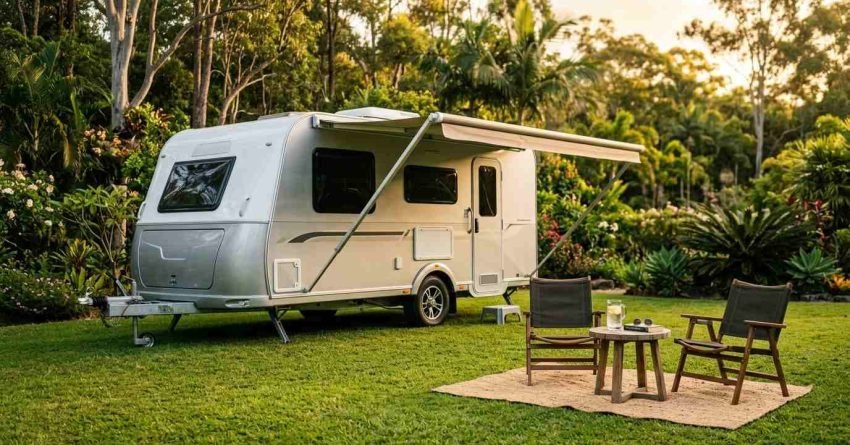
Yes, someone can live in a caravan on your property in Queensland, but only under specific conditions set by your local council and the Queensland Planning Act 2016. Whether the arrangement is lawful depends on your property’s zoning classification, the intended duration of occupancy, and whether the relevant approvals are in place. Getting this wrong carries real legal and financial consequences for property owners.
Queensland does not apply a single statewide rule to caravan dwelling on private land. Each local government area administers its own planning scheme, so the rules in Brisbane differ from those in Cairns, the Gold Coast, or regional councils. We always tell clients to start by understanding what the law actually requires for their specific property.
What QLD Law Says About Living in a Caravan on Private Property
Under the Queensland Planning Act 2016, a caravan used as a dwelling on private land is generally classified as a form of residential accommodation. Whether that use is permitted without approval, permitted with approval, or prohibited entirely depends on the planning scheme of the local government area where the property is located.
In most Queensland councils, a caravan can be used as temporary accommodation on a residential property without development approval for a limited period, typically up to four weeks in any twelve-month period. Beyond that threshold, the use generally requires a material change of use application or a secondary dwelling approval, depending on how the council classifies the arrangement. We recommend checking your council’s specific definition of “material change of use” early, because it directly determines which application pathway applies.
The Role of Local Council Approval
Local councils in Queensland hold the primary authority over land use decisions on private property. Property owners who want someone to live in a caravan on their land beyond the temporary threshold generally need to apply to their council for approval.
This process involves demonstrating that the proposed use is consistent with the zoning of the land, that the caravan meets minimum habitability standards, and that the arrangement does not create amenity or infrastructure impacts on neighbouring properties. Some councils, particularly in regional Queensland, have more permissive provisions for rural residential land. Others, including many metropolitan councils, apply stricter controls.
We always advise contacting the local council directly or reviewing the council’s planning scheme online, since this remains the most reliable way to confirm what applies to a specific property.
Zoning Classifications That Affect Caravan Residency
The zoning of the land is the single most important factor in determining whether caravan dwelling is permitted. Residential zones in Queensland typically allow for one primary dwelling and, in some cases, one secondary dwelling on a lot. A caravan used as a permanent residence may be assessed as a secondary dwelling, which triggers its own approval requirements including setback rules, minimum floor area standards, and connection to services.
Rural and rural residential zones often carry different provisions. In some cases, a caravan can be used as a temporary dwelling while a primary residence is under construction, provided the council grants a temporary accommodation approval. This is a common scenario for owner-builders and property developers managing staged construction timelines.
It helps to understand how a caravan differs from other secondary dwelling options in the eyes of the council. A tiny home on wheels, a granny flat, and a caravan can look similar on the ground, but each is assessed against different planning definitions, different minimum standards, and different approval pathways. The secondary dwelling approval process introduces a separate layer of planning requirements that go well beyond basic caravan occupancy rules.

Building and Service Standards for On-Site Caravans
Council approval for longer-term caravan occupancy typically hinges on more than just zoning. We find most councils assess the physical structure itself against basic habitability and service standards before granting approval.
These generally include connection to an adequate water supply, safe disposal of wastewater and sewage, and a reliable power connection if the caravan is intended for extended use. Councils also look at site drainage, vehicle access, and whether the caravan sits far enough from boundaries and existing structures to meet setback requirements.
Overlay restrictions matter here too. Properties in bushfire-prone or flood-affected zones often face additional conditions on where a caravan can be placed and what protective measures apply.
How to Apply for Council Approval
Applying for approval is a structured process, and we walk clients through it in a consistent sequence. Starting with the right information saves significant time and avoids costly resubmissions.
- Confirm the property’s zoning and check the local planning scheme for caravan-specific provisions.
- Contact the council’s planning department to clarify whether a material change of use or secondary dwelling application applies.
- Prepare site plans showing the caravan’s location, setbacks, and service connections.
- Submit the application with any required habitability and infrastructure documentation.
- Address any council requests for information promptly to avoid delays.
Councils generally respond within statutory timeframes set by the Planning Act, though complex applications involving overlays or neighbour submissions can take longer.
When a Caravan Can Be Used as Permanent or Temporary Accommodation
The distinction between temporary and permanent occupancy is central to how Queensland councils assess caravan dwelling on private land. Temporary use, generally defined as short-term and incidental to the primary use of the land, is treated differently from a permanent residential arrangement where the caravan functions as someone’s primary place of residence.
We tell clients planning to house someone in a caravan for more than a few weeks that the approval pathway and documentation required differ significantly from a short-term stay. Getting the classification right from the outset avoids compliance issues later.
Conditions That Determine Lawful Occupancy
For a caravan dwelling to be considered lawful in Queensland, several conditions typically need to be satisfied. The caravan must be located on land where residential use is permitted under the applicable planning scheme.
The occupancy must fall within the council’s defined threshold for temporary use, or a formal approval must be in place for longer-term arrangements. The caravan should have access to adequate sanitation, water, and waste disposal facilities, since councils assess habitability as part of any approval process.
The arrangement must not breach any conditions already attached to the existing use of the land. This includes any development approvals already in place for the property.
Insurance and Liability Considerations
Caravan occupancy carries risk implications that go beyond planning compliance. Standard home and contents insurance policies often exclude caravans used as permanent dwellings, which can leave property owners exposed if damage or injury occurs.
We recommend property owners check with their insurer before allowing anyone to live in a caravan long-term. An unapproved dwelling arrangement can also affect liability coverage if the occupant is injured in a structure that does not meet building standards.

What Happens If You Don’t Get Approval
Operating a caravan as an unapproved dwelling on a property exposes owners to enforcement action under the Queensland Planning Act 2016. Councils have the authority to issue show cause notices, enforcement notices, and penalty infringement notices for unlawful land use. Fines for individuals can be substantial, and councils can require the immediate cessation of the unapproved use.
Beyond financial penalties, an unapproved dwelling arrangement can complicate future development applications on the property and affect the property’s compliance history. The risk is not theoretical. Queensland councils actively investigate complaints from neighbours about unapproved residential uses on private land.
Conclusion
Someone can legally live in a caravan on a Queensland property, but the arrangement must align with the council’s planning scheme, zoning rules, and approval requirements.
Property owners weighing longer-term arrangements often find it useful to compare a granny flat against a caravan setup before committing, since each option carries different compliance obligations and long-term value.
At Sydney Home Renovation, we help property owners navigate secondary dwelling options with clear guidance, practical expertise, and solutions built for long-term value. Reach out to our team today.
Frequently Asked Questions
Can I live in a caravan in my backyard in QLD?
Yes, but only for short periods without approval, typically up to four weeks per year. Longer occupancy requires council approval under your local planning scheme.
Do I need council approval for a caravan on my property in QLD?
Yes, if the caravan is used as a dwelling beyond the temporary threshold defined by your local council. Requirements vary by council area and zoning classification.
How long can someone stay in a caravan on private property in QLD?
Most Queensland councils permit temporary caravan occupancy for up to four weeks in any twelve-month period without formal approval. Longer stays require a development or temporary accommodation approval.
Can a caravan be used as a granny flat in QLD?
In some cases, yes. However, a caravan used as a secondary dwelling must meet council approval requirements, including habitability standards, setbacks, and service connections, similar to a permanent granny flat.
What are the penalties for illegal caravan dwelling in QLD?
Penalties under the Queensland Planning Act 2016 include enforcement notices, show cause notices, and significant fines. Councils can also require immediate removal of the unapproved use from the property.