In NSW, licensed tradespeople are legally required for any work classified as high-risk under the Home Building Act 1989, including all electrical, plumbing, gas, structural, and waterproofing work. Attempting these jobs without a licence is not just a compliance issue. It exposes homeowners to serious financial and legal consequences that can follow a property for years.
I see this come up constantly with bathroom renovations. Homeowners assume certain tasks are straightforward enough to hand off to a handyman or tackle themselves. Understanding exactly where the legal line sits protects your investment and keeps your project on the right side of NSW Fair Trading.
Work That Legally Requires a Licence in NSW
In NSW, any work that involves structural integrity, essential services, or waterproofing must be carried out by a licensed contractor holding the appropriate class of licence issued by NSW Fair Trading. This applies regardless of the project size, property type, or whether the work is part of a larger renovation.
The Home Building Act 1989 defines the categories of “specialist work” and “contractor work” that require licensing. Unlicensed work in these categories is illegal, and any contracts for such work are unenforceable, meaning a homeowner cannot legally recover costs if something goes wrong.
Electrical, Plumbing, and Gas Work
All electrical work in NSW requires a licensed electrician. This covers new circuits, switchboard upgrades, installing power points, hardwired lighting, exhaust fans, and any connection to the mains supply. There are no exceptions for minor jobs.
Licensed plumbers must carry out all drainage, water supply, and sanitary plumbing work. In a bathroom renovation, this includes relocating or extending pipes, installing new fixtures connected to the water supply, and any work touching the drainage system. Gas fitting, connecting or modifying gas appliances and lines, requires a separate gas fitting licence on top of a plumbing licence.
Structural, Waterproofing, and Specialist Trades
Structural work requires a licensed builder. Removing or modifying load-bearing walls, altering floor framing, and any work that affects the structural integrity of the building all fall into this category. A licensed builder must also supervise any project valued above $5,000 in NSW.
Waterproofing is one of the most overlooked licensing requirements in bathroom renovations. NSW requires waterproofing in wet areas, showers, bath surrounds, and floor areas, to be completed by a licensed waterproofer. This is not optional. Defective waterproofing is one of the leading causes of major building defects in residential properties, and unlicensed waterproofing work voids statutory warranties.
Other specialist trades requiring a licence include refrigeration and air conditioning work, roof plumbing, and certain types of fire protection work.
Knowing which trades require a licence is the foundation of any renovation plan. The next step is understanding how these requirements directly shape your bathroom renovation budget
and what it costs to do the job properly.
Why Licensing Rules Matter for Bathroom Renovations
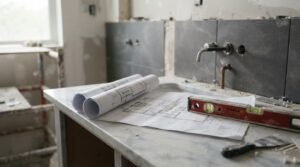
Bathroom renovations touch almost every licensed trade category at once, plumbing, waterproofing, electrical, and often structural work. This makes them one of the highest-risk renovation types from a compliance standpoint.
We work with homeowners who have inherited unlicensed work from previous owners or budget renovations. The consequences are consistent: insurance claims get rejected, building inspections flag defects, and rectification costs far exceed what the original unlicensed work saved.
What Happens If Unlicensed Work Is Done
NSW Fair Trading can issue on-the-spot fines for unlicensed contracting work. For individuals, penalties reach up to $22,000. For companies, they reach $110,000. Beyond fines, any work completed without the required licence is not covered by the statutory warranty provisions under the Home Building Act, meaning the homeowner carries the full cost of any defects.
Home insurance policies routinely exclude damage caused by unlicensed work. A leaking shower installed by an unlicensed waterproofer, for example, may result in a rejected water damage claim. Before engaging any tradesperson, always verify a tradesperson’s licence
through the NSW Fair Trading licence check tool.
What Homeowners Can Legally Do Themselves
Not everything in a renovation requires a licensed trade. Homeowners in NSW can legally carry out their own general building work, painting, tiling over existing surfaces, installing flat-pack cabinetry, and basic landscaping, without a licence, provided the work does not involve any of the specialist categories above.
For larger scopes of self-managed work, an owner-builder permit
from NSW Fair Trading allows homeowners to manage their own building project. Owner-builder permits come with specific conditions, including restrictions on selling the property within five years without a defects inspection report.
The practical rule is straightforward. If the work connects to electricity, gas, water, drainage, or the structural frame, or if it involves waterproofing a wet area, a licensed tradesperson is required. Everything else sits in the homeowner’s hands.
Conclusion
Licensed trades in NSW are defined by law, not by convention. Electrical, plumbing, gas, structural, and waterproofing work all require the right licence, no exceptions.
For anyone planning a bathroom renovation, understanding these requirements upfront prevents costly defects, rejected insurance claims, and compliance issues that surface at resale.
We help homeowners and investors navigate every stage of this at Sydney Home Renovation contact us to plan your renovation with full compliance and confidence from day one.
Frequently Asked Questions
Does tiling a bathroom require a licensed tradesperson in NSW?
Tiling over existing surfaces does not require a licence in NSW. However, if tiling follows waterproofing work, the waterproofing underneath must be completed by a licensed waterproofer before tiles are laid.
Can a handyman do plumbing work in NSW?
No. All plumbing work in NSW, including fixture installation connected to water supply or drainage, must be carried out by a licensed plumber. A handyman without a plumbing licence cannot legally perform this work.
How do I check if a tradesperson is licensed in NSW?
Use the NSW Fair Trading licence check tool at service.nsw.gov.au. Enter the tradesperson’s name or licence number to confirm their licence class, status, and any conditions or restrictions.
Is waterproofing in a bathroom legally required in NSW?
Yes. Waterproofing in wet areas, including showers and bath surrounds, is mandatory under the National Construction Code and must be completed by a licensed waterproofer in NSW.
What is the penalty for using an unlicensed tradesperson in NSW?
Engaging or performing unlicensed contractor work in NSW carries fines of up to $22,000 for individuals and $110,000 for companies. Unlicensed work also voids statutory warranties and may invalidate home insurance claims.