A restaurant renovation transforms your hospitality venue’s physical space to improve functionality, compliance, customer experience, and revenue potential. We work with Sydney restaurant owners across every venue type, from fine dining establishments to casual cafes and quick-service outlets, and the condition of the physical space directly shapes how customers perceive the brand and how efficiently the team delivers service.
This guide covers everything Sydney restaurant owners need to understand before starting a renovation project. We explain what distinguishes a full renovation from a partial refresh, how to plan effectively around council requirements and operational constraints, what costs to expect in the current Sydney market, which areas of your venue deserve priority attention, and how to select contractors who understand commercial hospitality fit-outs. The sections below also address permits and compliance, project management strategies, common mistakes that derail budgets and timelines, and approaches to maximising return on your renovation investment.
What Is a Restaurant Renovation?
A restaurant renovation encompasses planned upgrades to a hospitality venue’s physical infrastructure, interior finishes, equipment, and operational layout. Unlike routine maintenance or minor repairs, renovation projects involve structural changes, compliance upgrades, or comprehensive aesthetic transformations that require professional planning, council approvals, and coordinated trade work.
Restaurant renovations differ significantly from residential projects. Commercial hospitality spaces must meet stringent food safety regulations, accommodate high-traffic workflows, support specialised equipment requirements, and comply with accessibility standards that residential properties do not face. The complexity increases when renovating an operating business where every day of closure represents lost revenue.
Full Renovation vs Partial Refresh
A full renovation involves comprehensive changes across multiple areas of your venue. This typically includes structural modifications, complete kitchen upgrades, new mechanical systems, updated electrical and plumbing infrastructure, and total interior redesign. Full renovations suit venues requiring significant compliance upgrades, complete rebranding, or adaptation to a different cuisine or service style.
A partial refresh focuses on targeted improvements without disrupting core infrastructure. This includes new flooring and wall finishes, updated lighting, furniture replacement, or cosmetic kitchen upgrades. Partial refreshes work well for venues with sound structural bones that need aesthetic modernisation or specific compliance corrections.
When Renovation Makes Business Sense
Several triggers indicate renovation has become a business necessity rather than an optional improvement. Declining customer numbers despite consistent food quality often signals that the physical environment no longer meets market expectations. Equipment failures that increase operating costs or compromise food safety demand attention.
Lease renewals present natural decision points for assessing whether investment in the current space makes financial sense. Compliance requirements also drive renovation decisions; changes to food safety regulations, accessibility standards, or fire safety codes require upgrades regardless of aesthetic preferences. Proactive renovation before compliance deadlines avoids rushed work and potential trading restrictions.

Planning Your Restaurant Renovation Project
Effective planning separates successful restaurant renovations from projects that exceed budgets, miss deadlines, and fail to deliver expected returns. The planning phase establishes scope, timeline, budget parameters, and compliance pathways before any physical work begins.
Restaurant renovation planning requires balancing multiple competing priorities. Comprehensive improvements compete with budget constraints. Quality work competes with the need to minimise closure periods. Compliance requirements must be met while preserving the design elements that define the brand. Resolving these tensions during planning prevents costly mid-project changes.
Setting Clear Renovation Goals
Begin by defining what success looks like for your specific situation. Are you primarily addressing compliance deficiencies, improving operational efficiency, refreshing brand presentation, or expanding capacity? Most projects involve multiple objectives, but establishing priorities helps guide decisions when trade-offs become necessary.
Document your goals in measurable terms where possible. Rather than “improve the kitchen,” specify “reduce ticket times by 20% through better workflow design” or “achieve full compliance with current ventilation requirements.” Measurable goals provide benchmarks for evaluating design proposals and contractor quotes.
Timeline Considerations for Hospitality Fit-Outs
Restaurant renovation timelines extend beyond the physical construction period. A realistic timeline includes design development, council approval processes, contractor procurement, construction, equipment installation, staff training, and soft opening periods.
Sydney council approval processes typically require 4–12 weeks depending on the scope of work and whether the project triggers development application requirements. Kitchen equipment often involves 8–16-week lead times for custom or imported items; we sequence equipment orders early to avoid holding up the construction programme. For restaurant fit-outs in Sydney, construction duration varies based on scope, but most comprehensive restaurant renovations require 8–20 weeks of physical work.
Consider your business calendar when scheduling renovation. Many Sydney restaurants time major work for traditionally slower periods, though this varies by location and cuisine type. Avoid scheduling completion immediately before peak seasons, as unexpected delays put your busiest trading periods at risk.
Working With Councils and Compliance Requirements
Early engagement with your local council prevents costly surprises. Before finalising designs, confirm what approvals your project requires. Some cosmetic refreshes proceed with minimal council involvement, while projects involving structural changes, increased capacity, or modified use classifications require formal development applications.
Food safety compliance involves NSW Food Authority requirements and local council health inspections. Fire safety compliance falls under Building Code of Australia requirements and involves certification from accredited practitioners. Accessibility compliance follows Disability Discrimination Act requirements and relevant Australian Standards.
Lease Obligations and Landlord Consent
Lease terms directly affect renovation scope and budget. Most commercial leases require written landlord consent before structural or significant cosmetic work begins, and some leases specify approved contractors or materials. We review lease documents before finalising designs to avoid work that triggers make-good obligations at lease end.
Make-good clauses require tenants to return premises to their original condition when vacating. Renovations that alter base building fabric, flooring, ceilings, partitions create make-good liability unless the lease is amended. Negotiating a lease variation that excludes approved renovation works from make-good requirements protects the investment and avoids costly strip-out costs at lease expiry.
Pre-Renovation Checklist for Sydney Restaurant Owners
Working through this checklist before engaging contractors prevents the most common planning failures:
- Confirm lease consent requirements and negotiate make-good exclusions in writing
- Identify whether the project requires a development application or complying development certificate
- Engage a food safety consultant to audit current compliance gaps before design begins
- Obtain a hydraulic report if grease trap upgrades are likely
- Check whether the building is heritage-listed or within a conservation area
- Confirm equipment lead times and order long-lead items before construction starts
- Establish a realistic contingency budget of 15–20% for older buildings
- Set a provisional reopening date with at least four weeks of buffer built in
Restaurant Renovation Costs in Sydney
Understanding realistic cost expectations prevents budget shortfalls that compromise project completion or quality. Sydney’s commercial renovation market reflects high labour costs, premium material pricing, and compliance requirements that add expense compared to residential projects or less regulated commercial fit-outs.
Restaurant renovation costs vary dramatically based on scope, existing conditions, design complexity, and finish quality. A cosmetic refresh of an existing compliant space costs far less than a comprehensive fit-out of a raw shell or a renovation requiring significant structural modifications.
Typical Cost Ranges Per Square Metre
Sydney restaurant renovations typically range from $1,500 to $4,500 per square metre for the fit-out component, excluding equipment. Basic cosmetic refreshes with minimal structural work fall toward the lower end. Comprehensive renovations with custom joinery, premium finishes, and significant mechanical upgrades reach the higher end. High-end fine dining establishments with bespoke design elements exceed $5,000 per square metre.
These figures represent fit-out costs only. Commercial kitchen equipment adds $50,000 to $300,000 or more depending on cuisine type, capacity, and equipment quality. Furniture, fixtures, and equipment for front-of-house areas add another $500 to $1,500 per square metre depending on quality and style.
Labour vs Material Cost Breakdown
Labour typically represents 40–50% of total renovation costs in Sydney’s current market. Skilled tradespeople command premium rates, and commercial hospitality projects require trades with specific licensing and experience. Electrical work in commercial kitchens, gas fitting for cooking equipment, and mechanical ventilation installation all require specialist contractors.
Materials account for 35–45% of costs, with significant variation based on finish quality and specification. The remaining 10–20% covers design fees, council application costs, certifications, project management, and contingencies.
According to the Master Builders Association of NSW, commercial construction costs in Sydney increased approximately 8–12% between 2024 and 2025, driven by labour shortages and material price inflation. We factor continued cost pressure into every budget we prepare.
Hidden Costs and Budget Contingencies
Experienced renovators budget for costs that surprise first-time project owners. Asbestos identification and removal in older buildings add $10,000 to $50,000 or more. Electrical switchboard upgrades to support commercial kitchen loads typically cost $5,000 to $15,000. Hydraulic upgrades for grease traps and commercial dishwashers add similar amounts.
Council application fees, development contribution levies, and certification costs accumulate quickly. Design fees for architects and interior designers typically run 8–15% of construction costs for comprehensive projects.
Industry practice recommends contingency allowances of 10–15% for renovations of existing spaces and 15–20% for projects involving older buildings or significant unknowns. Contingency funds address unexpected conditions discovered during demolition, design changes required by certifiers, and market price fluctuations during extended projects.
Key Areas to Renovate in a Restaurant
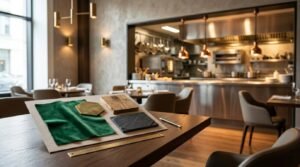
Restaurant renovation projects typically address four distinct zones, each with unique requirements, compliance considerations, and impact on operations. Understanding these zones helps prioritise investment and coordinate work sequences.
Commercial Kitchen Upgrades
The commercial kitchen represents the operational heart of any restaurant and often the most complex renovation component. Kitchen renovations must balance workflow efficiency, equipment requirements, ventilation capacity, food safety compliance, and budget constraints.
Effective commercial kitchen design follows logical workflow patterns from delivery and storage through preparation, cooking, plating, and service. Renovation provides the opportunity to correct workflow inefficiencies that developed organically as menus and service styles evolved.
Ventilation requirements for commercial kitchens significantly exceed residential standards. Extraction systems must handle heat, smoke, grease, and steam from commercial cooking equipment while maintaining comfortable conditions for kitchen staff. Under AS 1668.2, commercial kitchen exhaust systems require engineered make-up air provisions typically 80–90% of exhaust volume to maintain negative pressure and prevent grease migration into the building fabric. Inadequate ventilation creates compliance issues and uncomfortable working conditions that affect staff retention.
Dining Area and Front-of-House Design
Front-of-house renovation directly impacts customer experience and revenue capacity. Dining area design balances seating density with comfort, traffic flow with atmosphere, and brand expression with practical durability.
Flooring selection for restaurant dining areas must withstand heavy foot traffic, frequent cleaning, and inevitable spills while contributing to desired aesthetic and acoustic properties. Hard surfaces clean easily but create noise issues in busy service. Carpet and soft flooring absorb sound but present cleaning challenges.
Lighting design significantly influences dining atmosphere and can be modified relatively economically compared to structural changes. Layered lighting schemes combining ambient, task, and accent lighting create flexibility for different service periods and occasions.
Bathroom and Amenities Compliance
Customer bathrooms require compliance with accessibility standards and health regulations while reflecting the quality standards of the overall venue. Bathroom condition disproportionately influences customer perception of cleanliness and attention to detail.
Accessibility requirements under the Disability Discrimination Act and relevant Australian Standards mandate specific provisions for accessible bathroom facilities. Requirements vary based on building classification and capacity, but most restaurant renovations must address accessibility to some degree.
Staff amenities including change rooms, lockers, and staff bathrooms fall under workplace health and safety requirements. Adequate staff facilities support compliance and contribute to staff satisfaction and retention.
Storage, Back-of-House, and Workflow Zones
Effective back-of-house design supports efficient operations while remaining invisible to customers. Storage areas must accommodate dry goods, refrigerated items, cleaning supplies, and equipment while maintaining required separation between food and non-food items.
Delivery access and waste management areas require practical design that minimises disruption to customer areas while meeting council requirements for waste storage and collection access.
Grease Trap and Hydraulic Compliance
Grease traps are a non-negotiable requirement for Sydney restaurant fit-outs and renovations. Sydney Water mandates grease arrestors for all food premises discharging to the sewer, with sizing determined by kitchen capacity and peak flow rates. Undersized or non-compliant grease traps trigger enforcement action and trading restrictions.
Renovation provides the opportunity to upgrade undersized traps and bring hydraulic infrastructure into compliance. We engage a licensed hydraulic engineer early in the design process to confirm trap sizing, drainage grades, and connection requirements. Grease trap installation or upgrade typically adds $8,000 to $25,000 to project costs depending on access conditions and trap capacity.
Design Considerations for Restaurant Spaces
Restaurant design extends beyond aesthetics to encompass brand strategy, operational efficiency, and regulatory compliance. Effective design creates environments that attract customers, support efficient service, and express brand identity through physical space.
Creating Brand Identity Through Interior Design
Your restaurant’s physical environment communicates brand values before customers read menus or taste food. Design elements including colour palettes, material selections, furniture styles, and spatial arrangements create immediate impressions that shape customer expectations.
Successful restaurant interior design aligns the physical environment with cuisine type, price point, and target demographic. A casual neighbourhood cafe requires different design language than a fine dining destination, even if both aim for quality and warmth. Design inconsistency between environment and offering creates cognitive dissonance that undermines customer experience.
Material durability matters as much as appearance in commercial hospitality environments. Surfaces must withstand constant cleaning, heavy use, and inevitable accidents while maintaining appearance over years of service. Specifying commercial-grade materials prevents premature wear that undermines design investment.
Lighting, Acoustics, and Ambience
Lighting design influences mood, perceived quality, and even how food appears to customers. Warm colour temperatures generally flatter food presentation and create comfortable dining atmospheres. Cooler temperatures suit quick-service environments prioritising efficiency over lingering.
Acoustic design receives insufficient attention in many restaurant renovations, yet noise levels significantly impact customer satisfaction and staff wellbeing. Hard surfaces that clean easily also reflect sound, creating noise buildup during busy periods that makes conversation difficult and creates stressful working conditions.
Acoustic treatments including ceiling panels, wall treatments, and soft furnishings dramatically improve sound environments without compromising cleanability. Early acoustic planning costs less than retrofitting solutions after problems become apparent.
Accessibility and Universal Design Standards
Accessibility compliance represents both a legal requirement and a business opportunity. Beyond mandatory provisions, accessible design welcomes customers with diverse abilities and creates more comfortable environments for all users.
The Australian Human Rights Commission provides guidance on accessibility requirements under the Disability Discrimination Act. Requirements address entry access, circulation space, seating provisions, bathroom facilities, and service counter heights.
Universal design principles extend beyond minimum compliance to create genuinely welcoming environments. Wider circulation paths, varied seating options, good lighting, and clear wayfinding benefit all customers while ensuring accessibility for those who require specific provisions.

Hiring Contractors for Restaurant Renovation
Contractor selection significantly influences project outcomes. The right contractor brings relevant experience, reliable trade networks, compliance knowledge, and project management capability that keeps work on track and within budget.
What to Look for in a Commercial Fit-Out Contractor
Commercial hospitality experience matters more than general construction capability. Contractors experienced in restaurant fit-outs understand food safety requirements, ventilation complexities, equipment coordination, and the operational pressures that make extended timelines costly for hospitality businesses.
Verify licensing and insurance appropriate for commercial construction work. In NSW, contractors must hold appropriate licences from NSW Fair Trading for the work they undertake. Confirm public liability insurance, workers’ compensation coverage, and any specific insurances required by your landlord or lease.
Request and check references from recent comparable projects. Speaking with previous clients reveals reliability, communication quality, problem-solving capability, and how contractors handle the inevitable challenges that arise during renovation projects.
Questions to Ask Before Signing a Contract
Clarify pricing structure before engaging. Fixed-price contracts provide budget certainty but include contingency margins that increase overall cost. Cost-plus arrangements offer transparency but transfer cost risk to the owner. Hybrid approaches with fixed prices for defined scope and provisional sums for uncertain elements balance certainty with flexibility.
Understand payment terms and milestone structures. Industry practice involves progress payments tied to completion milestones rather than time-based payments. Retain sufficient funds until practical completion and defect rectification to maintain leverage for addressing any issues.
Confirm how variations are handled. Changes during construction are common, and clear processes for pricing and approving variations prevent disputes. Require written variation quotes before work proceeds and maintain documentation of all approved changes.
Managing the Contractor Relationship
Clear communication prevents most contractor relationship problems. Establish regular progress meetings, preferred communication channels, and escalation processes for urgent issues. Document important decisions and agreements in writing.
Understand the contractor’s site supervision arrangements. Projects benefit from consistent site supervision by someone with authority to make decisions and coordinate trades. Frequent supervisor changes or inadequate site presence often correlate with quality and timeline problems.
Address issues promptly rather than allowing problems to compound. Early intervention when work quality concerns arise, or timelines slip, prevents small issues from becoming major disputes.
Permits, Approvals, and Compliance
Restaurant renovations in Sydney operate within a complex regulatory environment involving local council planning controls, state food safety regulations, building codes, and fire safety requirements. Understanding these requirements early prevents costly delays and rework.
Development Applications and Council Approvals
Not all renovations require development approval, but many do. Work that changes building use, increases capacity, modifies external appearance, or involves structural changes typically triggers development application requirements for commercial renovations. Internal cosmetic work within existing approved use often proceeds without formal approval, though confirmation from your local council prevents assumptions that prove incorrect.
Development application processing times vary by council and project complexity. Straightforward applications receive determination within 4–6 weeks. Complex applications involving heritage considerations, neighbour notification, or planning panel assessment extend to 3–6 months or longer.
The NSW Planning Portal provides information on development application requirements and processes. Early consultation with your local council’s planning department clarifies requirements for your specific project and location.
FURTHER READING
► Commercial Renovation Planning Approval Process
► Commercial Building Renovation Permits Guide
Food Safety and Health Regulations
Food businesses in NSW must comply with the Food Act 2003 and Food Standards Code. Renovations provide the opportunity to address any existing compliance gaps and ensure new work meets current requirements.
The NSW Food Authority administers food safety regulation and provides guidance on requirements for food business fit-outs. Key considerations include appropriate surface finishes, adequate handwashing facilities, proper food storage provisions, pest-proofing measures, and ventilation requirements.
Local council environmental health officers inspect food premises and provide guidance on compliance requirements during renovation planning. Early engagement helps identify requirements before designs are finalised and construction begins.
Fire Safety and Building Code Requirements
Building Code of Australia requirements apply to commercial renovation projects and address structural adequacy, fire safety, accessibility, and health and amenity provisions. Compliance typically requires certification from accredited building certifiers.
Fire safety requirements for restaurants address fire detection and alarm systems, emergency lighting, exit signage, fire extinguisher provisions, and evacuation planning. Commercial kitchens with cooking equipment require specific fire suppression systems and trigger additional requirements for the broader premises.
Existing buildings undergoing renovation require upgrades to meet current fire safety standards, even for elements not directly affected by renovation work. Fire safety upgrade requirements add significant unexpected cost if not identified during planning.
Heritage Buildings and Conservation Areas
Sydney’s restaurant precinct includes many buildings subject to heritage overlays, local heritage listings, or State Heritage Register protections. Heritage constraints affect what changes are permissible, how they must be documented, and which consent pathways apply.
Work on heritage-listed buildings typically requires a Statement of Heritage Impact prepared by a heritage consultant, and some changes require referral to the NSW Heritage Office or Heritage Council. External alterations, signage, and changes to significant interior fabric face the highest scrutiny. We identify heritage status at the outset of every project; discovering a heritage constraint mid-design is one of the most expensive planning failures we see.
Liquor Licence Variations and Renovation
Structural changes to a licensed premises often trigger liquor licence variation requirements under the Liquor Act 2007 (NSW). Changes that alter the licensed area, increase patron capacity, or modify the physical boundaries of the premises require approval from Liquor and Gaming NSW before or alongside the building approval process.
Failing to notify Liquor and Gaming NSW of relevant changes creates compliance exposure that can result in licence suspension. We flag licence implications during the planning phase so applications run concurrently with the DA process rather than delaying the project after construction completes.
Managing a Restaurant Renovation Project
Project management during renovation balances construction progress with business continuity, budget control, and quality assurance. Effective management prevents the timeline extensions and cost overruns that plague poorly managed projects.
Phased Renovation vs Full Closure
The fundamental project management decision involves whether to close completely during renovation or attempt phased work while maintaining some level of trading. Each approach carries distinct advantages and risks.
Full closure simplifies construction logistics, typically reduces overall construction duration, and eliminates the complexity of maintaining food safety compliance in an active construction zone. However, closure means zero revenue during the renovation period plus potential customer loss to competitors.
Phased renovation maintains some revenue stream and customer connection but extends overall project duration, increases construction complexity, and requires careful management of food safety and customer experience during construction. Phased approaches work best for projects with clearly separable zones and sufficient space to maintain compliant operations.
Minimising Disruption to Operations
If maintaining operations during renovation, establish clear boundaries between construction and trading areas. Physical barriers, separate access routes, and scheduled work windows prevent construction activity from impacting customer experience or food safety.
Coordinate noisy or disruptive work for periods when the restaurant is closed. Early morning demolition before lunch service or overnight work for critical installations minimises customer-facing disruption, though such scheduling typically increases labour costs.
Plan for utility interruptions. Electrical, plumbing, and gas work require temporary service disconnections. Schedule these for closed periods and have contingency plans for unexpected extended outages.
Communication With Staff and Customers
Staff anxiety about renovation is natural and requires proactive management. Communicate renovation plans, expected timeline, and implications for staff schedules and roles. Involve key staff in planning where their operational insights add value.
Customer communication maintains relationships during disruption. Announce renovation plans through your usual channels, provide realistic reopening timelines, and consider maintaining connection through social media updates showing progress. Managed expectations prevent customer frustration with extended closures or reduced service during phased work.
Soft Opening and Relaunch Planning
The period immediately after construction completion is as important as the renovation itself. A soft opening, typically 1–2 weeks of reduced-capacity trading before a full relaunch, allows the team to stress-test new workflows, identify equipment issues, and build confidence before peak trading resumes.
We recommend scheduling the soft opening at least four weeks before any major event or peak season. This buffer absorbs the minor defect rectification and equipment commissioning that almost always follows practical completion. The relaunch itself benefits from a coordinated communications push: updated photography, refreshed social media, and direct outreach to regular customers who experienced the closure firsthand.

Common Restaurant Renovation Mistakes to Avoid
Learning from others’ mistakes costs less than making your own. These common pitfalls derail restaurant renovation projects with predictable regularity.
Underestimating Costs and Timelines
Optimistic budgeting causes more renovation failures than any other single factor. Owners who budget based on best-case scenarios find themselves unable to complete projects when inevitable complications arise. Realistic budgeting includes adequate contingencies and acknowledges that commercial hospitality projects carry complexity that residential renovations do not.
Timeline optimism creates similar problems. Owners who plan grand reopening events before construction begins often face embarrassing postponements when reality diverges from optimistic schedules. Build buffer time into public commitments and avoid announcing specific reopening dates until construction completion is certain.
Scope creep compounds both problems. Changes during construction almost always add cost and time. Thorough planning that resolves design decisions before construction begins prevents the mid-project changes that blow budgets and extend timelines.
Ignoring Workflow and Operational Efficiency
Renovation focused purely on aesthetics misses the opportunity to improve operational efficiency. Kitchens designed without input from the people who work in them contain workflow problems that reduce productivity and increase staff frustration.
Involve your chef and key kitchen staff in kitchen design decisions. Their practical experience identifies workflow issues that designers without hospitality operations experience miss. Similarly, front-of-house staff identify service flow problems and practical issues with proposed dining layouts.
Consider how your menu and service style may evolve. Renovation investments should support your business direction for the next 5–10 years, not just current operations. Building flexibility into designs accommodates future changes without requiring additional renovation.
Skipping Professional Design Input
Cost-cutting on design fees often proves false economy. Professional designers bring expertise in space planning, material selection, compliance requirements, and supplier relationships that improve outcomes and often reduce overall project costs.
Architects and interior designers experienced in hospitality projects understand the specific requirements of restaurant environments. They navigate compliance requirements efficiently, specify appropriate commercial-grade materials, and create designs that balance aesthetic goals with operational practicality.
Design documentation also protects owners during construction. Detailed specifications and drawings provide clear benchmarks for assessing contractor work quality and resolving disputes about scope and standards.

Maximising ROI on Your Restaurant Renovation
Renovation represents significant capital investment that should generate returns through increased revenue, reduced operating costs, or enhanced asset value. Strategic renovation planning maximises these returns.
Renovations That Increase Revenue
Capacity improvements directly impact revenue potential. Additional seating, improved table turnover through better service flow, or extended trading hours enabled by compliance upgrades all increase revenue opportunity.
Customer experience improvements drive repeat visits and positive word-of-mouth. Comfortable, attractive environments encourage customers to return and recommend your venue to others. In competitive hospitality markets, physical environment quality increasingly influences customer choice.
Menu capability expansion through kitchen upgrades enables revenue growth through new offerings. Equipment that supports additional cooking methods, increased production capacity, or improved consistency justifies premium pricing and attracts new customer segments.
Calculating Your Payback Period
A simple payback framework helps prioritise renovation investments before committing to scope. Divide the total renovation cost by the expected annual revenue uplift or cost saving to estimate payback in years.
For example, a $200,000 kitchen renovation that reduces ticket times and enables $80,000 in additional annual revenue delivers a 2.5-year payback a strong return for a commercial fit-out with a 10–15 year useful life. Capacity additions and compliance upgrades that enable extended trading hours typically deliver the shortest payback periods. Purely cosmetic upgrades in markets where competitors have already refreshed their venues deliver longer paybacks and warrant more conservative investment.
We model payback scenarios for clients during the planning phase so scope decisions are grounded in financial outcomes, not just design preferences.
Energy Efficiency and Long-Term Savings
Renovation provides the opportunity to address energy efficiency, reducing ongoing operating costs. Commercial kitchens consume significant energy, and modern equipment often delivers substantial efficiency improvements over older installations.
LED lighting retrofits typically deliver rapid payback through reduced electricity consumption and extended lamp life. HVAC system upgrades improve both efficiency and comfort. Insulation improvements reduce heating and cooling loads.
The NSW Government’s Energy Saver program provides resources and potential incentives for business energy efficiency improvements. Incorporating efficiency measures into renovation projects costs less than standalone retrofits.
Timing Your Renovation for Market Conditions
Market timing influences both renovation costs and business impact. Construction costs fluctuate with market conditions, and periods of high construction activity see higher prices and longer lead times for trades and materials.
Business cycle timing matters for revenue impact. Renovating during traditionally slower periods minimises lost revenue from closure or reduced capacity. Reopening before peak seasons maximises the benefit of improved facilities.
Lease timing also influences renovation decisions. Major investment shortly before lease expiry carries risk if renewal terms prove unfavourable. Conversely, renovation strengthens the negotiating position for lease renewal by demonstrating commitment to the location.
Conclusion
Restaurant renovation combines construction complexity with hospitality operations knowledge, regulatory compliance, and strategic business planning. Success requires realistic budgeting, thorough planning, appropriate contractor selection, and effective project management throughout the construction process.
The sections throughout this guide provide starting points for deeper exploration of specific topics including costs, compliance, design, and project management. Each element contributes to renovation outcomes that justify investment and support long-term business success.
At Sydney Home Renovation, we help Sydney restaurant owners navigate renovation projects with confidence. We bring commercial fit-out expertise, transparent pricing, and practical guidance to deliver renovations that meet compliance requirements, respect budgets, and create spaces where hospitality businesses thrive. Contact us to discuss your project.
Frequently Asked Questions
How much does a restaurant renovation cost in Sydney?
Sydney restaurant renovations typically cost $1,500 to $4,500 per square metre for fit-out work, excluding equipment. Commercial kitchen equipment alone adds $50,000 to $300,000 depending on cuisine type and capacity.
How long does a restaurant renovation take?
Most comprehensive restaurant renovations require 8–20 weeks of construction, plus 4–12 weeks for council approvals and 8–16 weeks for equipment procurement. Total project duration from planning to opening typically spans 6–12 months.
Do I need council approval for a restaurant renovation?
Many restaurant renovations require development approval, particularly projects involving structural changes, capacity increases, or modified use. Internal cosmetic work within existing approved use often proceeds without formal approval; confirm requirements with your local council before finalising plans.
Should I close my restaurant during renovation?
Full closure simplifies construction and typically reduces overall duration. Phased renovation maintains some revenue but extends timelines and increases complexity. The right approach depends on project scope, space configuration, and financial position.
What is the difference between a restaurant renovation and a fit-out?
Renovation modifies an existing restaurant space, working with or around existing infrastructure. Fit-out creates a restaurant within a raw or shell space, installing all infrastructure from scratch. Fit-outs typically cost more but offer greater design flexibility.
How do I choose a contractor for my restaurant renovation?
Select contractors with specific commercial hospitality experience, verified references from comparable projects, appropriate licensing and insurance, and clear communication about pricing structures. Experience with food safety compliance and council approval processes matters significantly.
What renovations add the most value to a restaurant?
Renovations that increase capacity, improve operational efficiency, or address compliance requirements typically deliver the strongest returns. Kitchen workflow improvements, strategic capacity additions, and customer-facing upgrades that support premium positioning justify investment through increased revenue.