The atmosphere of a restaurant is the sum of every design decision made before a single customer walks through the door. Lighting, colour, furniture, acoustics, materials, and spatial layout all work together to shape how diners feel, how long they stay, and whether they return. For Sydney restaurant owners and hospitality operators, getting these elements right is not a matter of aesthetics alone; it is a direct commercial investment.
This guide covers every dimension of restaurant atmosphere design. We work through what atmosphere actually is and why it drives revenue, then address each major design element in turn: lighting, colour, furniture layout, acoustics, materials, and design styles. We also cover outdoor and alfresco dining, fit-out budgeting, and how to choose the right contractor for your Sydney venue.
Whether you are fitting out a new space or redesigning an existing one, this resource gives you the orientation you need to make confident, well-informed design decisions.
What Is Restaurant Atmosphere and Why Does It Matter?
Restaurant atmosphere is the combined sensory experience a dining space creates for its guests. It is not a single element but the result of how lighting, sound, colour, spatial arrangement, materials, and scent interact to produce an emotional response one that determines whether customers feel comfortable, stay longer, and choose to return.
When those elements are aligned, customers feel engaged and inclined to linger. When they are misaligned, even excellent food cannot compensate for an environment that feels wrong.
The Psychology of Dining Environments
Research in environmental psychology consistently shows that physical surroundings influence human behaviour in measurable ways. In a restaurant context, design decisions directly affect how customers perceive the quality of their food, how much they spend, and how likely they are to return.
The implication for restaurant operators is significant. Atmosphere is not decoration; it is a revenue driver.
How Atmosphere Influences Customer Behaviour and Spend
Dwell time is one of the clearest commercial outcomes of good atmosphere design. Customers who feel comfortable in a space stay longer, order more, and are more likely to return.
Conversely, a space that feels too loud, too bright, or spatially uncomfortable drives faster table turnover, which sounds positive but typically reduces per-head spend and damages repeat visit rates. Cover count optimisation, table configuration, and seating comfort all interact with atmosphere to determine the commercial performance of a dining room.
Scent and Sensory Design
Scent is the most underused atmospheric tool in restaurant design, yet it operates faster than any visual cue. A subtle ambient fragrance warm vanilla in a casual venue, cedar and citrus in a premium space reinforces the emotional character of the room before a customer has looked at the menu.
We treat scent as part of the design brief, not an afterthought. Diffusion systems integrated into the HVAC or discreet cold-air diffusers at entry points deliver consistent, controllable results without the inconsistency of candles or reed diffusers in a busy service environment.
Restaurant Lighting Design: Setting the Mood
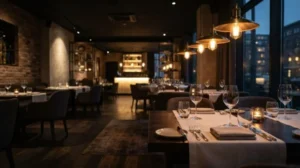
Lighting is the single most powerful tool available to a restaurant designer. It controls how food looks on the plate, how flattering the space feels to guests, and how the energy of a room shifts from a quiet lunch service to a busy dinner sitting.
Yet lighting is also one of the most technically complex elements of a hospitality fit-out, requiring careful planning across multiple layers and fixture types.
Ambient, Task, and Accent Lighting Layers
Effective restaurant lighting operates across three distinct layers. Ambient lighting provides the overall illumination level for the space and sets the baseline mood. Task lighting serves functional purposes, illuminating kitchen pass areas, bar surfaces, and menus. Accent lighting draws attention to architectural features, artwork, or focal points that reinforce the venue’s design concept.
The relationship between these three layers determines whether a space feels intimate and considered or flat and institutional. Most successful restaurant interiors use dimmable ambient systems that allow the lighting mood to shift across different service periods, with warm white colour temperatures (typically 2700K–3000K) that make food and skin tones appear more appealing.
Lighting control systems are worth specifying from the outset. Scene-based dimming where pre-programmed settings shift the room from a bright lunch configuration to a warm dinner atmosphere at the touch of a button removes the guesswork from service transitions and ensures consistency across every sitting.
Natural Light and Window Placement
Natural light introduces a dynamic quality to a dining space that artificial lighting cannot replicate. Sydney’s climate makes natural light a significant asset for venues with north-facing or east-facing aspects, particularly for breakfast and lunch.
However, uncontrolled natural light creates glare, uneven illumination, and heat gain. These require considered management through glazing specifications, shading systems, and window placement decisions made during the fit-out design phase.
Colour Schemes That Define Your Restaurant’s Identity
Colour is one of the fastest-acting atmospheric tools in a designer’s toolkit. Within seconds of entering a space, a customer’s nervous system has already processed the dominant palette and begun forming an emotional response.
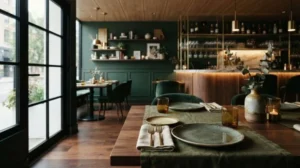
Warm tones terracotta, amber, deep red create feelings of warmth, intimacy, and appetite stimulation. Cool tones slate blue, sage green, soft grey communicate calm, sophistication, and restraint.
Warm vs. Cool Palettes and Their Emotional Effects
The choice between warm and cool palettes is a strategic decision that aligns with the dining format, target customer, and brand positioning. A high-energy casual venue benefits from warm, saturated tones that energise the space and encourage social interaction. A fine dining restaurant typically benefits from a more restrained palette that communicates quality and allows the food presentation to take visual precedence.
Neutral base colours warm whites, natural linens, soft stone tones provide flexibility and longevity in a restaurant interior. They allow accent colours, materials, and lighting to do the atmospheric work without the palette becoming dated as design trends shift.
Brand Colour Integration in Interior Design
For restaurants with an established brand identity, the interior colour scheme extends and reinforces that identity rather than contradicts it. This does not mean painting every wall in the brand’s primary colour.
It means finding the tonal family that the brand colour belongs to and building the interior palette around that relationship. A brand with a deep forest green logo, for example, translates into an interior using sage walls, dark timber joinery, and brass accents rather than literal green surfaces throughout.
Restaurant Furniture and Spatial Layout
The physical arrangement of a restaurant how tables are positioned, how much space exists between them, what seating types are used, and how customers and staff move through the room is one of the most consequential design decisions an operator makes. Layout directly determines cover count, which directly determines revenue capacity.
But layout also determines comfort, privacy, and the social energy of the room.
Table Configuration and Cover Count Optimisation
Cover count optimisation is the process of maximising the number of seated covers in a space without compromising the comfort or experience of individual diners. It requires balancing table sizes, aisle widths, service circulation paths, and the spatial expectations of the target customer.
A fine dining venue requires significantly more space per cover than a casual bistro, typically 1.5–2.0 square metres per person compared to 1.0–1.2 square metres in a casual format. Getting this balance wrong in either direction is costly: too few covers and the venue cannot generate sufficient revenue; too many and the space feels cramped, service quality suffers, and customers do not return.
Spatial zone planning is equally important. Separating the bar zone, main dining room, and any private dining area into distinct spatial experiences, each with its own lighting mood, acoustic treatment, and furniture specification allows a single venue to serve multiple customer occasions without the design feeling incoherent.
Seating Comfort and Customer Dwell Time
Seating comfort has a direct relationship with dwell time. Comfortable seating, whether banquette, booth, or chair, encourages customers to relax, order additional courses, and extend their visit. Uncomfortable seating, regardless of how visually appealing it may be, shortens visits and reduces per-head spend.
The choice between different seating types also shapes the social character of the room. Booth seating creates privacy and intimacy. Communal tables encourage social interaction and work well in casual formats. Banquette seating along walls maximises cover density while providing a degree of separation between groups.
Bar Design and Its Role in the Dining Room
The bar is rarely just a service point; it is one of the most atmospherically charged elements in a restaurant. A well-positioned bar creates visual energy, draws customers into the space, and anchors the room’s social dynamic.
Bar height, material specification, and lighting treatment all contribute to how the bar reads from the dining room. A backlit bottle display, a marble or stone bar top, and pendant lighting at the correct height above the bar surface create a focal point that works even when the bar is not in active use. We treat bar design as an integral part of the dining room layout, not a separate brief.
Accessibility and Inclusive Spatial Design
Accessible design is both a compliance requirement and a commercial opportunity. Under the National Construction Code and the Disability Discrimination Act, commercial dining spaces must meet minimum accessibility standards for aisle widths, table heights, and amenity access.
Beyond compliance, an accessible layout serves a broader customer base and signals that the venue is genuinely welcoming. Specifying a mix of table heights, ensuring clear circulation paths of at least 900mm for wheelchair access, and positioning accessible seating in desirable rather than marginal locations are all decisions that reflect well on the brand.
Acoustic Design: Managing Sound in Dining Spaces
Noise is one of the most common complaints in restaurant reviews, and one of the most underestimated design challenges in hospitality fit-outs. A space that is too loud makes conversation difficult, raises stress levels, and shortens visits. A space that is too quiet feels uncomfortable and exposed.
The goal of acoustic design is to achieve a sound environment that supports the social purpose of dining: energetic enough to feel alive, controlled enough to allow comfortable conversation.
Hard vs. Soft Surfaces and Sound Reflection
The acoustic character of a dining space is largely determined by the ratio of hard to soft surfaces. Hard surfaces polished concrete floors, tiled walls, glass partitions, high ceilings reflect sound and create reverberation. Soft surfaces upholstered seating, carpet, curtains, acoustic ceiling panels absorb sound and reduce echo.
Many contemporary restaurant interiors favour hard, industrial-influenced materials for their visual appeal, which creates significant acoustic challenges. The solution is not to abandon those materials but to introduce strategic soft elements: acoustic panels disguised as artwork, upholstered booth backs, fabric ceiling baffles that absorb sound without compromising the design intent.
Acoustic Panels and Noise Reduction Solutions
Acoustic panels are the most direct intervention available for a space with excessive reverberation. They are available in a wide range of formats: wall-mounted panels, suspended ceiling baffles, decorative fabric screens, and integrate into the interior design rather than being applied as an afterthought.
The placement of acoustic panels is as important as their presence. Panels positioned at primary reflection points, typically the first and second reflection surfaces from the sound source, deliver significantly better results than panels placed arbitrarily. We always model acoustic performance during the design phase rather than treating it as a post-construction correction.
Materials, Finishes, and Texture in Restaurant Interiors
The materials used in a restaurant interior serve two simultaneous purposes: they contribute to the visual and tactile atmosphere of the space, and they must withstand the physical demands of a high-traffic commercial environment. A material that looks beautiful but cannot survive daily cleaning, heavy foot traffic, or the humidity of a busy kitchen service is a liability, not an asset.
Flooring Choices for High-Traffic Dining Areas
Flooring is the most heavily used surface in any restaurant and one of the most visible contributors to the overall design character. Polished concrete delivers an industrial aesthetic and is highly durable, but it amplifies sound and can feel cold underfoot. Timber flooring adds warmth and texture but requires careful specification; engineered timber with a commercial-grade wear layer performs significantly better than solid timber in high-traffic dining environments.
Ceramic and porcelain tile offer the widest range of aesthetic options and excellent durability, but grout lines require ongoing maintenance in food service environments. The choice of flooring material is made in the context of the overall design concept, the acoustic requirements of the space, and the practical realities of daily cleaning and maintenance.
Wall Treatments, Cladding, and Feature Surfaces
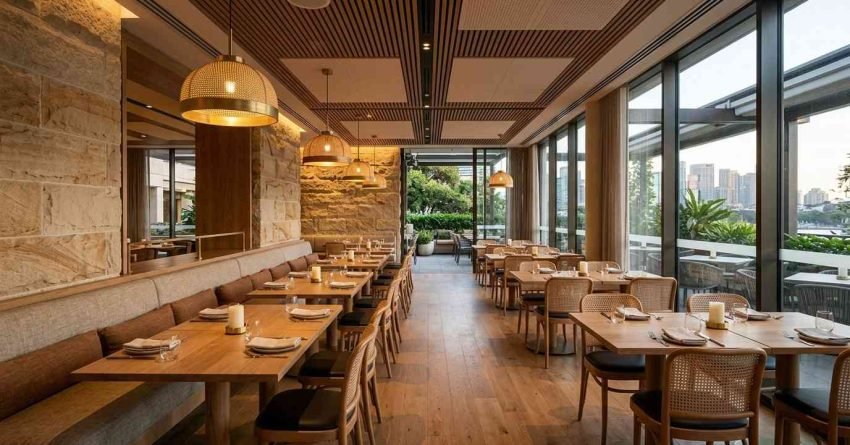
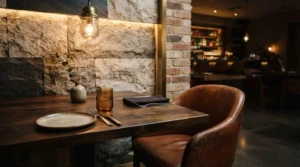
Wall treatments are one of the most effective ways to introduce texture, warmth, and visual interest into a dining space. Timber cladding, stone veneer, exposed brick, textured plaster, and decorative tile all create tactile depth that flat painted surfaces cannot achieve.
Feature walls, a single surface treated differently from the rest of the room, are a cost-effective way to create a focal point and reinforce the design concept without committing to a full material treatment throughout. The specification of wall materials must account for proximity to food preparation areas, ease of cleaning, and the acoustic contribution of the surface.
Biophilic Design and Natural Elements
Biophilic design, the integration of natural elements into the built environment, has moved from a niche trend to a mainstream expectation in Sydney’s hospitality sector. Living walls, potted planting, natural stone, unfinished timber, and woven natural fibres all introduce an organic quality that resonates strongly with Sydney diners.
Beyond aesthetics, biophilic elements have a measurable effect on perceived comfort and stress reduction. We specify planting and natural material layers as part of the atmospheric brief, not as decorative additions. A well-executed living wall, for example, simultaneously contributes to acoustic absorption, visual warmth, and the sensory richness of the space.
Restaurant Design Styles and Concept-Driven Interiors
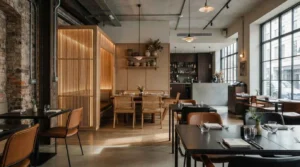
The design style of a restaurant is the visual and spatial language through which its brand identity is expressed. It is the framework that gives coherence to every individual design decision the lighting fixtures, the furniture selection, the colour palette, the material choices and communicates to customers what kind of experience they are about to have before they have ordered a single dish.
Industrial, Coastal, Japandi, and Contemporary Styles
Industrial design remains one of the most popular styles in Sydney’s hospitality sector, characterised by exposed structural elements, raw materials (concrete, steel, reclaimed timber), and a utilitarian aesthetic that communicates authenticity and informality. It works particularly well in converted warehouse or heritage commercial spaces where the existing architecture supports the design language.
Coastal design draws on the natural palette and material vocabulary of the Australian coastline bleached timbers, natural linens, rattan, soft blues and sandy neutrals and resonates strongly with Sydney’s geographic identity. It suits venues in beachside or waterfront locations but applies effectively in any setting where a relaxed, light-filled atmosphere is the goal.
Japandi, the fusion of Japanese minimalism and Scandinavian design principles, has emerged as a significant trend in Sydney’s premium casual and fine dining sectors. It is characterised by restrained palettes, natural materials, considered negative space, and a strong emphasis on craftsmanship. Contemporary design is the broadest category, encompassing current trends without committing to a single aesthetic vocabulary; it allows flexibility but requires a strong design brief to prevent the result from feeling generic.
Matching Design Concept to Brand and Menu
The most successful restaurant interiors are those where the design concept and the culinary concept are in genuine alignment. A Japanese omakase restaurant and a Sydney-style brunch venue require fundamentally different design languages, even if both are targeting a similar demographic.
The design brief begins with a clear articulation of the brand’s values, the menu’s character, and the target customer’s expectations. Every design decision is then evaluated against that brief.
Entry Experience and First Impressions
The atmosphere of a restaurant begins before a customer is seated. The entry sequence the facade, the signage, the threshold, the host station sets the emotional register for everything that follows.
A well-designed entry communicates the venue’s identity instantly and creates a moment of transition between the street and the dining room. Signage specification, door hardware, lighting at the entry point, and the visual depth of the space as seen from outside are all design decisions we address as part of the concept brief. A strong entry experience reduces walk-past rates and increases the likelihood that a first-time visitor becomes a repeat customer.
Outdoor and Alfresco Dining Design in Sydney
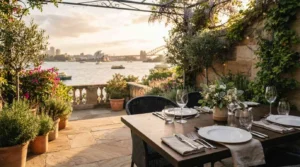
Sydney’s climate makes outdoor dining one of the most commercially valuable assets a restaurant can offer. Alfresco seating extends cover count without the cost of additional enclosed floor area, creates a visible street presence that attracts passing trade, and delivers the kind of relaxed, open-air dining experience that Sydney customers actively seek.
However, designing an outdoor dining space that performs well across Sydney’s full range of weather conditions requires careful planning.
Weather-Resilient Materials for Outdoor Spaces
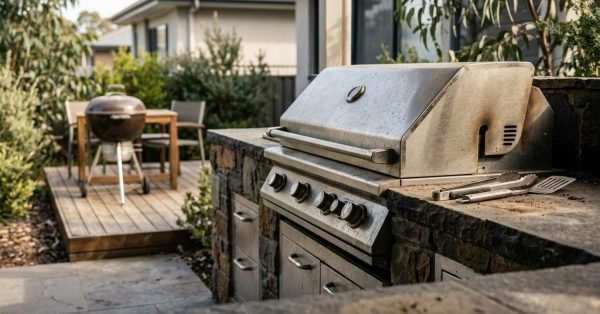
Outdoor furniture and finishes in Sydney must withstand UV exposure, coastal salt air (in beachside and harbour locations), rain, and the temperature extremes of summer and winter. Powder-coated aluminium, marine-grade stainless steel, teak, and high-density polyethylene (HDPE) are among the most durable material choices for outdoor hospitality furniture.
Fabrics used for cushions, umbrellas, and shade sails are specified to commercial outdoor standards; solution-dyed acrylic fabrics such as Sunbrella are the industry benchmark for UV and moisture resistance. Flooring in outdoor dining areas must be slip-resistant when wet, easy to clean, and capable of withstanding thermal expansion and contraction. Porcelain pavers, composite decking, and sealed concrete are the most commonly specified options for Sydney alfresco areas.
Council Approvals and Compliance for Alfresco Areas
In Sydney, outdoor dining areas on public footpaths or in street-facing locations typically require a footway dining approval from the relevant local council. The requirements vary between councils but generally cover the size and placement of furniture, the type of barriers used, accessibility compliance, and the hours of operation.
Rooftop dining areas may require a Development Application (DA) depending on the extent of the works and the existing use consent for the premises. Engaging a fit-out contractor with experience in Sydney’s council approval processes is one of the most effective ways to avoid delays and compliance issues during the fit-out phase.
Planning and Budgeting Your Restaurant Fit-Out
A well-designed restaurant atmosphere does not happen by accident, and it does not happen without a realistic budget. Understanding the cost structure of a restaurant fit-out before committing to a design brief is one of the most important steps any operator can take.
It prevents the painful experience of falling in love with a design concept that the budget cannot support, and it allows for informed trade-offs between competing priorities.
Typical Restaurant Fit-Out Costs in Sydney
Restaurant fit-out costs in Sydney vary significantly depending on the size of the venue, the complexity of the design, the quality of materials specified, and the extent of structural or work required. A basic commercial fit-out typically starts at around $1,500–$2,500 per square metre for a straightforward refurbishment. A mid-range fit-out with custom joinery, quality finishes, and a considered lighting design typically falls in the range of $2,500–$4,500 per square metre. High-end fit-outs with premium materials, bespoke furniture, and complex structural works can exceed $5,000 per square metre.
These figures are indicative and are treated as a starting framework rather than a fixed budget. The actual cost of any specific project depends on a detailed scope of works, the condition of the existing tenancy, and the specific design decisions made during the briefing process.
What Affects the Cost of a Restaurant Interior?
The primary cost drivers in a restaurant fit-out are the kitchen and bar infrastructure (which typically accounts for 30–40% of total fit-out cost), the quality and complexity of joinery and custom furniture, the extent of electrical and mechanical work, and the specification of flooring and wall finishes. Structural alterations removing walls, adding mezzanine levels, and modifying the building facade add high cost and typically require council approval.
A realistic contingency allowance of 10–15% of the total project budget is standard practice for commercial fit-outs in Sydney. Unexpected conditions within existing tenancies, concealed structural issues, and asbestos in older buildings are common and add cost if not identified during the pre-construction assessment phase.
Choosing the Right Restaurant Fit-Out Contractor in Sydney
The quality of the contractor you engage for your restaurant fit-out has as much influence on the final outcome as the quality of the design itself. A skilled fit-out contractor does not simply build what is on the drawings; they manage the coordination between trades, identify and resolve construction issues before they become costly problems, and ensure that the design intent is faithfully translated into the finished space.
What to Look for in a Commercial Fit-Out Partner
Experience in hospitality fit-outs specifically is the most important qualification to look for in a commercial contractor. Restaurant fit-outs involve a unique combination of trades: commercial kitchen installation, bar fit-out, electrical and data, mechanical ventilation, plumbing, joinery, and finishes that require a contractor with established relationships across all of these disciplines and the project management capability to coordinate them effectively.
Transparent pricing is equally important. A detailed, itemised quote that clearly separates labour, materials, and provisional sums gives you the visibility you need to make informed decisions and manage your budget throughout the project. Contractors who provide vague lump-sum quotes without detailed breakdowns create significant financial risk for the client.
Questions to Ask Before Signing a Fit-Out Contract
Before engaging any fit-out contractor, ask to see examples of completed restaurant projects of similar scale and complexity. Request references from previous hospitality clients and, where possible, visit completed venues to assess the quality of workmanship firsthand. Confirm that the contractor holds the appropriate licences for commercial building work in NSW, carries adequate public liability and workers’ compensation insurance, and has a clear process for managing variations and cost changes during the project.
Ask specifically how the contractor manages the council approval process, how they handle unforeseen site conditions, and what their communication and reporting process looks like during construction. The answers to these questions tell you as much about the contractor’s professionalism as their portfolio.
Conclusion
Restaurant atmosphere is the product of every design decision working in concert; lighting, colour, furniture, acoustics, materials, and spatial planning all contribute to the sensory experience that determines whether customers stay, spend, and return.
Each of these design dimensions has its own depth of complexity, and the sections above provide the detailed guidance you need to make informed decisions on every element of your venue’s interior.
At Sydney Home Renovation, we deliver end-to-end restaurant fit-outs in Sydney that translate design vision into finished, revenue-ready spaces on budget, on schedule, and built to perform. Contact us today to discuss your project.
Frequently Asked Questions
What creates atmosphere in a restaurant?
Restaurant atmosphere is created by the combined effect of lighting, colour, furniture, acoustics, materials, and scent. When these elements align with the venue’s brand and target customer, we produce an emotional response that keeps diners comfortable and returning.
How does lighting affect the atmosphere of a restaurant?
Lighting controls the mood, energy, and visual comfort of a dining space. Warm, dimmable ambient lighting creates intimacy and makes food appear more appealing, while harsh or overly bright lighting creates discomfort and shortens customer visits.
What are the best colours for a restaurant interior?
Warm tones such as terracotta, amber, and deep red stimulate appetite and create intimacy, making them well-suited to casual and fine dining venues. Cool tones like sage green and slate blue communicate calm and sophistication, working well in premium casual and contemporary formats.
How do I reduce noise in a restaurant?
Reducing noise requires introducing sound-absorbing surfaces to counterbalance hard reflective materials. Acoustic panels, upholstered seating, fabric ceiling baffles, and soft furnishings all reduce reverberation and create a more comfortable sound environment for diners.
How much does a restaurant fit-out cost in Sydney?
Restaurant fit-out costs in Sydney typically range from $1,500 per square metre for a basic refurbishment to over $5,000 per square metre for a high-end custom fit-out. The final cost depends on venue size, design complexity, material quality, and the extent of kitchen and infrastructure required.
Do I need council approval for alfresco dining in Sydney?
Yes, in most cases. Outdoor dining on public footpaths requires a footway dining approval from the relevant local council, and rooftop or structurally altered outdoor areas may require a Development Application. Requirements vary between councils, so early engagement with your local authority is recommended.
What is the most popular restaurant design style in Sydney right now?
Industrial, coastal, and Japandi are among the most prevalent design styles in Sydney’s current hospitality market. Industrial suits converted heritage spaces, coastal resonates with Sydney’s geographic identity, and Japandi appeals to premium casual and fine dining venues seeking a restrained, quality-focused aesthetic.