
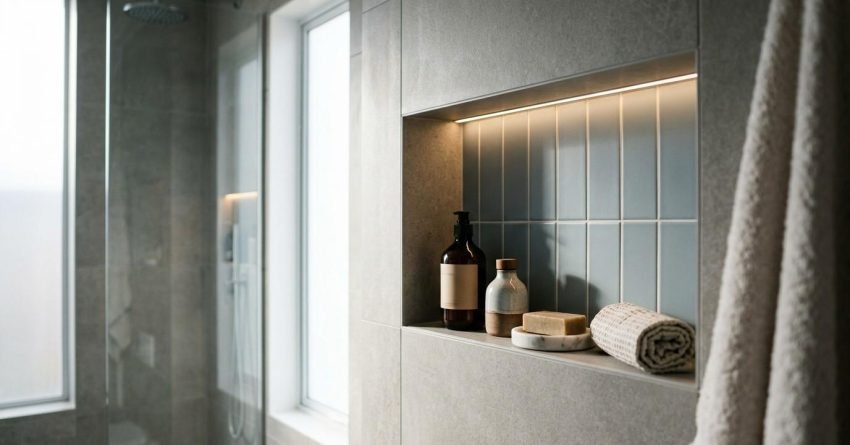
A well-designed bathroom niche adds meaningful storage, reduces visual clutter, and becomes one of the most noticed features in a finished renovation. Whether you are planning a full bathroom rebuild or a targeted upgrade, the right niche design makes a measurable difference to both function and resale appeal.
Choosing the wrong niche type or placing it without proper planning leads to costly rework, waterproofing failures, and wasted wall space.
This guide walks through niche types, tile combinations, placement rules, lighting options, and realistic cost expectations to help you plan with confidence.
What Makes a Bathroom Niche Worth Planning For
A bathroom niche is a recessed or surface-mounted storage cavity built into a wall, designed to hold toiletries, shampoo bottles, soap, and accessories without consuming floor space or requiring freestanding shelving. Unlike a cabinet or shelf unit, a niche integrates directly into the wall structure, creating a flush, built-in finish that reads as part of the room rather than an addition to it.
The functional case is straightforward: niches eliminate the clutter of bottles balanced on shower ledges, reduce the need for over-bath caddies, and keep surfaces clear. The design case is equally strong. A well-tiled niche with considered proportions adds architectural interest to an otherwise flat wall, particularly in shower recesses where there is limited opportunity for decorative detail.
We find that niche placement is one of the first structural decisions to lock in during a bathroom renovation; getting it right before waterproofing begins saves significant rework cost later.
Recessed Storage Niches: The Space-Saving Standard
Recessed niches are built by cutting into the wall cavity between studs and lining the recess with waterproof board and tile. They sit flush with the surrounding wall surface, creating a seamless look that works in both contemporary and traditional bathroom styles. This is the most requested niche type in Sydney bathroom renovations because it delivers maximum storage without reducing the usable floor area or projecting into the shower space.
Standard Niche Dimensions by Type
Getting the dimensions right before tiling begins is essential; a niche that is too shallow holds nothing useful, and one that is too wide creates tile alignment problems. We use the following as our standard starting points:
- Single-shelf niche: 300–600mm wide · 150–200mm tall · 100–120mm deep
- Multi-shelf niche: 300–600mm wide · 600–900mm tall · 100–120mm deep
- Corner niche: 200–300mm per face · 100–150mm deep
- Vertical niche: 150–250mm wide · 600–900mm tall · 100–120mm deep
Depth is determined by stud spacing and the thickness of the waterproof lining board. We always confirm stud positions before committing to a width, because a niche that falls between two studs requires additional framing.
What Goes Inside the Wall: Framing and Lining Materials
A recessed niche is not simply a hole in the wall; it needs a rigid, waterproof-ready frame before any membrane or tile goes on. We frame niche openings with treated timber noggings between the existing studs, then line all internal surfaces with a waterproof sheet product before the membrane is applied.
The most common lining materials in Sydney are fibre cement sheet (such as Villaboard), compressed cement sheet, and waterproof-rated plasterboard. Fibre cement is our preferred choice for shower niches because it holds tile adhesive well, does not swell when wet, and provides a stable substrate for the waterproofing membrane. Standard plasterboard is not acceptable inside a shower niche, even with a membrane applied over it.
Single-Shelf Shower Niches
A single-shelf recessed niche is the most common configuration. Typically positioned at shoulder height in the shower recess, it provides a dedicated landing zone for shampoo, conditioner, and body wash. A single-shelf niche is the most cost-effective option and suits most household storage needs without requiring structural modification.
Multi-Shelf Recessed Niches
Multi-shelf niches stack two or three shelves within a taller recess, typically 600mm to 900mm in height. They suit households with higher storage demands or bathrooms where a single niche does not accommodate the full range of products in use. The shelves are tiled to match the niche interior or finished in a contrasting material such as stone or solid surface for a layered look. Positioning matters: multi-shelf niches work best on the non-shower-head wall to avoid direct water exposure on upper shelves.
Niche vs. Built-In Shelf: Which One Suits Your Bathroom?
We get this question regularly, and the honest answer depends on the wall. A recessed niche is always our first recommendation because it sits flush with the wall surface, takes up zero shower space, and reads as a deliberate architectural detail rather than an afterthought. The trade-off is that it requires a suitable wall one with accessible stud cavities, no conflicting plumbing or electrical runs, and enough depth between the face and the external wall or waterproofing layer.
A built-in projecting shelf, sometimes called a floating shelf niche, is the right call when the wall structure rules out a recess. It projects 80–120mm from the wall surface and delivers usable storage without cutting into the wall at all. In a shower recess of 900mm or wider, the projection rarely causes a practical problem. In a compact 900mm square enclosure, we assess the available clearance before recommending it.
The key difference is permanence and finish. A recessed niche, once tiled, is part of the wall. A projecting shelf, even when tiled to match, reads as an addition. For most Sydney renovations where the wall allows it, we go recessed every time.
Floating Shelf Niches: Style Without the Structural Work
Not every wall is suitable for a recessed niche. Concrete walls, external walls with insulation, and walls housing plumbing or electrical runs do not allow for a recess without significant structural work. In these situations, a surface-mounted floating shelf niche is the practical alternative.
A floating shelf niche uses a projecting frame typically tiled or finished in a matching material to create the visual impression of a niche without cutting into the wall. The frame is fixed directly to the wall surface using appropriate anchors for the substrate, then waterproofed and tiled as a unit. This approach suits renovation projects where budget or structural constraints rule out a full recess, and it installs in almost any wall location without the waterproofing complexity of a cut-in niche.
The trade-off is projection into the shower space. In compact shower enclosures, a projecting shelf reduces the sense of openness and creates a bump hazard. For bathrooms with a shower recess of 900mm or wider, this is rarely a practical concern.
Corner Niches: Maximising Dead Space in Small Bathrooms
Corner niches occupy the 90-degree junction between two walls, using a space that is otherwise difficult to tile cleanly and rarely serves any functional purpose. A corner niche is typically triangular or square in plan, with a depth of 100mm to 150mm, and is positioned at a height that suits the primary user.
In small Sydney bathrooms where every centimetre of floor space is valuable, a corner niche is one of the most efficient storage solutions available. It adds storage without consuming any usable shower area, and the angled geometry creates a point of visual interest that breaks up the monotony of flat tiled walls. Corner niches work particularly well in square shower enclosures where both adjacent walls are accessible and structurally suitable for a recess.
The installation complexity is slightly higher than a standard recessed niche because the waterproofing membrane wraps two wall faces and the corner junction, with a minimum 50mm overlap onto each adjoining surface. This is not a reason to avoid the option, but it is a reason to confirm your tiler and waterproofer have experience with corner niche construction before committing to the design.
Niche Tile Design Ideas That Elevate the Whole Bathroom
The tile choice inside a niche has a disproportionate impact on the finished look of the bathroom. Because the niche interior is a contained, framed space, it draws the eye and holds attention in a way that a flat tiled wall does not. This makes it one of the most effective locations in the bathroom to introduce a feature tile, a contrasting colour, or a decorative pattern without overwhelming the overall scheme.
Contrast Tile Inserts
The most widely used approach is a contrast tile insert: the niche interior is tiled in a colour, texture, or format that differs from the surrounding wall tile. A white subway tile bathroom with a charcoal or terracotta niche interior is a common and effective combination. The contrast draws attention to the niche, reinforces the storage function visually, and adds depth to an otherwise uniform wall.
Grout colour and type play an equally important role. A matching grout reads as subtle and refined, while a contrasting grout adds graphic definition to the tile layout. Inside a shower niche, we recommend epoxy grout over cement-based grout. Epoxy is non-porous, resists staining from shampoo and soap residue, and holds its colour far longer in a wet environment.
Mosaic and Feature Tile Niches
Mosaic tiles small-format tiles on a mesh backing are well suited to niche interiors because they are cut to fit the exact dimensions of the recess without the alignment challenges of larger format tiles. A mosaic niche interior in a metallic, glass, or natural stone finish creates a jewel-box effect that elevates the surrounding bathroom without requiring a full feature wall. Zellige tiles, handmade terracotta, and fluted ceramic formats are increasingly popular choices in Sydney renovations for niche interiors, particularly in bathrooms with a warm, textured aesthetic.
Niche Lighting Ideas: Turning Storage Into a Feature
Lighting a bathroom niche converts a functional storage recess into a deliberate design feature. The most common approach is LED strip lighting installed along the top or bottom edge of the niche interior, casting a soft wash of light across the tiled surface and the products stored within. This works particularly well in niches with a contrasting tile insert, where the light amplifies the colour and texture of the feature tile.
Recessed LED downlights above the niche opening are a cleaner alternative for niches with a flat ceiling above the recess. These provide direct illumination without visible hardware and suit contemporary bathrooms where a minimal aesthetic is the priority. Warm white LED temperatures (2700K to 3000K) are the standard recommendation for bathroom niches, as they complement skin tones and create a relaxed atmosphere rather than the clinical feel of cool white light.
Any niche lighting must comply with Australian Standard AS/NZS 3000 for electrical installations in wet areas. LED strip lighting used inside a shower niche carries a minimum IP65 rating, and all electrical work is completed by a licensed electrician.
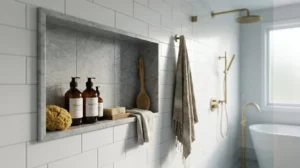
Bathroom Niche Placement: Where to Put It for Best Results
Placement determines whether a niche is genuinely useful or merely decorative. The most functional position for a shower niche is on the wall opposite the shower head, at a height between 1,200mm and 1,500mm from the floor. This keeps the niche within easy reach, out of the direct water stream, and at a height that suits most adults without requiring bending or reaching overhead.
We always advise against placing a niche on the shower head wall. Direct water pressure accelerates grout deterioration and increases the risk of water ingress behind the niche if the waterproofing membrane is not perfectly executed. The non-shower-head wall is always the safer and more practical choice.
For bath niches, the most common placement is on the wall at the tap end of the bath, at a height that allows easy access from a seated position. A niche at this location holds bath salts, candles, and accessories without requiring a separate shelf unit or bath caddy.
Niche Design Ideas for Small Bathrooms in Sydney
Small bathrooms present the strongest case for a niche. In a bathroom where the shower recess is 900mm by 900mm and the vanity occupies most of the remaining floor space, a recessed niche is often the only storage option that does not make the room feel smaller. We use niches as one of our primary tools in small bathroom renovations; they free up floor space and reduce visual clutter without compromising on storage or style.
For small Sydney bathrooms, the most effective niche configurations are a single recessed niche in the shower recess, a corner niche at the junction of the shower walls, or a narrow vertical niche beside the vanity mirror for everyday items such as cotton pads, toothbrushes, and skincare products. Vertical niches taller than they are wide suit narrow wall sections and create a sense of height that makes compact bathrooms feel more spacious. We typically proportion vertical niches at a 3:1 or 4:1 height-to-width ratio, which reads as intentional rather than awkward.
Tile selection in small bathrooms prioritises light tones and low-contrast grout inside the niche to avoid making the recess feel heavy or visually dominant. A niche that reads as part of the wall rather than a break in it keeps the space feeling open and cohesive.
How Much Does a Bathroom Niche Cost in Sydney?
The cost of a bathroom niche in Sydney depends on the niche type, the tile selection, and whether the wall requires structural modification to accommodate the recess. As a general guide, here is what we see across niche types when completed as part of a broader bathroom renovation in Sydney:
| Niche Type | Indicative Cost Range | Notes |
| Single-shelf recessed | $400–$900 | Standard ceramic/porcelain tile, no structural modification |
| Multi-shelf recessed | $700–$1,400 | Additional framing, more tile cutting, longer waterproofing |
| Corner niche | $600–$1,200 | Two-face waterproofing, angled cuts |
| Floating shelf niche | $350–$750 | No wall cutting; frame fixing and tiling only |
| Niche with feature tile | Add $200–$600 | Mosaic, Zellige, or handmade tile; higher material and labour cost |
| Niche with integrated LED | Add $300–$700 | Licensed electrician required; IP65-rated strip or downlight |
A niche installed as a standalone addition to an existing bathroom costs more than one built during a full renovation, due to the additional preparation, waterproofing, and finishing work required. Mosaic and handmade tile formats carry a higher material cost than standard ceramic or porcelain, and the additional cutting and setting time adds to the labour component.
Conclusion
Bathroom niches combine practical storage with genuine design impact, making them one of the most cost-effective upgrades available in a Sydney bathroom renovation. The right niche type, tile selection, and placement transforms a functional recess into a defining feature of the finished space.
Whether you are working with a compact ensuite or a full family bathroom, the niche options covered here offer solutions that suit every layout, budget, and aesthetic direction. The key is planning the niche early, before waterproofing and tiling begin, to avoid costly rework.
At Sydney Home Renovation, we help homeowners and property investors design and build bathrooms that work as well as they look. Contact our team to discuss your niche design options and get a clear, itemised quote for your renovation.
Frequently Asked Questions
What is the standard size for a bathroom niche?
A standard single-shelf bathroom niche is 300–600mm wide, 150–200mm tall, and 100–120mm deep. Depth is set by stud spacing and lining board thickness.
Can a niche be added to an existing tiled bathroom?
Yes, but it requires removing existing tiles, cutting into the wall cavity, installing waterproofing, and retiling. The cost is higher than building a niche during a full renovation, so we recommend planning ahead.
Does a bathroom niche need to be waterproofed?
Yes. Every niche inside a shower recess is fully waterproofed before tiling. The membrane covers all internal surfaces and connects continuously with the surrounding shower waterproofing system.
What tiles work best inside a bathroom niche?
Mosaic tiles, small-format porcelain, and natural stone are the most practical choices because they cut to fit the exact recess dimensions. Feature tiles in a contrasting colour or texture are a popular choice for adding visual interest.
Is a corner niche harder to install than a standard recessed niche?
A corner niche is slightly more complex because the waterproofing membrane wraps two wall faces and the corner junction. An experienced tiler and waterproofer handles this without difficulty we just confirm their experience before the project begins.
What is the difference between a niche and a built-in shelf?
A niche is recessed into the wall and sits flush with the surface. A built-in shelf projects outward from the wall. Niches are our preferred option where the wall structure allows, because they take up no shower space and read as part of the room.
What framing material is used inside a bathroom niche?
We frame niche openings with treated timber noggings and line all internal surfaces with fibre cement sheet (such as Villaboard) or compressed cement sheet before the waterproofing membrane is applied. Standard plasterboard is not suitable inside a shower niche.


