Coastal bathroom design transforms an everyday space into a calm, light-filled retreat, drawing on natural textures, soft palettes, and open layouts to bring the feel of the Australian coastline indoors. For Sydney homeowners, the style is a natural fit: the climate, the light, and the architectural character of local homes all support it. Whether you are renovating a compact ensuite or a full family bathroom, the coastal aesthetic is achievable at a range of budgets and scales.
Getting the look right comes down to understanding which elements carry the most visual weight and where your renovation budget delivers the strongest return. This guide covers the defining features of coastal bathroom design from colour and materials to tiles, fixtures, lighting, waterproofing, and practical planning for Sydney renovations.
What Defines a Coastal Bathroom Style
A coastal bathroom is built around three core principles: natural light, organic materials, and a restrained colour palette. The style avoids heavy ornamentation in favour of clean lines, tactile surfaces, and a sense of openness that mirrors the environment it references.
The defining characteristics are consistent across projects of all sizes. Soft, neutral tones form the base. Natural materials timber, stone, rattan, and linen add warmth and texture. Fixtures are typically simple in profile, with brushed or matte finishes that complement rather than compete with the surrounding surfaces.
What separates a well-executed coastal bathroom from a generic neutral renovation is intentionality. Every material choice, every fitting, and every surface finish should reinforce the same visual language. When those decisions are aligned, the result feels effortless rather than assembled.
Colour Palettes That Capture the Coast
The most effective coastal colour palettes are built on restraint. White, off-white, and warm sand tones form the foundation in most projects. These are layered with soft blues, sage greens, and stone greys used as accents rather than dominant colours.
The goal is to create a palette that reads as calm and cohesive. A common approach is to keep walls and large tile surfaces within the neutral range, then introduce colour through smaller elements: a feature tile, a painted vanity, or soft furnishings. This keeps the space feeling open while giving it visual interest.
Avoid high-contrast combinations. Coastal design relies on tonal harmony, not contrast, to create its characteristic sense of ease.
Natural Materials and Textures
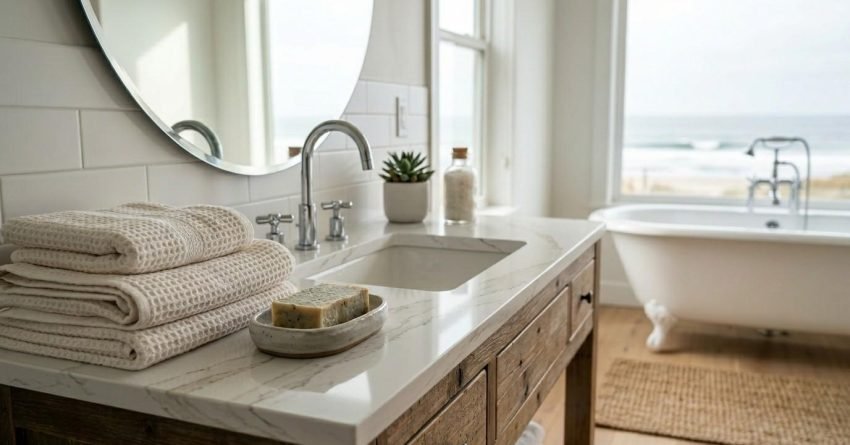
Texture is what gives a coastal bathroom its warmth. Smooth, reflective surfaces alone produce a clinical result. The introduction of natural materials timber vanities, stone benchtops, woven accessories, and matte-finish tiles creates the layered, organic quality that defines the style.
Timber is the most commonly used natural material in coastal bathrooms. It works well in vanity cabinetry, open shelving, and mirror frames. For wet areas, engineered timber or timber-look porcelain provides the visual effect with appropriate moisture resistance; solid timber in direct water contact will swell and degrade over time, regardless of how well it is sealed.
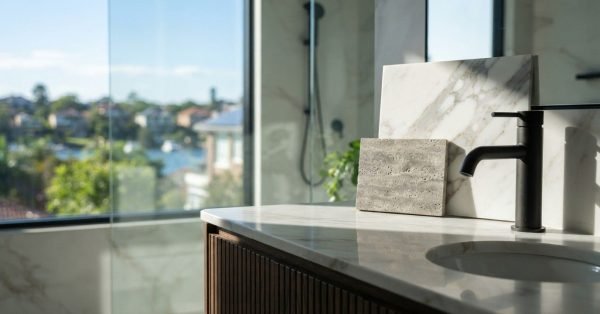
Stone, whether natural or engineered, adds weight and permanence to benchtops and feature walls. Honed or leathered finishes suit the coastal aesthetic better than polished surfaces, which read as too formal. Natural stone in wet areas requires sealing on installation and periodic re-sealing; engineered stone eliminates that maintenance requirement while delivering a comparable visual result.
Rattan and woven accessories work well in dry zones: open shelving, mirror frames, and freestanding storage. In high-humidity bathrooms without adequate ventilation, natural fibre accessories deteriorate quickly, so we typically recommend them as accent pieces rather than structural elements.
Planning the Layout of a Coastal Bathroom
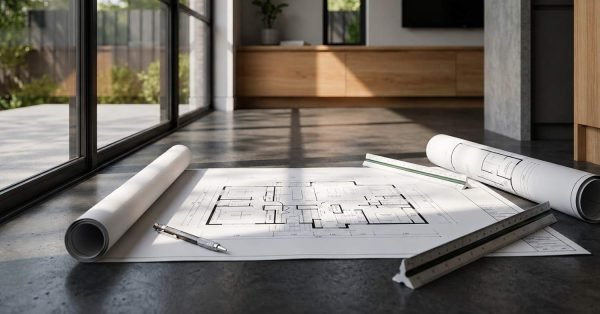
Layout decisions made at the planning stage have a greater impact on the finished result than any single material choice. The placement of the wet zone, the position of the vanity, and the relationship between natural light sources and reflective surfaces all shape how the space reads and how well it functions.
In a coastal bathroom, the wet zone is best positioned away from the primary entry point. This keeps the visual experience of entering the space clean and open, with the vanity and mirror as the first focal point rather than the shower screen. Where the floor plan allows, positioning the shower against an external wall also simplifies waterproofing and drainage.
Traffic flow matters more in bathrooms than most homeowners expect. A minimum 900mm clearance in front of the vanity and toilet is the practical standard; 1,000mm reads as genuinely comfortable. In ensuite configurations, we often see this clearance compromised to gain floor area; it is almost always worth the trade-off in reverse.
For family bathrooms, separating the toilet from the wet area and vanity zone adds significant functional value. Coastal design supports this separation naturally: a partial wall or a change in tile format can define zones without introducing visual clutter.
The relationship between windows, skylights, and mirrors is worth planning deliberately. A mirror positioned to reflect a window doubles the perceived natural light in the space one of the most cost-effective tools available in a coastal bathroom renovation.
Coastal Bathroom Tiles: Choices That Work
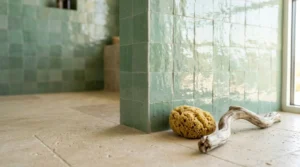
Tiles are the single most impactful design decision in a coastal bathroom. They cover the largest surface area, carry the most visual weight, and set the tone for every other element in the space.
The most effective coastal tile selections share a few common qualities: natural-looking finishes, organic colour variation, and formats that reinforce the sense of openness. Large-format tiles in soft stone tones, textured surfaces that reference sand or sea glass, and handmade-look ceramics with subtle glaze variation all perform well in this context.
What to avoid is equally important. High-gloss white tiles in small formats read as clinical rather than coastal. Heavily patterned tiles in bold colours compete with the restrained palette the style depends on. The best coastal tile selections feel considered but not laboured.
Floor Tile Options for Coastal Bathrooms
For floors, textured porcelain in stone or sand tones is the most practical and visually appropriate choice. The texture provides slip resistance, a functional requirement in wet areas, while the natural colour variation reinforces the coastal palette.
Encaustic-look tiles and terrazzo-effect porcelain are popular alternatives that add pattern without overwhelming the space. Both work well in smaller format sizes on bathroom floors, where the grout lines contribute to the overall texture of the surface.
Avoid large-format polished tiles on floors. They are difficult to maintain in wet areas and produce a finish that reads as contemporary rather than coastal.
Wall Tile Patterns and Finishes
Wall tiles in coastal bathrooms typically follow one of two approaches: a clean, large-format field tile that recedes into the background, or a feature tile used selectively to create a focal point.
Subway tiles in a brick or stacked pattern remain a reliable choice for their simplicity and versatility. In a coastal context, they work best in soft white or off-white with a matte or satin finish. Handmade-look ceramics with irregular edges and subtle glaze variation add character without introducing pattern.
For feature walls, typically behind a freestanding bath or as a shower niche surround, zellige-style tiles, fluted ceramics, or stone-look slabs in warm tones all deliver strong visual impact while staying within the coastal palette.
Grout Colour and Finish for Coastal Tiles
Grout colour is one of the most overlooked decisions in a coastal bathroom, and one of the most consequential. A grout tone that matches the tile body makes the surface read as continuous and calms the effect most coastal palettes are aiming for. A contrasting grout draws attention to the grid pattern, which works against the sense of ease the style depends on.
For stone-look and sand-tone tiles, a mid-grey or warm beige grout in a sanded finish performs well. For white or off-white subway tiles, a white or light grey grout keeps the surface clean without the clinical sharpness of a bright white-on-white combination.
In wet areas, epoxy grout outperforms cement-based grout on durability and stain resistance. The upfront cost is higher, but the maintenance saving over a ten-year period is significant, particularly in a coastal climate where humidity accelerates the deterioration of standard grout.
Fixtures and Fittings for a Coastal Look
Fixtures and fittings are the hardware of a coastal bathroom. They are present in every view of the space, and their finish has a disproportionate effect on the overall aesthetic.
The finishes that work best in coastal bathrooms are brushed nickel, brushed brass, matte black, and gunmetal. These have a tactile, understated quality that complements natural materials without competing with them. Chrome, while practical, reads as too polished and contemporary for a coastal context unless used very selectively.
Profiles should be simple. Lever handles, round spouts, and clean geometric forms suit the style better than ornate or heavily detailed fittings. The goal is for fixtures to feel like a natural part of the space rather than a focal point.
Tapware and Shower Fittings
In the shower, a rail shower or overhead rain shower in a brushed finish is the most common choice for coastal bathrooms. Wall-mounted mixers with a simple lever handle keep the profile clean. Exposed shower systems where the pipework is visible as a design feature work well in larger showers where the fitting becomes part of the visual composition.
For basins, wall-hung mixers or deck-mounted tapware in brushed nickel or brushed brass complement timber vanities and stone benchtops effectively. Avoid overly ornate spout profiles, which introduce a formality that sits outside the coastal aesthetic.
Freestanding Baths in Coastal Bathrooms
A freestanding bath is one of the strongest single statements available in a coastal bathroom. Positioned against a feature tile wall or beneath a window, it anchors the space and gives the room a clear focal point that the rest of the design can build around.
Material choice matters here. Acrylic freestanding baths are lightweight, warm to the touch, and available in a wide range of profiles; they suit most coastal budgets and perform well over time. Stone resin baths have a denser, more substantial quality that reads as more premium; they retain heat longer and carry more visual weight, which works well in larger bathrooms where the bath needs to hold its own against generous tile surfaces.
Avoid claw-foot baths in a contemporary coastal context. The ornate profile introduces a period reference that sits outside the clean, restrained aesthetic the style depends on. A simple oval or rectangular freestanding form in a matte white or off-white finish is the most versatile choice.
Shower Screens for a Coastal Bathroom
The shower screen is a functional element that also has a significant impact on how open and light-filled the space reads. Frameless glass screens are the strongest choice for a coastal bathroom; they allow the tile work to remain the visual focus and keep the wet zone from feeling enclosed.
Semi-frameless screens with minimal hardware in a brushed finish are a practical alternative where budget is a consideration. Fully framed screens in chrome or bright finishes work against the coastal palette and are best avoided.
Vanities and Storage in Coastal Bathrooms
The vanity is typically the largest single piece of furniture in a bathroom and the element that most directly communicates the design direction. In coastal bathrooms, timber-fronted cabinetry in natural, whitewashed, or painted finishes is the most consistent choice.
Freestanding vanities with open lower shelving reinforce the relaxed, airy quality of the style. Wall-hung vanities work well in smaller bathrooms where floor space is limited, and they are easier to keep clean. Avoid high-gloss cabinetry finishes, which conflict with the matte and natural-texture palette that coastal design depends on.
Storage in coastal bathrooms should feel considered but not clinical. Open shelving for towels and accessories, recessed niches in the shower, and simple mirror cabinets all contribute to a functional, uncluttered space. For mirror cabinets, a recessed installation set into the wall rather than surface-mounted keeps the profile clean and avoids the visual bulk that a projecting cabinet introduces. Recessed niches in the shower work best at a depth of 100–120mm, which accommodates standard product sizes without requiring oversized tiles to be cut.
Waterproofing in a Coastal Bathroom
Waterproofing is the most important structural decision in any bathroom renovation, and it is the one most homeowners never see. A correctly waterproofed bathroom protects the building structure, prevents mould growth behind walls and under floors, and is a legal requirement under Australian Standard AS 3740 for all wet areas.
In a coastal bathroom, the stakes are higher than in a standard renovation. Coastal climates and Sydney’s humidity in particular accelerate the consequences of waterproofing failures. Water that penetrates a membrane in a standard inland bathroom may take years to cause visible damage; in a high-humidity environment, the timeline is significantly shorter.
The wet area membrane must be applied to the floor and walls of the shower recess to a minimum height of 1,800mm, and to the full floor area of any bathroom where the floor is tiled. Junctions between floor and wall, and around any penetrations (waste outlets, pipe entries), are the most common failure points and require particular care during application.
This is not a DIY task. Waterproofing in a bathroom renovation must be carried out by a licensed waterproofer and inspected before tiling begins. In NSW, the work must comply with AS 3740 and is subject to inspection under the building approval process for renovations that require a Development Application or Complying Development Certificate.
Getting waterproofing right is invisible in the finished result, but getting it wrong is one of the most expensive renovation failures to rectify.
Lighting Ideas for Coastal Bathrooms
Lighting in a coastal bathroom serves two purposes: it supports the practical functions of the space, and it reinforces the warm, relaxed atmosphere the design is trying to create.
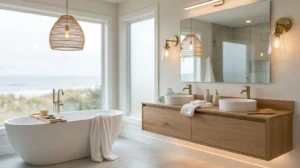
Natural light is the most valuable asset in any coastal bathroom. Where possible, renovation planning should prioritise maximising it through skylights, larger windows, or the strategic use of mirrors to reflect and distribute light through the space. A bathroom that reads as bright and open in natural light will always feel more coastal than one that relies on artificial sources.
In Sydney terrace homes and older semi-detached properties, skylights are often the most practical way to introduce natural light into a bathroom that has no external wall. A fixed skylight over the shower or bath zone transforms the quality of light in the space and is one of the highest-return investments available in a bathroom renovation.
Mirrors positioned to face a window or skylight double the perceived light in the space. A full-width mirror above the vanity is the most common application; a frameless or simply framed mirror in a natural timber or brushed metal finish suits the coastal palette best.
For artificial lighting, warm white globes (2700K–3000K) suit the coastal palette better than cool white, which makes natural materials look flat and grey. Recessed downlights provide even general illumination. Pendant lights or wall sconces on either side of a mirror add warmth and a sense of considered design.
All bathroom lighting must comply with Australian Standard AS/NZS 3000 and use fittings with the appropriate IP rating for their zone. Zone 1 directly above the bath or shower requires IP65-rated fittings as a minimum. Zone 2, within 600mm horizontally of the bath or shower, requires IP44 as a minimum. This is a non-negotiable compliance requirement, not a design preference.
Coastal Bathroom Design on a Budget
A coastal bathroom does not require a premium budget. The aesthetic is built on restraint, which means that thoughtful material selection and a clear design brief can deliver strong results at a range of price points.
The most cost-effective coastal bathrooms are those where the design decisions are made before the renovation begins. Changing tile selections mid-project, upgrading fixtures after installation has started, or adding features that were not in the original scope are the primary drivers of budget overruns. A clear brief protects the budget as much as it protects the design.
In Sydney, a full bathroom renovation including waterproofing, tiling, fixtures, vanity, and labour typically ranges from $15,000 to $35,000 depending on scope, materials, and whether any structural changes are involved. A compact ensuite at the lower end of that range is achievable with careful specification; a full family bathroom with premium finishes sits toward the upper end.
Where to Spend and Where to Save
Spend on tiles and tapware. These are the elements with the highest visual impact and the longest service life. A quality floor tile and a well-chosen tapware finish will define the space for decades. Cutting costs here typically produces a result that looks dated within a few years.
Save on accessories and soft furnishings. Towel rails, toilet roll holders, soap dispensers, and mirrors can all be sourced at mid-range price points without compromising the overall aesthetic. These are also the easiest elements to upgrade later without a full renovation.
For cabinetry, a painted MDF vanity in a quality finish delivers a strong coastal result at a fraction of the cost of solid timber. The visual difference is minimal when the finish and hardware are well chosen. Spend the saving on the tapware finish instead; it has a greater impact on the overall aesthetic than the vanity material.
Coastal Bathroom Design for Sydney Homes
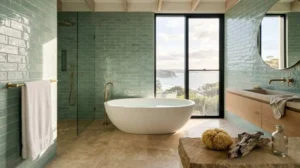
Sydney’s built environment is particularly well suited to coastal bathroom design. The city’s climate, its proximity to the water, and the architectural character of its housing stock from Federation bungalows in the inner suburbs to contemporary homes on the Northern Beaches all create conditions where the style performs well.
In older Sydney homes, coastal design offers a way to modernise a bathroom without erasing its character. Soft palettes and natural materials complement the warm tones of period architecture. In newer builds, the style’s emphasis on clean lines and quality finishes aligns naturally with contemporary construction.
The practical considerations for Sydney renovations are also relevant to design decisions. Humidity, ventilation, and the durability of materials in a coastal climate all influence which products perform best over time. Specifying materials that are appropriate for the local environment is as important as choosing ones that look right.
Ventilation and Humidity Management
Ventilation is a compliance requirement and a design consideration in equal measure. Under Australian Standard AS 1668.2, bathrooms without openable windows must be mechanically ventilated. In practice, we specify mechanical ventilation in almost every bathroom renovation we undertake, even those with windows, because Sydney’s humidity levels make passive ventilation insufficient for managing condensation in a sealed wet area.
An exhaust fan rated for the volume of the bathroom, positioned to draw air from the wet zone toward an external vent, is the minimum effective specification. In larger bathrooms or those with a freestanding bath, a second exhaust point improves performance significantly.
Condensation on walls and ceilings is the primary driver of mould growth in Sydney bathrooms. Adequate ventilation, combined with correct waterproofing and the use of moisture-resistant materials in the wet zone, is the most effective prevention strategy. Natural materials, particularly timber and rattan, should be kept out of direct condensation zones where ventilation is limited.
Coastal Bathrooms and Resale Value in Sydney
Coastal bathroom design consistently performs well in Sydney’s property market. Buyers in coastal and near-coastal suburbs respond strongly to the aesthetic, which aligns with the lifestyle associations that drive purchasing decisions in those markets. In inner-city and western suburbs, the style’s emphasis on quality finishes and timeless materials also translates well, even without the direct coastal reference.
The elements that deliver the strongest resale return are those with the longest visual life: large-format stone-look tiles, brushed metal tapware, and a frameless shower screen. These are the finishes that photograph well, hold their appeal across buyer demographics, and signal quality without requiring explanation.
A well-executed coastal bathroom renovation in Sydney typically returns more than its cost in added property value, particularly in the $15,000–$25,000 renovation tier, where the quality-to-cost ratio is strongest.
Renovation Compliance for Sydney Homeowners
Most bathroom renovations in Sydney require some form of approval or notification, and understanding the threshold before work begins avoids delays and cost overruns. Cosmetic work replacing fixtures, retiling, and repainting generally falls within exempt development and requires no approval. Structural changes, relocating plumbing, or altering the building envelope typically require a Complying Development Certificate or Development Application through your local council.
All plumbing and drainage work must be carried out by a licensed plumber. All electrical work must be carried out by a licensed electrician. Waterproofing must be carried out by a licensed waterproofer. In NSW, owner-builders are permitted to carry out certain work on their own homes, but bathroom renovations involving plumbing, electrical, and waterproofing fall outside the scope of what an unlicensed owner-builder can legally self-perform.
We manage the compliance process on every project we undertake, from confirming approval requirements at the planning stage to coordinating licensed trades and arranging inspections at the correct milestones.
Conclusion
Coastal bathroom design is one of the most enduring and adaptable styles available to Sydney homeowners, built on natural materials, restrained palettes, and a commitment to quality finishes that hold their value over time.
The decisions that matter most are made early: tile selection, tapware finish, and vanity style set the tone for everything that follows and are the hardest to change once the renovation is underway. Waterproofing, ventilation, and compliance planning are equally important; they are the foundation the design sits on.
At Sydney Home Renovation, we help homeowners plan and deliver coastal bathrooms that are designed with intention and built to last. Contact us to discuss your project and get a clear, honest picture of what your renovation will involve.
Frequently Asked Questions
What colours work best in a coastal bathroom?
Soft neutrals form the foundation of most coastal bathroom palettes: white, off-white, warm sand, and stone grey. Accents of soft blue, sage green, or warm terracotta can be introduced through tiles or accessories without overwhelming the space.
What tiles are best for a coastal bathroom?
Large-format porcelain in stone or sand tones, textured surfaces with natural colour variation, and handmade-look ceramics with matte or satin finishes all suit the coastal aesthetic. Avoid high-gloss tiles in small formats, which read as clinical rather than relaxed.
What tapware finish suits a coastal bathroom?
Brushed nickel, brushed brass, and matte black are the most effective tapware finishes for coastal bathrooms. These have an understated, tactile quality that complements natural materials. Chrome tends to read as more contemporary than coastal.
Can I achieve a coastal bathroom on a modest budget?
Yes. The coastal aesthetic is built on restraint, which means it is achievable at a range of price points. Prioritise spend on tiles and tapware, the highest-impact elements, and save on accessories and soft furnishings, which can be upgraded later without a full renovation.
How do I make a small bathroom feel coastal?
Large-format tiles reduce the number of grout lines and make a small space feel larger. A wall-hung vanity frees up floor space and reinforces the open, airy quality of the style. Mirrors used strategically to reflect natural light are one of the most effective tools in a compact coastal bathroom.
Is coastal bathroom design suitable for older Sydney homes?
Yes. Coastal design works well in period homes because its soft palettes and natural materials complement the warm tones of Federation and Californian bungalow architecture. The key is to choose finishes that feel considered rather than incongruous with the home’s existing character.
How long does a coastal bathroom renovation take in Sydney?
A standard bathroom renovation in Sydney typically takes three to five weeks from demolition to completion, depending on scope, trade availability, and whether structural changes are involved. Confirmed material selections before work begins are the most effective way to keep the timeline on track.
Does a coastal bathroom renovation require waterproofing?
Yes, all wet areas in Australian bathrooms must be waterproofed to AS 3740. This is a legal requirement, not optional. Waterproofing must be carried out by a licensed waterproofer and inspected before tiling begins.
How do I manage humidity and condensation in a Sydney bathroom?
Mechanical ventilation is the most effective solution. An exhaust fan rated for the bathroom’s volume, positioned to draw air from the wet zone, manages condensation and protects natural materials from moisture damage. We specify mechanical ventilation on every project we undertake, regardless of whether the bathroom has a window.