Commercial renovation projects transform commercial, mixed-use, and investment properties into functional, compliant, and value-optimised spaces. Unlike residential renovations, they involve stricter regulatory requirements, more complex trade coordination, and higher financial stakes, making informed planning the difference between a project that delivers returns and one that drains resources.
Understanding the full scope of a commercial renovation is essential for property owners, investors, and business operators who cannot afford delays, cost overruns, or compliance failures.
We cover what commercial renovation projects involve, the types of projects undertaken in Sydney, how to plan and budget accurately, which trades are required, how compliance works, why bathroom quality matters in commercial spaces, how timelines are managed, and how to maximise long-term ROI from every renovation dollar spent.
What Is a Commercial Renovation Project?
A commercial renovation project is a structured construction and refurbishment process applied to a non-residential or mixed-use property, including offices, retail spaces, hospitality venues, healthcare facilities, and investment properties with the goal of improving functionality, compliance, aesthetics, or asset value.
Commercial renovations differ from residential projects in three fundamental ways. First, they are subject to more stringent regulatory frameworks, including the National Construction Code (NCC), Work Health and Safety (WHS) legislation, and local council development controls. Second, they typically involve a broader range of licensed trades working simultaneously or in sequence, requiring active project coordination to prevent delays and defect disputes.
Third, the financial consequences of poor planning are amplified. A commercial renovation that runs over time or over budget directly affects business operations, tenant relationships, and investment returns.
Commercial vs. Residential Renovation: Key Differences
The distinction between commercial and residential renovation is not simply one of scale. Commercial projects carry different legal obligations, different insurance requirements, and different performance standards. A commercial bathroom, for example, must meet accessibility standards under the Disability Discrimination Act (DDA) and the NCC, whereas a residential bathroom does not carry the same mandatory compliance burden.
Commercial fit-outs in leased premises must also align with the terms of the lease and any landlord consent requirements, adding a contractual layer that residential renovations do not face. From a cost perspective, commercial renovations typically carry higher per-square-metre rates than equivalent residential work, driven by compliance costs, commercial-grade materials, and the need for licensed contractors across all regulated trades.
Who Undertakes Commercial Renovation Projects?
Commercial renovation clients in Sydney span a wide range of profiles. Property investors and landlords renovate to increase rental yield, attract higher-quality tenants, or meet compliance obligations before lease renewal. Business owners renovate to improve customer experience, staff productivity, and brand presentation.
Developers undertake commercial renovations as part of mixed-use projects where residential and commercial spaces coexist. Each client type brings different priorities, but all share the need for accurate budgeting, reliable trade coordination, and a contractor who understands the regulatory environment.
Types of Commercial Renovation Projects
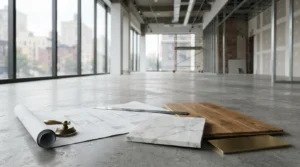
Commercial renovation is not a single category. It encompasses a broad range of project types, each with distinct scope requirements, compliance obligations, and cost profiles. Understanding which type of project you are undertaking is the first step toward accurate planning and realistic budgeting.
Office and Retail Fit-Outs
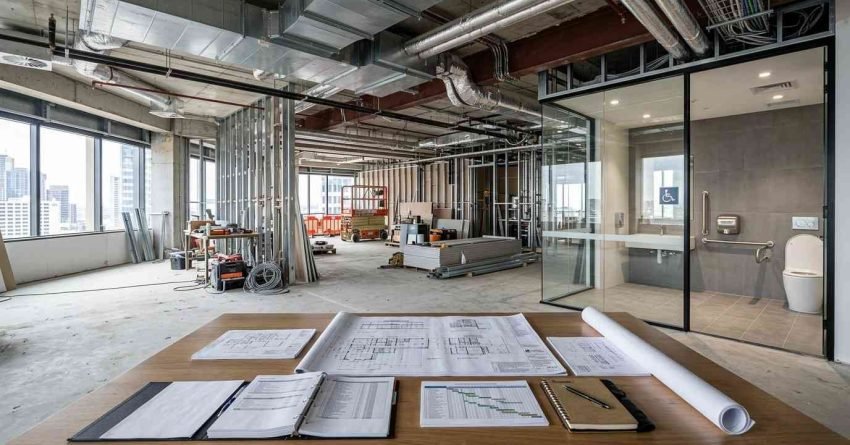
Office fit-outs involve reconfiguring interior spaces to support modern working environments, open-plan layouts, collaborative zones, private meeting rooms, and updated amenities including kitchens and bathrooms. Retail fit-outs focus on customer-facing environments where brand presentation, traffic flow, and product display are the primary design drivers.
Both project types require careful attention to fire safety, accessibility, electrical capacity, and mechanical ventilation, all of which are governed by the NCC and local council requirements. In Sydney’s competitive commercial property market, the quality of a fit-out directly influences a property’s ability to attract and retain tenants.
Hospitality and Healthcare Renovations
Hospitality renovations covering restaurants, cafes, hotels, and accommodation facilities carry some of the most demanding compliance requirements of any commercial project type. Food safety regulations, liquor licensing conditions, fire egress requirements, and accessibility standards all intersect in a hospitality renovation, requiring a contractor with specific experience in this sector.
Healthcare renovations add infection control requirements, specialised mechanical systems, and stringent material specifications to the compliance mix. Both sectors demand a level of project management discipline that goes well beyond standard commercial fit-out work.
Mixed-Use and Investment Property Renovations
Mixed-use properties where residential apartments sit above commercial tenancies present a unique renovation challenge. Works affecting shared building systems, fire compartmentation, or structural elements require careful coordination between the commercial and residential components of the project.
For property investors, mixed-use property renovations offer the opportunity to upgrade both income streams simultaneously, but they require a contractor who understands the regulatory boundary between commercial and residential construction.

How to Plan a Commercial Renovation Project
Effective planning is the single most important factor in commercial renovation success. Projects that begin without a clearly defined scope, realistic budget, and coordinated trade programme consistently experience delays, cost overruns, and quality failures.
The planning phase is not a preliminary step. It is a core component of the project itself.
Defining Scope and Objectives
Scope definition begins with a clear statement of what the renovation is intended to achieve. Is the goal to meet a compliance obligation, improve tenant amenity, increase rental yield, or reposition the property in the market? Each objective drives different decisions about which elements to renovate, which materials to specify, and how much to invest.
A renovation undertaken to meet a fire safety compliance notice has a different scope profile than one designed to attract premium tenants, and conflating the two leads to either under-investment or unnecessary expenditure. A well-defined scope document identifies every area of the property to be renovated, the specific works to be undertaken in each area, the performance standards to be achieved, and the budget allocated to each component.
Engaging Architects, Designers, and Builders Early
One of the most common and costly mistakes in commercial renovation planning is engaging design professionals and builders sequentially rather than simultaneously. When an architect completes a design without input from the builder, the resulting documentation often contains specifications that are either impractical to construct or significantly more expensive than the budget allows.
Early contractor involvement, sometimes called early contractor engagement (ECE), allows buildability, cost, and compliance to be assessed during the design phase, before changes become expensive. In Sydney, early engagement with a principal contractor who has established relationships with licensed trades across plumbing, electrical, tiling, carpentry, and waterproofing also reduces the risk of trade availability gaps that can stall a project mid-construction.
Creating a Realistic Project Brief
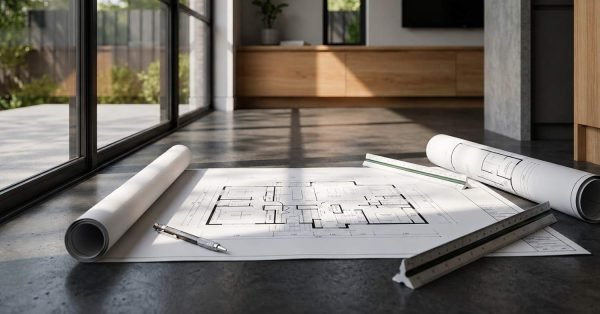
A project brief is the governing document for a commercial renovation. It includes the project objectives, scope of works, budget parameters, timeline requirements, compliance obligations, and any specific constraints such as operating hours restrictions, tenant occupation requirements, or heritage considerations.
The brief is shared with all contractors and consultants at the outset and updated as the project evolves. For projects that include a bathroom component, a detailed bathroom renovation planning checklist covers every pre-construction step from scope confirmation and product selection through to trade scheduling and compliance sign-off.
Commercial Renovation Pre-Start Checklist
Before construction begins, we confirm the following are in place:
- Scope of works document signed off by all stakeholders
- DA or CDC approval obtained (or confirmed exempt)
- Principal contractor appointed with current NSW builder’s licence verified
- All subcontractor licences and insurance certificates collected
- WHS management plan prepared and distributed
- Material procurement confirmed with lead times locked in
- Tenant or business continuity plan agreed and communicated
- Contingency budget (minimum 10%) allocated and ring-fenced
This checklist is the difference between a project that starts clean and one that hits avoidable delays in the first week.
Commercial Renovation Costs and Budgeting
Cost management is the most challenging aspect of commercial renovation for most clients. The complexity of commercial projects multiple trades, compliance requirements, material lead times, and site-specific constraints creates a cost environment where inaccurate budgeting has serious consequences.
Understanding what drives commercial renovation costs and how to build a budget that accounts for both known and unknown expenses is essential before any work begins.
What Drives Commercial Renovation Costs?
Commercial renovation costs are driven by four primary variables: scope complexity, material specification, trade labour rates, and compliance requirements. Scope complexity refers to the number of systems being modified. A renovation that touches electrical, plumbing, mechanical, and structural elements simultaneously is exponentially more complex than one confined to cosmetic finishes.
Material specification determines both the direct cost of materials and the installation complexity. Commercial-grade tiles, for example, require different substrate preparation and adhesive systems than residential-grade products. According to the Australian Bureau of Statistics, construction labour costs in New South Wales have increased by more than 15% over the past three years, driven by sustained demand across both residential and commercial sectors.
Commercial Renovation Cost Benchmarks by Project Type
The table below reflects typical Sydney market rates for commercial renovation work. These are indicative ranges; actual costs depend on scope, specification, site conditions, and compliance requirements.
| Project Type | Basic Scope (per sqm) | Mid-Range (per sqm) | Full Refurbishment (per sqm) |
| Office Fit-Out | $800–$1,200 | $1,200–$2,000 | $2,000–$3,500+ |
| Retail Fit-Out | $900–$1,400 | $1,400–$2,200 | $2,200–$4,000+ |
| Hospitality Renovation | $1,200–$2,000 | $2,000–$3,500 | $3,500–$6,000+ |
| Healthcare Renovation | $1,500–$2,500 | $2,500–$4,500 | $4,500–$8,000+ |
| Mixed-Use (commercial component) | $1,000–$1,800 | $1,800–$3,000 | $3,000–$5,000+ |
These figures exclude DA/CDC fees, building surveyor costs, and temporary works. Always obtain fixed-price or schedule-of-rates quotes from licensed contractors for each trade package before committing to a budget.
Labour, Materials, and Hidden Expenses
A realistic commercial renovation budget accounts for three cost categories: direct costs (labour and materials), indirect costs (project management, design fees, compliance costs), and contingency, typically 10–15% of the total project value for commercial work. The contingency allowance is not optional. It exists to absorb the cost of unforeseen conditions discovered during demolition or construction, such as asbestos, deteriorated waterproofing, or non-compliant existing electrical installations.
Hidden expenses that consistently catch commercial renovation clients off guard include council application fees and assessment costs, building surveyor fees, temporary works (hoarding, scaffolding, traffic management), waste disposal and demolition costs, and the cost of operating the business or managing tenants during the construction period. Each of these items must be explicitly included in the project budget before works commence.
How to Build a Realistic Renovation Budget
A reliable commercial renovation budget is built from the bottom up, starting with a detailed scope of works and obtaining fixed-price or schedule-of-rates quotes from licensed contractors for each trade package. Lump-sum quotes that cover the entire project without a detailed breakdown make it impossible to identify where cost overruns are occurring or to make informed decisions about scope adjustments.
For a detailed breakdown of one of the most cost-intensive components in any commercial renovation, our bathroom renovation costs in Sydney guide explains typical price ranges, labour allowances, material tiers, and the hidden expenses that most budgets fail to account for.
Trades, Contractors, and Project Coordination
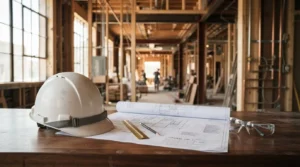
A commercial renovation involves a coordinated programme of licensed trades working in a defined sequence. The quality of project coordination how trades are scheduled, how their work interfaces are managed, and how defects are identified and resolved determines whether a project is delivered on time, on budget, and to the required standard.
Which Trades Are Involved in a Commercial Renovation?
The trade mix for a commercial renovation depends on the scope of works, but most projects involve some combination of the following: demolition and asbestos removal, structural carpentry and framing, plumbing and drainage, electrical and data, mechanical (HVAC), waterproofing, tiling, plastering, painting, joinery and cabinetry, glazing, and fire protection. Each trade must be licensed for the specific work they perform under NSW Fair Trading requirements.
The principal contractor is responsible for verifying that all subcontractors hold current licences and appropriate insurance. Working with a full-service renovation contractor who manages trade scheduling, compliance, and quality control under one roof removes the coordination burden from the client and significantly reduces the risk of delays, cost overruns, and defect disputes.
Asbestos and Hazardous Materials
Asbestos is present in a significant proportion of Sydney’s commercial building stock constructed before 1990. Before any demolition or structural work begins, a licensed asbestos assessor must inspect the site and produce a clearance report. Where asbestos-containing materials are identified, removal must be carried out by a licensed asbestos removalist under a safe work method statement approved by SafeWork NSW.
Failing to identify and manage asbestos before demolition is not only a serious WHS breach; it can result in stop-work orders, significant remediation costs, and personal liability for the principal contractor and client. We treat hazardous materials identification as a non-negotiable pre-construction step on every commercial project.
The Role of a Principal Contractor
In NSW, a principal contractor is the licensed builder who takes overall responsibility for the construction work on a commercial renovation project. The principal contractor is responsible for site safety under the Work Health and Safety Act 2011, for coordinating all subcontractor trades, for managing the construction programme, and for ensuring that all work meets the requirements of the approved plans and specifications.
For commercial projects above certain value thresholds, the appointment of a principal contractor is a legal requirement, not an option. The principal contractor also serves as the primary point of contact for the building certifier or private certifier who inspects the work at mandatory hold points, including waterproofing inspections, framing inspections, and final occupation certificate inspections.
Commercial Renovation Contract Essentials
A well-drafted commercial renovation contract protects both the client and the contractor. The contract must specify the full scope of works, the fixed price or schedule of rates, the construction programme with milestone dates, the payment schedule, the defects liability period (typically 12 months for commercial work), and the process for managing variations.
Fixed-price contracts provide cost certainty but require a complete and detailed scope before signing. Cost-plus contracts offer flexibility for complex or uncertain scopes but require rigorous cost reporting to prevent budget drift. We always recommend engaging a construction lawyer to review any commercial renovation contract before execution; the cost of legal review is negligible compared to the cost of a disputed contract.
How to Evaluate and Select a Renovation Contractor
Selecting the right contractor for a commercial renovation has a greater impact on project outcomes than almost any other factor. The evaluation criteria include: a current NSW builder’s licence (verifiable through the NSW Fair Trading licence check), demonstrated experience with projects of similar type and scale, evidence of current public liability and workers’ compensation insurance, a clear and detailed contract that specifies scope, price, programme, and payment terms, and references from recent commercial renovation clients.
Request a minimum of three references from projects of comparable size and type, and follow up with those clients directly. A contractor who cannot provide references from recent commercial work is a significant red flag.
Compliance, Permits, and Council Approvals in Sydney
Commercial renovation projects in Sydney operate within a layered regulatory framework that includes local council development controls, state government building legislation, and national construction standards. Navigating this framework correctly is not optional: non-compliant work can result in stop-work orders, demolition notices, fines, and significant rectification costs.
Development Applications vs. Complying Development Certificates
Most commercial renovation works in Sydney require either a Development Application (DA) or a Complying Development Certificate (CDC) before construction can begin. A DA is assessed by the local council and is required for works that do not meet the criteria for complying development, typically more complex or sensitive projects, or those in heritage conservation areas. A CDC is a faster approval pathway administered by a private certifier and is available for works that comply with the State Environmental Planning Policy (Exempt and Complying Development Codes) 2008.
The choice between a DA and a CDC has significant implications for project timeline. DA assessment periods in Sydney range from 40 days for straightforward applications to six months or more for complex or contested proposals. CDC approvals, where available, are obtained in as little as 10 business days.
Properties in heritage conservation areas face additional constraints. Works that affect the external appearance of a heritage-listed building or a building within a conservation area typically require a DA regardless of scope, and the assessment process involves heritage impact assessment by a qualified heritage consultant.
Work Health and Safety Requirements
Commercial renovation projects in NSW are subject to the Work Health and Safety Act 2011 and the Work Health and Safety Regulation 2017. For projects above $250,000 in value, a Safe Work Method Statement (SWMS) is required for all high-risk construction work, and a site-specific WHS management plan must be prepared before works commence.
The principal contractor is the primary duty holder for site safety and is responsible for ensuring that all workers and subcontractors comply with the WHS management plan. All workers on site must complete a site-specific induction before commencing work. Notifiable incidents including serious injuries, dangerous incidents, and deaths must be reported to SafeWork NSW immediately, and the site must not be disturbed until SafeWork NSW authorises resumption of work.
Building Code of Australia Obligations
The National Construction Code (NCC), which incorporates the Building Code of Australia (BCA), sets the minimum performance requirements for all commercial construction work in Australia. For commercial renovations, the most commonly triggered NCC requirements relate to fire safety (egress, fire-rated construction, sprinkler systems), accessibility (DDA compliance, accessible sanitary facilities), energy efficiency (NCC Section J), and structural adequacy.
NCC Section J sets minimum energy efficiency standards for commercial buildings, covering insulation, glazing performance, lighting power density, and HVAC efficiency. Any renovation that changes the use of a space, increases the floor area, or modifies fire-rated elements triggers a full NCC compliance assessment. A building certifier or private certifier must be engaged to confirm compliance at each mandatory inspection hold point before work proceeds.
Bathroom Renovations in Commercial Projects
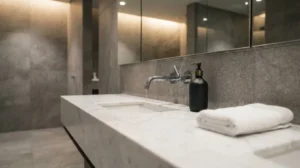
Bathrooms are among the most technically complex and compliance-sensitive components of any commercial renovation. They involve the intersection of plumbing, waterproofing, tiling, electrical, and accessibility requirements, and their performance directly affects occupant health, safety, and satisfaction.
In commercial environments, where bathrooms serve multiple users daily, the consequences of poor workmanship or non-compliant installation are amplified significantly.
Why Bathroom Quality Matters in Commercial Spaces
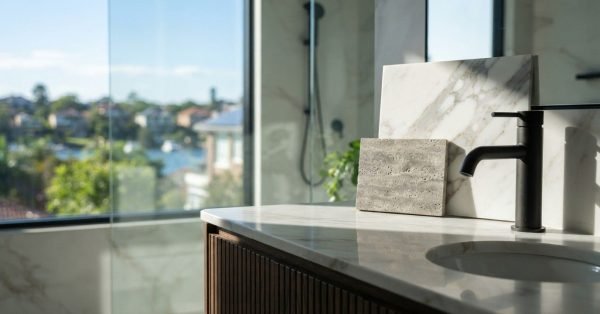
In commercial properties, bathroom quality is a direct signal of overall building standard. For office tenants, bathroom amenity is consistently cited as a key factor in lease renewal decisions. For hospitality venues, bathroom presentation is a significant driver of customer reviews and repeat business. For healthcare facilities, bathroom hygiene and accessibility are regulatory requirements, not optional upgrades.
Research by CBRE consistently identifies amenity quality, including bathroom facilities, as one of the top factors influencing commercial tenant satisfaction and lease renewal rates in Australian office markets. This finding reinforces the investment case for specifying commercial bathrooms to a standard that exceeds minimum compliance requirements.
Commercial Bathroom Specifications and Compliance
Commercial bathrooms must meet a range of mandatory standards that do not apply to residential bathrooms. Accessibility requirements under the NCC and the DDA mandate that a proportion of sanitary facilities in commercial buildings be accessible to people with disabilities, including minimum clearance dimensions, grab rail specifications, and accessible fixture heights. Waterproofing must comply with AS 3740-2021, which specifies membrane types, application methods, and inspection requirements for wet areas.
Ventilation must meet NCC requirements for air change rates and exhaust capacity. Material specifications for commercial bathrooms must also account for the higher wear rates associated with multi-user environments. Commercial-grade tiles, fixtures, and fittings are specified to withstand significantly higher usage cycles than residential products.
Cost Considerations for Commercial Bathroom Renovations
Commercial bathroom renovation costs in Sydney vary significantly based on the number of fixtures, the level of accessibility compliance required, the material specification, and the complexity of the existing plumbing and drainage configuration. A basic commercial bathroom renovation replacing fixtures, retiling, and updating lighting typically starts from $15,000 to $25,000 per bathroom for a standard two-fixture configuration.
Fully accessible bathrooms with compliant layout, grab rails, and accessible fixtures add a further $5,000 to $15,000 per bathroom depending on the extent of structural modification required. The cost difference between residential and commercial-grade specifications is a common source of budget underestimation and one we address directly in every commercial bathroom scope we prepare.

Commercial Renovation Timelines and Project Management
Timeline management is one of the most underestimated challenges in commercial renovation. Projects that begin without a realistic, trade-sequenced programme consistently experience delays that compound: a late waterproofing inspection delays tiling, which delays joinery installation, which delays the final fit-out, which delays occupation.
Understanding how commercial renovation timelines are structured, and what causes them to fail, is essential for any client who needs to manage business continuity or tenant expectations during a renovation.
Typical Timelines by Project Type
Commercial renovation timelines vary significantly by project type and scope. A basic office fit-out covering 200–300 square metres typically takes 6–10 weeks from commencement of construction, assuming all approvals are in place and materials are on-site. A full hospitality renovation including kitchen, bar, and bathroom works typically takes 12–20 weeks depending on the complexity of the mechanical and plumbing systems.
A mixed-use property renovation affecting both commercial and residential components can extend to 6–12 months for larger buildings. Including the DA or CDC approval period, design development, and contractor procurement, the total project duration from initial brief to practical completion is typically 6–18 months for most commercial renovation projects in Sydney.
Managing Trades and Minimising Downtime
Trade sequencing is the discipline of scheduling each trade to commence only when the preceding trade’s work is complete and inspected. In commercial renovation, the critical path typically runs: demolition, structural works, rough-in plumbing and electrical, waterproofing, tiling, joinery and cabinetry, fixtures and fittings, painting, final fit-out and commissioning. Any disruption to this sequence caused by trade unavailability, material delays, or failed inspections creates a cascade of delays that affects every subsequent trade.
Minimising business downtime during a commercial renovation requires careful staging of works. Where possible, renovations are programmed to occur in sections, allowing parts of the building to remain operational while others are under construction. Out-of-hours work evenings and weekends is another strategy for minimising disruption, though it carries a labour cost premium of 25–50% above standard rates.
Managing Tenants and Business Continuity
Tenant management during a commercial renovation is a project management discipline in its own right. Tenants need advance notice of works that affect access, noise, dust, or shared areas, typically a minimum of 5 business days for minor works and 20 business days for works affecting common areas or the building.
A written tenant communication plan, agreed before construction commences, sets out the works programme, the areas affected, the hours of work, and the escalation process for complaints. We prepare this plan as a standard deliverable on every commercial renovation project we manage, because a tenant who feels informed is significantly less likely to raise a formal dispute or seek rent abatement.
What Causes Delays and How to Prevent Them
The most common causes of commercial renovation delays in Sydney are: late or incomplete design documentation, approval delays (particularly for DA applications), material procurement failures (long lead times for imported tiles, fixtures, or joinery), trade unavailability caused by competing project demands, and unforeseen site conditions discovered during demolition. Each of these causes is preventable with adequate planning but only if the planning phase is given sufficient time and resources.
Understanding how long a bathroom renovation takes is essential for scheduling within a broader commercial project, particularly when bathroom works sit on the critical path.
Maximising ROI from Commercial Renovation Projects
Every commercial renovation represents a capital investment that must be evaluated against its expected return. Whether the goal is increased rental yield, improved tenant retention, enhanced asset value, or reduced operating costs, the renovation decisions made during the planning phase determine whether the investment delivers the intended return.
Value-Adding Upgrades That Deliver Returns
Not all renovation expenditure delivers equal returns. The upgrades that consistently generate the highest return on investment in commercial properties are those that directly affect tenant attraction and retention: bathroom and amenity upgrades, energy efficiency improvements, lobby and reception presentation, and technology infrastructure (data cabling, power capacity, and building management systems).
End-of-trip facilities showers, lockers, and secure bicycle storage have become a significant tenant attraction driver in Sydney’s office market, particularly as active commuting rates increase. According to JLL’s Australian Office Market research, buildings that have undergone significant amenity upgrades command rental premiums of 10–20% above comparable unrefurbished stock in Sydney’s competitive office market.
Cosmetic upgrades that improve visual presentation without addressing functional or compliance deficiencies typically deliver lower returns than functional upgrades that resolve genuine tenant pain points.
Renovation ROI for Property Investors and Landlords
For property investors and landlords, the ROI calculation for a commercial renovation accounts for both the direct financial return (increased rent, reduced vacancy, improved sale price) and the indirect return (reduced maintenance costs, improved compliance position, extended asset life). A renovation that costs $200,000 but increases annual rent by $30,000 delivers a simple payback period of 6.7 years, a strong return in a market where commercial property yields are typically 5–7%.
The ROI calculation is also affected by the tax treatment of renovation expenditure. In Australia, capital works deductions under Division 43 of the Income Tax Assessment Act 1997 allow property investors to claim a 2.5% annual deduction on the cost of eligible capital works, meaning a $200,000 renovation generates $5,000 per year in tax deductions over 40 years. Investors seek advice from a qualified tax professional to ensure renovation expenditure is correctly classified and claimed.
Sustainability and Energy Efficiency as Value Drivers
The NCC 2022 introduced significantly strengthened energy efficiency requirements for commercial buildings, and the trajectory of regulatory change is clearly toward higher performance standards over time. Commercial renovations that incorporate energy efficiency upgrades, such as LED lighting, high-performance glazing, improved insulation, and efficient HVAC systems, not only meet current compliance requirements but position the property ahead of future regulatory changes.
Beyond compliance, energy efficiency upgrades reduce operating costs for tenants, a direct financial benefit that supports higher rents and stronger tenant retention. According to the Green Building Council of Australia, Green Star-rated commercial buildings achieve operating cost savings of 20–30% compared to conventional buildings, a figure that is increasingly influencing tenant decision-making in Sydney’s commercial property market.
Conclusion
Commercial renovation projects in Sydney encompass a broad and complex domain spanning project types, regulatory requirements, trade coordination, cost management, compliance obligations, and long-term value outcomes. The decisions made during planning and budgeting determine whether a renovation delivers its intended return or becomes a source of financial and operational risk.
Every section of this guide goes deeper into a component that matters: from bathroom renovation costs and compliance permits through to timeline management and ROI frameworks. That depth is what separates a renovation that performs from one that merely completes.
At Sydney Home Renovation, we deliver commercial renovation projects with transparent pricing, skilled trade coordination, and a commitment to quality that protects your investment. We are ready to help you plan and execute with confidence. Get in touch to discuss your project.
Frequently Asked Questions
What is a commercial renovation project?
A commercial renovation project is a structured refurbishment of a non-residential or mixed-use property, including offices, retail spaces, hospitality venues, and investment properties, to improve functionality, compliance, or asset value. It involves licensed trades, regulatory approvals, and active project management.
How much does a commercial renovation cost in Sydney?
Commercial renovation costs in Sydney vary widely based on scope, materials, and compliance requirements. Basic fit-outs typically start from $800 to $1,500 per square metre, while full refurbishments with compliance upgrades exceed $3,000 per square metre depending on project complexity and specification level.
Do I need council approval for a commercial renovation in Sydney?
Most commercial renovation works in Sydney require either a Development Application (DA) assessed by the local council or a Complying Development Certificate (CDC) issued by a private certifier. The approval pathway depends on the nature of the works, the zoning of the property, and whether the site is in a heritage conservation area.
How long does a commercial renovation take?
Commercial renovation timelines depend on project type and scope. A basic office fit-out typically takes 6–10 weeks of construction, while a full hospitality or mixed-use renovation takes 12–20 weeks or more. Including design, approvals, and procurement, total project duration is typically 6–18 months.
What trades are involved in a commercial renovation?
Commercial renovations typically involve demolition, structural carpentry, plumbing, electrical, mechanical (HVAC), waterproofing, tiling, plastering, painting, joinery, glazing, and fire protection trades. Each trade must hold a current NSW licence for the specific work they perform.
Why is bathroom quality important in a commercial renovation?
Bathroom quality in commercial properties directly affects tenant satisfaction, lease renewal rates, and regulatory compliance. Commercial bathrooms must meet NCC accessibility standards and AS 3740 waterproofing requirements, and their condition is consistently cited as a key factor in tenant decision-making across office, hospitality, and healthcare sectors.
How do I choose the right contractor for a commercial renovation in Sydney?
Choose a contractor with a current NSW builder’s licence, demonstrated experience with similar commercial projects, current public liability and workers’ compensation insurance, and a detailed contract that specifies scope, price, programme, and payment terms. Request references from recent commercial renovation clients and verify licence status through NSW Fair Trading before signing any agreement.