
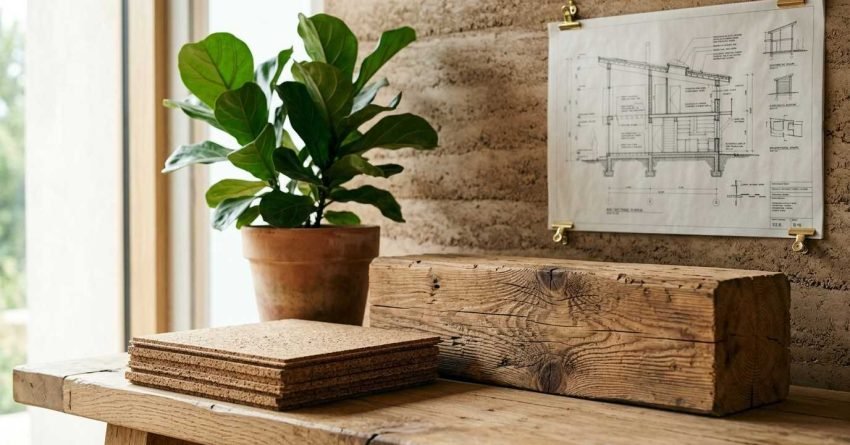
Sustainable renovation is the practice of upgrading an existing home to use less energy, less water, and lower-impact materials while improving comfort, health, and long-term value. For Sydney homeowners, first-time renovators, and property investors, it’s no longer a fringe idea; it’s the most cost-effective way to renovate.
Rising energy bills, stricter BASIX rules, and shifting buyer expectations mean every renovation choice now affects both monthly running costs and resale value across NSW. A home’s NatHERS energy star rating is increasingly visible to buyers, and properties that score well command stronger prices and shorter selling times.
This guide covers what sustainable renovation is, why it matters in Sydney, core design principles, energy, materials, water, bathrooms, kitchens, costs, rebates, and how to choose the right contractor.
What Is Sustainable Renovation?
Sustainable renovation is a whole-home upgrade approach that reduces a property’s environmental footprint across its full life cycle from construction to daily operation to eventual disposal. Unlike a standard renovation, which prioritises aesthetics and cost alone, a sustainable renovation evaluates every decision against three measurable outcomes: energy use, water use, and embodied carbon in materials.
It is not the same as building a new green home. Sustainable renovation works with the structure, orientation, and constraints you already have, then layers in performance upgrades that pay back over time.
The Three Pillars
Most sustainable renovations are built around three core dimensions:
- Energy: Insulation, glazing, electrification, efficient appliances, and renewable generation.
- Water: WELS-rated fixtures, rainwater capture, greywater systems, and drought-tolerant landscaping.
- Materials: Low-VOC, recycled, certified, locally sourced, and low-embodied-carbon products.
When these three pillars are addressed together rather than in isolation, the renovation compounds in value: lower bills, healthier indoor air, and a property that ages well financially.
Why Sustainable Renovation Matters in Sydney
Sydney’s climate, energy market, and property dynamics make sustainable renovation unusually high-value compared to other Australian capitals. Summer heat is intensifying, electricity prices have climbed steeply, and buyers increasingly screen for energy ratings before making an offer.
For owner-occupiers, the benefit is direct: a well-insulated, well-sealed home runs cooler in summer and warmer in winter without running the air conditioner constantly. For investors and landlords, it’s about future-proofing properties with low NatHERS star ratings will become harder to lease and slower to sell as energy disclosure rules tighten across NSW.
There’s also a health dimension. Sydney’s older housing stock often has poor ventilation, condensation issues, and lingering off-gassing from old materials. A sustainable renovation tackles all three.
What This Looks Like in Practice
A typical Sydney sustainable renovation produces measurable wins:
- 30 to 60 percent lower energy bills after insulation and electrification upgrades
- 25 to 40 percent lower water bills with WELS 4-star or higher fixtures
- Significantly improved resale appeal in a market where energy efficiency is now a screening criterion
- Better thermal comfort year-round without mechanical overuse
These are operating savings that continue every year for decades. They compound far beyond the upfront cost.
Core Principles of a Sustainable Renovation
Before you choose a single fixture or finish, the principles below should shape every brief, drawing, and quote. Skipping this layer is the single biggest reason renovations underperform after handover.
Passive design first. Orientation, shading, cross-ventilation, and thermal mass do the heavy lifting before any active system is added. A passive design approach reduces the size and cost of every mechanical system you install afterwards.
Life-cycle thinking. Cheap materials with short lifespans are rarely cheap once you factor in replacement, disposal, and the embodied carbon of doing the work twice. Specifying for a 20 to 30 year horizon usually wins on total cost.
Whole-home performance. Upgrading windows but ignoring insulation creates a thermal weak point that wastes the window investment. Sustainable renovations work as systems, not parts.
Health and indoor air quality. Low-VOC finishes, balanced ventilation, and moisture-managed bathrooms protect the people living in the home, not just the planet.
Measurable outcomes. If you can’t measure energy, water, or comfort before and after, you can’t manage the result. A good brief defines targets up front.
Passive Cooling Strategies for Sydney’s Climate
Sydney’s climate sits in a temperate zone with hot, humid summers and mild winters, which means passive cooling delivers more value here than in most other Australian cities. Cross-ventilation is the most powerful tool: positioning openings on opposite sides of a room allows prevailing north-easterly breezes to flush heat without mechanical assistance.
External shading: fixed horizontal louvres or adjustable blinds on north and west-facing windows block summer sun while allowing low winter sun to enter and warm the slab. Thermal mass in the form of concrete floors or brick internal walls absorbs daytime heat and releases it slowly overnight, flattening the temperature curve.
Getting these three elements right at the design stage reduces the required cooling capacity of any reverse-cycle system by 20 to 40 percent, which directly cuts both equipment cost and running cost.
How to Plan a Sustainable Renovation in Sydney
The sequence in which you plan a sustainable renovation matters as much as the upgrades themselves. Most budget blowouts and performance shortfalls trace back to decisions made in the wrong order.
Step 1: Define your performance brief. Before engaging a designer or builder, set measurable targets: a NatHERS star rating goal, a percentage reduction in energy bills, a WELS rating floor for all fixtures. Targets give every trade a shared reference point.
Step 2: Passive design assessment. Have a designer or energy assessor review your home’s orientation, shading, and ventilation before specifying any active systems. Changes at this stage cost almost nothing. Changes after construction begins cost a great deal.
Step 3: BASIX assessment early. In NSW, any renovation above a defined value or scope requires a BASIX certificate. Running the assessment early, before finalising the design, means compliance shapes the design rather than being bolted on at the end. Late BASIX compliance is one of the most common causes of specification changes and cost overruns.
Step 4: Envelope before. Insulate, seal, and glaze before sizing any mechanical system. An under-insulated home will always require oversized, over-priced equipment. Getting the envelope right first means every service you install is correctly sized for the actual load.
Step 5: Before generation. Electrify hot water, cooking, and heating before sizing a solar PV system. A solar system sized to a gas-heavy home will be undersized the moment you switch to induction and a heat pump. Sequence matters.
Step 6: Document and measure. After handover, record your baseline energy and water bills. Measuring performance against your pre-renovation targets is the only way to confirm the renovation delivered what it promised and to identify any remaining gaps.
Energy-Efficient Renovation Strategies
Energy upgrades drive the biggest single share of long-term savings in a sustainable renovation. According to the Australian Government’s Your Home guide, heating and cooling alone account for roughly 40 percent of typical household energy use, which means even modest envelope improvements compound quickly.
A well-sequenced energy upgrade moves through the building envelope first, then generation:
- Envelope: Ceiling and wall insulation to R3.5–R6.0 (Sydney’s climate zone 5 sits at the higher end of this range), draught sealing, double or low-E glazing where affordable.
- Services: Replace gas hot water with a heat pump, switch cooktops to induction, install reverse-cycle air conditioning sized to the actual post-insulation load.
- Lighting and controls: LED across the home, smart thermostats, zoned circuits.
- Generation: Solar PV sized to the new electrified load, battery storage where the consumption pattern justifies it.
Doing services before the envelope is a common Sydney mistake. It locks you into oversized, over-priced equipment for a home that didn’t need that much capacity in the first place.
Understanding NatHERS Ratings
NatHERS, the Nationwide House Energy Rating Scheme, rates a home’s thermal performance on a scale of zero to ten stars. A higher star rating means the home needs less energy to stay comfortable. Most Sydney homes built before 2000 sit between 1.5 and 3.5 stars. A well-executed sustainable renovation targeting insulation, glazing, and draught sealing can lift that to 5 or 6 stars without structural changes.
The rating matters beyond comfort. NSW’s energy disclosure framework is tightening, and a NatHERS certificate is increasingly requested at point of sale and lease. Renovating to a documented star rating gives you a credible, third-party-verified performance claim, not just a marketing statement.
We recommend getting a NatHERS assessment before and after any major envelope upgrade. The before assessment tells you where the biggest losses are. The after assessment gives you a document you can use in a sales campaign or rental listing.
Sustainable Building Materials and Finishes
Materials are where sustainable renovation gets specified, costed, and won or lost on detail. Embodied carbon the emissions locked into a product before it ever arrives on site can equal a decade of operating emissions for a renovation. Choosing well at the spec stage matters.
To put that in concrete terms: structural steel carries roughly 10 to 12 kg of CO₂ per kilogram of material. Sustainably sourced timber framing carries less than 0.5 kg of CO₂ per kilogram and sequesters additional carbon during its service life. For a mid-size Sydney renovation, switching from steel to timber framing where structurally appropriate can reduce embodied carbon by several tonnes before a single light switch is flipped.
The strongest sustainable material categories for Sydney renovations include:
- Recycled and reclaimed: Recycled hardwood flooring, reclaimed bricks, recycled-content tiles and engineered stone alternatives.
- Low-carbon engineered timber: FSC-certified plywood, hoop pine, locally sourced hardwoods.
- Low-VOC finishes: Paints, sealants, adhesives, and engineered floor coatings rated low or zero VOC.
- Natural insulation: Sheep’s wool, recycled polyester, and recycled glasswool batts.
Look for credible third-party certifications: FSC for timber, GreenTag and GECA for general products, and Declare or EPD documentation for transparency on what’s actually inside the material.
Managing Demolition and Renovation Waste
Renovation waste is one of the most overlooked sustainability levers in a Sydney project. Construction and demolition waste accounts for a significant share of landfill in NSW, and most of it is recoverable with basic planning.
Before demolition begins, walk the site with a salvage mindset. Hardwood floorboards, solid timber doors, cast-iron baths, and original brickwork all have resale or reuse value. Engaging a salvage contractor before a skip arrives on site typically recovers 20 to 40 percent of demolition material from landfill.
For materials that can’t be salvaged, specify a mixed-waste skip with a licensed recycler rather than a general landfill skip. Concrete, plasterboard, and metal are all recyclable streams. Keeping them separated on site, even loosely, dramatically improves the recycling rate and can reduce skip hire costs.
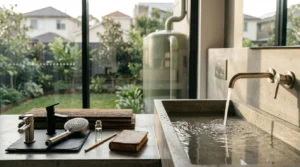
Water-Saving Renovation Upgrades
Water-saving upgrades deliver some of the fastest payback in any sustainable renovation, particularly in Sydney where water prices and dry-period restrictions continue to rise. Most upgrades are inexpensive at the fixture level and immediately measurable on the next bill.
Focus areas with the strongest impact:
- Tapware and showers: WELS 4-star or higher tapware, 7.5 L/min or lower showerheads.
- Toilets: Dual-flush 4-star toilets cut bathroom water use sharply versus older single-flush units.
- Appliances: WELS-rated dishwashers and washing machines compound the savings.
- Rainwater systems: Tank capture for garden, laundry, and toilet flushing is well suited to Sydney roof areas.
- Greywater reuse: Diverters from showers and laundry into subsurface irrigation reduce mains demand.
A practical sequence for most Sydney homes: fixtures first (cheap, immediate), then appliances at end-of-life, then rainwater or greywater when reroofing or relandscaping work is happening anyway. Bathrooms account for the majority of household water use, and upgrading to WELS-rated tapware and showerheads is the single fastest-payback step in any water-saving plan.
Sustainable Bathroom Renovations
Bathrooms are the highest-impact, fastest-payback room for sustainable renovation in Sydney. They use disproportionate water and energy relative to their size, and they’re renovated more often than any other room, which makes every eco decision compound across the home’s lifetime.
A sustainable bathroom renovation typically targets four dimensions at once:
- Water: WELS-rated tapware, water-efficient showerheads, dual-flush toilets.
- Energy: Heat-pump hot water, LED lighting, properly insulated walls and ceiling.
- Materials: Low-VOC paints and sealants, recycled-content tiles, FSC vanities.
- Air quality: Continuous mechanical ventilation, mould-resistant finishes, sealed wet areas.
For ventilation, the Australian standard for bathroom exhaust is a minimum of 25 L/s continuous or 50 L/s intermittent. In practice, most Sydney bathrooms are under-ventilated, which drives condensation, mould, and the associated health and maintenance costs. A heat recovery ventilation unit, which captures warmth from exhaust air before it leaves the building, adds roughly $400 to $600 to the ventilation budget and pays back through reduced heating load.
A heat pump hot water system sized for a Sydney household (250–315 L) typically costs $1,800 to $2,800 installed, compared to $800 to $1,200 for a standard electric storage unit. The running cost difference is roughly $300 to $500 per year, meaning payback in 3 to 5 years, after which the savings are pure return.
For most Sydney owner-occupiers and investors, an eco bathroom renovation lands in a similar budget band to a standard renovation when planned from the start, typically $18,000 to $28,000 for a full wet-area refit but adds long-term value through lower utility costs and better resale appeal. The mistake is bolting on eco upgrades late in the build, which is when costs blow out.
Sustainable Kitchen Renovations
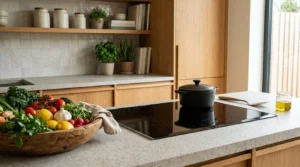
Kitchens are the highest-energy room in most Sydney homes, and a sustainable kitchen renovation focuses on the appliances, materials, and lighting choices that drive that load. Done well, the kitchen becomes the room with the highest visible eco credentials and the biggest operating savings outside of HVAC and hot water.
Key levers for a sustainable kitchen:
- Appliances: 4-star-plus energy and water ratings on dishwashers, fridges, ovens. Induction over gas cooktops for efficiency and air quality.
- Cabinetry: FSC-certified plywood or low-formaldehyde particleboard carcasses, recycled-content or stone-alternative benchtops, durable finishes that won’t need replacement in 10 years.
- Lighting: LED throughout, task lighting zones, daylight glazing where possible.
- Waste: Built-in recycling, compost, and organics separation to keep landfill volumes down.
The biggest single sustainability decision in most kitchen renovations is electrification: removing gas cooking and switching to induction. Research from the Rocky Mountain Institute found that gas cooktops produce nitrogen dioxide at levels that can exceed outdoor air quality standards within 15 minutes of use. Switching to induction eliminates that exposure entirely and reduces kitchen energy consumption by 20 to 30 percent compared to gas.
On cabinetry, the formaldehyde standard to specify is E0 or F4 Star (the Australian equivalent). Standard particleboard carcasses are typically E1, which off-gasses at measurably higher rates. The cost difference between E1 and E0 board at the cabinet level is usually $200 to $400 for a full kitchen, a negligible premium for a meaningful indoor air quality improvement.
Cost and Budget Considerations for Sustainable Renovations
The single most persistent myth about sustainable renovation is that it costs significantly more than a standard renovation. The reality is more nuanced: some eco upgrades carry a modest premium, others are cost-neutral, and a meaningful subset are cheaper over a 5 to 10 year window once running costs are included.
Upfront Premium vs. Lifetime Savings
A useful way to think about sustainable renovation cost is in three tiers:
| Tier | Upgrades | Typical Sydney Premium | Payback |
| Cost-neutral | LED lighting, WELS fixtures, low-VOC paint, energy-rated appliances at end of life | $0 | Immediate |
| Modest premium | Insulation upgrades, heat pump hot water, induction cooking, solar PV | $2,000–$8,000 | 3–7 years |
| Larger premium | Double glazing, batteries, premium low-carbon materials, full envelope retrofits | $10,000–$30,000+ | 8–15 years |
Because bathrooms attract a disproportionate share of renovation spend, reviewing realistic bathroom renovation costs in Sydney before you brief a builder gives you defensible numbers for tapware, tiling, and trades that match current market pricing.
Where Eco Upgrades Pay Back Fastest
For owner-occupiers, the fastest-payback eco upgrades are usually water fixtures, LED lighting, induction cooktops, heat pump hot water, and ceiling insulation. For investors, the calculation shifts toward upgrades that boost rent, lift the energy rating, or reduce vacancy.
Avoiding Hidden Costs and Budget Blowouts
The most common reasons sustainable renovations exceed budget in Sydney:
- Decisions made too late in the build, when changes are expensive
- Underestimating waterproofing, electrical, and plumbing rework
- Choosing aesthetic finishes before performance specs
- Skipping a contingency reserve of 10 to 15 percent
Budgeting accurately is what separates a renovation that finishes on plan from one that runs over. Getting a line-by-line sustainable renovation cost breakdown before you sign a contract gives you the numbers to hold your builder accountable.
Government Rebates, Incentives, and Compliance in NSW
NSW has one of the more generous rebate environments in Australia for sustainable renovation, but the schemes move every year, and most homeowners leave money behind because they apply too late or specify the wrong product.
Currently active categories worth investigating:
- NSW Energy Savings Scheme (ESS): Discounts on heat pump hot water, insulation, lighting, and certain HVAC upgrades through accredited providers. ESS certificates are created by accredited certificate providers and passed on as point-of-sale discounts — you don’t apply directly; you choose an accredited provider.
- Solar and battery incentives: Federal STCs on solar PV systems, plus NSW interest-free loan options for batteries under the Empowering Homes program.
- Hot water rebates: Heat pump and solar hot water rebates that can substantially reduce upfront cost.
- BASIX compliance: In NSW, a BASIX certificate is required for any renovation with a value above $50,000, or any addition of a swimming pool or spa. The certificate sets minimum targets for energy, water, and thermal performance. Compliance is not optional, and shapes design decisions early, which is why we recommend running the BASIX assessment before finalising your design, not after.
The biggest practical mistake is buying equipment before checking which model is rebate-eligible. The product list updates regularly, and a $300 difference in product choice can be a $2,000 difference after rebate. Checking the NSW Energy Savings Scheme register before purchasing any major appliance takes five minutes and can save thousands.
Choosing a Sustainable Renovation Contractor
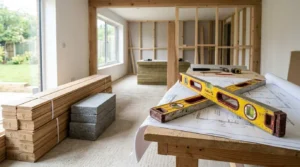
The right contractor is the single biggest variable in whether a sustainable renovation actually delivers on its promise. Most builders can install eco products. Far fewer can sequence the trades, sign off the BASIX detailing, and protect the performance assumptions through the build.
What to Ask Before Signing
Five questions that surface the difference fast:
- Can you show me three completed renovations with measured energy or water outcomes?
- How do you handle BASIX compliance and assessor liaison?
- Which sustainable materials and finishes do you specify by default, and why?
- What’s your contingency and variation policy on eco upgrades that need late changes?
- How are you priced: fixed quote, cost-plus, or open-book?
Before signing any contract, verify the builder holds a current NSW Fair Trading contractor licence and carries both public liability and home warranty insurance. Ask to see the BASIX specification document from a previous project; a contractor who has genuinely managed BASIX compliance will have one readily available. One who hasn’t will not.
Red Flags and Greenwashing
Watch for vague claims (“we use eco materials”), no documentation of certifications, refusal to commit to specific brands or model numbers, and quotes that are markedly below market. Sustainable renovation runs on detail. Detail costs money, and contractors who skip it almost always recover the gap through variations.
Working With an Experienced Eco Builder
Finding a builder who genuinely understands passive design principles, not just one who can install a solar panel, is the difference between a renovation that performs and one that looks sustainable on paper. Ask for a written performance brief before work begins, and make sure BASIX compliance is built into the contract scope, not treated as an afterthought.
Conclusion
Sustainable renovation works because it links three pillars energy, water, and materials into a single, compounding system. Each pillar reinforces the others, and the result is a home that costs less to run, performs better in every season, and holds its value as energy standards tighten across NSW.
The planning sequence matters as much as the upgrades themselves. Getting passive design, BASIX compliance, and the envelope right before specifying generation is what separates renovations that deliver on their promise from those that disappoint after handover.
At Sydney Home Renovation, we plan, price, and deliver sustainable renovations that stay on budget, on schedule, and on performance from day one, and we’re ready to help you build a brief that gets every decision in the right order.
Frequently Asked Questions
What is the difference between a sustainable renovation and a green renovation?
The terms are often used interchangeably. We define sustainable renovation as a measurable, life-cycle approach across energy, water, and materials. “Green” is a broader marketing term.
How much more does a sustainable renovation cost in Sydney?
Most sustainable renovations cost between 0 and 15 percent more upfront than a standard renovation, recovering that premium within 5 to 10 years through lower energy, water, and maintenance bills.
Do I need BASIX approval for a renovation?
Yes. In NSW, renovations valued above $50,000 require a BASIX certificate covering energy, water, and thermal performance targets. Your designer or contractor manages the assessment.
Which sustainable renovation upgrades pay back fastest?
LED lighting, WELS-rated tapware, ceiling insulation, induction cooktops, and heat pump hot water typically pay back within 3 to 7 years with little to no upfront premium.
Are there government rebates for renovating sustainably in NSW?
Yes. The NSW Energy Savings Scheme, federal solar STCs, heat pump hot water rebates, and the Empowering Homes battery loan program are all currently active. Check eligible product lists before purchasing.
Can I make my existing bathroom or kitchen more sustainable without a full renovation?
Absolutely. Swapping tapware, showerheads, lighting, appliances, and paint to eco-rated alternatives delivers most of the operating savings without touching tiles, layout, or structure.
How do I know if a contractor is genuinely qualified for sustainable renovation?
We ask for completed projects with measured performance outcomes, a current NSW Fair Trading licence, BASIX assessor experience, named product certifications, and a transparent variation policy.


