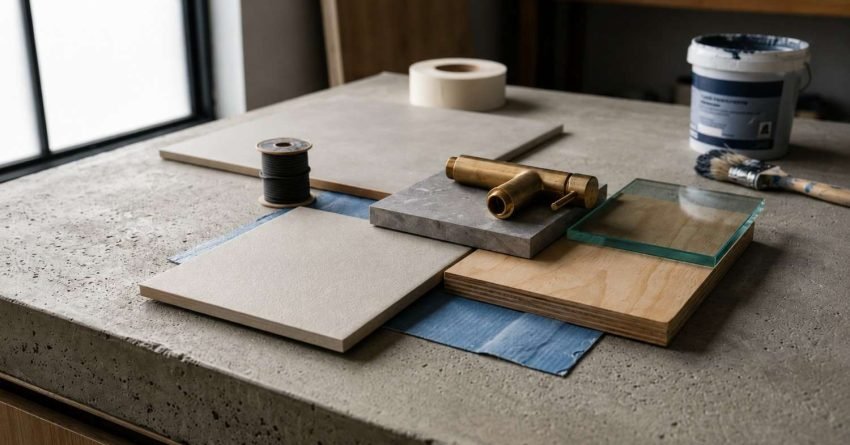
Bathroom materials are the surface and structural products that define how your renovated bathroom looks, performs, and lasts tiles, vanities, flooring, fixtures, benchtops, wall linings, and waterproofing membranes. For Sydney homeowners, first-time renovators, and property investors, material choice is the single largest driver of both budget and long-term value.
Get materials wrong and you face cracked tiles, leaking showers, swollen vanities, and repair bills within five years. Get them right and your bathroom looks current and functions flawlessly for decades.
This guide covers every major material category tiles, vanities, flooring, fixtures, waterproofing, shower components, benchtops, grout, costs, and Sydney-specific considerations with realistic price ranges, durability benchmarks, and the decision sequence we use on every project.
What Are Bathroom Materials and Why Selection Matters
Bathroom materials refer to every surface, fitting, and structural product specified during a renovation, from the waterproofing membrane hidden behind walls to the tapware your hand touches daily. Each material category carries its own price range, performance profile, and maintenance demand.
Material selection matters because the bathroom is the most demanding room in a home. Bathrooms experience more thermal cycling, moisture saturation, and chemical exposure cleaning agents, soaps, body oils than any other interior space. Choosing materials is not just an aesthetic exercise; it is a risk management decision that affects waterproofing integrity, resale value, insurance claims, and ongoing maintenance cost.
A premium tile installed over poor substrate fails. A budget vanity in a humid Sydney coastal home swells within two seasons. The right materials, specified for the right context, deliver value that compounds over time.
Quick-Reference: Bathroom Material Comparison
| Material | Typical Cost Range | Durability | Maintenance | Best Use |
| Porcelain tile | $40–$300+/m² (supply) | 25+ years | Very low | Floors, walls, wet zones |
| Ceramic tile | $25–$120/m² (supply) | 15–20 years | Low | Dry-zone walls |
| Natural stone tile | $80–$350+/m² (supply) | 20–30 years | High (seal every 12–18 months) | Feature walls, floors |
| Luxury vinyl plank | $30–$90/m² (supply) | 15–20 years | Low | Floors outside shower zones |
| Microcement | $120–$250/m² (installed) | 10–15 years | Medium (periodic reseal) | Seamless floors, feature walls |
| Engineered stone benchtop | $400–$900/lm (installed) | 15–20 years | Low | Vanity benchtops |
| Sintered stone benchtop | $700–$1,400/lm (installed) | 20+ years | Very low | Premium vanity benchtops |
| Solid brass tapware | $300–$2,500+/piece | 15–25 years | Low | All tapware positions |
| Marine-grade plywood vanity | $1,800–$8,000+ (unit) | 15+ years | Low | All vanity applications |
Bathroom Tiles: Types, Finishes, and Selection Criteria
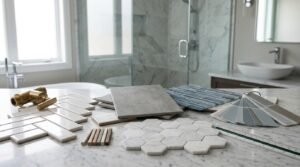
Tiles are the dominant visual and protective surface in any bathroom, covering floors, walls, showers, and often vanity splashbacks. The three main tile categories are porcelain, ceramic, and natural stone, each with distinct performance characteristics.
Porcelain offers the lowest water absorption rate under 0.5% and the highest durability, making it the default choice for floors and wet zones. Ceramic costs less but absorbs more water and is best reserved for walls outside direct spray areas. Natural stone (marble, travertine, limestone) delivers unmatched aesthetic but requires sealing every 12 to 18 months and softer cleaning protocols.
Key selection criteria include slip rating, tile size, grout colour, and rectification. Australia uses the R-rating system: R10 is the minimum we specify for bathroom floors, and R11 is required for shower bases. The R-rating reflects a pendulum friction test under wet barefoot conditions a tile rated below R10 on a wet floor is a genuine safety hazard, regardless of how it looks in a showroom.
Larger format tiles (600x600mm and above) reduce grout lines and visual clutter but demand a flatter substrate and skilled installation. We always confirm substrate flatness before specifying large-format tiles on any project.
Substrate Preparation and Tile Adhesive
Substrate preparation is the step that determines whether a tile installation lasts five years or twenty-five. We specify cement sheet or aqua board as the substrate in all wet zones never standard plasterboard, regardless of what a budget quote might suggest.
Adhesive selection follows the substrate and tile type. Flexible polymer-modified adhesives are required for large-format tiles and any surface subject to thermal movement. Standard cement-based adhesives suit smaller ceramic tiles on stable substrates. Using the wrong adhesive on the right tile is one of the most common causes of premature tile failure we see on renovation assessments.
Bathroom Vanities: Materials, Construction, and Style
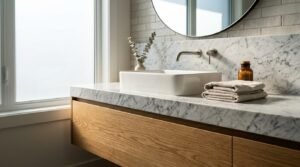
Bathroom vanities combine cabinetry, benchtop, and basin into the room’s primary storage and styling element. Vanity quality varies enormously across price tiers, and the difference is almost entirely structural rather than visual.
Cabinet carcass material is the single most important quality marker. Solid timber and marine-grade plywood carcasses tolerate moisture for 15+ years. Standard MDF swells, delaminates, and fails within five to seven years in Sydney’s humid climate. Mid-range vanities typically use moisture-resistant MDF (often labelled HMR), which sits between these extremes.
Mounting style affects both aesthetics and longevity. Wall-hung vanities create floor visibility making small bathrooms feel larger simplify cleaning, and protect the cabinet base from floor moisture. Floor-standing vanities offer more storage and stability but expose the kickboard to splashes and mop water.
Door finishes range from melamine and 2-pack polyurethane to natural timber veneer and laminate. 2-pack polyurethane offers the best moisture resistance and longevity among painted finishes, while quality melamine remains the value benchmark for mid-range projects.
Bathroom Flooring: Materials Built for Wet Areas
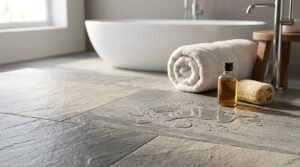
Bathroom flooring must satisfy three simultaneous demands: water resistance, slip safety, and visual continuity with the rest of the home. The viable material categories are tile, vinyl (sheet or luxury vinyl plank), microcement, and engineered timber rated for wet areas.
Tile remains the long-term performance leader. Porcelain floor tiles deliver 25+ year lifespans, zero water absorption issues, and full compliance with Australian Standard AS 3740 when properly installed over a waterproof membrane. Cost ranges from $40 to $250+ per square metre for materials, with installation typically adding $70 to $120 per square metre.
Luxury vinyl plank (LVP) has emerged as a credible alternative, offering warmth underfoot, easier installation, and visual continuity with adjoining living spaces. Quality LVP rated for wet areas can perform for 15 to 20 years but cannot match tile in shower zones.
Microcement sometimes called Venetian or tadelakt finishes creates seamless, joint-free floors increasingly popular in Sydney’s design-led renovations. It demands expert application and periodic resealing but delivers a uniquely modern aesthetic.
Bathroom Fixtures and Tapware: Finishes and Quality Tiers
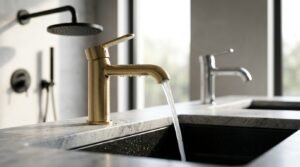
Fixtures and tapware include every functional metal component: taps, showerheads, mixers, towel rails, robe hooks, toilet roll holders, and drain wastes. Quality here directly affects daily user experience and water efficiency over decades.
Body material is the foundational decision. Solid brass remains the industry standard for tapware, offering corrosion resistance, weight, and longevity. Stainless steel performs well in coastal areas where chloride exposure is a concern. Zinc-alloy budget tapware typically fails within five years and is a false economy we actively advise against.
Finish technology matters as much as base material. Chrome and brushed nickel remain the most affordable durable finishes. Matte black, brushed brass, and gunmetal finishes use Physical Vapour Deposition (PVD) coating, which dramatically outperforms traditional electroplating on scratch and tarnish resistance but only when sourced from reputable manufacturers with documented PVD processes.
Australian compliance is non-negotiable. All tapware must carry WaterMark certification, and water efficiency is rated under the WELS scheme. A 4-star WELS mixer delivers meaningful long-term water savings versus a non-rated import.
Wall Linings and Waterproofing Materials
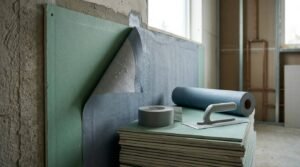
Behind every tiled surface sits a wall lining and waterproofing system the hidden material layer that protects the entire structure. Getting this layer wrong is the most expensive mistake in bathroom renovation.
Wall lining options include standard plasterboard (unsuitable for wet areas), water-resistant plasterboard (acceptable in dry zones only), aqua board or villaboard (a cement-based sheet rated for wet areas), and full cement sheet (the most durable substrate for shower walls). We increasingly specify cement sheet across all bathroom walls on premium projects for consistency and tile bonding strength.
Waterproofing membranes are applied directly over wall linings and across the entire floor in wet zones. Liquid-applied polyurethane and acrylic membranes dominate the residential market. They must be installed in continuous coats with reinforcing tape at all junctions, corners, and penetrations.
Compliance with Australian Standard AS 3740 is mandatory for all bathroom waterproofing, requiring certified applicators, documented coverage, and council inspection in many jurisdictions. Industry data from the Australian Institute of Building Surveyors shows waterproofing failure accounts for over 80% of bathroom-related insurance claims a figure that reflects how often this step is rushed or under-specified.
Shower Materials: Screens, Bases, and Linings
The shower combines more material decisions per square metre than any other bathroom zone. Each component screen, base, walls, niche, drain involves its own material specification.
Shower screens come in three configurations. Frameless screens use 10mm or 12mm toughened safety glass with minimal hardware, delivering the most premium aesthetic and easiest cleaning. Semi-frameless screens balance cost and appearance. Framed screens offer the lowest price but show their age quickly. All screens must meet Australian Standard AS/NZS 2208 for safety glazing.
Shower bases divide into two camps. Fully tiled bases built on a screeded fall with hidden waterproofing deliver design freedom, custom sizing, and seamless visual continuity with surrounding tiles, but cost more and demand expert waterproofing. Acrylic or stone-resin pre-formed bases install faster and remove waterproofing risk in that zone but limit shape and tile selection.
Wall linings inside shower zones should always be cement sheet, never water-resistant plasterboard, regardless of how strong the membrane appears.
Grout Selection: Types, Colour, and Maintenance
Grout is one of the most overlooked material decisions in a bathroom renovation, yet it directly affects both the finished aesthetic and long-term maintenance burden. We treat grout selection as a deliberate specification, not an afterthought.
The three main grout types are sanded, unsanded, and epoxy. Sanded grout suits joints wider than 3mm and is the standard choice for floor tiles. Unsanded grout is used for joints under 3mm and on polished or delicate stone surfaces where sand particles cause scratching. Epoxy grout offers near-zero porosity, exceptional stain resistance, and is the specification we recommend for shower floors and any surface exposed to heavy moisture though it requires skilled application and costs more than cement-based options.
Colour selection affects how the room reads at scale. Light grout on light tiles creates a seamless, expansive feel but shows staining more readily. Dark grout on light tiles creates definition and hides discolouration but can visually shrink a space. We generally recommend mid-tone grout that complements the tile body colour for the most forgiving long-term result.
Cement-based grout in wet zones requires sealing on installation and resealing every two to three years. Epoxy grout requires no sealing. Skipping grout sealing in a shower is one of the fastest routes to mould penetration and substrate damage we see on renovation assessments.
Benchtops and Countertop Materials for Vanities
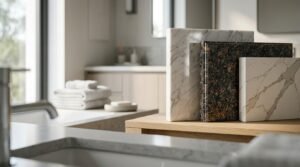
Vanity benchtops sit at constant exposure to water, cosmetics, toothpaste, and heat from hair tools. The material here must resist staining, chipping, and surface dulling for at least 15 to 20 years to be considered a sound investment.
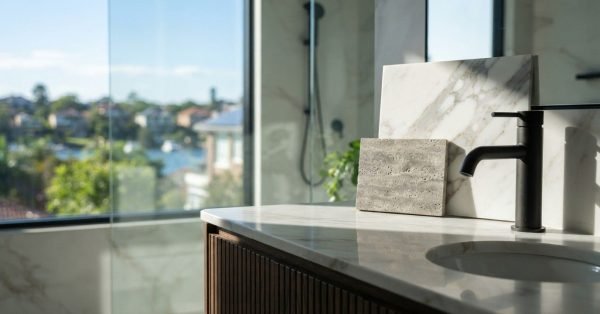
Engineered stone (quartz-based composite) has long been the Australian default for vanity benchtops, offering hardness, low porosity, and a wide colour range. Note that recent NSW regulations have restricted high-silica engineered stone, prompting industry shift toward low-silica reformulations and alternative materials.
Sintered stone (Dekton, Neolith, and similar brands) has emerged as a leading alternative, offering near-zero porosity, exceptional heat resistance, and large slab formats ideal for waterfall vanity designs. It costs more but delivers unmatched performance.
Natural stone (marble, granite) offers unmatched visual character but requires sealing and is vulnerable to acidic substances (citrus, vinegar, certain cosmetics). Laminate remains the budget option, with modern high-pressure laminates offering surprisingly convincing stone visuals at a fraction of the cost.
Benchtop selection affects both vanity aesthetics and how well your surface resists chips, stains, and heat, and our forthcoming guide to bathroom benchtop materials compares engineered stone, sintered stone, laminate, and natural marble side by side.
Material Costs and Budget Planning
Material costs typically represent 35% to 45% of a Sydney bathroom renovation budget, with labour, plumbing, electrical, and waterproofing comprising the remainder. Understanding allowance ranges by material category is essential to realistic budgeting.
Tile allowances vary widely. A budget renovation might allocate $40 to $80 per square metre for materials. A mid-range project sits in the $80 to $150 range. Premium specifications push $150 to $300+ for designer porcelain, terrazzo, or natural stone.
Vanity allowances range from $800 to $1,500 for budget flatpack units, $1,800 to $3,500 for mid-range custom or semi-custom cabinetry, and $4,000 to $8,000+ for fully bespoke wall-hung vanities with stone tops.
Tapware and fixtures show the steepest quality curve. Budget chrome mixers can be purchased for $120 to $250, while premium European brands (Hansgrohe, Brodware, Astra Walker) range from $600 to $2,500+ per piece. The mid-range sweet spot for most Sydney renovations sits between $300 and $700 per major fixture.
Hidden material costs include adhesives, grout, silicone, waterproofing consumables, and substrate boards. These typically add 8% to 12% to the headline material budget and are frequently underestimated.
Material allowances are the single biggest variable in your total renovation budget, and our transparent bathroom renovation cost guide breaks down realistic price ranges, hidden expenses, and how labour and materials split across budget, mid-range, and premium projects in Sydney.
Benchtops and Countertop Materials for Vanities
Vanity benchtops sit at constant exposure to water, cosmetics, toothpaste, and heat from hair tools. The material here must resist staining, chipping, and surface dulling for at least 15 to 20 years to be considered a sound investment.
Engineered stone (quartz-based composite) has long been the Australian default for vanity benchtops, offering hardness, low porosity, and a wide colour range. Recent NSW regulations have restricted high-silica engineered stone specifically products exceeding 40% crystalline silica content prompting an industry shift toward low-silica reformulations and alternative materials. We now specify low-silica or silica-free products on all new projects. Price ranges from $400 to $900 per lineal metre installed, depending on thickness and edge profile.
Sintered stone (Dekton, Neolith, and similar brands) has emerged as the leading premium alternative, offering near-zero porosity, exceptional heat resistance, and large slab formats ideal for waterfall vanity designs. It costs more typically $700 to $1,400 per lineal metre installed but delivers unmatched performance and is fully compliant with current NSW regulations.
Natural stone (marble, granite) offers unmatched visual character but requires sealing and is vulnerable to acidic substances citrus, vinegar, certain cosmetics. Laminate remains the budget option at $150 to $350 per lineal metre installed, with modern high-pressure laminates offering surprisingly convincing stone visuals at a fraction of the cost.
Material Costs and Budget Planning
Material costs typically represent 35% to 45% of a Sydney bathroom renovation budget, with labour, plumbing, electrical, and waterproofing comprising the remainder. Understanding allowance ranges by material category is essential to realistic budgeting.
Tile allowances vary widely. A budget renovation might allocate $40 to $80 per square metre for materials. A mid-range project sits in the $80 to $150 range. Premium specifications push $150 to $300+ for designer porcelain, terrazzo, or natural stone.
Vanity allowances range from $800 to $1,500 for budget flatpack units, $1,800 to $3,500 for mid-range custom or semi-custom cabinetry, and $4,000 to $8,000+ for fully bespoke wall-hung vanities with stone tops.
Tapware and fixtures show the steepest quality curve. Budget chrome mixers can be purchased for $120 to $250, while premium European brands (Hansgrohe, Brodware, Astra Walker) range from $600 to $2,500+ per piece. The mid-range sweet spot for most Sydney renovations sits between $300 and $700 per major fixture.
Hidden material costs include adhesives, grout, silicone, waterproofing consumables, and substrate boards. These typically add 8% to 12% to the headline material budget and are frequently underestimated.
Choosing Materials for Sydney Climate and Strata Homes
Sydney’s climate and housing stock create specific material constraints that generic renovation advice misses. Coastal humidity, salt-laden air in eastern and northern suburbs, dense strata living, and heritage terrace constraints all shape what works.
Coastal homes Bondi, Manly, Cronulla face accelerated corrosion on chromed and electroplated tapware. PVD finishes and solid brass or stainless steel bodies become not optional but necessary for fittings within several kilometres of the ocean.
Strata apartments often impose strict acoustic and waterproofing requirements set by the building’s strata bylaws. Materials must comply with both AS 3740 waterproofing standards and the building’s own approval process. Lightweight tile selections and impact-isolation underlays often become mandatory.
Heritage terraces in suburbs like Paddington, Surry Hills, and Glebe demand material choices that respect the architectural era while delivering modern performance. Smaller footprints reward large-format tiles, wall-hung vanities, and frameless screens that maximise perceived space.
Material Durability, Maintenance, and Long-Term Value
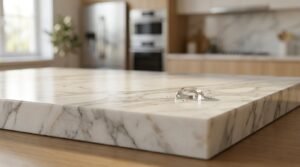
Durability and maintenance demands vary enormously across material categories, and these factors weigh as heavily as upfront cost during selection. A cheap material that needs replacing in seven years costs more than a quality material that lasts 25.
Porcelain tile is essentially zero-maintenance, requiring only routine cleaning. Natural stone tiles require sealing every 12 to 18 months. Engineered stone benchtops are low-maintenance but vulnerable to extreme heat damage. Sintered stone is virtually indestructible under normal use.
Vanity carcasses determine longevity more than door finishes. A solid plywood carcass with a tired melamine door can be reskinned. An MDF carcass that has swollen and delaminated must be replaced entirely.
Tapware lifespan correlates almost linearly with body material and cartridge quality. Premium ceramic disc cartridges from brands offering 10 to 25 year warranties routinely outlast the surrounding renovation. Budget cartridges fail within three to seven years, requiring full mixer replacement.
Maintenance Schedule by Material
| Material | Maintenance Task | Frequency |
| Natural stone tiles | Re-seal with penetrating sealer | Every 12–18 months |
| Cement-based grout (wet zones) | Re-seal with grout sealer | Every 2–3 years |
| Engineered stone benchtop | Clean with pH-neutral cleaner; avoid heat | Ongoing |
| Sintered stone benchtop | Wipe clean; no sealing required | Ongoing |
| Solid brass tapware (PVD finish) | Wipe with damp cloth; avoid abrasives | Ongoing |
| Waterproofing membrane | Visual inspection for cracking at junctions | Every 5 years |
| Tapware cartridges (budget) | Replace cartridge or full mixer | Every 3–7 years |
| Tapware cartridges (premium) | Inspect; replace if dripping | Every 10–25 years |
When evaluating any material, we ask three questions: what is the realistic service life, what ongoing maintenance does it demand, and what is the cost of replacement when it eventually fails. The answers reveal true value far better than the showroom price tag.
Common Bathroom Material Mistakes to Avoid
Most material disappointments are not the result of bad products, but poor planning, mismatched specifications, or shortcuts during installation. Avoiding the common mistakes below preserves both budget and long-term satisfaction.
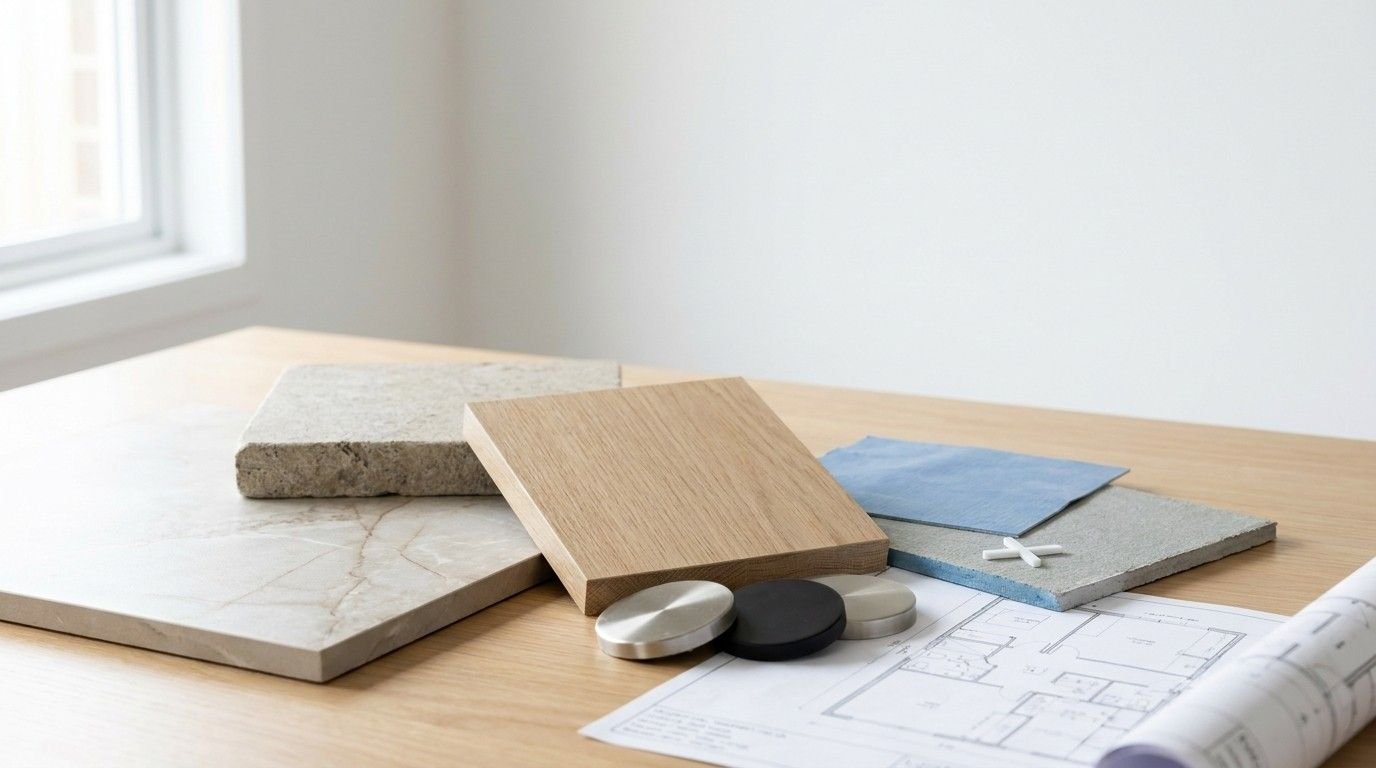
Choosing tile finish without sampling under bathroom lighting is a frequent regret. Showroom lighting differs dramatically from a closed bathroom with downlights, and colour interpretation shifts accordingly. Always take samples home and view them in the actual space at multiple times of day.
Specifying floor tiles with insufficient slip rating creates a genuine safety hazard. Anything below R10 on bathroom floors, or R11 on shower bases, breaches good practice regardless of what a salesperson recommends.
Buying cheap tapware to save budget consistently backfires. The lifecycle cost of replacing failed budget mixers including labour and water damage from leaks exceeds the upfront premium of quality fittings within five to eight years.
Skipping membrane checks and accepting waterproofing without documentation is the most expensive shortcut possible. Failed waterproofing damages adjacent rooms, structural timbers, and downstairs ceilings, with repair costs routinely exceeding $15,000 to $30,000.
Mixing too many finishes chrome with brushed nickel with matte black creates visual disharmony and signals unplanned decision-making. Most accomplished bathroom designs commit to one primary metal finish with a single contrast accent maximum.
Planning Your Bathroom Renovation with the Right Materials
Material decisions cascade through every other renovation choice: budget allocation, trade scheduling, plumbing rough-in dimensions, and final aesthetic outcome. Planning materials as an integrated system rather than item by item separates renovations that finish on budget from those that blow out.
We follow a five-step decision sequence on every project:
- Lock the non-negotiables first waterproofing system, substrate type, and tile slip rating. These are structural decisions that cannot be changed after installation.
- Set budget allocations by category tile, vanity, tapware, benchtop before visiting any showroom. Falling in love with a product before confirming the budget is the most common cause of cost overruns we see.
- Select finish families choose your primary metal finish and tile palette together so they read as a coherent system.
- Confirm compliance requirements AS 3740 waterproofing, WaterMark tapware, WELS ratings, and any strata-specific approvals before ordering.
- Sequence material deliveries to the build programme tiles and vanities need to be on-site before tiling begins; tapware and screens arrive at fit-off stage. Mis-sequenced deliveries are a leading cause of project delays.
Begin with the non-negotiable performance materials before selecting visual finishes. Confirm budget allocations by material category before falling in love with any specific product. Match finish families across the entire room.
Frequently Asked Questions
What are the most important materials in a bathroom renovation?
Waterproofing membrane, substrate boards, and tiles form the structural core. We get these right first surface materials, fixtures, and finishes can all be upgraded later without major rework.
How much do bathroom materials typically cost in Sydney?
Materials account for 35% to 45% of total renovation cost, ranging from around $5,000 in budget renovations to $25,000+ in premium projects, depending on tile, vanity, and tapware specifications.
What is the best flooring material for a Sydney bathroom?
Porcelain tile is our top recommendation for Sydney bathrooms, offering zero water absorption, high slip ratings, and 25+ year service life when installed over compliant waterproofing.
Are matte black tapware finishes durable?
Quality matte black tapware uses PVD coating, which significantly outperforms standard electroplating in scratch and tarnish resistance but only when sourced from reputable brands with documented warranties.
What waterproofing standard applies in NSW?
All bathroom waterproofing must comply with Australian Standard AS 3740, requiring certified applicators, documented coverage, and inspection. Non-compliance risks insurance claims and council enforcement.
Should I choose engineered or natural stone for vanity benchtops?
Engineered stone offers lower porosity, higher hardness, and easier maintenance. Natural stone delivers unmatched visual character but requires regular sealing and careful protection from acidic substances.
How long should quality bathroom materials last?
Porcelain tiles last 25+ years, solid brass tapware 15 to 20 years, quality vanity carcasses 15+ years, and waterproofing membranes 20+ years when correctly specified and installed.
Conclusion
Bathroom materials interconnect tiles, vanities, flooring, fixtures, benchtops, and waterproofing into one performance system where every choice influences the others’ longevity and value. Specifying each category in isolation is how budgets blow out and bathrooms fail early.
Every material category covered in this guide carries its own compliance requirements, maintenance demands, and Sydney-specific considerations. Getting the sequence right performance materials first, finishes second is what separates a bathroom that lasts decades from one that needs remediation within five years.
At Sydney Home Renovation, we help Sydney homeowners specify materials with confidence, combining transparent pricing, qualified product recommendations, and end-to-end project management from concept to handover. Contact us today to start planning your renovation with materials built to last.