Most bathroom renovations in Sydney do not require a development application, but plumbing, drainage, and waterproofing work must still meet strict NSW compliance standards before, during, and after the project.
Getting approvals right protects your investment, prevents costly rectification, and ensures your renovation passes inspection without delays, fines, or insurance complications later down the line.
This guide explains Sydney permit pathways, when approvals apply, plumbing compliance rules, typical costs, common mistakes, and how to lodge your bathroom renovation application correctly.

Do You Need a Permit for a Bathroom Renovation in Sydney?
In most cases, a like-for-like bathroom renovation in Sydney does not need a full Development Application. If you are replacing fixtures in the same position, retiling, repainting, and updating finishes inside an existing wet area, the work usually falls under Exempt Development under the NSW State Environmental Planning Policy.
When Approvals Are Not Required
You can generally proceed without lodging a permit when the renovation is purely cosmetic, the room’s footprint stays the same, no structural walls are altered, and no new plumbing runs are added. Examples include replacing a vanity, swapping tiles, installing a new toilet pan in the existing connection, or updating lighting fittings.
When Approvals Are Mandatory
Approval becomes mandatory the moment the project changes the building’s structure or footprint. This includes moving walls, relocating drainage points, converting a separate WC into an open bathroom, adding a second bathroom, or extending the wet area into a different room.
Strata Bathroom Renovations: Extra Approval Layer
Strata properties carry an additional layer of approval that freehold homes do not. Owners’ corporation consent is required before any waterproofing, plumbing, or structural work begins and that consent is separate from any council or certifier approval.
Most strata schemes require you to submit a scope of works and waterproofing method to the owners’ corporation before lodging a CDC or DA. Approval is typically granted under a bylaw with specific conditions around licensed trades, inspection access, and reinstatement of common property. Skipping this step is one of the most common and costly mistakes apartment renovators make.

Types of Approvals: Exempt, Complying Development, and DA
NSW uses three approval pathways, and choosing the right one upfront determines your timeline, your cost, and whether you need a private certifier or council assessment.
Exempt Development
Exempt Development covers minor, low-impact renovation work that meets specific standards. No permit is needed, no certifier is required, and you can start immediately, provided every condition is met. Cosmetic-only bathroom refreshes typically sit here.
Complying Development Certificate (CDC)
A CDC is a fast-tracked approval issued by a private certifier or council. It applies to renovations that involve more substantial work but still meet pre-set NSW standards, such as replacing plumbing runs, altering non-structural walls, or significant fitout changes. Approvals are usually issued within 20 business days when documentation is complete.
Development Application (DA)
A full DA is required when the renovation involves structural changes, expansions, heritage-listed properties, or work outside Complying Development rules. DAs are assessed by your local council, take longer, and typically need architectural drawings, a Statement of Environmental Effects, and engineering reports.
Private Certifier vs. Council: Which Path Is Faster
For CDC-eligible projects, a private certifier is almost always the faster option. Private certifiers are commercially motivated to turn approvals around quickly, and the 20-business-day statutory timeframe is routinely met when documentation is complete on first submission.
Council-assessed CDCs follow the same timeframe in theory, but council workloads vary significantly across Sydney’s 33 local government areas. For anything requiring a full DA, council assessment is mandatory but engaging a private certifier to review your documentation before lodgement reduces the risk of council requesting additional information, which is the single biggest cause of DA delays.
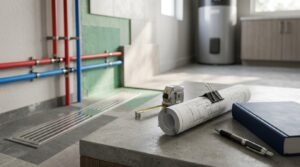
Plumbing, Drainage, and Waterproofing Compliance
Even when no building permit is required, bathroom plumbing and waterproofing must always meet Australian and NSW standards. This is the area where most non-compliant renovations are caught, usually at sale, insurance claim, or strata inspection.
Licensed Plumber and Sydney Water Sign-Off
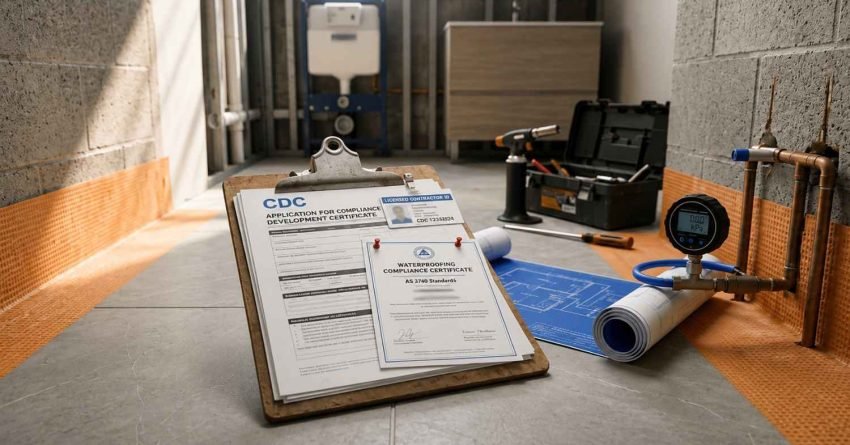
All bathroom plumbing in Sydney must be carried out by a licensed contractor registered with NSW Fair Trading. Any work affecting drainage, sewer connections, or hot water systems requires a Certificate of Compliance lodged with Sydney Water. Without this certificate, the renovation cannot legally be considered complete, and future buyers, insurers, or strata committees can demand rectification at your expense.
AS 3740 Waterproofing Requirements
Waterproofing must comply with AS 3740, the Australian Standard for waterproofing internal wet areas. Membranes must extend to set heights on shower walls, across the entire shower floor, around bath edges, and on bathroom floors where required. Waterproofing failure is the single biggest cause of post-renovation defects in NSW, covering membrane types, minimum heights, and the inspection points every Sydney bathroom must pass.
When an Occupation Certificate Is Required
An Occupation Certificate (OC) is required when a bathroom renovation involves structural work, a change of use, or any scope that triggered a CDC or DA. The OC confirms the completed work matches the approved plans and meets the Building Code of Australia.
Without an OC where one is required, the renovation is legally incomplete. This creates problems at sale conveyancers routinely check for outstanding certificates and can void building insurance if a claim arises from the uncertified work. Your private certifier or council will advise whether an OC applies to your specific scope before work begins.
Permit Costs, Timelines, and Council Variations
Permit costs vary significantly across Sydney depending on the approval pathway, the council area, and the project scope. Treat the figures below as planning ranges, not quotes.
Typical Fees by Approval Type
Exempt Development carries no application fee because no permit is lodged. A Complying Development Certificate from a private certifier typically falls between $1,500 and $4,000 for a bathroom-scale project, including inspections. A full Development Application varies more widely council lodgement fees, plus consultant costs for drawings, BASIX certificates where applicable, and a Statement of Environmental Effects can push total approval costs into the $5,000 to $10,000 range for complex jobs.
How Costs Vary by Sydney Council Area
Approval costs are not uniform across Sydney’s 33 local government areas. Inner-city councils such as City of Sydney and Inner West tend to have higher lodgement fees and more complex assessment requirements than outer suburban councils like The Hills Shire or Penrith. Heritage conservation overlays common in areas like Balmain, Glebe, and Paddington add consultant costs for heritage impact statements that can add $1,500 to $3,000 to a DA budget.
The NSW Planning Portal publishes each council’s current fee schedule, and checking it before scoping your project prevents budget surprises. A private certifier familiar with your LGA can also advise on council-specific documentation preferences that reduce the risk of additional information requests.
Expected Processing Timelines
A CDC is usually issued within 20 business days when documentation is complete, while a DA can take anywhere from 8 weeks to 6 months depending on council workload, neighbour notifications, and how often council requests additional information. Approval fees sit alongside labour, fittings, and contingency in your total bathroom renovation budget understanding the full cost picture before committing to a scope prevents the budget pressure that leads to shortcuts.
Common Bathroom Permit Mistakes That Cause Delays
Most permit problems trace back to a handful of avoidable issues, and they almost always cost more to fix than to prevent. The most frequent are starting work before checking strata bylaws, assuming a like-for-like renovation cannot trigger approval requirements, using unlicensed trades, missing the Sydney Water Certificate of Compliance, or relocating plumbing without notifying the certifier.
Heritage Overlays and Conservation Zones
Heritage overlays catch many homeowners off guard. A property may look entirely ordinary but sit inside a conservation zone, which automatically pushes even minor changes into the DA pathway. Inner Sydney suburbs including Balmain, Newtown, Paddington, and Glebe have extensive heritage conservation areas where standard CDC pathways do not apply.
Always check your property’s planning controls on the NSW Planning Portal before scoping the project. A heritage impact statement prepared by a qualified consultant is typically required for DA lodgement in these areas, and the cost and timeline implications are significant enough to affect your entire project plan.
Consequences of Skipping Approval
Renovating without the required approval is not a minor administrative oversight it carries real financial and legal consequences. Council inspectors can issue stop-work orders the moment unapproved work is identified, halting the project immediately and leaving the site in a partially completed state.
Beyond the stop-work order, council can require full rectification at the owner’s expense, which often costs more than the original approval would have. Unapproved work also creates problems at sale: conveyancers and buyers’ solicitors check council records, and an unapproved bathroom renovation can delay settlement, reduce sale price, or require a Section 96 modification application before contracts exchange. Building insurance may also be voided for claims arising from uncertified work.
Hidden Compliance Costs Most Renovators Miss
Beyond the headline permit fees, several smaller compliance costs catch first-time renovators off guard and quietly inflate the final invoice. Common hidden items include the Sydney Water tap-in inspection fee, asbestos testing if the property was built before 1990, electrical compliance certificates for new lighting circuits, occupation certificates where structural work has occurred, and strata application fees in apartment buildings.
Budgeting an additional 5 to 10 per cent of total project cost for compliance, certification, and inspection extras is a realistic safety margin. It prevents the budget pressure that pushes renovators toward shortcuts that ultimately fail inspection.
How to Apply for a Bathroom Renovation Permit in Sydney
Once you have confirmed which approval pathway applies, the application process becomes straightforward as long as your documentation is complete on first submission.
Documentation You Will Need
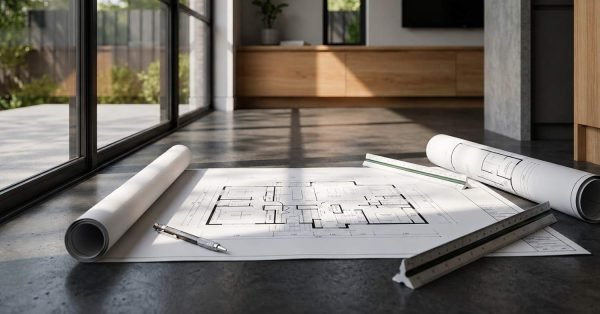
A complete bathroom permit submission typically includes a site plan, a floor plan showing existing and proposed layouts, plumbing and drainage diagrams, waterproofing details, product specifications for any fixed items, and where applicable, structural engineering certification. Having this documentation organised before lodgement is the single most effective way to avoid additional information requests that extend your timeline.
Lodging Through the NSW Planning Portal
All planning applications in NSW are now lodged digitally through the NSW Planning Portal. You create an account, select your approval pathway, upload documents, pay fees, and track progress online. Private certifiers can lodge a CDC directly on your behalf, which is usually the smoothest option for most renovators.
Conclusion
Bathroom permits in Sydney sit at the intersection of plumbing standards, waterproofing law, planning controls, and strata rules. Understanding which pathway applies turns a stressful unknown into a predictable, well-managed stage of the renovation.
The right approval saves money, prevents delays, and protects your property’s long-term value. It also keeps insurance, resale, and certification clean.
At Sydney Home Renovation, we coordinate approvals, trades, and compliance so your bathroom is built on budget, on schedule, and fully certified. Talk to us before you start.
Frequently Asked Questions
Do I need council approval to renovate a bathroom in Sydney?
Not always. Like-for-like cosmetic renovations usually qualify as Exempt Development and need no approval, but any structural change, layout alteration, or new plumbing run typically requires a CDC or full DA from your local council.
How much does a bathroom renovation permit cost in Sydney?
A Complying Development Certificate generally costs between $1,500 and $4,000 for a bathroom project, while a full Development Application can range from $5,000 to $10,000 once council fees and supporting documentation are included.
Can I do my own bathroom plumbing in Sydney?
No. All bathroom plumbing in NSW must be completed by a licensed plumber and certified through Sydney Water. Unlicensed work voids insurance, fails inspection, and creates significant resale and strata compliance risks.
How long does a bathroom CDC take in Sydney?
A Complying Development Certificate is typically issued within 20 business days of lodgement when documentation is complete. Incomplete submissions or missing plumbing details are the most common cause of approval delays in Sydney.
Do I need strata approval for a bathroom renovation?
Yes. Apartment bathroom renovations almost always require owners’ corporation approval because the work affects common property, waterproofing, and shared drainage. Approval is usually granted under a bylaw with specific conditions.
What is AS 3740 in bathroom waterproofing?
AS 3740 is the Australian Standard governing waterproofing of internal wet areas. It defines minimum membrane heights, coverage zones, and material requirements every Sydney bathroom must meet to pass inspection and protect surrounding structures.
Can I start renovating before my permit is approved?
No. Starting work before approval can trigger stop-work orders, fines, and forced rectification. Even for Exempt Development, confirm every condition is met in writing before any trade enters the site.