
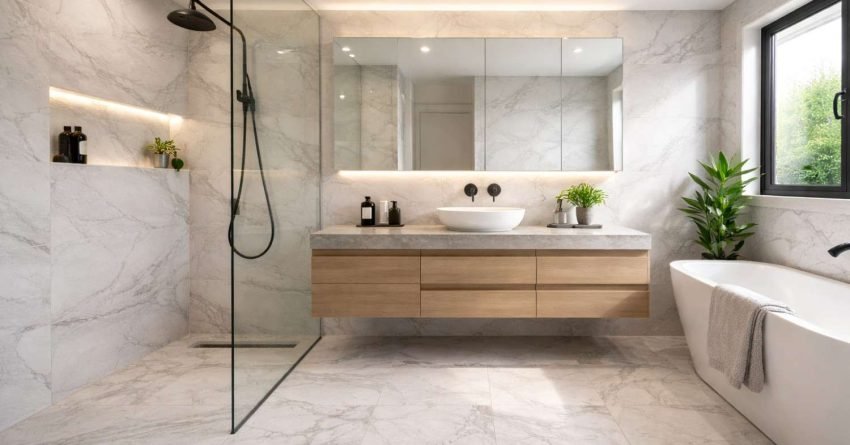
A well-designed walk-in shower can increase your Sydney home’s value by roughly 2–5% of the bathroom renovation cost at resale, depending on quality, design, and buyer appeal. This upgrade consistently ranks among the most requested bathroom features for modern Australian homes.
Not every property benefits equally. The return depends on your home’s location, target buyer, and how the shower integrates with the rest of the bathroom.
This guide breaks down the real numbers behind walk-in shower ROI in Sydney, which factors drive value, what installation costs to expect, and how to avoid overcapitalising on your bathroom renovation.
How Walk-in Showers Affect Property Value in Sydney
Walk-in showers have shifted from a luxury feature to buyer expectation across Sydney’s property market. This change reflects broader trends in bathroom design preferences and demographic shifts among homebuyers.
The connection between bathroom upgrades and property value is well documented. The specific impact of a walk-in shower depends on execution quality and market alignment.
What the Data Shows About Bathroom Renovations and Resale Value
Industry consensus across Australian renovation and real estate sources suggests well-executed bathroom upgrades typically return 60–80% of costs at resale. Walk-in showers specifically appeal to buyers seeking modern, low-maintenance bathrooms.
Real estate agents across Sydney consistently report that updated bathrooms with walk-in showers generate more buyer interest during inspections. The key qualifier is “well-executed.”
Poor quality installations or dated designs can actually detract from perceived value. Buyers notice cheap materials, inadequate waterproofing, and awkward layouts immediately.
Why Buyers in Sydney Prefer Walk-in Showers
Sydney buyers favour walk-in showers for practical and aesthetic reasons. The open design creates visual space in typically compact Sydney bathrooms, which matters in a market where apartment living is common.
Accessibility drives demand among downsizers and families planning long-term. A curbless or low-threshold shower accommodates mobility changes without requiring future renovations.
Cleaning ease appeals to time-poor professionals. Walk-in showers eliminate the mould-prone corners and difficult-to-reach areas common in shower-over-bath configurations.
The spa-like aesthetic aligns with current design trends. Frameless glass, large-format tiles, and rainfall showerheads create the hotel-bathroom feel many Sydney buyers actively seek.
Key Factors That Determine ROI on a Walk-in Shower
Not all walk-in showers deliver equal returns. The difference between a value-adding upgrade and wasted money comes down to three core factors.
Quality of Materials and Workmanship
Premium materials signal quality to buyers. Porcelain tiles rated for wet areas, quality fixtures from recognised brands, and proper waterproofing membrane installation matter more than size or elaborate features.
Workmanship shows immediately. Uneven tile lines, poor grout work, or visible silicone failures suggest corners were cut, and buyers, along with their building inspectors, notice these details.
Waterproofing represents the most critical quality factor. Australian Standards require specific membrane systems for wet areas, and proper installation prevents costly water damage while giving buyers confidence in the renovation’s integrity.
Design Appeal and Universal Accessibility
Design choices should balance current trends with timeless appeal. Neutral colour palettes, quality hardware, and clean lines age better than bold design statements.
Universal design principles add value across buyer demographics. Zero-threshold entries, grab rail provisions, and adequate turning space appeal to accessibility-conscious buyers without appearing clinical.
Shower niches, built-in seating, and thoughtful storage solutions demonstrate attention to functionality. These practical additions cost relatively little but improve daily usability significantly.
Integration With Overall Bathroom Layout
A walk-in shower should complement the bathroom’s overall flow. Awkward placement, inadequate ventilation, or poor drainage positioning creates problems that outweigh the upgrade’s benefits.
Proportions matter in smaller bathrooms. An oversized walk-in shower that crowds the vanity or toilet creates a worse outcome than a well-designed shower-over-bath configuration.
Natural light and ventilation requirements influence placement. Walk-in showers near windows benefit from light and airflow, reducing moisture issues and improving the space’s feel.
Walk-in Shower Costs vs Value Added in the Sydney Market
Understanding the numbers helps you budget realistically and set appropriate expectations for return on investment.
Typical Installation Costs for Walk-in Showers
Walk-in shower installation in Sydney typically ranges from $5,000 to $15,000 depending on scope and specifications, including demolition, waterproofing, tiling, fixtures, and glass screening.
Budget installations ($5,000–$8,000) use standard tiles, basic fixtures, and framed or semi-frameless glass. Quality remains acceptable, but finishes are modest.
Mid-range installations ($8,000–$12,000) incorporate better tiles, quality tapware brands, frameless glass, and features like shower niches. This range typically delivers the best value-to-cost ratio.
Premium installations ($12,000–$15,000+) feature large-format porcelain, high-end fixtures, custom glass solutions, and additional features like heated flooring or digital shower controls.
Labour typically represents a substantial share of total costs in Sydney. Skilled waterproofers, tilers, and plumbers command premium rates, but their expertise protects your investment.
Expected Value Increase at Resale
Quantifying exact value increases is difficult because bathroom upgrades combine with other property factors at sale. Industry consensus suggests well-executed bathroom renovations return 60–80% of costs.
For a $10,000 walk-in shower installation, expect to recover roughly $6,000–$8,000 in added property value. The remaining cost represents the enjoyment value you receive while living in the home.
Properties with outdated bathrooms face buyer resistance. The walk-in shower upgrade eliminates a common objection and can accelerate sale timeframes, a value that doesn’t appear in simple ROI calculations.
Market conditions influence returns significantly. In competitive seller’s markets, updated bathrooms help properties stand out, while in slower markets they prevent price reductions that outdated bathrooms often trigger.
When a Walk-in Shower Adds the Most Value
Certain properties and situations benefit more from walk-in shower installations. Understanding these patterns helps you prioritise renovation spending.
Property Types That Benefit Most
Apartments and townhouses benefit significantly because compact bathrooms gain visual space from open shower designs. Buyers in this segment prioritise modern, low-maintenance features.
Properties targeting downsizers see strong returns from accessible walk-in showers. This growing demographic values aging-in-place features and will pay premiums for homes that accommodate future mobility needs.
Investment properties in inner-city and suburban rental markets benefit from the durability and tenant appeal of walk-in showers. Quality installations reduce maintenance calls and support higher rental yields, and this same logic applies when weighing up any broader home extension as part of a wider investment strategy.
Older homes with original bathrooms see dramatic improvement from walk-in shower upgrades. The contrast between dated and modern creates strong buyer impressions during inspections.
Buyer Demographics Driving Demand
Young professionals seek contemporary aesthetics and low-maintenance living. Walk-in showers align with their design preferences and busy lifestyles.
Growing families appreciate the practicality of walk-in showers for bathing children and the safety benefits of eliminating bath edges.
Downsizers and retirees represent the fastest-growing segment prioritising walk-in showers. Accessibility features that don’t compromise style command premiums in this market.
Property investors recognise walk-in showers as tenant-attracting features that reduce vacancy periods and support rental price positioning.
When a Walk-in Shower May Not Increase Value
Honest assessment prevents overcapitalisation. Some situations warrant keeping existing configurations or choosing alternative upgrades.
Homes Where Bathtubs Are Expected
Family homes with young children as the target buyer can suffer from bathtub removal. Many parents consider a bathtub essential for bathing young children safely.
We generally recommend keeping at least one bathtub in homes with multiple bathrooms. The main bathroom can feature a walk-in shower while a secondary bathroom retains bathing facilities, and weighing up a walk-in shower against a bathtub side by side often clarifies which configuration suits your specific buyer profile.
Luxury properties often expect both features. High-end buyers anticipate freestanding baths as design statements alongside spacious walk-in showers.
Heritage properties may lose character from overly modern bathroom treatments. Sensitive renovation approaches that respect original features often deliver better returns than complete modernisation.
Overcapitalisation Risks to Avoid
Spending beyond neighbourhood norms rarely returns at sale. A $20,000 bathroom in a suburb where homes sell for $800,000 makes sense, but the same spend in a $500,000 suburb likely won’t recover costs, and this gap widens further across Sydney’s more affordable outer suburbs.
Premium specifications in rental properties often overcapitalise. Tenants value functionality and cleanliness over luxury finishes, and mid-range quality typically delivers optimal rental returns.
Renovating immediately before sale may not allow time for value recognition. Buyers sometimes discount recent renovations, assuming they were done cheaply to facilitate sale.
DIY installations attempting to save costs often backfire. Waterproofing failures, compliance issues, and visible quality problems can reduce rather than increase property value, and the same overcapitalisation caution applies whether you’re updating one bathroom or planning a whole home renovation across every room.
How to Maximise Value When Installing a Walk-in Shower
Strategic decisions during planning and installation phases determine whether your walk-in shower delivers maximum return.
Design Features That Appeal to Sydney Buyers
Frameless glass screening creates the open, spacious feel buyers expect. The premium over framed alternatives typically returns at sale through improved buyer perception.
Large-format tiles (600x600mm or larger) reduce grout lines and create contemporary aesthetics. They also simplify cleaning, a practical benefit buyers appreciate.
Quality tapware from recognised brands signals overall renovation quality. Buyers associate brand names with durability and style.
Rainfall showerheads with handheld attachments combine the spa experience with practical functionality. This combination appeals across demographic groups.
Adequate lighting transforms shower spaces. Recessed LED downlights rated for wet areas provide even illumination without the dated appearance of older fixture styles.
Neutral colour palettes ensure broad appeal. White, grey, and natural stone tones age well and allow buyers to envision their own styling.
Budgeting for Long-Term Value
We recommend allocating a significant share of your budget to labour from qualified tradespeople, since waterproofing and tiling quality depend entirely on installer skill.
Prioritise waterproofing over visible finishes if budget constraints force choices. Proper membrane installation prevents catastrophic failures that destroy value.
Include a contingency of 10–15% for unexpected issues. Older homes frequently reveal problems during demolition that require additional work.
Plan for the disruption too. Most installations take the bathroom fully out of use for a week or more, so it’s worth arranging alternative bathing arrangements or scheduling around household needs before work begins.
Consider future maintenance costs when selecting materials. Cheaper tiles may require earlier replacement, while quality porcelain lasts decades.
Get multiple quotes but don’t automatically choose the cheapest. Understand what’s included and excluded in each quote to make valid comparisons.
Choosing the Right Contractor
Verify licensing and insurance before engaging any contractor. NSW requires specific licences for waterproofing and plumbing work, and engaging unlicensed tradespeople creates compliance and warranty risks.
Request references from recent bathroom projects. Speaking with previous clients reveals reliability, communication quality, and problem-solving ability.
Review detailed quotes that itemise materials, labour, and inclusions. Vague quotes often lead to unexpected costs during projects.
Confirm warranty coverage for workmanship and materials. Quality contractors stand behind their work with meaningful warranty periods.
Establish clear communication expectations before work begins. Regular updates and accessible contact prevent misunderstandings and delays.
Conclusion
Walk-in showers can meaningfully increase Sydney home values when quality materials, skilled installation, and thoughtful design align with buyer expectations. The investment typically returns 60–80% of costs at resale while delivering daily enjoyment throughout your ownership.
Understanding your specific property, target buyer demographic, and local market conditions determines whether this upgrade makes financial sense. Not every home benefits equally, and honest assessment prevents overcapitalisation.
We help Sydney homeowners plan bathroom renovations with transparent cost estimates and quality workmanship from start to finish. Contact us at Sydney Home Renovation to discuss whether a walk-in shower upgrade aligns with your property goals and budget.
Frequently Asked Questions
Does removing a bathtub for a walk-in shower decrease home value?
Removing the only bathtub in a family home can decrease value for buyers with young children. If your home has multiple bathrooms, converting one to a walk-in shower while retaining a bathtub elsewhere typically maintains or increases overall value.
How much does a walk-in shower cost to install in Sydney?
Walk-in shower installation in Sydney ranges from $5,000 to $15,000 depending on size, materials, and specifications. Mid-range installations between $8,000 and $12,000 typically deliver the best balance of quality and value.
Do walk-in showers appeal to older buyers?
Yes, walk-in showers strongly appeal to downsizers and retirees. The accessibility features, including low or zero thresholds and space for future grab rails, allow aging in place without requiring later modifications.
What walk-in shower features add the most value?
Frameless glass screening, quality tapware from recognised brands, large-format tiles, and rainfall showerheads with handheld attachments consistently add perceived value. Proper waterproofing, while invisible, protects the investment long-term.
Is a frameless glass walk-in shower worth the extra cost?
Frameless glass typically costs $800 to $1,500 more than framed alternatives but creates significantly better visual impact. For properties targeting style-conscious buyers, the premium usually returns through improved buyer perception.
Should I install a walk-in shower before selling my home?
Installing a walk-in shower before sale makes sense if your existing bathroom is dated and likely to trigger buyer objections or price negotiations. Allow at least two to three months before listing to complete the work properly and avoid rushed finishes.
How long does it take to install a walk-in shower?
A complete walk-in shower installation typically takes five to ten working days, including demolition, waterproofing, tiling, and fixture installation. Waterproofing requires curing time that cannot be rushed without compromising quality.


