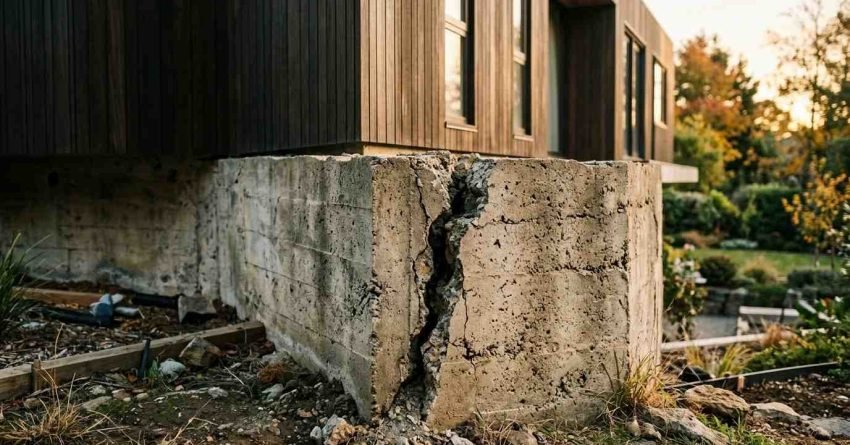
Foundation damage is the most expensive thing to repair in a house, with Sydney costs running from $8,000 to over $150,000 depending on severity. This one structural failure drains a renovation budget faster than any other repair, and it usually arrives without warning.
I have watched homeowners absorb a five-figure underpinning bill they had no reserve for, purely because nobody told them what to watch for. Knowing which repairs carry the highest price tags lets you prioritise inspections, schedule maintenance, and build realistic reserves before the emergency arrives.
Below are the most expensive home repairs in Australia, the warning signs that precede each one, and the sequencing logic we use when a homeowner faces several at once.
Foundation Repairs: The Most Costly Home Expense
Foundation problems are the single most expensive repair category Australian homeowners face. The foundation carries your entire house, so when it fails, everything above it fails with it.
Direct answer: Foundation repair is the most expensive house repair, averaging $4,000 to $15,000 for common fixes and reaching $25,000 to $150,000+ for underpinning, pier installation, or full replacement. Roof replacement and drainage or sewer work follow as the next costliest categories.
Most Expensive Home Repairs, Ranked
| Repair | Typical Cost Range (AUD) | Worst-Case Cost |
| Foundation repair/underpinning | $8,000 – $60,000 | $150,000+ |
| Whole-home roof replacement | $15,000 – $45,000 | $80,000+ |
| Sewer and stormwater line replacement | $5,000 – $30,000 | $45,000+ |
| Whole-house repiping | $8,000 – $25,000 | $35,000+ |
| Whole-house rewiring | $10,000 – $35,000 | $50,000+ |
| Mould remediation (whole home) | $12,000 – $35,000 | $60,000+ |
| Cladding or external wall replacement | $15,000 – $45,000 | $80,000+ |
| Ducted HVAC replacement | $8,000 – $25,000 | $35,000+ |
| Asbestos removal (licensed) | $8,000 – $35,000 | $50,000+ |
| Termite structural repair | $5,000 – $30,000 | $50,000+ |
Why Foundation Repairs Cost So Much
Foundation work demands specialised equipment, engineering assessments, and heavy labour. Crews excavate around the home, install support systems, and work in confined subfloor spaces with almost no access.
Complexity climbs sharply with damage severity. Minor crack sealing runs $1,500 to $5,000, while structural failures requiring underpinning or piers land between $25,000 and $100,000. Full foundation replacement exceeds $150,000 on larger homes.
Foundation Repair Methods and What Each Costs
Not all foundation repairs use the same technique, and the method drives the invoice more than the crack you can see.
Screw piers drive steel to load-bearing strata and cost $1,800 to $3,000 per pier, with an average home needing 10 to 16 piers. Concrete underpinning by mass pour suits shallower footings and runs $2,500 to $4,500 per pit.
Resin injection lifts a settled slab by injecting expanding polyurethane underneath. At $2,500 to $6,000 per zone, it is faster and less invasive than piering, though it treats the slab rather than the soil movement driving it. I tell homeowners to get a geotechnical opinion before choosing between the two, because the soil report decides which method actually holds.
Cost Per Square Metre Benchmarks
Per-metre rates let you sanity-check a quote before you ever compare totals. Roof replacement runs $120 to $300 per square metre in tile or metal, and slate pushes past $450.
Repiping lands near $150 to $250 per square metre of floor area, rewiring sits at $100 to $180, and licensed asbestos removal costs $50 to $120 per square metre for bonded sheeting. Friable asbestos removal multiplies that figure several times over because of the containment requirements.
Common Causes of Foundation Damage
Reactive clay soils across western and south-western Sydney create constant foundation stress. These soils swell when saturated and shrink during drought, and that cycle flexes concrete slabs and footings until they crack.
Homes on the sandstone shelf through the inner west and northern suburbs face the opposite problem, where shallow rock forces uneven bearing across a single footing. Poor drainage, mature tree roots, and inadequate original construction compound every bit of it.
Plumbing leaks beneath slabs cause an enormous share of failures. Water saturating soil under the foundation removes uniform support, which produces settlement and cracking, and most homeowners discover these leaks only after the structural damage is already done.
Warning Signs to Watch For
Early detection cuts foundation repair costs dramatically. Watch for:
- Cracks in walls, especially diagonal cracks near doors and windows
- Doors and windows that stick or refuse to latch
- Uneven, sloping, or bouncing floors
- Gaps opening between walls and ceilings or floors
- Stair-step cracks in exterior brickwork
- Water pooling against the foundation after rain
Multiple signs together justify a structural engineer’s assessment immediately. A $600 to $1,200 inspection routinely prevents a five-figure repair.
Roof Replacement and Major Repairs
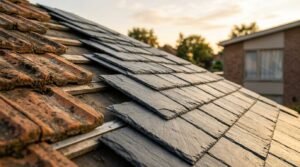
Your roof protects everything beneath it, which makes major roof work the second most expensive repair category. Full replacement in Sydney runs $15,000 to $45,000 depending on size, pitch, and material.
Factors Affecting Roof Replacement Costs
Roof area sets the baseline, and pitch, accessibility, and penetration count for skylights, vents, and flues then drive labour hours well beyond it. Steep roofs demand fall-protection systems and slow the crew considerably.
Material choice creates the widest cost swing. Concrete tile runs $120 to $180 per square metre installed, Colorbond steel reaches $150 to $250, and terracotta or slate exceeds $300 per square metre.
When Repair Becomes Replacement
Individual tile repairs and minor leak fixes cost $600 to $3,000. Once damage covers more than 25% of the roof, or the battens and sarking underneath show rot, replacement beats another round of patching outright.
Roofs at 25 to 40 years almost always hit this crossover. Repeated patching on an aging roof costs more over five years than replacement does, and you still own an unreliable roof at the end of it.
Protecting Your Roof Investment
Annual inspections catch small problems while they remain small. Clear gutters twice yearly to stop water backing up under the tile edge, and trim branches that abrade the surface or drop debris.
Address every leak the week you find it, because water moves fast once it breaches the roof system.
Plumbing System Overhauls
Major plumbing work ranks among the most expensive and most disruptive repairs in a house. A dripping tap costs $180 to fix, while whole-house repiping runs $8,000 to $25,000.
Sewer and Stormwater Line Replacement Costs
Drainage problems generate the highest plumbing invoices in the trade. Traditional open-trench replacement costs $5,000 to $30,000 and destroys landscaping, driveways, and paving that then need restoration.
Trenchless pipe relining offers a less invasive route at $400 to $900 per linear metre, though it does not suit every situation. Root intrusion, collapsed pipe, and advanced corrosion still force full replacement.
Septic and Onsite Wastewater Costs
Homes on septic or an aerated treatment system carry a repair exposure that sewered homeowners never think about. A full system replacement costs $12,000 to $30,000, and absorption trench replacement alone runs $8,000 to $20,000.
Failure signals include standing water over the trenches, effluent odour in the yard, and drains that slow across the entire house at once. Pumping every three to five years at $400 to $800 is the cheapest insurance available on any system in this article.
Hidden Leak Damage
Undetected leaks cause damage that dwarfs the repair itself. A slow leak inside a wall cavity runs for months, growing mould, rotting framing, and inflating water bills the whole time, and by the time staining appears, remediation reaches $8,000 to $25,000.
Slab leaks are the worst case. Reaching the pipe under concrete means tunnelling beneath the foundation or cutting through the slab, and either route adds $3,000 to $9,000 on top of the plumbing fix.
Preventing Major Plumbing Expenses
Locate your main shutoff valve today and make sure everyone in the house knows where it is. Track your water bill quarterly, because an unexplained jump is the earliest leak signal you will get.
Fix small leaks the week they appear. Order a CCTV drain inspection before buying any home built before 1980, since galvanised supply lines and earthenware sewer laterals from that era are on borrowed time.
Electrical System Upgrades and Rewiring
Whole-house rewiring costs $10,000 to $35,000 for an average Sydney home. That expense becomes non-negotiable once existing wiring creates a fire hazard or cannot carry modern loads.
When Rewiring Becomes Necessary
Homes built before 1980 frequently contain wiring that no longer meets standards. Rubber and VIR-insulated cabling from the 1950s and 1960s perishes and crumbles, exposing live conductors inside wall cavities and ceiling spaces.
Switchboard upgrades alone cost $1,800 to $5,000, and they routinely uncover wider problems once the cover comes off. A home still running ceramic fuses instead of circuit breakers and safety switches needs a full electrical assessment before anything else.
Signs of Electrical Problems
Flickering lights, breakers that trip repeatedly, warm outlet covers, and any burning smell demand immediate attention. Discoloured outlets and switches indicate heat damage at the connection.
Two-pin outlets and an absence of RCD protection on power and lighting circuits both confirm the wiring predates current requirements. Insurers increasingly query electrical condition on older homes, and undisclosed non-compliant work complicates a claim after a fire.
Electrical Safety Investment
Only a licensed electrician can legally perform this work in NSW, and the licence protects both safety and resale. Every completed job must come with a Certificate of Compliance for Electrical Work, and you keep that certificate permanently because a purchaser’s conveyancer will ask for it.
Pull itemised quotes from three licensed contractors, because pricing on large electrical jobs varies more than on almost any other trade. Confirm each quote specifies switchboard scope, circuit count, and whether making-good of plaster and paint is included, since that omission is where cheap quotes quietly recover their margin.
HVAC System Replacement
Heating and cooling systems represent major investments with hard expiration dates. Complete split-system replacement costs $3,500 to $9,000, while a ducted system with new zoning and ductwork reaches $15,000 to $25,000.
Understanding HVAC Lifespan
Outdoor condensing units last 12 to 15 years with maintenance. Ducted gas heaters average 15 to 20 years, and reverse-cycle systems land near 15 years. Efficiency drops the whole way through that life, so an aging system costs more to run every season even while it works.
Replacement wins financially once repair costs pass 50% of replacement value, or the system needs service calls in consecutive seasons.
Ductwork and Efficiency Considerations
The equipment is only half the system. Leaky or under-insulated ductwork wastes a large share of conditioned air before it reaches a room, and fitting a new outdoor unit onto failed ducts wastes the upgrade.
Duct replacement adds $4,000 to $9,000. Star ratings also matter more than they did a decade ago, and a high-rated inverter system cuts running costs meaningfully against a twenty-year-old fixed-speed unit.
Repair vs Replace Calculations
Compressor replacement runs $2,000 to $5,000. Heat exchanger replacement on a ducted gas heater costs $2,000 to $4,500, and on any system past ten years, that repair rarely makes sense against replacement.
Get quotes for both paths whenever a major component fails. Weigh remaining component age, efficiency gain, and whether the repair carries any warranty at all.
Water Damage and Mould Remediation
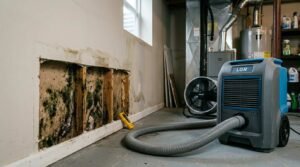
Water damage restoration varies enormously with source and duration. Minor cleanup starts near $1,800, while extensive flooding with structural repair exceeds $45,000.
The Three Categories of Water Damage
Restoration pricing follows contamination class, not litres. Category 1 covers clean supply-line water and costs $40 to $60 per square metre. Category 2 covers grey water from appliances at $50 to $80. Category 3 covers sewage and flood water, which requires full material removal at $80 to $120 per square metre.
Drying timelines matter just as much. Mould colonises wet materials within 24 to 48 hours, so response speed decides whether you pay for drying or for demolition.
Rising Damp and Salt Attack
Rising damp is the failure mode I see most often in older Sydney brickwork, and it is routinely misdiagnosed as a leak. Moisture wicks up through footings past a failed or bridged damp-proof course, leaving tide marks, bubbling paint, and crumbling mortar within the first metre of wall height.
Chemical damp-proof course injection costs $150 to $350 per linear metre, and full remedial work with render removal and salt-resistant replastering reaches $8,000 to $25,000 on a typical semi. Coastal homes face salt attack on top of it, where airborne salts crystallise inside brick and mortar until the face spalls away.
The True Cost of Water Damage
Extraction and drying represent only the opening line item. Saturated plasterboard, insulation, and flooring come out and get replaced, and mould testing and remediation add $3,000 to $12,000 depending on the affected area.
Structural repairs to wet framing or subfloor push the total higher again.
Mould Remediation Expenses
Contained remediation costs $2,500 to $8,000. Whole-house remediation on a severe infestation reaches $12,000 to $35,000, and the health exposure makes professional handling mandatory rather than optional.
Mould returns unless the moisture source dies first. Remediating without fixing the leak, correcting drainage, or adding subfloor ventilation simply resets the clock on the same bill.
Termite and Pest Structural Damage
Termites damage a large share of Australian homes at some point in their life, and standard building policies exclude every dollar of it. That combination makes timber pest damage one of the most under-planned expenses in this entire list.
What Termite Repairs Cost
Localised damage to a bearer or a few joists runs $5,000 to $12,000. Extensive damage requiring structural timber replacement across a subfloor or wall frame reaches $15,000 to $50,000.
Treatment is separate from repair. Chemical soil barrier treatment costs $2,500 to $6,000, baiting systems run $2,000 to $5,000 installed with $400 to $700 annual monitoring, and full structural treatment on an active infestation climbs higher again.
Catching Infestation Early
Look for mud tubes on foundation walls and piers, hollow-sounding skirting and architraves, discarded wings near windowsills, and paint that bubbles without a moisture source. Any of these justifies an inspection that week.
Annual timber pest inspections cost $300 to $600 and are the highest-return maintenance spend available on an older home.
Asbestos and Lead Paint Removal
Homes built before 1990 carry a hidden cost that surfaces the moment you open a wall. Asbestos and lead paint turn routine renovations into regulated removal projects with licensed crews and controlled disposal.
Asbestos Removal Costs
Bonded asbestos removal costs $50 to $120 per square metre, putting whole-home projects at $20,000 to $40,000. Fibro sheet removal from a bathroom or laundry runs $3,000 to $8,000, eaves and soffit replacement reaches $4,000 to $12,000, and friable material demands a Class A licensed removalist at several times the bonded rate.
Testing first costs $300 to $900 and is always cheaper than assuming. Any removal over ten square metres of bonded material requires a licensed removalist under NSW work health and safety rules, and the disposal receipt from a licensed facility is part of the compliance record.
Lead Paint Remediation
Most homes painted before 1970 contain lead paint, and pre-1990 homes carry meaningful risk. Encapsulation costs $45 to $80 per square metre, while full removal reaches $90 to $180 per square metre.
Full-home lead remediation lands between $15,000 and $40,000. Dry sanding lead paint is a prohibited practice, and the containment, wet-scraping, and waste-handling requirements are what separate a compliant quote from a cheap one.
Council Approval and Compliance Costs
Approval costs surprise homeowners more often than material costs do. Structural work, drainage alterations, and external changes routinely need either a Complying Development Certificate or a full Development Application, and certifier and lodgement fees run $1,500 to $6,000 before a tradesperson lifts a tool.
Heritage listing or a conservation area adds a heritage impact statement at $1,500 to $4,000 and extends the timeline by months. Engineering certification for underpinning or structural timber replacement adds $2,000 to $6,000, and skipping it creates an unapprovable-work problem that surfaces at sale.
Cladding and Exterior Envelope Replacement
The exterior envelope rarely makes anyone’s mental list of expensive repairs, right up until a failure lets water into the wall assembly. Then it becomes a structural problem wearing a cosmetic disguise.
Cladding Replacement Costs
Weatherboard replacement costs $15,000 to $30,000 on an average home. Fibre cement runs $18,000 to $35,000, and rendered, or brick-veneer remediation reaches $25,000 to $60,000.
Removing failed cladding often reveals rotted framing and sarking underneath, and that discovery adds $3,000 to $10,000 before new material goes on. Budget a contingency on any cladding job on a home more than 25 years old.
Whole-Home Window Replacement
Window replacement costs $800 to $2,200 per window installed, putting a 20-window home at $16,000 to $44,000. Full-frame replacement, required when the surrounding framing has rotted, costs 40% to 50% more than an insert replacement.
Failed seals showing condensation between panes, frames that no longer close square, and visible rot at the sill all signal replacement rather than repair.
What Home Insurance Covers and What It Doesn’t
Understanding coverage before a failure decides whether a repair costs you $1,000 or $40,000. The dividing line is almost always sudden versus gradual.
Generally Covered
Insurance covers sudden, accidental damage. A burst supply line, a storm that lifts tiles, a tree through the roof, and fire damage all qualify under standard building policies, and coverage extends to the resulting water damage from those sudden events.
Generally Excluded
Policies exclude gradual deterioration by design. Foundation settlement, long-running leaks, mould from ongoing moisture, termite damage, wear-and-tear roof failure, and any repair traceable to deferred maintenance fall outside coverage.
Flood cover is defined separately and varies by insurer and address, and actions of the sea are excluded on most residential policies entirely.
Protecting Your Claim
Document your home’s condition annually with dated photos. Keep every maintenance receipt, because proof of upkeep defeats a deferred-maintenance denial.
Report sudden damage within days, since delay itself becomes grounds for reduction.
Pre-Purchase Inspections and What They Save You
Every repair in this article is cheaper to discover before settlement than after it. A combined building and timber pest inspection costs $500 to $900 in Sydney, and it is the only point in the transaction where a five-figure defect is still someone else’s problem.
A building inspection flags structural movement, roof condition, drainage faults, and moisture ingress. Order the timber pest component at the same time, because termite activity and structural damage sit outside a standard building report.
I add two specialist reports on anything pre-1980. A CCTV drain inspection at $300 to $600 finds the earthenware sewer collapse that becomes a $20,000 excavation, and a structural engineer’s opinion at $800 to $2,000 turns visible cracking into a costed scope you can negotiate against.
How to Decide Which Repair Comes First
Most homeowners do not face one of these repairs. They face three at once, with budget for one, and no framework for choosing.
We sequence by consequence, not by cost. A repair that compounds damage while you wait always outranks a repair that only degrades comfort or appearance.
Tier One: Repairs That Compound
Foundation movement, active water intrusion, roof failure, and sewer backup all worsen every month you defer them. A $10,000 foundation issue becomes a $60,000 issue in three years because the movement never pauses. These get funded first, always.
Tier Two: Repairs That Threaten Safety
Failed wiring, gas-appliance heat exchanger cracks, and structural pest damage carry risk that has nothing to do with money. They come second, funded ahead of anything discretionary.
Tier Three: Repairs That Degrade Slowly
HVAC nearing end of life, windows with failed seals, and cosmetic cladding damage cost you efficiency and comfort while you save. They wait without multiplying, which makes them the correct thing to defer.

How to Budget for Major Home Repairs
Strategic planning is what separates a manageable repair from a financial emergency. Reserves and preventive maintenance reduce both the frequency and the severity of major expenses.
Emergency Fund Guidelines
Financial planners recommend three to six months of living expenses in liquid reserves. Homeowners need a dedicated repair reserve on top of that, and $20,000 to $30,000 covers most single-category failures in the Sydney market.
Property investors should set aside 1% to 2% of property value annually for maintenance and repair. On a Sydney dwelling near the metropolitan median, that means $12,000 to $24,000 a year, which sounds punishing until you price a single underpinning job against it.
Build the reserve in a separate offset or savings account so it never gets absorbed into general spending. I tell owners of pre-1980 homes to weight toward the top of that range, because the failure categories in this article cluster heavily in older housing stock.
How Homeowners Fund Major Repairs
Few homeowners fund a five-figure structural repair from cash alone. Redrawing against an existing mortgage or accessing equity through a loan increase is usually the cheapest route, and it prices well below unsecured personal lending or a construction facility.
Staging the work across financial years is the underused option. Sequencing by consequence lets you fund Tier One now and defer Tier Three without compounding damage, and a builder able to quote a staged scope with fixed pricing per stage protects you from cost drift between stages.
How Location Changes Your Repair Costs
National averages mislead badly. Labour rates across Sydney metro run well above regional NSW, so identical underpinning work priced at $30,000 in a regional centre reaches $45,000 in the eastern suburbs where access and parking constrain every delivery.
Climate and geology drive the exposure too. Reactive clay through western Sydney raises foundation risk, coastal humidity and salt accelerate mould and masonry decay, and the sandstone shelf inland of the harbour creates its own footing problems. Budget against your suburb’s dominant failure mode, not against a national mean.
Prioritising Preventive Maintenance
Maintenance costs a fraction of emergency repair. Annual inspection of roof, plumbing, electrical, and structure catches problems while they remain cheap, and an $800 fix today routinely prevents a $25,000 failure later.
Build a maintenance calendar covering:
- Annual roof and gutter inspection
- Annual timber pest inspection
- Biannual HVAC service, spring and autumn
- CCTV drain inspection every five years on pre-1980 homes
- Electrical inspection every five to ten years
- Septic or onsite system pumping every three to five years
Which Repairs Protect Resale Value
Buyers do not pay a premium for a sound foundation, but they walk away from a cracked one. Structural, roof, electrical, and plumbing repairs protect your base value rather than adding to it, and skipping them costs you at the building inspection.
Exterior and presentation work recovers the strongest percentages at resale, with cladding, roof, and entry improvements near the top. Interior renovations recover less on paper but sell the house faster, and in the Sydney market a clean building and pest report is worth more at auction than any single cosmetic upgrade.
Getting Accurate Repair Quotes
Collect three written quotes on any repair over $10,000, and confirm each one covers identical scope before comparing numbers. Ask about warranty terms, payment schedule, and approval responsibility in writing.
Verify licence status and active insurance with NSW Fair Trading before signing anything, and confirm home building compensation cover applies on residential work above the statutory threshold.
Treat any quote landing far below the other two as a warning rather than a bargain. Underquoting resolves itself through variations or through material substitution, and you pay either way.
Conclusion
Foundation repair, roof replacement, and major plumbing work are the most expensive home repairs Australian homeowners face, with severe foundation failures reaching $150,000 or more. Knowing these numbers lets you budget with real figures, recognise warning signs early, and decide between urgent and deferrable with confidence.
The homeowners who avoid financial damage are rarely the ones who spend the most on maintenance. They are the ones who inspect annually, fix small problems immediately, and sequence major work by consequence rather than by convenience.
At Sydney Home Renovation, we help homeowners navigate complex renovation decisions with transparent pricing and honest assessments of what needs doing now. Contact us for a property assessment, and we will help you prioritise the work and build a budget that protects your investment.
Frequently Asked Questions
What is the most expensive repair in an older home?
Foundation repair costs the most in older homes, running $25,000 to over $150,000. Decades of soil movement, dated construction methods, and deferred maintenance compound the damage.
How much should I budget annually for home repairs?
Budget 1% to 2% of your home’s value each year. On a $1.2 million Sydney home, that means $12,000 to $24,000 annually, covering routine maintenance and building reserves.
Can I claim home repairs on insurance?
Insurance covers sudden accidental damage like burst pipes, storms, and fire. Gradual deterioration, mould, termites, and wear-and-tear repairs fall outside standard building policies.
How do I know if foundation cracks are serious?
Horizontal cracks, cracks wider than five millimetres, and stair-step cracks in brickwork indicate structural movement. Fine vertical hairline cracks are usually cosmetic settling.
What home repairs add the most value?
Exterior and presentation work recovers the most at resale, particularly cladding, roofing, and entry improvements. Structural, electrical, and plumbing repairs protect base value rather than adding it.
Should I repair or replace an old roof?
Replace once damage exceeds 25% of the roof area, the roof passes 25 years, or repair costs approach half of replacement value. Repeated patching costs more long term.
How much does asbestos removal cost?
Bonded asbestos removal runs $50 to $120 per square metre, putting whole-home projects at $20,000 to $40,000. Testing first costs $300 to $900 and prevents unnecessary work.
Which repair should I fix first if I have several?
Fix repairs that compound first, meaning foundation, active leaks, roof, and drainage. Safety issues like failed wiring come second, and comfort items like HVAC wait.
How can I prevent expensive home repairs?
Annual inspections, immediate attention to small problems, proper drainage, and adequate subfloor ventilation prevent most large expenses. Professional roof, plumbing, and timber pest inspections catch issues early.