A minimalist bathroom is built on one principle: every element earns its place. Clean lines, concealed storage, and a restrained material palette create a space that feels larger, calmer, and easier to maintain. These qualities make minimalist design one of the most consistently popular renovation choices for Sydney homeowners and investors and one of the most rewarding to execute well.
Cluttered bathrooms are harder to clean, harder to sell, and harder to enjoy. A well-executed minimalist renovation solves all three problems at once.
This guide covers layouts, colour palettes, storage solutions, fixtures, lighting, waterproofing compliance, and realistic renovation costs everything you need to plan a minimalist bathroom that works for your home and budget.
What Is Minimalist Bathroom Design?
Minimalist bathroom design removes everything unnecessary and refines everything that remains. It prioritises function, visual calm, and quality over quantity using fewer materials, fewer fixtures, and fewer decorative elements to create a space that feels intentional rather than sparse.
The result is a bathroom that is easier to clean, easier to maintain, and more visually cohesive than a heavily styled alternative.
Core Principles of Minimalism in Bathrooms
Five principles define a genuinely minimalist bathroom.
Simplicity of form. Fixtures and fittings with clean, geometric profiles no ornate detailing, no decorative hardware that collects grime.
Concealed storage. Clutter is the enemy of minimalism. Every toiletry, towel, and cleaning product needs a home behind a door or inside a niche.
Restrained material palette. Two to three materials maximum. Consistency across surfaces creates cohesion; too many finishes create visual noise.
Neutral or monochromatic colour. White, warm grey, soft stone, and matte black are the most common minimalist palettes in Sydney bathrooms.
Quality over quantity. Fewer items means each item is more visible. Investing in one excellent tapware set delivers more visual impact than filling the space with mid-range fittings.
Minimalist design is one of the most requested styles in bathroom renovation Sydney projects today, valued for its clean lines, reduced maintenance, and lasting visual appeal.
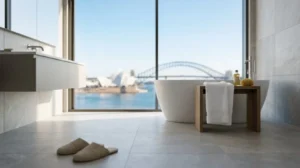
Minimalist Bathroom Layouts That Work in Sydney Homes
Layout is the foundation of any minimalist bathroom. A poorly planned layout forces compromise: awkward traffic flow, wasted floor space, and fixtures that fight each other visually. A well-planned layout makes the minimalist aesthetic effortless.
Sydney homes present a wide range of bathroom sizes and configurations, from compact inner-city ensuites to larger family bathrooms in suburban properties. The minimalist approach works across all of them, but the layout strategy differs.
Small Bathroom Minimalist Layouts
In a small bathroom, minimalism is not just an aesthetic choice; it is a practical necessity. Every square metre counts.
The most effective small bathroom renovation layouts share three characteristics. First, they keep the wet zone shower and bath, if present, clearly defined and separate from the dry zone. Second, they use wall-hung fixtures to free up floor space and make the room feel larger. Third, they eliminate unnecessary transitions between materials, which visually fragment a small space.
A walk-in shower with a frameless screen, a wall-hung vanity with integrated storage, and a back-to-wall toilet are the three fixtures that consistently deliver the best minimalist result in compact Sydney bathrooms.
Ensuite and Full Bathroom Configurations
Larger ensuites and full bathrooms offer more layout flexibility, but the minimalist discipline remains the same: define zones clearly, keep the material palette consistent, and resist the temptation to fill available space with unnecessary fixtures.
A double vanity with integrated storage, a freestanding bath positioned as a focal point, and a fully tiled wet room configuration are common in larger Sydney minimalist bathrooms. The key is ensuring each element has visual breathing room; overcrowding a larger bathroom with too many features undermines the minimalist intent.
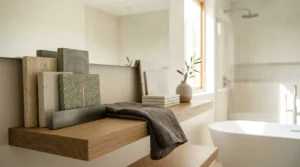
Colour Palettes and Materials for a Minimalist Bathroom
Colour and material selection are where minimalist bathrooms either succeed or fall flat. The palette needs to be cohesive, calm, and durable, chosen for how it performs over years, not just how it photographs.
Neutral Tones and Monochromatic Schemes
The most enduring minimalist bathroom palettes in Sydney are built around neutral tones: warm whites, soft greys, greige, and matte black accents. These colours recede visually, making the space feel larger, and they age well; they do not date the way trend-driven colours do.
Monochromatic schemes using one colour in multiple tones and finishes are particularly effective in smaller bathrooms. A bathroom finished entirely in warm white, with variation created through matte and gloss tile finishes, reads as sophisticated rather than monotonous.
Warm undertones generally perform better in Sydney’s natural light conditions than cool blue-grey palettes, which can feel clinical under artificial lighting.
Minimalist Tile and Surface Choices
Large-format tiles are the single most impactful material choice in a minimalist bathroom. Fewer grout lines mean a cleaner visual field, and larger tiles make a space feel more expansive. Porcelain in 600×600mm or 600×1200mm formats is the most common choice in Sydney minimalist renovations.
Honed or matte finishes outperform polished finishes in minimalist bathrooms; they hide water marks, reduce visual noise, and feel more considered than high-gloss alternatives. We consistently recommend honed porcelain or stone-look surfaces as the baseline for any minimalist brief.
Grout Colour in a Minimalist Bathroom
Grout colour is a detail that carries more visual weight than most homeowners expect. Tone-matched grout where the grout colour closely mirrors the tile creates the cleanest, most seamless surface and is the standard choice in minimalist bathrooms.
Contrast grout can work in a minimalist design, but only when it is deliberate and consistent across every tiled surface. A single grout colour used throughout the entire bathroom floor, walls, and shower reads as intentional. Inconsistent grout colours across surfaces undermine the restrained aesthetic immediately.
Sustainable Material Choices for a Minimalist Bathroom
Sustainable materials are increasingly common in Sydney minimalist renovations, and they align naturally with the minimalist principle of choosing fewer, better things. Recycled-content porcelain tiles, low-VOC grout and adhesives, and water-efficient tapware rated under the WELS scheme all reduce environmental impact without compromising the aesthetic.
Timber-look porcelain, a durable, water-resistant alternative to real timber, is one of the most popular sustainable choices we specify for minimalist bathrooms. It delivers warmth and texture without the maintenance demands of natural wood in a wet environment.
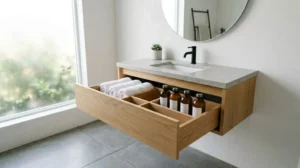
Storage Solutions That Keep Minimalist Bathrooms Clutter-Free
A minimalist bathroom without adequate storage is not minimalist; it is just empty. The discipline of minimalism requires that everything has a place, and that place is hidden from view.
Built-In and Concealed Storage Options
The most effective storage solutions in minimalist bathrooms are those that disappear into the architecture. Recessed wall niches in the shower provide shampoo and soap storage without protruding into the wet zone. Full-height mirrored cabinets above the vanity conceal toiletries behind a reflective surface that also makes the room feel larger.
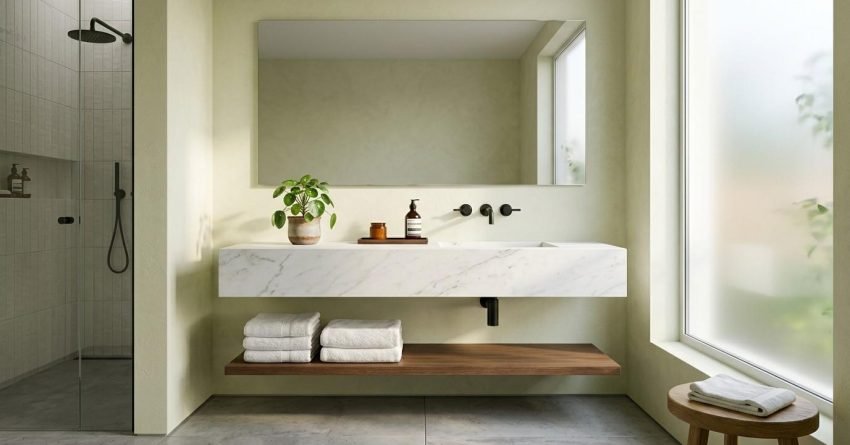
Floating vanities with integrated drawers are the workhorse of minimalist bathroom storage. They keep the floor visible, which reads as more space while providing practical, organised storage for everyday items.
In larger bathrooms, a full-height linen tower or built-in cabinetry column provides towel and linen storage without the visual weight of a freestanding unit.
Mirror Selection and Placement
Mirrors do more work in a minimalist bathroom than in any other style. A full-width mirror above the vanity running the full length of the benchtop eliminates the visual interruption of a framed mirror and makes the room feel significantly wider.
Frameless mirrors are the strongest minimalist choice. They disappear into the wall plane rather than announcing themselves as a decorative object. Where a mirrored cabinet is used instead, a recessed installation set flush with the wall surface maintains the same clean-line result.
We recommend sizing the mirror generously. In a minimalist bathroom, a mirror that is too small reads as an afterthought, while a full-width or oversized mirror reads as a considered design decision.
Fixtures and Fittings for a Minimalist Aesthetic
Fixtures are the most visible elements in a minimalist bathroom, and because the palette is restrained, each fixture carries more visual weight than it would in a busier design. Selection needs to be deliberate.
Tapware, Showerheads, and Basin Styles
Matte black and brushed nickel are the two tapware finishes that dominate Sydney minimalist bathrooms in 2025. Both hold their appearance better than chrome under daily use, and both read as intentional rather than default.
Lever handles with a simple geometric profile are the most versatile minimalist tapware choice. Avoid ornate spout curves or decorative bases; they conflict with the clean-line aesthetic.
Basin style has a significant impact on the overall look. Under-counter basins integrated into a stone or solid surface vanity top create the cleanest possible line. Above-counter basins can work in minimalist designs but require a very simple form: a plain cylinder or shallow oval, not a sculptural statement piece.
Selecting the right bathroom fixtures and fittings is one of the highest-impact decisions in a minimalist renovation, where every visible element contributes directly to the overall aesthetic.
Frameless Shower Screens and Floating Vanities
A frameless glass shower screen is the defining fixture of a contemporary minimalist bathroom. The absence of a frame means the eye travels through the glass rather than stopping at a metal border; the wet zone reads as part of the room rather than a separate enclosure.
Floating vanities reinforce the same principle. By lifting the vanity off the floor, the floor plane becomes continuous and uninterrupted, which makes the room feel larger and cleaner.
Both frameless shower screens and floating vanities require precise installation; substrate preparation, waterproofing, and structural fixing must be done correctly for the minimalist finish to hold up over time.
Underfloor Heating
Underfloor heating is one of the few additions that enhances a minimalist bathroom without adding visual complexity. The heat source is entirely concealed beneath the tile surface, which means it contributes comfort without contributing clutter.
Electric hydronic systems are the most common choice in Sydney bathroom renovations. Installation cost typically adds $800–$2,500 to the project depending on floor area and system type. We recommend specifying underfloor heating at the design stage; retrofitting it after tiling is significantly more expensive.
Lighting in Minimalist Bathroom Design
Lighting is the element most often underplanned in minimalist bathrooms, and it is the element that most determines how the finished space feels. A well-lit minimalist bathroom feels calm and considered. A poorly lit one feels cold and clinical.
Natural Light, Recessed Lighting, and LED Strips
Natural light is the best starting point. Where skylights or windows are possible, we prioritise them; natural light renders tile colours and material finishes more accurately than any artificial source.
For artificial lighting, recessed downlights are the minimalist standard. They disappear into the ceiling plane and provide even, shadow-free illumination without adding visual clutter. Positioning matters: downlights placed directly above the vanity mirror create unflattering shadows; positioning them slightly forward of the mirror face eliminates this problem.
LED strip lighting installed behind a floating vanity or beneath a wall-hung cabinet adds a layer of ambient light that makes the space feel warmer and more dimensional without introducing a visible fixture. This technique is particularly effective in bathrooms with dark tile palettes.
Avoid pendant lights, exposed bulb fittings, or decorative sconces in a minimalist bathroom; they introduce visual complexity that works against the design intent.
Ventilation and Humidity Control
Ventilation is a non-negotiable element in any bathroom, and in a minimalist design it needs to be planned carefully so the exhaust system does not become a visual intrusion. A ceiling-mounted exhaust fan with a flat, flush-fitting grille integrates cleanly into a minimalist ceiling plane.
We specify exhaust fans rated at a minimum of 25 litres per second for standard bathroom sizes, in line with the requirements of the National Construction Code. Undersized ventilation leads to condensation, mould growth, and tile grout deterioration, all of which directly undermine the clean, maintained look that minimalist design depends on.
Where a bathroom has no external window, a continuous-run exhaust fan with a humidity sensor is the most effective solution. It manages moisture automatically without requiring the homeowner to remember to switch it on.
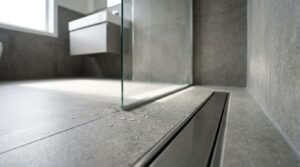
Waterproofing and Wet Area Compliance in a Minimalist Bathroom
Waterproofing is the most important structural element in any bathroom renovation, and it is the one most likely to be underestimated in a minimalist brief focused on aesthetics. In New South Wales, wet area waterproofing must comply with AS 3740:2021, the Australian Standard for waterproofing of domestic wet areas.
What AS 3740 Requires
The standard mandates waterproofing membranes in all shower recesses, around baths, and on any floor area subject to regular water exposure. The membrane must be applied by a licensed waterproofer and must extend a minimum of 150mm up the wall from the floor in wet zones, with higher upstands required in shower recesses.
We use a liquid-applied membrane system as our standard specification. It bonds directly to the substrate, accommodates minor movement, and creates a seamless barrier with no joins or seams that can fail over time.
Why Waterproofing Matters for a Minimalist Finish
A waterproofing failure does not just cause structural damage; it destroys the minimalist finish. Water ingress behind tiles causes grout cracking, tile lifting, and surface staining that cannot be repaired without a full strip-out and re-tile. Getting the waterproofing right the first time protects both the structure and the aesthetic investment.
We always obtain a waterproofing inspection certificate before tiling begins. This is a legal requirement in NSW and a quality checkpoint we treat as non-negotiable on every project.
Common Minimalist Bathroom Mistakes and How to Avoid Them
The minimalist aesthetic looks simple, but it is one of the hardest styles to execute without errors. The restraint that makes it beautiful also means every mistake is visible.
Under-specifying storage. The most common mistake we see is a bathroom that looks minimalist in the design render but has nowhere to put anything in real life. Every toiletry that ends up on the benchtop is a failure of storage planning. We always audit storage capacity against the household’s actual needs before finalising the design.
Choosing the wrong tile scale. Small tiles in a minimalist bathroom create visual noise; the grout grid fragments the surface and works against the clean-field aesthetic. Large-format tiles are not just a trend; they are structurally correct for the style.
Ignoring lighting placement. A single ceiling downlight centred in the room is not a lighting plan. It creates shadows at the vanity and makes the space feel flat. We plan lighting in three layers: task, ambient, and accent, even in the most restrained minimalist brief.
Skipping the waterproofing inspection. Cutting costs on waterproofing to spend more on tapware is a false economy. A waterproofing failure costs far more to rectify than the inspection saved.
Mixing too many finishes. Matte black tapware with brushed nickel accessories and chrome towel rails is not a curated palette; it is an accident. We specify all metal finishes from a single family at the design stage and hold to it throughout the project.
What to Expect During a Minimalist Bathroom Renovation in Sydney
Understanding the renovation process helps homeowners plan realistically and avoid the surprises that cause budget blowouts and timeline stress.
Typical Renovation Stages and Durations
A standard minimalist bathroom renovation in Sydney moves through five stages.
Design and documentation (1–2 weeks). This covers the design brief, material selections, fixture specifications, and council or certifier requirements if structural work is involved.
Demolition and rough-in (3–5 days). The existing bathroom is stripped to the substrate. Plumbing and electrical rough-in work is completed at this stage; this is when any hidden issues (old waterproofing failures, corroded pipes, inadequate drainage falls) are identified and resolved.
Waterproofing and tiling (5–8 days). Waterproofing membrane is applied, inspected, and certified before tiling begins. Large-format tiles require additional time for substrate preparation and adhesive cure.
Fixture installation (2–3 days). Vanity, toilet, shower screen, tapware, and accessories are installed once tiling is complete and cured.
Finishing and handover (1–2 days). Silicone sealing, final inspections, cleaning, and client walkthrough.
A standard minimalist bathroom renovation in Sydney typically takes three to five weeks from demolition to completion. Custom joinery, natural stone, or complex plumbing relocations can extend the timeline by one to two weeks. We provide a detailed project schedule at the start of every renovation so there are no surprises.
How Much Does a Minimalist Bathroom Renovation Cost in Sydney?
Understanding the full bathroom renovation cost, including labour, materials, and contingency, is essential before committing to a minimalist design scope in Sydney. Minimalist bathrooms are not inherently cheaper than other styles; the cost savings from fewer decorative elements are often offset by the higher quality of materials and the precision required in installation.
Budget Ranges by Scope and Finish Level
Sydney minimalist bathroom renovations typically fall into three budget tiers.
Entry-level minimalist ($15,000–$22,000). Porcelain tiles in a standard format, wall-hung vanity with laminate finish, matte black tapware from a mid-range supplier, frameless shower screen, recessed niche. Suitable for investment properties and first renovations.
Mid-range minimalist ($22,000–$35,000). Large-format porcelain or stone-look tiles, solid surface or stone vanity top, premium tapware in brushed nickel or matte black, frameless screen with custom sizing, recessed lighting, concealed cistern toilet. The most common scope for owner-occupier renovations in Sydney.
Premium minimalist ($35,000–$60,000+). Natural stone surfaces, custom joinery, designer tapware, heated floors, integrated lighting design, bespoke shower niches, and high-specification waterproofing. Appropriate for high-value properties where the renovation needs to reflect the home’s overall quality.
The largest cost variables in a minimalist bathroom are tile format and material (larger and natural stone cost more), tapware brand tier, and whether the layout changes require moving plumbing. Keeping the existing plumbing layout is the single most effective way to control costs without compromising the minimalist aesthetic.
Conclusion
Minimalist bathroom design delivers lasting value visually, functionally, and financially when it is planned with discipline and executed with precision. The principles are straightforward: restrained materials, concealed storage, quality fixtures, and a layout that gives every element room to breathe.
For Sydney homeowners and investors, the minimalist approach consistently produces bathrooms that are easier to maintain, more appealing to buyers, and more enjoyable to use over the long term. Getting the waterproofing, storage, and lighting right from the start is what separates a minimalist bathroom that holds up from one that disappoints.
At Sydney Home Renovation, we specialise in minimalist bathroom renovations across Sydney from initial design brief and cost planning through to skilled installation and quality finishes. Contact our team to discuss your project and get a transparent, detailed quote.
Frequently Asked Questions
What makes a bathroom look minimalist?
A minimalist bathroom is defined by clean lines, a restrained colour palette, concealed storage, and fixtures with simple geometric profiles. Removing visual clutter exposed pipes, decorative accessories, and mismatched materials is as important as what we add.
Is minimalist bathroom design more expensive?
Not necessarily. Minimalist bathrooms use fewer decorative elements, but the materials and fixtures that remain are typically higher quality. The total cost depends on tile format, tapware brand, and whether plumbing is relocated, not the design style itself.
What tiles work best in a minimalist bathroom?
Large-format porcelain tiles in 600×600mm or 600×1200mm formats are the most effective choice. Matte or honed finishes reduce visual noise and hide water marks better than polished alternatives. Limiting the palette to one or two tile types maintains cohesion.
How do I add storage to a minimalist bathroom without ruining the look?
Recessed wall niches, floating vanities with integrated drawers, and full-height mirrored cabinets are the most effective concealed storage solutions. The key is ensuring every storage element is built into the architecture rather than added on top of it.
What colour palette suits a minimalist bathroom in Sydney?
Warm whites, soft greys, greige, and matte black accents are the most enduring minimalist palettes for Sydney homes. Warm undertones perform better under Sydney’s natural light conditions than cool blue-grey tones, which can feel clinical under artificial lighting.
Do I need a frameless shower screen for a minimalist bathroom?
A frameless screen is the strongest choice for a minimalist aesthetic because it eliminates the visual interruption of a metal frame. Semi-frameless options are a cost-effective alternative that still reads as clean and contemporary without the full frameless price point.
How long does a minimalist bathroom renovation take in Sydney?
A standard minimalist bathroom renovation in Sydney typically takes three to five weeks from demolition to completion, depending on scope, tile format, and whether any plumbing or waterproofing complications arise. Custom joinery and natural stone can extend the timeline by one to two weeks.
What are the biggest mistakes in minimalist bathroom design?
Under-specifying storage, choosing small-format tiles, ignoring layered lighting, and mixing metal finishes are the four most common mistakes we see. Each one is avoidable with careful planning at the design stage before any work begins.
Does waterproofing affect a minimalist bathroom finish?
Waterproofing is applied beneath the tile surface and is completely invisible in the finished bathroom. It has no impact on the aesthetic, but a waterproofing failure will destroy the finish through tile lifting, grout cracking, and staining that requires a full strip-out to repair.