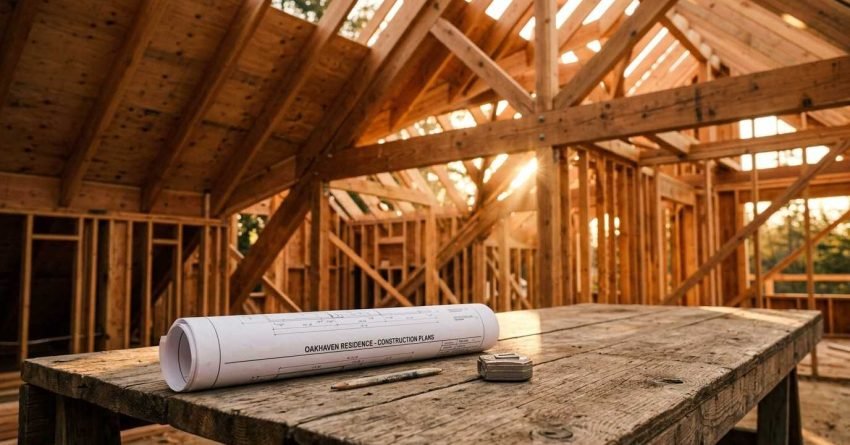
The biggest expense when building a house is the framing and structural phase, which consumes 25% to 35% of total construction cost. On a typical Sydney home, that works out to roughly $140,000 to $250,000 for timber, sheathing, roof trusses, and the crew that turns a slab into a weathertight shell.
I have priced hundreds of builds and renovations across Sydney, and that number surprises people every time. Most homeowners walk in convinced the kitchen or the bathrooms will dominate the budget.
Construction costs have climbed sharply since 2020, and budget overruns remain the leading source of stress on residential projects. Knowing which cost centres actually carry the weight is what lets you plan, negotiate, and prioritise with confidence.
Understanding Total House Construction Costs
Before you can identify the biggest expense, you need the total it sits inside. Building a new house in Sydney runs roughly $2,500 to $4,500 per square metre for a standard to mid-range build, and the Australian Bureau of Statistics tracks average approval values for new houses in New South Wales at well above $500,000 excluding land.
A 250 square metre home therefore lands somewhere between $625,000 and $1,125,000 to build, excluding land. Material volatility, trade scarcity, and supply chain disruption have all pushed those numbers up.
Your total build divides into predictable categories: site preparation, foundation, framing and structure, exterior envelope, interior finishes, and services. Each one carries a different share, and the shares are remarkably consistent from build to build.
How Construction Budgets Break Down by Percentage
Here is the ranking that answers the question at a glance.
Rank | Cost Category | Share of Budget | Typical Cost (250 m²) |
1 | Framing, roofing, and structure | 25–35% | $140,000–$250,000 |
2 | Interior finishes | 15–20% | $90,000–$150,000 |
3 | Services (electrical, plumbing, HVAC) | 15–20% | $90,000–$150,000 |
4 | Foundation and slab | 10–15% | $60,000–$110,000 |
5 | Exterior envelope and windows | 10–15% | $60,000–$110,000 |
6 | Site work, approvals, and professional fees | 10–15% | $60,000–$110,000 |
Framing holds the top spot in almost every build. Interior finishes only overtake it when someone specifies a luxury package, and even then the gap closes rather than reverses.
These percentages shift with design choices, site conditions, and finish grade. A steep Northern Beaches block pushes foundation costs up, while a simple rectangular single storey on flat ground pushes framing down.
Hard Costs Versus Soft Costs
Hard costs are the physical building: timber, concrete, tiles, wiring, and the labour that installs them. They account for roughly 75% to 80% of a typical residential budget.
Soft costs cover everything you cannot touch. Architectural design, engineering, council fees, surveys, certification, insurance, and finance interest together consume the remaining 20% to 25%.
I bring this up early because soft costs are where budgets quietly bleed. They rarely appear in a builder’s headline square-metre rate, and homeowners routinely discover them after the contract is signed.
Where Land Cost Fits
Every figure on this page excludes land. Construction cost and land cost are separate line items, and conflating them is one of the fastest routes to a broken budget.
Land regularly represents 40% to 60% of the all-in cost of a new Sydney home, a far heavier share than most Australian markets. A registered lot in an established suburb also arrives with services stubbed and levels resolved, which removes site work that a raw block still owes you.
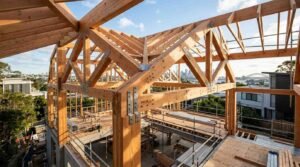
Framing and Structural Work: The Biggest Single Expense
Framing takes the top spot because it demands three expensive things at once: high material volume, skilled labour, and significant time on site. This is the phase that turns a flat slab into a three-dimensional structure with walls, roof trusses, and the skeleton carrying every load above.
Why Framing Costs Dominate Your Budget
Structural timber for an average Sydney build runs $45,000 to $90,000 in materials alone, and framing labour adds another $40,000 to $85,000 depending on complexity and roof pitch. Steel framing costs 15% to 25% more than timber but resists termites and holds dimension better over decades.
Roof trusses are the line item that shocks people. An engineered truss package for a 250 square metre home now runs $16,000 to $35,000, and building material prices have moved violently since 2020, with the Australian Bureau of Statistics producer price indexes recording sustained double-digit annual increases across timber and structural inputs before partially stabilising.
Window and door framing, structural beams, and bracing all land inside this phase. Multiple roof planes, high ceilings, and cantilevered sections each multiply the labour hours.
Structural Materials and Their Cost Ranges
Timber prices track commodity markets and move fast, which is why locking a material allowance early protects you. Steel framing carries that 15% to 25% premium over timber while eliminating termite exposure entirely, a real consideration across much of Sydney.
Concrete runs $280 to $400 per cubic metre delivered, with pumping adding $1,500 to $3,000 per pour. Reinforcing steel adds meaningfully to any slab of size.
Roofing spans $60 to $110 per square metre for Colorbond, $70 to $130 for concrete tile, and past $200 for slate or premium terracotta.
Factors That Increase Framing Costs
Design complexity drives framing cost more than floor area does. A single-storey rectangle with a simple gable roof frames far cheaper than a two-storey plan with hips, dormers, and stepped setbacks.
Every corner, angle change, and ceiling height variation adds both labour and material waste.
Site access matters too. Narrow inner-Sydney lots, steep driveways, and restricted street frontage add $8,000 to $25,000 in crane time and material handling during framing alone.
Labour Costs: The Hidden Giant in Construction Budgets
Framing materials are visible on an invoice. Labour is spread across twenty trades, which is exactly why it escapes attention despite being the larger number.
Skilled trades command premium rates across Sydney, and labour accounts for roughly 40% to 50% of total build cost once you add every crew together.
Trade Rates in the Current Sydney Market
Carpenters and framers bill $70 to $110 per hour, with experienced structural crews at the top of that band. A three- or four-person framing team works two to four weeks on an average home.
Electricians run $90 to $150 per hour, and a new build absorbs 80 to 120 hours of electrical work. Plumbers price similarly across rough-in and fit-off stages.
Bricklayers, plasterers, tilers, and painters each stack on top. Added together, labour commonly totals $250,000 to $420,000 on a standard Sydney build.
Why Labour Costs Keep Rising
The construction workforce is structurally short. Jobs and Skills Australia has repeatedly listed carpenters, bricklayers, plumbers, and electricians in national shortage, and that scarcity flows straight into hourly rates and programme length.
Apprenticeship pipelines thinned during the pandemic and never fully recovered. Experienced tradespeople now name their price, and builders compete hard to keep reliable crews attached to their schedule.
We plan around this rather than fight it. Booking trades early and sequencing them tightly protects both the budget and the timeline.
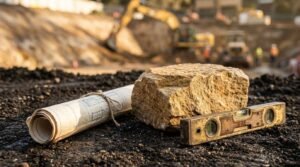
Foundation and Site Costs: The Variable Expense
Foundation cost swings wider than any other category. A flat, stable block with good soil takes a straightforward waffle slab at $22,000 to $50,000, while a sloped site with reactive clay demands engineered footings and retaining work at $70,000 to $160,000 or more.
Soil Conditions and Their Budget Impact
Reactive clay soils classified H1 or H2 under AS 2870 require deeper footings, heavier reinforcement, and sometimes piered construction. A geotechnical report costs $1,200 to $3,500 and tells you exactly which classification you are in before you commit.
Poor soil classifications add $25,000 to $70,000 against a stable-soil baseline. Rock excavation, common across Sydney sandstone country, adds $150 to $400 per cubic metre removed.
Contaminated parcels such as former industrial sites or filled land need remediation first. That ranges from $15,000 for minor issues to well past $150,000 for serious contamination.
Sloping Sites and Retaining Requirements
Cut and fill to create a level building pad costs $80 to $250 per cubic metre of earth moved. Retaining walls holding back those cuts add $600 to $1,400 per square metre of wall face.
A moderately sloped block adds $40,000 to $90,000 in site work. A steep one adds $110,000 to $230,000 before framing even starts.
These costs blindside first-time builders who buy land on view and price alone. Always get a builder walkthrough and a soils report before you exchange on a challenging block.
Finishes: Where Quality Choices Impact Budget
Structural materials are largely fixed by engineering and the National Construction Code. Finish materials are where your choices actually move the number, and the spread between standard and premium selections is enormous.
Finish Materials and Cost Density
Interior finishes offer the widest budget range in the entire build. Flooring alone runs $40 to $80 per square metre for carpet, $90 to $160 for engineered timber, and $150 to $300 for solid hardwood installed.
Kitchens and bathrooms concentrate cost density more than any other rooms, which is why they dominate renovation budgets even though they sit second to framing in new construction. A full bathroom comes in near $25,000 at builder grade and passes $60,000 at the premium end, and a kitchen renovation spans an even wider band depending on joinery and stone selection.
Location Variation Across Sydney
Location changes all of it. The same house costs materially more to build in the eastern suburbs or on the North Shore than in the outer west, driven by trade rates, site access, council requirements, and bushfire or flood overlays.
Constrained inner-city sites carry surcharges that never appear on a headline square-metre rate. Skip bin permits, traffic control, scaffolding over footpaths, and limited material storage each add cost that an outer-suburban block simply never incurs.
Hidden Costs That Blow Construction Budgets
Beyond the headline categories sit the costs that never make it into an initial quote. These are the ones that turn a comfortable budget into a stressful one.
Council Approval and Planning Costs
Most Sydney builds proceed either as a Development Application through the local council or as Complying Development under a private certifier. DA fees scale with project value and commonly land between $3,000 and $15,000 once lodgement, notification, and assessment charges are counted.
The Complying Development pathway is faster and cheaper where your design meets every standard in the NSW Codes SEPP, typically resolving in weeks rather than months. Section 7.11 developer contributions apply on top in many local government areas and add $5,000 to $40,000 depending on the council and the dwelling type.
Approval timelines carry a cost of their own. Every month of delay accrues interest, rates, and holding expenses on land you already own.
Home Warranty Insurance and Compliance Costs
Any residential job in New South Wales above $20,000 requires the builder to hold cover under the Home Building Compensation Fund before work starts or money changes hands. The premium is a real line item, generally 1% to 2% of contract value, and it belongs in your budget rather than in a surprise variation.
BASIX certification is mandatory for new dwellings and major alterations, and it drives real design cost. Meeting the current NSW energy and thermal targets pushes glazing specification, insulation, and shading upward, commonly adding $8,000 to $25,000 against a non-compliant baseline.
Engineering certification, private certifier inspections, and the occupation certificate each carry their own charges. Budget $5,000 to $12,000 across the full certification chain on a standard new build.
Connection and Service Costs
Utility connections surprise nearly every first-time builder. Electrical service runs $3,000 to $9,000 for a standard connection and can pass $30,000 when a substation or pole upgrade is required.
Water and sewer connections cost $5,000 to $20,000 depending on distance to the main, and a Sydney Water tap-in on a constrained site sits at the upper end. Stormwater and drainage, particularly on sites requiring on-site detention, add $8,000 to $25,000.
Temporary site services during construction, meaning power, water, fencing, and sanitation, add $5,000 to $12,000 across a typical build.
Change Orders and Contingency
Variations made after contract signing typically add 5% to 15% to final cost. Even disciplined projects hit conditions nobody could see from the plans.
A contingency of 10% to 15% is not optional. On an $800,000 build, that means holding $80,000 to $120,000 in reserve, and I return unspent contingency far more happily than I watch a client stall mid-project.
Provisional sums and prime cost allowances for fixtures and finishes are frequently set low to make a tender look competitive. Read every PC and PS line and raise the ones your actual selections will exceed.
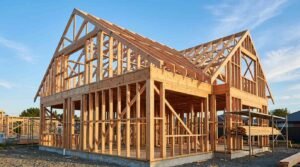
How to Reduce Your Biggest Construction Expenses
Here is the reframe that matters most: the biggest expense is also the least reversible one. You can change a tapware set in year three and a benchtop in year ten, but you cannot re-frame a house.
That is why structural decisions deserve the most planning time and the least improvisation, and it is the exact inverse of how renovation budgets behave.
Rebuild Versus Renovate on the Same Block
This is the decision that changes your entire cost hierarchy, and most Sydney homeowners face it before they face any other. A new build spends its budget on structure first and finishes second, while a renovation inverts that completely because the structure already exists.
Renovating an existing dwelling avoids the slab, the frame, the roof, and most of the approval burden, which is why a well-scoped home extension frequently delivers more usable space per dollar than starting again. A second storey addition trades on the same logic, buying floor area without buying land or a new foundation.
Knockdown-rebuild wins when the existing structure is unsound, the layout fights every change you want, or the block supports substantially more floor area than the current house uses. We run both numbers before anyone commits, because the answer genuinely flips depending on the condition of what is already standing.
Design Decisions That Save Money
A simple rectangular footprint cuts framing costs by 10% to 20% against a complex shape, worth $18,000 to $45,000 on an average build. Every corner you delete removes material, labour hours, and waste.
Standard ceiling heights of 2.4 to 2.7 metres cost less than tall volumes that need longer studs, more plasterboard, and extra paint. Holding one ceiling height throughout simplifies the whole frame.
Roof geometry is the single highest-leverage decision. A simple gable or hip beats multiple ridges and valleys, and reducing pitch saves 10% to 15% on roofing, commonly $5,000 to $14,000.
Material Selection Strategies
Standard window and door sizes cost less than custom units and arrive faster. Custom openings carry both a fabrication premium and a lead-time risk that lands squarely on your programme.
Selecting materials early and locking pricing shields you from mid-build increases. Bulk purchasing through your builder usually beats what you source individually.
Weigh lifecycle cost, not just sticker price. A roof that lasts 40 years at double the price of one lasting 18 beats it outright, and I steer clients toward durability on anything difficult to access later.
Builder Selection and Contract Negotiation
Get three to five detailed quotes and compare them line by line, not bottom line to bottom line. The cheapest number almost always hides thin allowances or excluded scope.
Fixed-price contracts protect you from increases while carrying a risk premium in the margin. Cost-plus gives you transparency and transfers price risk onto you, so choose based on how much volatility you can absorb.
Timing helps too. Builders quoting during slower seasons sharpen their pricing to keep crews working.
Conclusion
Framing and structural work is the biggest single expense when building a house, typically 25% to 35% of total cost. Combined with labour spread across every trade, these two forces set the shape of your entire budget and offer the largest returns on early planning.
The hierarchy inverts the moment you renovate instead. Structure is already paid for, finishes and services move to the top of the budget, and the smartest question stops being how much a new house costs and becomes which path gives you the space you want for the least money.
At Sydney Home Renovation, we build budgets the same way we build houses: structure first, finishes second, no surprises in between. We price transparently, flag the soft costs and allowances other quotes leave vague, and keep Sydney projects on schedule and inside the number we quoted. Contact us for a detailed consultation and a line-by-line quote that accounts for every expense, hidden ones included.
Frequently Asked Questions
What percentage of building costs goes to labour versus materials?
Labour accounts for roughly 40% to 50% of total construction cost, with materials making up the remaining 50% to 60%. Design complexity and local trade rates shift the split.
How much should I budget for contingencies when building a house?
Hold 10% to 15% of total construction cost as contingency for variations, price increases, and unforeseen conditions. On an $800,000 build, that means $80,000 to $120,000 in reserve.
Why is framing the most expensive part of building a house?
Framing combines high material volume, skilled labour over several weeks, and the entire structural skeleton of the home. Complex rooflines and varied ceiling heights push the cost higher still.
How do site conditions affect construction costs in Sydney?
Slopes, reactive clay, sandstone rock, and contamination add $40,000 to $230,000 in foundation, retaining, and site preparation work compared with a flat, stable block.
What hidden costs should I expect when building a house?
Expect council or certifier fees, developer contributions, home warranty insurance, BASIX compliance, utility connections, and variations. Together, these commonly add 15% to 25% beyond an initial quote.
How can I reduce framing costs without compromising quality?
Choose a simple rectangular footprint, consistent standard ceiling heights, and a straightforward roof. Single-storey construction with minimal corners cuts framing costs by 15% to 25%.
Is it cheaper to build single-storey or two-storey?
Single-storey homes cost less per square metre thanks to simpler framing, no stairs, and reduced scaffolding. Two-storey plans use less foundation and less land, which wins on expensive Sydney blocks.