
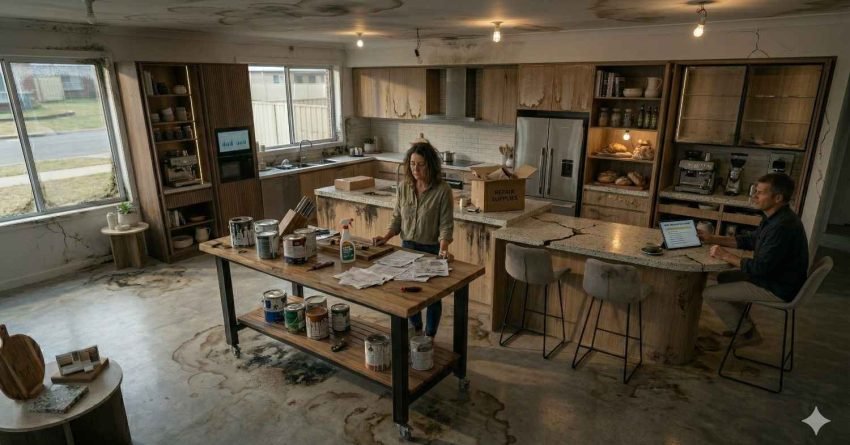
Structural defects, outdated bathrooms, poor renovation work, and neglected maintenance are the factors that devalue a house the most — and in Sydney’s competitive property market, even one of these issues can significantly reduce your sale price or buyer appeal.
Understanding what drives property devaluation matters whether you are preparing to sell, planning a renovation, or simply protecting your long-term investment. The gap between a well-maintained home and a neglected one can represent tens of thousands of dollars in lost value.
This guide breaks down every major factor that devalues a house — from permanent location issues to fixable cosmetic problems — and explains what Sydney homeowners and investors can do to protect and recover their property’s worth.
What Causes a House to Lose Value?
Property value is not static. It moves in response to physical condition, market forces, buyer expectations, and the decisions homeowners make — or fail to make — over time.
A house loses value when it falls short of what buyers in that market expect. In Sydney, where buyer expectations are high and competition is strong, the gap between a well-presented, well-maintained property and a neglected one is measured in real dollars at auction.
Devaluation can be triggered by a single significant defect, a pattern of deferred maintenance, or external factors entirely outside a homeowner’s control. Understanding which category applies to your property is the first step toward addressing it.
The Difference Between Cosmetic and Structural Devaluation
Cosmetic devaluation refers to issues that affect appearance and buyer perception — outdated finishes, worn surfaces, poor landscaping, and dated fixtures. These are fixable, often at a predictable cost, and the right renovation can recover or exceed the lost value.
Structural devaluation is more serious. It involves defects that affect the integrity, safety, or liveability of the building — foundation movement, roof failure, water damage, or the presence of hazardous materials. These issues are harder to conceal, more expensive to rectify, and carry legal disclosure obligations in NSW.
The distinction matters because it determines your renovation strategy. Cosmetic issues reward targeted investment. Structural issues demand rectification before any cosmetic work makes financial sense.
How Property Devaluation Is Measured in the Sydney Market
In practical terms, property devaluation in Sydney is measured against comparable sales — what similar homes in the same suburb sold for in the same period. Real estate agents, valuers, and buyers all use this benchmark.
A property with known defects, deferred maintenance, or poor presentation will be discounted against those comparables. The size of that discount depends on the severity of the issue, the cost to rectify it, and how risk-averse the buyer pool is at that point in the market cycle.
In a strong seller’s market, buyers may overlook moderate issues. In a cooling market, the same issues can result in properties sitting unsold or selling well below expectation.
Structural and Building Defects That Devalue a Property the Most
Of all the factors that devalue a house, structural and building defects carry the greatest financial impact. They are the issues that cause buyers to walk away, lenders to decline finance, and valuers to apply the steepest discounts.
In Sydney, where older housing stock is common across inner and middle-ring suburbs, structural issues are not rare. They are, however, consistently among the most damaging to property value.
Foundation Problems and Subsidence
Foundation movement is one of the most serious defects a property can have. It manifests as cracking in walls and ceilings, sticking doors and windows, uneven floors, and visible separation between structural elements.
In Sydney, clay-heavy soils in areas like the Hills District, parts of the Inner West, and Western Sydney are particularly susceptible to subsidence — the gradual sinking or shifting of the ground beneath a building. Tree root intrusion, poor drainage, and changes in soil moisture all contribute.
A property with active foundation movement can lose a substantial portion of its market value. Buyers who do proceed will factor in the full cost of underpinning or remediation, plus a risk premium, and deduct both from their offer.
Roof Damage and Water Ingress
A compromised roof is one of the fastest ways a property loses value. Water ingress causes cascading damage — to insulation, ceiling linings, wall cavities, electrical systems, and structural timbers. Left unaddressed, it creates the conditions for mould growth, which introduces a separate set of health and disclosure concerns.
In Sydney’s climate, where heavy summer storms are common, roof condition is a priority for buyers and building inspectors alike. A roof that is at or near end of life — even without active leaks — will attract a discount, because buyers understand the replacement cost is coming.
Asbestos, Mould, and Hazardous Materials
Homes built before 1990 in Sydney frequently contain asbestos in fibro sheeting, roof tiles, eaves, and floor underlays. The presence of asbestos does not automatically devalue a property if it is in good condition and properly managed, but damaged or friable asbestos is a serious issue that requires licensed removal and carries significant cost.
Mould is a more immediate concern for buyers. Visible mould — particularly in bathrooms, wet areas, and wall cavities — signals moisture problems, poor ventilation, and potential health risks. It is one of the most common reasons buyers reduce their offers or withdraw entirely after a building inspection.
Outdated Kitchens and Bathrooms — The Biggest Cosmetic Devaluer
If structural defects are the most damaging category overall, outdated kitchens and bathrooms are the most impactful cosmetic devaluers. These two rooms carry disproportionate weight in how buyers assess a property’s value and liveability.
Buyers form strong emotional responses to kitchens and bathrooms. A dated, poorly maintained bathroom signals neglect across the whole property — even when the rest of the home is in reasonable condition.
How an Outdated Bathroom Affects Resale Value in Sydney
In Sydney’s property market, an outdated bathroom is not just an aesthetic issue — it is a pricing issue. Buyers calculate the cost of renovation and deduct it from their offer, often applying a premium on top of the actual renovation cost to account for the inconvenience and risk of managing the work themselves.
A bathroom that features original 1980s or 1990s fittings, cracked tiles, poor waterproofing, or inadequate ventilation will consistently underperform at sale. In competitive suburbs where buyers expect modern finishes, an outdated bathroom can be the deciding factor between a strong result and a disappointing one.
The inverse is also true. A well-executed bathroom renovation — one with quality waterproofing, contemporary fixtures, and professional finishes — consistently delivers strong returns in Sydney’s market, particularly when it aligns with buyer expectations for that price bracket.
What Buyers Expect from a Modern Bathroom in Today’s Market
Sydney buyers in 2024 and 2025 expect bathrooms that are functional, well-ventilated, properly waterproofed, and finished to a standard that does not require immediate work. The specific aesthetic varies by suburb and price point, but the baseline expectations are consistent.
Buyers want to see rectified grout and sealed tiles, working exhaust ventilation, a shower that does not leak, adequate storage, and fixtures that are not visibly worn or corroded. In mid-to-upper price brackets, expectations extend to frameless shower screens, wall-hung vanities, and quality tapware.
A bathroom that meets these expectations removes a common objection from the buyer’s mental checklist. One that falls short adds a line item to their renovation budget — and a corresponding reduction in their offer.
Poor Renovation Work and Unpermitted Building Work
Not all renovation work adds value. Poorly executed renovations, unlicensed work, and building work carried out without the required approvals can actively devalue a property — sometimes by more than the cost of the original work.
This is one of the most misunderstood risks in the renovation space, particularly for homeowners who have undertaken DIY projects or engaged unlicensed tradespeople to reduce costs.
How DIY Renovations and Unlicensed Work Reduce Property Value
In NSW, certain categories of building work require a licensed contractor and, in many cases, council or certifier approval. Electrical work, plumbing, waterproofing, and structural alterations all fall into this category.
When this work is carried out by unlicensed individuals or without the required approvals, it creates a legal and financial liability that transfers to the property. Buyers who discover unpermitted work during due diligence — through a building inspection or a review of council records — will either withdraw or significantly reduce their offer to account for the cost and risk of rectification.
In some cases, buyers cannot obtain finance on a property with known non-compliant work, which removes a significant portion of the buyer pool entirely.
The Cost of Rectifying Non-Compliant Renovation Work in NSW
Rectifying non-compliant work in NSW is rarely straightforward. It typically involves engaging a licensed contractor to assess and redo the work, obtaining retrospective approval where possible, and in some cases demolishing and rebuilding elements that cannot be approved as-built.
The cost varies significantly depending on the scope and nature of the non-compliant work. Bathroom renovations with inadequate waterproofing are a common example — the waterproofing membrane must be replaced, which means removing tiles, rectifying the substrate, re-waterproofing to AS 3740 standard, and retiling. This can cost as much as a full bathroom renovation in its own right.
The lesson for homeowners is clear: the short-term saving from unlicensed or unapproved work is almost always outweighed by the long-term cost to property value and the expense of rectification
Location Factors That Permanently Devalue a House
Some devaluation factors are within a homeowner’s control. Location is not. The physical position of a property relative to noise sources, environmental hazards, and infrastructure can permanently suppress its value — regardless of how well the home itself is maintained or presented.
Understanding location-based devaluation is important for investors and buyers making purchasing decisions, and for homeowners who need to set realistic expectations about their property’s ceiling value.
Proximity to Noise, Traffic, and Industrial Zones
Properties located adjacent to major arterial roads, flight paths, rail lines, or industrial areas consistently trade at a discount to comparable properties in quieter locations. In Sydney, this is particularly relevant given the city’s density and the ongoing expansion of infrastructure.
The discount varies by degree of exposure. A property one street back from a busy road may attract a modest discount. A property directly fronting a motorway or under a flight path to Sydney Airport may be discounted by a meaningful percentage of its potential value.
Buyers factor in liveability, noise levels, air quality, and the long-term resale implications of the location. These are not concerns that renovation can address.
Flood Zones, Bushfire Risk, and Environmental Overlays in Sydney
Properties within flood-affected areas or designated bushfire attack level (BAL) zones in Sydney face specific challenges. Insurance costs are higher, development restrictions may apply, and buyers are increasingly aware of climate-related risk when making purchasing decisions.
Council flood mapping and bushfire overlays are publicly available in NSW, and buyers and their solicitors routinely check these as part of due diligence. A property identified as flood-prone or in a high BAL zone will attract a discount that reflects both the practical risk and the carrying costs — particularly elevated insurance premiums.
For homeowners in these areas, the focus should be on maintaining the property to the highest possible standard in all other respects, since location-based discounts cannot be renovated away.
Neglected Maintenance and Deferred Repairs
Deferred maintenance is one of the most common and most preventable causes of property devaluation. It is also one of the most insidious — because the impact accumulates gradually, often without the homeowner fully registering the extent of the deterioration.
A property that has been consistently maintained holds its value and presents well to buyers. A property where maintenance has been deferred across multiple systems and surfaces signals risk — and buyers price that risk into their offers.
How Maintenance Neglect Compounds Property Devaluation
The compounding nature of deferred maintenance is what makes it particularly damaging. A minor roof leak left unaddressed becomes water damage to ceiling linings. Water damage to ceiling linings creates conditions for mould. Mould spreads to wall cavities. What began as a relatively inexpensive repair becomes a multi-trade rectification project.
The same pattern applies to plumbing, electrical systems, external paintwork, and drainage. Each deferred repair creates the conditions for the next, more expensive problem. By the time a property reaches the market, the accumulated deferred maintenance can represent a significant discount against its potential value.
The Most Costly Deferred Repairs for Sydney Homeowners
Based on building inspection reports and rectification costs in the Sydney market, the deferred repairs that carry the greatest financial impact include roof maintenance and gutter replacement, re-stumping or underpinning in older homes, electrical rewiring in pre-1980s properties, and bathroom waterproofing failures.
Bathroom waterproofing is particularly relevant because failures are common, the damage they cause is extensive, and the cost of rectification is high relative to the original cost of doing the work correctly. A waterproofing membrane that was inadequately applied during a renovation can allow water to penetrate wall and floor substrates for years before visible damage appears — by which point the rectification scope has grown considerably.
Kerb Appeal, Landscaping, and First Impressions
First impressions in real estate are formed within seconds and are difficult to reverse. The exterior presentation of a property — its landscaping, paintwork, fencing, driveway, and garden — shapes the buyer’s emotional response before they step through the front door.
Poor kerb appeal does not just affect aesthetics. It affects the price a buyer is willing to pay and the confidence with which they make an offer.
How Poor Presentation Affects Buyer Perception and Sale Price
A property with overgrown gardens, peeling paintwork, a cracked driveway, or a tired facade signals neglect. Even if the interior is well-maintained, buyers carry that initial negative impression through the inspection. It creates doubt about what else may have been overlooked.
Conversely, a property with strong kerb appeal creates a positive emotional anchor that buyers carry through the inspection. They are more likely to overlook minor interior issues and more likely to make a confident offer at or near the asking price.
The investment required to improve kerb appeal is typically modest relative to the impact on buyer perception and sale price. Fresh exterior paint, a tidy garden, a clean driveway, and well-maintained fencing are among the highest-return pre-sale investments a homeowner can make.
Neighbourhood and Market Conditions That Affect House Value
Beyond the physical condition of the property itself, broader neighbourhood and market conditions play a significant role in determining value. These factors are largely outside a homeowner’s control, but understanding them is essential for setting realistic expectations and making informed decisions about when and how to sell or renovate.
Comparable Sales and How Neighbouring Properties Pull Your Value Down
In property valuation, comparable sales — or “comps” — are the primary reference point. Valuers and buyers look at what similar properties in the same suburb have sold for in the recent past and use those results to anchor their assessment of your property’s value.
If neighbouring properties have sold under distressed conditions, been poorly presented, or required significant work, those results pull the comparable sales data down — and your property’s assessed value with it. This is particularly relevant in smaller suburbs or streets where the sample of comparable sales is limited.
Homeowners cannot control what their neighbours do, but they can ensure their own property stands out positively against the local comparables through presentation, maintenance, and targeted renovation.
Oversupply, Interest Rates, and Sydney’s Property Market Cycles
Sydney’s property market moves in cycles, and the phase of that cycle at the time of sale has a direct impact on achievable prices. In periods of high interest rates, reduced borrowing capacity compresses buyer budgets and reduces competition at auction — which translates to lower sale prices across the market.
Oversupply in specific apartment or housing categories can also suppress values in particular suburbs or price brackets. When there are more properties available than there are active buyers, sellers face greater competition and buyers have more negotiating power.
For homeowners with flexibility on timing, understanding where Sydney’s market sits in its cycle — and planning renovation and sale timing accordingly — can make a meaningful difference to the final outcome.
What Can I Do to Stop My Property Losing Value?
This is the question that connects understanding the causes of devaluation to taking practical action. The answer lies in addressing the factors within your control — starting with the ones that carry the greatest financial impact.
How a Bathroom Renovation Can Recover Lost Property Value
A well-planned bathroom renovation is one of the most effective strategies for recovering lost property value and improving buyer appeal. Bathrooms are high-traffic, high-scrutiny spaces that buyers assess carefully — and a modern, well-finished bathroom removes one of the most common objections in the buyer’s decision-making process.
Return on Investment for Bathroom Renovations in Sydney
In Sydney’s property market, bathroom renovations consistently deliver strong returns when they are planned and executed correctly. The return depends on the scope of the renovation, the quality of the finish, and how well it aligns with buyer expectations for the suburb and price bracket.
A mid-range bathroom renovation in Sydney — covering waterproofing, tiling, a new vanity, shower screen, tapware, and toilet — typically costs between $15,000 and $25,000 when completed by a licensed contractor to a quality standard. In many Sydney suburbs, a renovation at this level can add $30,000 to $50,000 or more to the property’s perceived value and sale price, depending on the starting condition of the bathroom and the strength of the local market.
The key is avoiding overcapitalisation — spending more on the renovation than the market will return. A trusted renovation contractor with local market knowledge can help you identify the right scope and finish level for your suburb and price point.
What Renovation Upgrades Add the Most Value Before a Sale
Not all renovation upgrades deliver equal returns. In the bathroom, the upgrades that consistently add the most value are those that address functional deficiencies and meet baseline buyer expectations — rather than luxury additions that exceed what the market rewards.
Waterproofing rectification and retiling deliver strong returns because they address a known risk that buyers and building inspectors flag. A new vanity, toilet suite, and tapware refresh the space at a relatively modest cost. A frameless shower screen replaces a dated framed screen and immediately modernises the room’s appearance.
Heated towel rails, in-floor heating, and premium stone benchtops add appeal in higher price brackets but may not deliver proportional returns in entry-level or mid-market properties. The goal is to meet and slightly exceed buyer expectations for your market — not to build the most luxurious bathroom in the street.
How to Prioritise Renovations That Protect and Grow Your Property Value
With a clear understanding of what devalues a house, the next step is building a renovation priority list that addresses the most impactful issues first and allocates budget where it will deliver the strongest return.
Budgeting for Value-Adding Renovations Without Overcapitalising
Overcapitalisation — spending more on renovation than the market will return — is one of the most common financial mistakes homeowners and investors make. It typically happens when renovation decisions are driven by personal preference rather than market analysis, or when scope creep pushes a project beyond what the suburb’s price ceiling supports.
The starting point for any value-adding renovation budget is understanding your property’s current market value, its potential value after renovation, and the renovation cost required to bridge that gap. If the renovation cost exceeds the value uplift, the project does not stack up financially — regardless of how much you might personally want the upgrade.
A practical approach is to focus first on rectifying defects and deferred maintenance, then on the rooms that carry the most buyer weight — typically the bathroom and kitchen — and finally on presentation improvements like painting and landscaping. This sequence ensures that every dollar spent is working toward a measurable outcome.
Working With a Trusted Renovation Contractor in Sydney
The quality of the contractor you engage has a direct impact on the value outcome of your renovation. Poor workmanship, inadequate waterproofing, and non-compliant work do not just fail to add value — they actively create liability and can devalue your property further.
A licensed, experienced renovation contractor in Sydney will provide transparent pricing, manage council approvals and certifications where required, coordinate trades, and deliver work that meets Australian Standards — including AS 3740 for waterproofing in wet areas. This is not just about quality finishes. It is about ensuring the work is legally compliant, insurable, and defensible at the point of sale.
At Sydney Home Renovation, we work with homeowners and investors across Sydney to plan and deliver bathroom renovations that are scoped correctly, priced honestly, and built to last. We understand the local market, the regulatory requirements, and the renovation decisions that deliver real value — and we bring that knowledge to every project we take on.
Conclusion
Property devaluation in Sydney is driven by a combination of structural defects, outdated wet areas, poor renovation work, neglected maintenance, and market conditions — and understanding which factors apply to your property is the foundation of any effective value-protection strategy. The most damaging issues are those that compound over time or create legal liability, while the most recoverable are cosmetic deficiencies that targeted renovation can address with a clear return on investment.
At Sydney Home Renovation, we help homeowners and property investors identify the renovation priorities that will protect and grow their property’s value — starting with the bathroom, one of the highest-impact spaces in any home. Our approach combines honest cost planning, licensed workmanship, and a clear understanding of what Sydney’s market rewards.
If you are ready to protect your property’s value with a well-planned, professionally delivered bathroom renovation, contact Sydney Home Renovation today for a transparent quote and expert guidance from a team that understands both the construction and the market.
Frequently Asked Questions
What devalues a house the most in Australia?
Structural defects — particularly foundation movement, roof failure, and water damage — devalue a house the most in Australia. Outdated bathrooms and kitchens, non-compliant renovation work, and significant deferred maintenance also carry major financial impact, particularly in competitive markets like Sydney.
Does an outdated bathroom reduce house value?
Yes, an outdated bathroom consistently reduces house value by affecting buyer perception and triggering renovation cost deductions from offers. In Sydney’s market, buyers calculate the cost of updating a dated bathroom and reduce their offer accordingly — often applying a premium on top of the actual renovation cost to account for the inconvenience of managing the work.
How much value does a bad renovation add or remove?
A poorly executed renovation can remove more value than it adds, particularly if the work is non-compliant, structurally inadequate, or visually inconsistent with the rest of the property. In NSW, unlicensed or unpermitted work creates legal liability that buyers and lenders factor into their assessments, sometimes removing a property from consideration entirely.
What structural issues devalue a property the most?
Foundation movement and subsidence, active roof leaks and water ingress, and the presence of damaged asbestos or widespread mould are the structural issues that devalue a property the most. These defects are flagged in building inspections, disclosed in vendor statements, and factored heavily into buyer offers and lender valuations.
Does location permanently devalue a house?
Yes, certain location factors permanently suppress property value because they cannot be renovated away. Proximity to major arterial roads, flight paths, industrial zones, flood-affected land, and high bushfire attack level areas all create persistent discounts that reflect liveability risk and carrying costs like elevated insurance premiums.
How do I know if my property has lost value?
The clearest indicator is a gap between your property’s current market appraisal and comparable sales in your suburb. A building inspection report that identifies significant defects, deferred maintenance, or non-compliant work is also a strong signal. Engaging a licensed valuer or an experienced local real estate agent for a current market assessment is the most reliable way to understand where your property sits.
Can a bathroom renovation increase my property value in Sydney?
Yes, a well-planned and professionally executed bathroom renovation can meaningfully increase property value in Sydney. Mid-range bathroom renovations that address waterproofing, update fixtures, and deliver a clean, contemporary finish consistently deliver strong returns — particularly when the renovation aligns with buyer expectations for the suburb and price bracket, and avoids overcapitalisation.


