
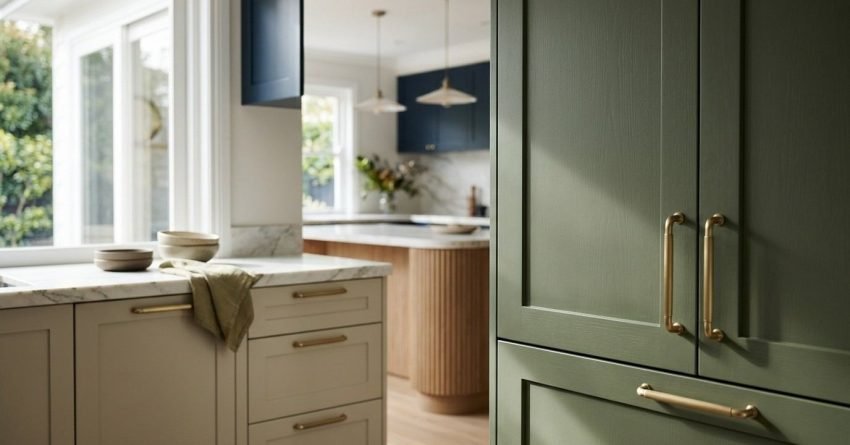
Warm neutrals, earthy greens, and rich navy tones are the cabinet colours defining 2026, replacing the cool greys and stark whites that dominated the last decade. The shift is significant, and it affects nearly every kitchen and bathroom renovation decision Sydney homeowners are making right now.
For Sydney homeowners and renovators, getting this decision right matters beyond aesthetics. Cabinet colour influences how a space feels, how it photographs, and critically, how it performs at resale.
The wrong choice can date a renovation before it is even finished.
This guide covers the cabinet colours leading the 2026 trend cycle, what is falling out of favour, how to apply these trends to Sydney homes specifically, and how colour choices connect to your renovation budget and long-term property value.
The Biggest Cabinet Colour Trends for 2026
The dominant shift in 2026 cabinet colour trends is a move away from cool, clinical tones toward warmth, depth, and natural connection. Homeowners and designers are gravitating toward colours that feel grounded and liveable rather than stark and sterile.
This reflects a broader interior design movement toward biophilic design principles, where natural materials, organic textures, and earthy palettes create spaces that feel calm and restorative.
Understanding which colours are leading this shift helps you make a renovation decision that will look current for years, not just months.
Warm Neutrals and Off-Whites Are Taking Over
Warm whites, creams, and off-white tones are the dominant cabinet colour story for 2026. These are not the bright, blue-toned whites that defined kitchens in the 2010s.
The whites trending now carry undertones of yellow, beige, or pink that read as soft, inviting, and timeless rather than cold and clinical. Shades like linen, alabaster, antique white, and warm ivory are appearing across both kitchen and bathroom cabinetry.
They pair naturally with timber benchtops, stone surfaces, and brass or brushed gold hardware, which are themselves major fixture trends for 2026. The result is a cohesive, layered look that feels considered rather than default.
For Sydney renovators, warm whites offer a practical advantage. They work across a wide range of home styles, from coastal properties to Federation homes, and they hold their appeal at resale because they read as neutral without feeling cold or dated.
Earthy Greens and Sage Tones Lead the Colour Movement
If there is one colour that defines cabinet design in 2026, it is green. Specifically, the muted, dusty, earthy greens that sit between sage and olive on the colour spectrum.
These tones have been building momentum since 2023 and have now reached mainstream adoption, appearing in high-end renovations and volume builder display homes alike. According to Houzz’s 2025 Kitchen Trends Study, green ranked as the fastest-growing cabinet colour choice among renovating homeowners surveyed.
Sage green cabinetry works particularly well in bathrooms, where it creates a spa-like, organic atmosphere. In kitchens, deeper olive and forest green tones are being used on lower cabinets or kitchen islands as a grounding contrast to lighter upper cabinets or walls.
The key characteristic of the greens trending in 2026 is their warmth. Cool, grey-based greens are fading, while the greens gaining traction have yellow or brown undertones that connect them to natural landscapes.
For Sydney homes, earthy greens complement the natural light and outdoor connection that defines much of the city’s residential architecture. They also photograph exceptionally well, which matters for property listings.
Deep Blues and Navy Are Holding Strong
Navy and deep blue cabinetry entered the mainstream several years ago and shows no sign of retreating in 2026. What has changed is the specific tone of blue that is trending.
Bright, saturated navy is giving way to softer, more complex blues with grey or green undertones, sometimes described as slate blue, denim blue, or dusty navy. These tones work best as accent colours rather than whole-kitchen applications.
A navy kitchen island against white or warm grey perimeter cabinets is a classic 2026 combination. In bathrooms, a deep blue vanity against white wall tiles creates a focal point that feels both bold and sophisticated.
Deep blues pair well with brushed nickel, matte black, and aged brass hardware, all of which are strong fixture trends for 2026. They also work with both light timber and dark stone benchtops, giving them significant design flexibility.
Warm Terracotta and Clay Tones Are Emerging
Terracotta and clay-toned cabinetry is the emerging trend of 2026, not yet mainstream but gaining significant traction in design-forward renovations and interior design publications. These warm, reddish-brown tones connect directly to the broader earthy palette movement.
In cabinet applications, terracotta and clay tones tend to work best in smaller doses. A terracotta kitchen island, a clay-toned bathroom vanity, or a single run of lower cabinets in a warm rust tone can anchor a space without overwhelming it.
Paired with natural stone, warm timber, and matte white walls, these tones create a richly layered interior that feels both current and deeply personal.
For Sydney renovators watching the trend cycle, terracotta cabinetry represents a higher-risk, higher-reward choice. It will look distinctive and design-forward now, but it requires more commitment than a neutral palette.
Greige and Warm Greys Replace Cool Greys
Greige, the blend of grey and beige, is the transitional colour of 2026. It bridges the gap between the cool grey era that is ending and the warm neutral era that is beginning.
Warm grey tones with beige or taupe undertones are replacing the blue-based cool greys that dominated kitchen and bathroom design for most of the 2010s. The distinction matters practically.
If you are renovating now and considering grey cabinetry, the undertone is everything. A grey cabinet with blue or purple undertones will look dated within a few years, while a grey cabinet with warm beige or brown undertones will read as current.
Greige cabinetry pairs well with white oak timber, honed stone benchtops, and warm-toned hardware. It is a particularly strong choice for open-plan living spaces where the kitchen needs to integrate seamlessly with living and dining areas.
What Cabinet Colours Work Best in Sydney Homes in 2026
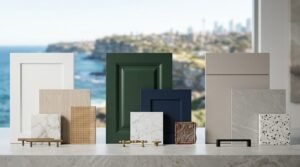
Sydney’s residential architecture is diverse, ranging from Federation-era homes in the inner west to coastal properties on the Northern Beaches and contemporary apartments across the CBD fringe. Cabinet colour choices that work well in one context may not translate to another.
Understanding how 2026 colour trends apply to specific Sydney home styles helps you make a decision that is both on-trend and architecturally appropriate.
Coastal and Beachside Homes Suit Soft Whites and Driftwood Tones
Sydney’s coastal suburbs, including Manly, Cronulla, Avalon, and Palm Beach, have a distinct design vernacular built around natural light, ocean views, and a relaxed, organic aesthetic. For these homes, the cabinet colours that work best in 2026 are soft whites, warm creams, and driftwood-inspired timber tones.
Soft white cabinetry in a coastal kitchen or bathroom reflects natural light and creates an airy, open feel that complements the surrounding environment. Paired with natural stone benchtops, rattan or woven accessories, and brushed brass or bronze hardware, warm white cabinets feel completely at home in a beachside setting.
Timber-look cabinetry in pale, bleached, or driftwood tones is also a strong choice for coastal properties. These finishes connect the interior to the natural landscape outside and age beautifully in high-light environments.
Federation and Heritage Homes Pair Well with Deep Greens and Navy
Sydney’s Federation and Victorian-era homes, concentrated in suburbs like Balmain, Glebe, Newtown, Paddington, and Leichhardt, have architectural features that call for richer, more characterful colour choices. Deep greens, navy blues, and warm charcoal tones complement the ornate joinery, high ceilings, and period detailing that define these homes.
A deep forest green or bottle green kitchen in a Federation home feels historically grounded while remaining completely current with 2026 trends. Navy cabinetry with brass hardware and marble or stone benchtops is another combination that honours the heritage character of these properties.
For bathroom renovations in heritage homes, deep green or navy vanities paired with white subway tiles, exposed brick, or pressed metal ceilings create a cohesive period-inspired aesthetic that adds genuine character value to the property.
Modern and Minimalist Interiors Favour Warm Neutrals and Greige
Sydney’s newer apartment stock and contemporary homes in suburbs like Zetland, Green Square, Waterloo, and the Hills District tend toward clean, minimalist interiors where the architecture itself is the feature. For these spaces, warm neutrals and greige cabinetry are the strongest 2026 choices.
Warm white or greige cabinetry in a contemporary apartment kitchen creates a calm, cohesive backdrop that allows other design elements, such as a statement benchtop or quality hardware, to take centre stage. These tones also photograph well in the bright, open-plan spaces typical of newer Sydney apartments, which matters for rental listings and eventual resale.
In minimalist bathrooms, warm white or greige vanity cabinetry paired with large-format tiles, frameless shower screens, and matte black tapware creates a refined, hotel-like aesthetic.
Kitchen Cabinet Colours That Are In for 2026
The kitchen is the room where cabinet colour decisions carry the most weight, both aesthetically and financially. Kitchen cabinetry represents a significant portion of any renovation budget, and the colour choice will define the look of the space for a decade or more.
Two-Tone Kitchen Cabinets Are a Growing Trend
Two-tone kitchen cabinetry, where upper and lower cabinets are finished in different colours, is one of the strongest kitchen design trends for 2026. This approach allows homeowners to introduce colour and personality without committing to a single bold tone throughout the entire kitchen.
The most popular two-tone combinations for 2026 include warm white upper cabinets with sage green or navy lower cabinets, greige uppers with deep olive or charcoal lowers, and cream uppers with warm timber-look lower cabinets. The upper cabinet colour is typically lighter to maintain a sense of height and openness, while the lower cabinet colour grounds the space.
Two-tone kitchens also offer a practical renovation advantage. If you want to update the look of an existing kitchen without replacing all cabinetry, repainting or refacing lower cabinets in a trending colour while keeping upper cabinets neutral is a cost-effective way to achieve a current aesthetic.
Warm White and Cream Kitchen Cabinets Remain a Safe Investment
Despite the growing interest in colour, warm white and cream kitchen cabinets remain the most popular choice for Sydney homeowners in 2026, particularly for those renovating with resale in mind. Warm white cabinetry is broadly appealing and works with almost any benchtop or flooring combination.
The key distinction in 2026 is the specific white. Warm whites with yellow, beige, or pink undertones are current, while cool whites with blue or grey undertones are fading.
If you are selecting a white cabinet colour for a kitchen renovation, asking your supplier or cabinet maker to show you the undertone in natural light is an important step before committing. Cream and linen tones sit just below white on the warmth scale and are gaining ground as an alternative to pure white.
Statement Island Colours Are Replacing All-White Kitchens
The all-white kitchen, once the default choice for Sydney renovations, is being replaced by kitchens that use the island as a colour statement. A coloured kitchen island, whether in deep green, navy, warm terracotta, or rich charcoal, against white or neutral perimeter cabinetry is one of the defining kitchen aesthetics of 2026.
This approach works well for Sydney homeowners who want to introduce a trending colour without the commitment of applying it across the entire kitchen. The island becomes a focal point that can be updated or repainted in the future if design preferences change.
For open-plan kitchens that flow into living and dining areas, a statement island colour also helps define the kitchen zone visually.
Bathroom Cabinet Colours That Are Trending in 2026
Bathroom cabinetry, primarily vanities and storage units, follows a slightly different trend trajectory to kitchen cabinetry. Bathrooms are smaller, more personal spaces where colour can be used more boldly without overwhelming the room.
Sage Green Vanities Are the Standout Bathroom Trend
Sage green is the single most prominent bathroom cabinet colour trend for 2026. Across Sydney renovation projects, interior design publications, and tile and bathroom showrooms, sage green vanities are appearing consistently as the go-to choice.
The appeal of sage green in a bathroom context is its connection to natural, organic tones. It reads as restful and spa-like without being cold or clinical.
Paired with white or warm grey wall tiles, natural stone or terrazzo benchtops, and brushed brass or matte black tapware, a sage green vanity creates a bathroom aesthetic that feels both on-trend and genuinely beautiful. For Sydney bathroom renovations, sage green vanities are available across a wide price range, from custom-painted timber cabinetry to off-the-shelf flat-pack options.
Warm Timber Finishes and Timber-Look Cabinets Are Rising
Natural timber and timber-look cabinetry is a significant bathroom trend for 2026, driven by the same biophilic design principles influencing the broader cabinet colour movement. Warm oak, walnut, and teak-toned timber finishes bring natural texture and warmth to bathroom spaces.
In bathroom applications, real timber cabinetry requires careful sealing and maintenance to manage moisture exposure. For this reason, many Sydney homeowners are opting for high-quality timber-look alternatives, including thermofoil, laminate, and PVC-wrapped cabinetry in realistic timber finishes.
Warm timber vanities pair particularly well with matte white wall tiles, concrete-look or stone benchtops, and brushed nickel or bronze tapware.
Matte Black and Charcoal Accents Add Depth to Bathroom Cabinetry
While matte black as a primary cabinet colour has peaked, it remains a strong accent choice for 2026 bathroom cabinetry. Charcoal and deep graphite tones are being used for vanity cabinetry in bathrooms where a bold, dramatic aesthetic is the goal, particularly in ensuite bathrooms.
Matte black and charcoal vanities work best in bathrooms with strong natural light or well-designed artificial lighting. In darker bathrooms, these tones can make the space feel smaller and heavier.
For Sydney renovators, matte black and charcoal cabinetry is a stronger choice for investment properties targeting the premium rental market than for family homes where broad resale appeal is the priority.
Cabinet Colours That Are Going Out of Style in 2026
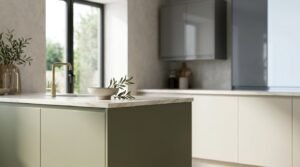
Understanding what is falling out of favour is as important as knowing what is trending. Choosing a cabinet colour that is already on its way out can make a renovation look dated before it is even finished.
The table below summarises the clearest shifts happening across 2026 renovations.
| Falling Out of Favour | Rising in Popularity | Why |
| Cool, blue-toned grey | Warm greige with beige/taupe undertones | Cool undertones read as clinical and dated |
| Stark, blue-white | Warm white with yellow/beige undertones | Warm whites feel softer and more timeless |
| High-gloss finishes | Matte and satin finishes | Matte feels tactile and hides fingerprints/scratches |
| Cool grey-green tones | Warm sage and olive greens | Warmth connects to biophilic, natural palettes |
| All-white kitchens | Statement islands with neutral perimeters | Adds personality without full commitment |
Cool Grey Cabinets Are Fading Fast
Cool grey cabinetry, the dominant kitchen and bathroom colour of the 2010s, is the clearest example of a trend that has run its course. The blue-toned, silver-based greys that appeared in virtually every renovation show and display home between 2012 and 2022 are now reading as dated rather than contemporary.
This does not mean all grey is out. Warm greys and greige tones with beige or taupe undertones remain current, while the specific greys fading are those with cool, blue, or purple undertones.
If you have existing cool grey cabinetry and are planning a renovation, updating the hardware and benchtop to warmer tones can help bridge the gap while you plan a more comprehensive update.
Stark White Cabinets Are Being Replaced by Warmer Alternatives
Pure, bright white cabinetry with cool undertones is losing ground to the warmer whites and creams described earlier in this guide. The stark, blue-white kitchen that was aspirational in the early 2010s now reads as cold and slightly sterile.
White cabinetry is not going out of style. The specific tone of white matters enormously, and choosing a warm white with yellow or beige undertones will ensure your renovation looks current rather than dated.
High-Gloss Finishes Are Giving Way to Matte and Satin Textures
Beyond colour, the finish of cabinetry is shifting significantly in 2026. High-gloss cabinet finishes, once associated with modern luxury, are being replaced by matte, satin, and textured finishes that feel more tactile and sophisticated.
Matte finishes in particular are dominant across all the trending cabinet colours for 2026. High-gloss finishes also show fingerprints and scratches more readily, which is a practical consideration for kitchens and family bathrooms.
If you are repainting existing cabinetry as part of a renovation update, choosing a matte or satin paint finish rather than a gloss finish is one of the simplest ways to ensure the result looks current.
How to Choose the Right Cabinet Colour for Your Renovation
Knowing the trends is one thing. Translating them into a confident decision for your specific home, budget, and goals is another.
Match Cabinet Colour to Your Benchtop and Flooring First
Cabinet colour does not exist in isolation. It is part of a material palette that includes your benchtop, flooring, wall tiles, and hardware.
The practical approach is to start with the elements that are hardest or most expensive to change, typically the flooring and benchtop, and then select a cabinet colour that complements them. If your flooring has warm, honey-toned timber, warm white, sage green, or greige cabinetry will integrate naturally.
Bringing physical samples of your benchtop and flooring to a cabinet showroom, or ordering cabinet door samples to place alongside your existing materials, is the most reliable way to assess compatibility before committing.
The table below is a quick reference for pairing trending cabinet colours with complementary hardware finishes.
| Cabinet Colour | Best Hardware Pairing | Best Benchtop Pairing |
| Warm white/cream | Brushed brass, brushed gold | Timber, warm stone |
| Sage green | Brushed brass, matte black | Natural stone, terrazzo |
| Navy / dusty blue | Brushed nickel, aged brass | Light timber, dark stone |
| Greige | Warm-toned brass, matte black | White oak, honed stone |
| Terracotta/clay | Matte black, aged brass | Natural stone, matte white |
Consider Natural Light Before Committing to a Dark Cabinet Colour
Natural light is one of the most important variables in cabinet colour selection, and it is one that is frequently underestimated. A deep navy or forest green cabinet that looks rich and sophisticated in a well-lit showroom can feel heavy in a north-facing Sydney kitchen with limited direct sunlight.
Before selecting a dark cabinet colour, assess your space at different times of day and in different weather conditions. Dark colours absorb light and can make smaller spaces feel enclosed, while lighter colours reflect light and create a sense of openness.
If you love a dark cabinet colour but are concerned about light levels, using it on lower cabinets or as an island colour while keeping upper cabinets and walls light is a practical way to incorporate the tone.
Think About Resale Value When Selecting Cabinet Colours in Sydney
Cabinet colour is a significant factor in how a renovated property is perceived by buyers and renters. Sydney’s property market is competitive, and renovation decisions that prioritise broad appeal over personal preference tend to deliver stronger returns at resale.
The cabinet colours with the strongest resale performance in Sydney’s current market are warm whites, creams, and warm neutrals. Sage green and navy are also performing well at resale in Sydney’s inner-city and coastal markets, where design-conscious buyers are more likely to appreciate a considered colour choice.
The colours most likely to limit resale appeal are highly personal or unusual choices, including terracotta, bold yellow, or unconventional tones that require a buyer to share a specific aesthetic preference.
Cabinet Colour and Renovation Costs in Sydney
Cabinet colour is not just an aesthetic decision. It connects directly to renovation costs, particularly when it comes to custom finishes, repainting existing cabinetry, and the choice between replacement and refacing.
Does Cabinet Colour Affect the Cost of a Renovation?
Cabinet colour can affect renovation costs in several ways. Custom or non-standard colours typically cost more than standard off-the-shelf finishes.
Darker colours and highly saturated tones can also require additional coats of paint or primer to achieve full, even coverage, which adds to labour costs if you are repainting existing cabinetry. Matte finishes, while currently on-trend, can be more difficult to clean and may require more careful maintenance than satin or semi-gloss alternatives.
For Sydney homeowners working within a defined renovation budget, selecting a cabinet colour from a supplier’s standard range rather than specifying a custom colour is one of the simplest ways to manage costs.
Budget-Friendly Ways to Update Cabinet Colours Without Full Replacement
Full cabinet replacement is not always necessary to achieve a current, on-trend aesthetic. For Sydney homeowners working with a tighter renovation budget, there are several cost-effective approaches available.
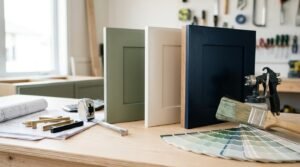
Cabinet repainting is the most accessible option. A professional cabinet painter can strip, prime, and repaint existing cabinet doors and frames in any colour, including the trending sage greens, warm whites, and navies discussed in this guide.
According to Houzz Australia’s 2025 renovation cost data, professional cabinet repainting typically costs between $150 and $400 per linear metre, depending on the condition of the existing finish, the number of coats required, and the complexity of the colour change. A small bathroom vanity may cost a few hundred dollars, while a full kitchen can run into several thousand.
Cabinet refacing, where existing door fronts are replaced with new doors in a different colour or finish while the cabinet boxes are retained, is another cost-effective option. New doors in a trending colour, combined with updated hardware, can transform the look of a kitchen or bathroom without the cost and disruption of full cabinet replacement.
DIY Cabinet Painting vs Hiring a Professional
Many Sydney homeowners consider painting cabinets themselves to save on labour costs. DIY cabinet painting can work for simple colour refreshes, but it carries real risk on surfaces exposed to moisture, grease, and daily wear, particularly in kitchens.
Professional cabinet painters use commercial-grade primers and spray equipment that produce a smoother, more durable finish than a brush-and-roller DIY job. This matters most with matte finishes, which show uneven application more visibly than gloss.
For a feature piece like a kitchen island or bathroom vanity, where the finish is highly visible, professional application is generally the safer investment even on a tighter renovation budget.
Conclusion
The cabinet colour landscape for 2026 is defined by warmth, depth, and natural connection. Warm whites, earthy greens, deep blues, and greige tones are leading the shift away from the cool greys and stark whites of the previous decade.
For Sydney homeowners, the right cabinet colour choice also depends on your home’s architecture, natural light, existing materials, and renovation budget. Getting these variables right requires practical renovation expertise and honest guidance from people who understand how design decisions translate into real-world outcomes.
At Sydney Home Renovation, we help homeowners and property investors make confident renovation decisions, from cabinet colour selection and material specification through to full project delivery. If you are planning a kitchen or bathroom renovation in Sydney and want expert guidance on colour, budget, and design, contact our team today for a consultation.
Frequently Asked Questions
What is the most popular cabinet colour for 2026?
Warm whites and earthy greens, particularly sage, are the most popular cabinet colours for 2026. These tones are replacing the cool greys and stark whites that dominated the previous decade, with sage green vanities and warm white kitchen cabinetry leading the trend.
Are white kitchen cabinets going out of style in 2026?
Cool, blue-toned white kitchen cabinets are fading, but warm whites and creams remain very much in style for 2026. Whites with warm yellow or beige undertones, such as alabaster and linen, are current and broadly appealing.
What colour cabinets make a kitchen look bigger?
Light-coloured cabinets in warm white, cream, or soft greige make a kitchen look bigger by reflecting natural and artificial light. Pairing light cabinetry with a light benchtop further enhances the sense of space.
Are green cabinets still in style for 2026?
Yes, green cabinets are very much in style for 2026. Earthy, muted greens with warm undertones, including sage, olive, and soft forest green, are among the strongest cabinet colour trends of the year.
What cabinet colour adds the most resale value in Sydney?
Warm white and cream cabinetry consistently delivers the strongest resale performance in Sydney’s property market. Sage green and navy are also performing well in design-conscious inner-city and coastal markets.
What colour cabinets work best in a small bathroom?
Light-coloured cabinets in warm white, soft sage, or pale greige work best in small bathrooms because they reflect light and create a sense of openness. A darker single vanity against light tiles is an effective alternative.
Should kitchen and bathroom cabinets match in colour?
Kitchen and bathroom cabinets do not need to match exactly, but they should sit within a cohesive colour palette. A common approach is using the same warm white tone in both spaces, or complementary earthy tones like sage and warm white.


