
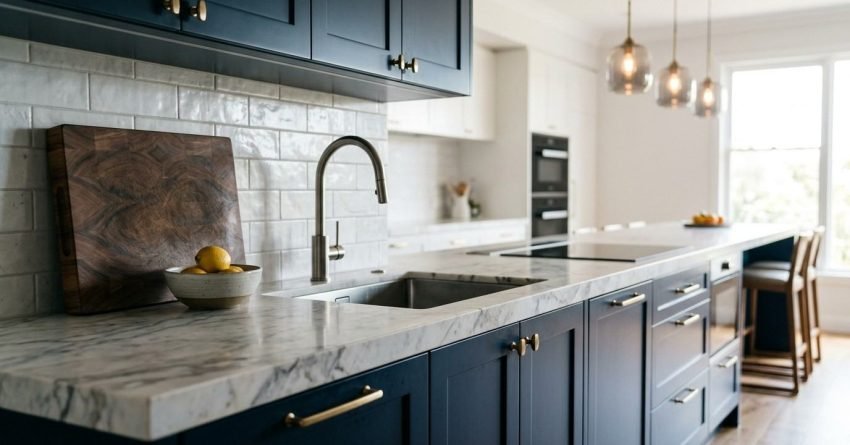
The upgrades that add the most value to a kitchen are cabinetry, benchtops, layout improvements, and quality lighting. These are the elements buyers and valuers assess first. In Sydney’s competitive property market, we consistently see a well-executed kitchen renovation rank as one of the highest-returning investments a homeowner or investor can make.
Getting it right means knowing which upgrades move the needle on value and which ones drain your budget without a return. The difference between a smart kitchen renovation and an expensive one often comes down to priorities.
In this guide, we break down every major kitchen upgrade by its value impact, cover realistic renovation costs for Sydney, and show you how to allocate your budget where it counts most.
Why Kitchen Upgrades Deliver the Highest ROI in Sydney Homes
The kitchen is the most scrutinised room in any property transaction. Buyers, tenants, and valuers form an immediate impression of a home’s quality, liveability, and maintenance standard the moment they step into the kitchen. No other single room carries that weight.
In Sydney’s property market, competition among buyers is high and rental yields are closely watched. A functional and visually appealing kitchen directly influences both sale price and rental income. We find that investors renovating for yield and owner-occupiers renovating for lifestyle both benefit from the same principle: kitchens return more per dollar spent than almost any other room.
How Kitchen Renovations Impact Property Resale Value
A kitchen renovation does not just improve aesthetics. It signals to buyers that the property has been maintained, that the infrastructure is current, and that they will not face immediate capital expenditure after purchase. That signal has a measurable effect on price.
Real estate agents across Sydney consistently report that updated kitchens reduce time on market and support stronger offers. A dated kitchen, by contrast, gives buyers a negotiating lever. They will discount their offer to account for the renovation they expect to carry out themselves. Removing that lever by renovating before sale often recovers more than the renovation cost.
The return varies by property tier. Research from Domain’s renovation cost guides indicates that in entry-level and mid-range Sydney properties, a well-budgeted kitchen renovation typically returns between 50 and 80 cents for every dollar spent in added resale value. In premium properties, where buyer expectations are higher, a quality kitchen can return dollar-for-dollar or better when it brings the property in line with comparable sales.
What Sydney Buyers and Renters Prioritise in a Kitchen
Sydney buyers prioritise storage, bench space, and natural light above almost everything else. Renters add appliance quality and ease of cleaning to that list. Both groups respond strongly to kitchens that feel spacious, well-organised, and low-maintenance.
We consistently see positive buyer feedback in Sydney for stone or engineered stone benchtops, soft-close cabinetry, integrated or concealed appliances, and continuous flooring that flows from the kitchen into living areas. These are not luxury features in Sydney’s current market. They are baseline expectations in the mid-range and above.
Understanding what your target buyer or tenant values is the first step in allocating your renovation budget correctly.

What Adds the Most Value to a Kitchen: The Highest-Impact Upgrades
Not all kitchen upgrades are equal. Some deliver visible, immediate value that buyers and valuers recognise instantly. Others improve your daily experience without meaningfully moving the property’s market position.
Below, we rank the highest-impact upgrades by their return on investment and buyer appeal in the Sydney market.
Kitchen Cabinetry: Storage, Layout, and Visual Impact
Cabinetry is the single largest visual element in any kitchen. It covers more surface area than any other component and sets the tone for the entire room. Outdated, damaged, or poorly configured cabinetry is the most common reason a kitchen feels tired, and replacing or refacing it is the most reliable way to transform a kitchen’s perceived value.
New cabinetry delivers value on three levels. First, it improves storage capacity and organisation, which buyers directly associate with liveability. Second, it modernises the kitchen’s aesthetic, which affects first impressions and emotional response during inspections. Third, quality cabinetry with soft-close hinges and drawer runners signals build quality throughout the property.
For budget-conscious renovators, we often recommend cabinet refacing. Replacing doors and drawer fronts while retaining the existing carcasses can achieve a significant visual transformation at roughly 40 to 60 percent of the cost of full replacement. This approach works well when the existing layout is functional, and the carcasses are structurally sound.
Full cabinet replacement is the right choice when the layout is inefficient, the carcasses are damaged or swelling, or when the renovation is targeting a significant uplift in property value. In Sydney’s mid-range market, full cabinetry replacement with a quality flat-pack or semi-custom solution typically costs between $8,000 and $18,000 installed, depending on kitchen size and configuration.
Benchtops: Material Choices That Buyers Notice First
After cabinetry, benchtops are the element buyers notice and touch first. The material, thickness, and condition of a benchtop communicate the quality tier of the entire kitchen renovation. Laminate benchtops in a property with new cabinetry create a mismatch that undermines the overall investment. Stone benchtops in a kitchen with dated cabinetry create a different kind of mismatch, one that wastes budget.
Engineered stone, commonly known by brand names such as Caesarstone or Silestone, is the dominant benchtop choice in Sydney’s mid-range and premium market. It offers the visual appeal of natural stone with greater consistency, lower maintenance, and a price point that is accessible for most renovation budgets. A standard engineered stone benchtop in a medium-sized Sydney kitchen typically costs between $3,000 and $6,000 supplied and installed, depending on thickness, edge profile, and stone selection.
Natural stone, including marble, granite, and quartzite, commands a premium and appeals to buyers in the upper market tier. It adds genuine value in premium properties but can represent overcapitalisation in entry-level or investor-grade renovations.
Laminate benchtops remain a practical choice for tight budgets and investment properties where the goal is functional presentation rather than premium appeal. Modern laminate options have improved significantly in appearance and durability. A quality laminate benchtop in a well-designed kitchen can still present well at inspection.
Kitchen Islands: A Standalone Value Driver
We treat kitchen islands as their own category because they influence value in ways that go beyond storage or benchtop material. A well-proportioned island adds usable bench space, additional storage, and a natural gathering point that Sydney buyers respond to strongly, particularly in open-plan and family-oriented properties.
An island with integrated seating serves double duty as a casual dining area and a social hub, which is a major drawcard for buyers upgrading from smaller or more compartmentalised kitchens. Waterfall benchtop edges on an island, where the stone or engineered stone wraps down the sides, are one of the strongest visual value signals we see in premium and upper mid-range renovations.
The trade-off is space. An island only adds value when there is enough clearance around it for comfortable movement and workflow. A cramped island in an undersized kitchen detracts from the layout rather than enhancing it, so proportion matters more than the addition itself.
Kitchen Appliances: When Upgrades Add Value vs. Overcapitalise
Appliances are the most nuanced category in kitchen renovation value. Buyers notice appliances, but they do not value them at retail price. A $5,000 oven does not add $5,000 to a property’s value. What appliances do is signal the quality tier of the kitchen and confirm that the renovation was completed to a consistent standard.
The appliances that add the most value relative to their cost are those that are visible and integrated into the kitchen design. A built-in oven and gas or induction cooktop, a rangehood that is properly ducted and proportionate to the cooktop, and a dishwasher that is integrated or panel-matched to the cabinetry all contribute to a cohesive, high-quality presentation.
Rangehood specification is worth getting right. An underpowered or poorly ducted rangehood undermines an otherwise well-executed kitchen, and buyers with cooking-focused lifestyles notice extraction performance during inspections. We recommend matching rangehood capacity to cooktop size and, where possible, ducting externally rather than relying on recirculating filtration.
Freestanding appliances, particularly older or mismatched ones, reduce the perceived quality of an otherwise good renovation. Replacing a freestanding cooker with a built-in oven and separate cooktop is one of the most cost-effective appliance upgrades for resale value.
For investment properties, mid-range appliances from reputable brands such as Bosch, Westinghouse, and Fisher & Paykel deliver the right balance of quality perception and cost. For owner-occupiers renovating for lifestyle and long-term value, premium appliances from brands such as Miele, Smeg, or AEG are justifiable, particularly in properties where the overall renovation budget supports that tier.
Splashbacks: Low-Cost Upgrade, High Visual Return
Splashbacks are one of the most cost-effective upgrades in a kitchen renovation. They occupy a prominent visual position directly behind the cooktop and often extend across the full width of the kitchen. A well-chosen splashback can elevate the entire room’s aesthetic at a fraction of the cost of cabinetry or benchtops.
Subway tiles remain a reliable, timeless choice that presents well across a wide range of kitchen styles and property tiers. Large-format tiles, including 600x300mm and 600x600mm formats, are increasingly popular in Sydney’s mid-range and premium market and create a cleaner, more contemporary look with fewer grout lines.
Glass splashbacks offer a seamless, easy-clean surface and work particularly well in smaller kitchens where visual continuity helps the space feel larger. Printed glass splashbacks allow for colour and pattern customisation, though trend-driven choices in this category carry the risk of dating quickly.
A tiled splashback in a standard Sydney kitchen typically costs between $800 and $2,500 installed, depending on tile selection and area. A glass splashback in the same kitchen typically costs between $1,200 and $3,000. Both represent strong value-for-money upgrades relative to their visual impact.
Kitchen Layout and Workflow: The Invisible Value Driver
Layout is the most underestimated value driver in kitchen renovation. A kitchen with premium finishes but a poor layout will frustrate buyers and underperform at inspection. A kitchen with modest finishes but an efficient, logical layout will consistently outperform expectations.
The classic work triangle, the relationship between the sink, cooktop, and refrigerator, remains the foundational principle of kitchen layout efficiency. When these three points are positioned within a comfortable working distance of each other, the kitchen functions well regardless of its size. When they are poorly positioned, no amount of premium finishes will compensate for the daily inconvenience.
In Sydney homes, particularly older properties with compartmentalised floor plans, opening the kitchen to the living or dining area is one of the highest-value structural changes a renovator can make. An open-plan kitchen creates a sense of space, improves natural light, and aligns with the way Sydney households actually live.
This type of structural change typically requires a builder and potentially an engineer, and it costs more than a cosmetic renovation. If the change involves removing a load-bearing wall or altering the building’s structure, you will also need to check with your local council on approval requirements before work begins. The value return in Sydney’s market is consistently strong once the compliance side is handled properly.
For renovators working within an existing layout, maximising storage efficiency through full-height cabinetry, pull-out pantry systems, and corner solutions can significantly improve the kitchen’s functional appeal without structural work.
Kitchen Lighting Upgrades That Add Measurable Value
Lighting is one of the most frequently overlooked elements in kitchen renovation, yet it has a disproportionate effect on how a kitchen looks and feels. A well-lit kitchen photographs better, presents better at inspection, and functions better for the people who use it daily.
Task Lighting vs. Ambient Lighting in Kitchen Design
Task lighting and ambient lighting serve different purposes, and both are necessary in a high-value kitchen. Task lighting, typically under-cabinet LED strips positioned to illuminate the benchtop work surface, ensures the kitchen is functional and safe to use. Ambient lighting, including recessed downlights and pendant lights over an island or dining area, creates the atmosphere and visual warmth that buyers respond to emotionally.
Under-cabinet lighting is one of the most cost-effective lighting upgrades available. LED strip lighting installed beneath wall cabinets costs relatively little but transforms the kitchen’s usability and visual appeal, particularly in photographs and evening inspections.
Pendant lights over a kitchen island or breakfast bar are a strong value signal in Sydney’s mid-range and premium market. They indicate that the kitchen was designed with intention and that the renovation was completed to a considered standard. The pendant light position and scale matter. Oversized pendants in a small kitchen or undersized pendants over a large island both undermine the effect.
How Lighting Affects Perceived Space and Buyer Appeal
Lighting directly affects how large a kitchen feels. A kitchen with a single central ceiling light will always feel smaller and less inviting than the same kitchen with layered lighting, where recessed downlights provide even ambient illumination, under-cabinet strips highlight the benchtop, and a pendant or two adds visual interest.
In Sydney’s apartment and townhouse market, where kitchens are often compact, strategic lighting is one of the most powerful tools available to make a space feel larger and more premium than its square meterage suggests. Buyers and tenants in this market are particularly responsive to well-lit kitchens because a dark, poorly lit kitchen is a common pain point in older Sydney apartments.
Replacing a single ceiling light with four to six recessed LED downlights typically costs between $600 and $1,500 installed by a licensed electrician, depending on ceiling type and access. The visual transformation relative to that cost is significant.

Flooring Choices That Increase Kitchen Value
Kitchen flooring is evaluated on three criteria by buyers: appearance, durability, and continuity with the rest of the home. A flooring choice that scores well on all three adds genuine value. A flooring choice that creates a visual break between the kitchen and adjacent living areas, or that shows wear and damage, actively reduces perceived value.
Engineered Timber, Tiles, and Vinyl Plank: Comparing Value
Engineered timber flooring is the premium choice for Sydney kitchens and the option most likely to add measurable resale value. It provides the warmth and visual appeal of natural timber with greater dimensional stability in environments where temperature and humidity fluctuate. In Sydney homes where the kitchen flows into a living or dining area, engineered timber flooring that runs continuously through both spaces creates a sense of cohesion and space that buyers respond strongly to.
Porcelain tiles are the most durable kitchen flooring option and the most practical choice for households with children, pets, or high foot traffic. Large-format porcelain tiles, 600x600mm or larger, present well in both contemporary and transitional kitchen styles and are easy to maintain. The limitation of tiles in a kitchen-to-living flow is the visual break they create if the adjacent living area has a different flooring material.
Luxury vinyl plank has become an increasingly popular choice in Sydney’s investment property and budget renovation market. Modern vinyl plank products are visually convincing, highly durable, waterproof, and significantly less expensive than engineered timber or porcelain tiles. For investment properties where the goal is durable, attractive flooring at a controlled cost, vinyl plank delivers strong value.
Flooring Continuity and How It Affects Whole-Home Value
The single most important flooring decision in a kitchen renovation is whether the flooring continues into adjacent living spaces. Continuous flooring, the same material running from the kitchen through the dining area and into the living room, is one of the most effective ways to make a Sydney home feel larger, more cohesive, and more premium.
Buyers in Sydney’s market have been conditioned by years of open-plan living to expect flooring continuity in modern homes. A kitchen with different flooring to the adjacent living area creates a visual boundary that makes both spaces feel smaller and signals that the renovation was done piecemeal rather than as a considered whole.
If your renovation budget allows for only one flooring upgrade, we recommend prioritising the kitchen-to-living transition. The cost of extending flooring through both spaces is marginal compared to the visual and value impact of the result.
Kitchen Sink and Tapware: Small Upgrades With Outsized Impact
The sink and tapware are among the most touched and most inspected elements in any kitchen. Buyers run the tap, check the sink depth, and assess the finish quality during inspections. Worn, stained, or dated tapware signals neglect. New, quality tapware signals care and attention to detail, and that signal extends to the buyer’s perception of the entire property.
Choosing a Sink That Balances Function and Aesthetics
The kitchen sink choice affects both daily function and visual presentation. Undermount sinks, installed beneath the benchtop rather than dropped in from above, are the preferred choice in mid-range and premium Sydney kitchens because they create a seamless benchtop surface that is easy to clean. They also signal a higher level of renovation quality than a standard drop-in sink.
Stone or stainless steel undermount sinks are the most common choices in Sydney’s renovation market. Stainless steel remains practical, durable, and appropriate across a wide range of kitchen styles. Stone sinks, typically composite granite or fireclay, add a premium visual element and work particularly well in kitchens with stone benchtops.
Sink size matters for function. A single large bowl sink is increasingly preferred over a double bowl configuration in contemporary Sydney kitchens, as it accommodates large pots and baking trays more easily and presents a cleaner visual line.
Tapware Finishes That Signal Quality to Buyers
Tapware finish is a detail that buyers notice consciously and subconsciously. Chrome remains the most versatile and durable finish, appropriate in virtually every kitchen style. Matte black tapware has become a strong trend in Sydney’s mid-range and premium market and adds a contemporary, design-forward signal when used consistently with other black hardware elements such as handles and light fittings.
Brushed nickel and brushed brass are popular choices in transitional and warm-toned kitchen designs. They add visual interest and a sense of considered design without the maintenance concerns of polished finishes.
The key principle with tapware is consistency. Mixing finishes, such as chrome tapware with black handles and brushed nickel light fittings, creates visual noise that undermines the kitchen’s overall quality perception. Choosing one finish and applying it consistently across tapware, handles, and light fittings is a low-cost way to elevate the kitchen’s design coherence significantly.
A quality kitchen mixer tap from a reputable brand, such as Methven, Caroma, Grohe, or Meir, typically costs between $300 and $900 supplied, with installation by a licensed plumber adding $150 to $300. The total cost of a tapware upgrade is modest relative to its visual impact.
Colour, Finish, and Style Decisions That Protect Long-Term Value
Colour and finish decisions in a kitchen renovation carry long-term consequences. A kitchen designed around a strong trend in 2025 may feel dated by 2030. A kitchen designed around timeless principles will hold its visual appeal, and its value, for a decade or more.
Timeless vs. Trend-Driven Kitchen Designs in Sydney
Timeless kitchen design in Sydney’s market is characterised by neutral cabinetry colours, quality materials, clean lines, and hardware choices that do not anchor the kitchen to a specific moment in design history. White, off-white, warm grey, and greige cabinetry consistently perform well across market cycles because they appeal to the broadest range of buyers and allow personal styling through accessories and soft furnishings.
Two-tone cabinetry, a neutral upper cabinet paired with a contrasting lower cabinet or island, has become a widely accepted design approach in Sydney’s mid-range market. It adds visual interest without the risk of a single strong colour that may not appeal to all buyers. Navy lower cabinets with white uppers, or charcoal lowers with off-white uppers, are combinations that have demonstrated staying power in Sydney’s market.
Trend-driven choices, including highly saturated cabinet colours, heavily veined marble-look surfaces, or statement hardware in unusual finishes, carry the risk of dating the kitchen within a few years. For owner-occupiers who plan to stay in the property long-term, personal expression in kitchen design is entirely valid. For renovators targeting resale or rental return, restraint in trend-driven choices protects the investment.
How Paint, Hardware, and Handles Change a Kitchen’s Value Perception
Cabinet hardware, including handles, knobs, and pulls, is one of the most cost-effective ways to update a kitchen’s appearance without a full renovation. Replacing dated brass or chrome handles with contemporary matte black or brushed nickel hardware can transform the kitchen’s perceived age and quality at a cost of $200 to $600 for a standard kitchen.
Wall paint colour in the kitchen affects how the cabinetry reads visually. A warm white or soft neutral on the walls allows the cabinetry to be the focal point and creates a cohesive, considered look. Strong wall colours in a kitchen can work well in the right context but narrow buyer appeal.
The finish of cabinetry doors, whether matte, satin, or gloss, also affects value perception. Matte and satin finishes are currently dominant in Sydney’s mid-range and premium market because they are less prone to showing fingerprints and scratches than high-gloss finishes, and they align with the contemporary design direction that most Sydney buyers expect.
Energy-Efficient Kitchens and Long-Term Value
We are increasingly seeing energy efficiency factor into how Sydney buyers assess a kitchen renovation, particularly as electricity costs and sustainability awareness both continue to rise. Induction cooktops are a strong example. They cook faster and more efficiently than gas or standard electric cooktops, and their growing popularity means buyers increasingly view them as a premium, forward-looking choice rather than a niche preference.
Energy-efficient appliances with strong star ratings reduce running costs for whoever lives in the property next, and that argument resonates with both owner-occupier buyers and investors calculating holding costs. A dishwasher, refrigerator, or oven with a higher efficiency rating costs a little more upfront but is an easy detail for buyers to verify and appreciate during an inspection.
LED lighting throughout the kitchen, which we already recommend for its visual impact, doubles as an energy-efficiency upgrade. Where a renovation includes solar panels elsewhere in the property, an induction cooktop and efficient appliances create a stronger overall sustainability story that can support a premium positioning at sale or lease.
How Much Should You Spend on a Kitchen Renovation in Sydney?
Kitchen renovation costs in Sydney vary significantly based on kitchen size, the scope of work, material selections, and whether structural changes are involved. Understanding the three main budget tiers helps renovators set realistic expectations and allocate spend where it delivers the strongest return.
Budget Kitchen Renovation: $10,000–$20,000
A budget kitchen renovation in Sydney typically covers cosmetic and functional upgrades within the existing layout. This tier is appropriate for investment properties, properties at the lower end of the market, or situations where the existing layout is functional and the goal is a clean, modern presentation rather than a premium transformation.
At this budget level, a renovator can typically achieve new flat-pack cabinetry, a laminate or entry-level engineered stone benchtop, a tiled splashback, new sink and tapware, updated lighting, and fresh paint. Appliances are generally retained or replaced with mid-range options, and flooring may be updated with vinyl plank if the existing floor is in poor condition.
The key to maximising value at this budget tier is focusing spend on the elements with the highest visual impact, cabinetry and benchtops, and keeping material selections practical and neutral.
Mid-Range Kitchen Renovation: $20,000–$40,000
A mid-range kitchen renovation in Sydney covers a more comprehensive transformation, typically including semi-custom or custom cabinetry, engineered stone benchtops, a quality tiled or glass splashback, new sink and tapware, updated lighting including pendants, mid-range appliances, and flooring replacement.
This budget tier is appropriate for owner-occupiers renovating for lifestyle and resale value, and for investors targeting the mid-range rental market. At this level, the renovation can achieve a result that competes with comparable properties in Sydney’s mid-range market and supports a meaningful uplift in both sale price and rental yield.
Structural changes, such as removing a wall to open the kitchen to a living area, are possible at this budget tier but will consume a significant portion of the allowance and may require trade-offs in material quality.
Premium Kitchen Renovation: $40,000–$80,000+
A premium kitchen renovation in Sydney delivers a fully custom result with high-specification materials, integrated appliances, bespoke cabinetry, natural stone benchtops, and considered design details throughout. This tier is appropriate for premium properties, significant renovations targeting top-of-market sale prices, or owner-occupiers with high lifestyle expectations.
At this budget level, the renovation can include structural changes, custom joinery, premium appliance packages, stone benchtops with waterfall edges, fully integrated appliances, and bespoke lighting design. The result is a kitchen that competes with new builds and commands attention in Sydney’s premium market.
The risk at this tier is overcapitalisation, spending more on the kitchen than the property’s market position can return. A $70,000 kitchen renovation in a property worth $800,000 is unlikely to return its full cost at sale. The same renovation in a $2,500,000 property may be essential to achieving the expected sale price.
Kitchen Upgrades to Avoid: What Doesn’t Add Value
Understanding what not to spend money on is as important as knowing where to invest. Several common kitchen upgrades consume budget without delivering a proportionate return in property value.
Overcapitalising on Appliances in Entry-Level Properties
Premium appliances are the most common source of overcapitalisation in kitchen renovations. A $6,000 integrated refrigerator, a $4,000 steam oven, or a $3,000 coffee machine will not add their retail value to a property’s sale price. Buyers in the entry-level and mid-range market appreciate quality appliances but will not pay a premium that reflects the appliance’s cost.
The principle is straightforward: appliance spend should be proportionate to the property’s market position. In an entry-level Sydney property, mid-range appliances from reputable brands are the right choice. In a premium property, quality appliances are expected and appropriate. The mistake is applying premium appliance logic to an entry-level property budget.
Trend-Driven Choices That Date Quickly
Highly specific trend-driven choices, such as a particular tile pattern, an unusual cabinet colour, or a statement material prominent in design media at the time of renovation, carry the risk of dating the kitchen within a few years. When that happens, the renovation that was intended to add value becomes a liability that buyers discount.
The safest approach for renovators targeting resale value is to apply trend-driven choices sparingly and in elements that are easy and inexpensive to change. A statement pendant light or a distinctive handle finish can be updated for a few hundred dollars. A full kitchen in a trend-driven colour that has fallen out of favour requires a much more significant investment to correct.
How to Prioritise Kitchen Upgrades on a Tight Budget
Not every renovator has the budget for a comprehensive kitchen transformation. When budget is constrained, the discipline of prioritisation determines whether the renovation delivers a return or simply consumes capital without a meaningful outcome.
The 80/20 Rule for Kitchen Renovation ROI
The 80/20 principle applies directly to kitchen renovation: roughly 80 percent of the value return comes from 20 percent of the upgrades. In a kitchen context, that 20 percent is almost always cabinetry and benchtops. These two elements define the kitchen’s quality tier in the eyes of buyers and valuers, and they are the elements that photographs, inspections, and valuations focus on most.
If your budget forces a choice between new cabinetry with a laminate benchtop or retaining existing cabinetry with a stone benchtop, the cabinetry is almost always the higher-value investment. The reverse, a stone benchtop in a kitchen with dated, damaged cabinetry, creates a mismatch that undermines both elements.
After cabinetry and benchtops, the next highest-return upgrades in order of cost-effectiveness are lighting, tapware and sink, splashback, and hardware. These elements are relatively inexpensive but have a significant effect on the kitchen’s overall quality perception.
Staging vs. Renovating When a Full Reno Isn’t Necessary
Not every kitchen needs a renovation to present well at sale. In some cases, professional styling and staging, including fresh paint, new hardware, updated lighting, and considered accessorising, can achieve a meaningful improvement in buyer perception at a fraction of the cost of a full renovation.
This approach is most effective when the kitchen’s bones are sound: the cabinetry is in good condition, the layout is functional, and the benchtops are not damaged or heavily stained. In these situations, a $2,000 to $5,000 investment in cosmetic updates and styling can deliver a presentation that competes with renovated kitchens in the same price bracket.
The decision between staging and renovating should be guided by a realistic assessment of the property’s market position, the condition of the existing kitchen, and the expected return on renovation spend. We can provide an honest assessment of where the investment is best directed.
Conclusion
The upgrades that add the most value to a kitchen- cabinetry, benchtops, layout, lighting, and considered material choices- share a common principle. They improve both the function and the perceived quality of the space in ways that buyers and valuers recognise and reward.
Prioritising these elements over trend-driven or appliance-heavy spend is the foundation of a kitchen renovation that delivers a genuine return. In Sydney’s property market, a well-planned kitchen renovation is one of the most reliable ways to increase a property’s sale price, rental yield, and long-term value.
At Sydney Home Renovation, we help homeowners and investors plan and deliver kitchen renovations that are scoped correctly, budgeted honestly, and built to last. Contact us to discuss your kitchen renovation and get a clear, transparent assessment of where your investment will deliver the strongest return.
Frequently Asked Questions
What adds the most value to a kitchen in Australia?
Cabinetry and benchtops consistently add the most value to a kitchen in Australia. These two elements define the kitchen’s quality tier in the eyes of buyers and valuers, and upgrading them delivers the strongest return on renovation spend across all property market segments.
Does a new kitchen increase home value in Sydney?
Yes, a new kitchen reliably increases home value in Sydney. A well-executed kitchen renovation removes a key buyer objection, supports stronger offers, and reduces time on market, with returns typically ranging from 50 to 80 cents per dollar spent in the mid-range market.
What is the ROI on a kitchen renovation?
The ROI on a kitchen renovation depends on the property’s market position, the scope of work, and the quality of execution. In Sydney’s mid-range market, a well-budgeted kitchen renovation typically returns between 50 and 80 percent of its cost in added property value.
Is it worth renovating a kitchen before selling?
Renovating a kitchen before selling is worth it when the existing kitchen is dated, damaged, or significantly below the standard of comparable properties in the area. A renovated kitchen removes the buyer’s negotiating leverage and supports a higher sale price.
What kitchen features do Sydney buyers look for?
Sydney buyers prioritise storage capacity, bench space, quality benchtop materials, integrated or concealed appliances, and continuous flooring that flows into living areas. Open-plan layouts and consistent hardware finishes are also strong positive signals.
How long does a kitchen renovation take in Sydney?
A standard kitchen renovation in Sydney typically takes between two and four weeks for the construction phase, depending on the scope of work. The planning, design, and procurement phase generally adds four to eight weeks before construction begins.
What is the most cost-effective kitchen upgrade?
Cabinet hardware replacement is the most cost-effective kitchen upgrade by cost-to-impact ratio. Replacing dated handles and knobs with contemporary hardware costs between $200 and $600 and can significantly update the kitchen’s perceived age and quality.
Do kitchen islands add value to a Sydney home?
Yes, kitchen islands add strong value when the kitchen has enough space to accommodate one comfortably. They add bench space, storage, and a social gathering point that buyers in open-plan and family-oriented properties respond to particularly well.


