
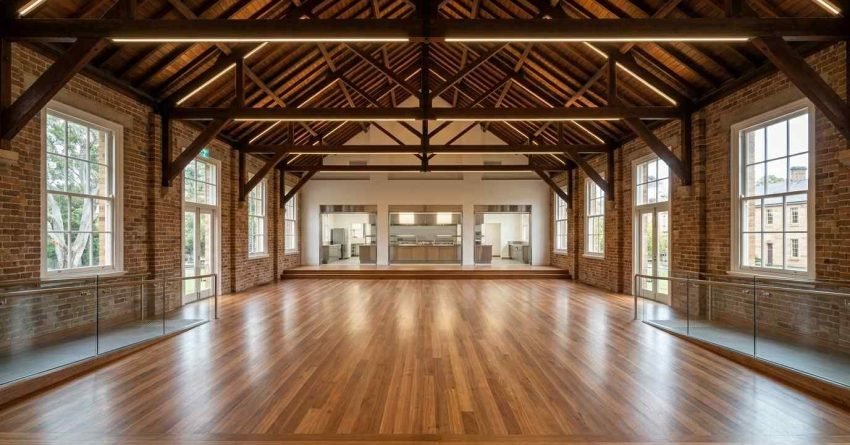
Renovating a church or community hall in Sydney involves a distinct set of planning, compliance, and budgeting considerations that differ significantly from standard residential renovation work. These buildings serve multiple users, often carry heritage significance, and must meet strict accessibility and safety standards, all of which shape how a renovation is scoped, priced, and delivered. Whether you are managing a place of worship, a neighbourhood hall, or a multi-purpose community facility, understanding the full scope of work before you begin is the foundation of a successful project.
Getting the planning right early protects your budget and your timeline. Without a clear picture of approval requirements, compliance obligations, and realistic cost ranges, community renovation projects are particularly vulnerable to scope creep and unexpected delays.
This guide covers what church and community hall renovation involves, how much it costs in Sydney, what the planning process looks like, which areas to prioritise, and how to keep your budget on track from start to finish.
What Does Church and Community Hall Renovation Involve?
Church and community hall renovation covers a wide range of building improvement works from structural repairs and systems upgrades to interior refurbishment and accessibility modifications. Unlike residential renovation, these projects must account for the building’s public-use function, its occupancy classification under the Building Code of Australia (BCA), and in many cases, its heritage status.
The scope of work on any given project depends on the building’s age, condition, current use, and the outcomes the committee or organisation wants to achieve. Most renovation projects fall into one of three categories: maintenance-driven works to address deterioration, compliance-driven works to meet current regulatory standards, or improvement-driven works to upgrade the facility for expanded or changed use.
Church and community hall renovation sits within the broader category of home renovation work across Sydney, covering the full spectrum of residential and institutional building improvement available across the city.
Structural and Building Fabric Works
Structural and building fabric works address the physical integrity of the building. This includes roof replacement or repair, external wall rendering and repointing, window and door replacement, subfloor repairs, and damp-proofing. In older buildings, particularly pre-1950s churches and halls, these works are often the most urgent and the most costly component of a renovation program.
Roof replacement on a large community hall in Sydney typically involves asbestos assessment and removal if the existing roof is corrugated fibrous cement sheeting, which adds both cost and programme time to the project.
Mechanical, Electrical, and Plumbing Upgrades
Mechanical, electrical, and plumbing (MEP) upgrades are a standard component of most community building renovations. Electrical switchboard upgrades to comply with current AS/NZS 3000 wiring standards are among the first items we address; older switchboards frequently lack the capacity for modern HVAC loads or three-phase power required by commercial kitchen equipment. LED lighting replacement, HVAC installation or replacement, and hot water system upgrades round out the most common MEP works undertaken.
For buildings that host food preparation or commercial kitchen activities, plumbing upgrades to meet the requirements of the NSW Food Authority are also frequently required. The choice between split-system and ducted HVAC has a significant impact on both installation cost and ongoing energy efficiency, and it is worth resolving early in the design phase.
Fire Safety and Essential Compliance
Fire safety compliance is a non-negotiable component of any renovation that changes a building’s use, increases its occupancy, or triggers a development application. Community buildings classified under the BCA as Class 9b assembly buildings must maintain compliant essential Systems, including emergency lighting, exit signage, fire detection systems, and portable fire equipment throughout and after construction.
We work with accredited fire safety practitioners to prepare the Annual Fire Safety Statement and confirm that all essential systems meet the Performance Requirements of the BCA. For buildings undergoing significant works, an upgrade to automatic fire sprinkler systems may be required by the consent authority. Addressing fire safety early prevents costly rectification orders after construction is complete.
Energy Efficiency and Section J Compliance
Section J of the National Construction Code sets minimum energy efficiency requirements for commercial and public-use buildings. Renovation works that trigger a development application will generally require a Section J assessment, covering insulation, glazing performance, HVAC efficiency ratings, and artificial lighting power density.
We factor Section J compliance into the design phase rather than treating it as an afterthought. Meeting the requirements upfront reduces the risk of consent conditions that require expensive design changes mid-project, and it produces a building that costs less to run over its lifetime.
How Much Does Church and Community Hall Renovation Cost in Sydney?
The cost of renovating a church or community hall in Sydney varies considerably depending on the building’s size, condition, heritage status, and the scope of works planned. A minor interior refurbishment, new flooring, painting, and lighting in a small hall might cost between $50,000 and $120,000. A comprehensive renovation covering structural repairs, MEP upgrades, accessibility modifications, and interior fitout in a medium-to-large building typically ranges from $300,000 to over $1,000,000.
These figures reflect Sydney market conditions, where labour costs are among the highest in Australia and material lead times can extend project programmes by several weeks. As a rough benchmark, full building renovations on community halls in Sydney typically fall between $2,500 and $4,500 per square metre of gross floor area, depending on scope and heritage complexity. Projects involving heritage-listed buildings carry additional cost premiums due to the specialist trades, approved materials, and heritage consultant fees required.
Cost Factors That Influence Your Budget
Several variables have a direct and significant impact on the final cost of a community hall renovation in Sydney.
- Building size and floor area: cost per square metre decreases as building size increases, but total project cost rises with scale
- Existing condition: buildings with deferred maintenance require more remediation work before improvement works can begin
- Heritage listing: heritage overlays require specialist trades, approved materials, and additional consultant fees
- Accessibility compliance: upgrading to current BCA and AS 1428 standards involves ramps, accessible amenities, and door width modifications
- Asbestos presence: buildings constructed before 1990 frequently contain asbestos-containing materials requiring licensed removal
- Council and DA requirements: development applications add time and cost to the pre-construction phase
Typical Price Ranges by Scope of Work
| Scope of Work | Indicative Cost Range (Sydney) |
| Minor interior refurbishment (paint, flooring, lighting) | $50,000 – $120,000 |
| Amenities and bathroom upgrade | $40,000 – $90,000 |
| Kitchen fitout or upgrade | $60,000 – $180,000 |
| Accessibility compliance upgrade | $30,000 – $120,000 |
| Roof replacement (medium hall) | $80,000 – $200,000 |
| Full building renovation (medium hall) | $300,000 – $700,000 |
| Full building renovation (large church or hall) | $700,000 – $1,500,000+ |
These ranges are indicative only. A detailed scope of works and contractor quotes are required to establish an accurate project budget.
Planning Your Church or Community Hall Renovation
Effective planning is the single most important factor in delivering a community hall renovation on time and within budget. The planning phase for these projects is more complex than residential renovation because it involves multiple stakeholders, regulatory approvals, and in many cases, the need to maintain partial building operation during construction.
A well-structured planning process typically begins 12 to 18 months before the intended construction start date for projects of significant scope. This allows sufficient time for condition assessments, heritage consultant engagement, DA preparation, contractor procurement, and funding applications where applicable.
Heritage Listings, Council Approvals, and DA Requirements
Many churches and community halls in Sydney are subject to heritage listings at the local, state, or national level. Heritage listing does not prevent renovation, but it does require that works are carried out in a manner consistent with the building’s heritage significance. This means using approved materials, retaining significant fabric, and in most cases engaging a heritage consultant to prepare a Statement of Heritage Impact.
Development applications (DAs) are required for most works that alter the external appearance of a building, change its use, or affect its structural elements. The DA process through your local council typically takes between 40 and 120 days, depending on the complexity of the proposal and whether the building is heritage-listed. For heritage-listed properties, the approval process involves additional assessment against the heritage significance criteria in the relevant Local Environmental Plan, and consent conditions routinely specify approved materials, finishes, and construction methods.
Funding Sources and Grant Programs
Funding is a practical reality for most community organisations undertaking significant renovation works. We regularly help committees identify and apply for funding before construction begins, because grant timelines directly affect project scheduling.
Relevant funding sources for Sydney community buildings include the NSW Government’s Community Building Partnership program, local council community grants, and the federal government’s Community Development Grants Programme. Heritage-listed buildings may also be eligible for heritage grants administered by the NSW Heritage Office. Matching funding requirements where the organisation must contribute a percentage of the total project cost are common, so understanding the funding landscape early shapes how the project is staged and scoped.
Choosing the Right Renovation Contractor
Selecting a contractor with demonstrated experience in community and institutional building renovation is critical. These projects require a contractor who understands BCA compliance for public-use buildings, has experience working with heritage consultants and council approval processes, and can manage the coordination demands of a project with multiple stakeholders and funding sources.
When evaluating contractors, ask for references from comparable community building projects, confirm their licence and insurance status with NSW Fair Trading, and request a detailed scope of works and fixed-price contract before committing to any engagement.
Key Renovation Areas and What to Prioritise
Most community hall renovation projects involve trade-offs between what is needed, what is wanted, and what the budget allows. Prioritising works that address safety, compliance, and building integrity first protects the organisation’s legal obligations and ensures the building remains fit for use. Improvement works that enhance the facility’s functionality and appeal can then be staged across subsequent budget cycles.
Accessibility and Compliance Upgrades
Accessibility upgrades are a legal requirement for buildings that are open to the public. Under the BCA and the Disability Discrimination Act 1992, community buildings must provide accessible entry, accessible amenities, and accessible paths of travel to all areas used by the public. Non-compliance exposes the building owner or managing organisation to legal risk and can result in orders to cease public use of the facility.
The specific requirements under BCA accessibility standards and AS 1428 include minimum door clear widths of 850mm, compliant ramp gradients of 1:14 or better, accessible toilet dimensions, and continuous accessible paths of travel from the street boundary to all publicly used spaces. We assess compliance against the current standard at the outset of every project, so there are no surprises during the DA process.
Kitchen and Amenities Renovation
Kitchen and amenities upgrades are among the highest-value improvements for community halls that generate income through hire and events. A functional, compliant commercial kitchen significantly expands the range of events a hall can host and increases its hire rate. Amenities upgrades including accessible toilets, baby change facilities, and improved ventilation directly affect user experience and the building’s suitability for a wide range of community activities.
Commercial kitchen fitouts in community halls must comply with the NSW Food Authority’s requirements for food handling premises, which include specific requirements for surfaces, ventilation, hand-washing facilities, and pest control.
Flooring, Lighting, and Interior Finishes
Flooring, lighting, and interior finishes have a disproportionate impact on the perceived quality and usability of a community hall. High-traffic flooring materials polished concrete, commercial-grade vinyl, or hardwood offer durability and ease of maintenance that carpet and standard residential finishes cannot match in a public-use environment. Wet areas require slip-resistance ratings of R10 or better under AS 4586, which rules out many standard tile finishes used in residential projects.
LED lighting upgrades reduce ongoing energy costs and improve the quality of light for events, performances, and meetings. Event spaces benefit from a minimum maintained illuminance of 300 lux at floor level, with dimming capability for performance and presentation use. Acoustic panel installation is one of the most cost-effective interior improvements available it reduces reverberation time, improves speech intelligibility, and makes the space significantly more comfortable for meetings and community gatherings without requiring structural intervention.

Managing Your Renovation Budget and Avoiding Cost Overruns
Budget management on a community hall renovation requires discipline from the earliest planning stages. The most common cause of cost overruns on these projects is an incomplete scope of works at the time of contractor engagement, when the full extent of required works is not defined before pricing; variations accumulate rapidly during construction.
A structured approach to financial planning before work begins is the single most effective way to prevent cost blowouts. That means locking the scope, establishing a realistic contingency, and agreeing on a payment schedule tied to construction milestones before a contract is signed.
Hidden Costs and Contingency Planning
Several cost categories are consistently underestimated or overlooked in community hall renovation budgets.
- Asbestos testing and removal: mandatory for buildings constructed before 1990; costs vary significantly based on the extent and type of asbestos-containing materials present
- Consultant fees: heritage consultants, building surveyors, structural engineers, and project managers add 10 to 20 per cent to the base construction cost on complex projects
- Temporary relocation: if the building must be vacated during construction, the cost of temporary facilities or alternative venue hire must be factored into the project budget
- Utility disconnection and reconnection: electrical, gas, and water disconnection and reconnection fees are frequently omitted from early budget estimates
- Contingency allowance: a minimum 15 per cent contingency on the base construction cost is recommended for community hall renovations; 20 per cent is appropriate for heritage-listed buildings or those with significant deferred maintenance
Establishing a realistic contingency from the outset and treating it as a reserved fund, not a spending target, is the most effective single measure for keeping a community hall renovation within budget.
Staging Works Across Budget Cycles
Not every community organisation can fund a full building renovation in a single project. Staging works across two or three budget cycles is a practical and financially sound approach provided the staging sequence is planned correctly from the start.
We help committees develop a staged works program that sequences construction logically: structural and compliance works first, then MEP upgrades, then interior improvements. Staging in the wrong order, for example, completing interior fitout before addressing roof or structural issues, results in damage to new finishes and wasted expenditure. A clear staging plan also strengthens grant applications by demonstrating that the organisation has a long-term capital works strategy rather than a single ad hoc request.
Conclusion
Church and community hall renovation in Sydney demands careful planning, realistic budgeting, and a contractor who understands the compliance and heritage requirements that apply to public-use buildings. Getting the scope, approvals, and cost structure right before construction begins is what separates projects that deliver on their objectives from those that run over time and budget.
The priorities are clear: address structural integrity and compliance first, then invest in the improvements that expand the building’s functionality and community value. A staged approach aligned to available funding is both practical and financially sound.
We bring end-to-end expertise to church and community hall renovation projects across Sydney from initial cost planning and DA support through to construction delivery and quality finishes. Contact Sydney Home Renovation to discuss your project and get a clear, honest assessment of what your renovation will involve and what it will cost.
Frequently Asked Questions
What is the average cost of renovating a community hall in Sydney?
The average cost of renovating a community hall in Sydney ranges from $50,000 for a minor interior refurbishment to over $1,000,000 for a full building renovation. The final cost depends on the building’s size, condition, heritage status, and the scope of works required.
Do I need council approval to renovate a church or community hall?
Most renovation works on churches and community halls in Sydney require a development application (DA) through your local council. Works that alter the building’s external appearance, change its use, or affect structural elements will generally require DA approval, with heritage-listed buildings subject to additional requirements.
How long does a church or community hall renovation take?
A minor interior refurbishment typically takes 6 to 12 weeks on site. A comprehensive renovation covering structural, MEP, compliance, and interior works can take 6 to 18 months from planning to completion, depending on the scope, DA timeframes, and contractor availability.
What accessibility upgrades are required for community buildings?
Community buildings open to the public must comply with the BCA and AS 1428 disability access standards. Required upgrades typically include accessible entry ramps, accessible toilet facilities, compliant door widths, and accessible paths of travel to all public areas of the building.
Can a heritage-listed church be renovated?
Yes, heritage-listed churches can be renovated, but works must be carried out in a manner consistent with the building’s heritage significance. This requires a Statement of Heritage Impact, approved materials, specialist trades, and in most cases, development consent from the relevant council or heritage authority.
What should I prioritise in a community hall renovation?
Prioritise works that address safety, structural integrity, and compliance obligations first including accessibility upgrades, roof and structural repairs, and electrical compliance. Improvement works such as kitchen upgrades, flooring, and interior finishes can then be staged based on available budget and community need.
How do I choose a contractor for a church or community hall renovation?
Choose a contractor with demonstrated experience in community and institutional building renovation, a current builder’s licence with NSW Fair Trading, and references from comparable projects. Confirm they understand BCA compliance for public-use buildings and have experience managing DA and heritage approval processes before engaging them.


