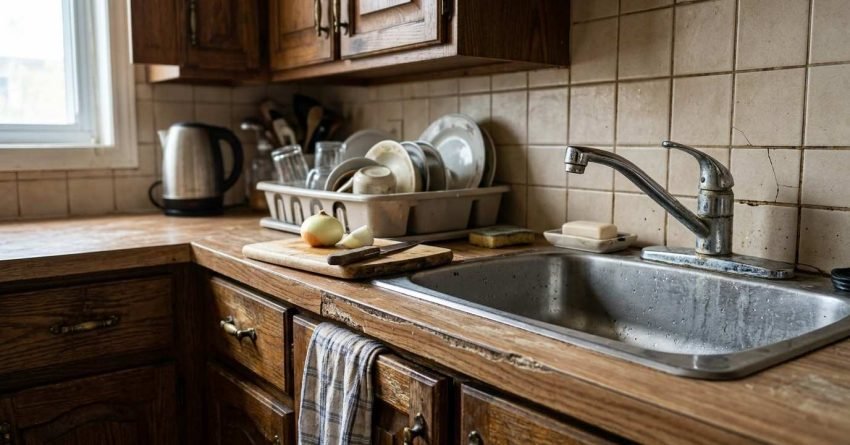
Most Sydney kitchens show clear warning signs before they fail completely — and recognising them early is the difference between a planned renovation and an emergency repair bill. Whether you are an owner-occupier, first-time renovator, or property investor, knowing when your kitchen has reached the end of its useful life helps you act strategically rather than reactively.
Ignoring these signs costs more over time, reduces your property’s appeal, and creates daily frustration that compounds with every passing month.
This guide covers the seven most common signs your kitchen needs a renovation, what each one means for your budget, and what to do next when the evidence is clear.
Your Kitchen Layout No Longer Works for Daily Life
A kitchen that made sense twenty years ago may be completely misaligned with how your household operates today. If you find yourself constantly working around the space rather than within it, the layout is the problem.
Poor workflow is one of the most consistent signs a kitchen has reached its functional limit. The classic kitchen work triangle — connecting the sink, cooktop, and refrigerator — should allow smooth, unobstructed movement. When benchtop space is too limited to prepare a meal, when two people cannot use the kitchen simultaneously without colliding, or when the traffic flow forces you through the cooking zone to reach the pantry, the layout is actively working against you.
Storage failures compound the problem. Kitchens that lack deep drawers, pull-out shelving, or adequate overhead cabinetry force workarounds: appliances on the floor, items stacked in front of other items, and pantry overflow into other rooms. These are not organisational problems. They are design deficiencies that a renovation resolves permanently.
If your layout is creating daily frustration, it may be time to explore a full kitchen renovation in Sydney — our kitchen renovation Sydney outlines every stage of the process, from design planning through to final handover.
Visible Wear, Damage, and Deterioration Are Spreading
Surface-level wear is easy to dismiss as cosmetic, but in a kitchen, deterioration rarely stays cosmetic for long. When cabinet doors are warping, laminate is peeling, or benchtop edges are chipping, the underlying substrate is usually compromised too.
Cabinets that no longer close flush, hinges that have pulled away from the carcass, and drawer runners that stick or collapse under load are structural failures, not cosmetic ones. Replacing individual components is a short-term fix that rarely addresses the root cause, particularly in kitchens where the cabinetry is more than fifteen years old and the materials have absorbed years of heat and moisture.
Benchtops tell a similar story. Laminate surfaces that have lifted at the joins allow water to penetrate the particleboard beneath, leading to swelling, mould growth, and eventual structural failure of the cabinet below. Stone benchtops that are cracked or stained beyond cleaning have typically reached the end of their serviceable life.
Flooring and splashbacks complete the picture. Grout that has blackened, tiles that have cracked or lifted, and vinyl that has bubbled or torn are all indicators that the kitchen has aged past the point where maintenance is cost-effective.
Understanding how far the damage has spread helps you scope the work accurately — our guide to kitchen renovation costs breaks down typical pricing for cabinet replacements, benchtop upgrades, and full kitchen overhauls in Sydney.
Plumbing, Electrical, and Ventilation Are Underperforming
A kitchen’s infrastructure is invisible until it fails, and by the time it does, the cost of rectification is significantly higher than it would have been during a planned renovation.
Plumbing problems in older kitchens include corroded pipes, slow drainage, persistent leaks under the sink, and water pressure that fluctuates unpredictably. These are not minor inconveniences. Slow drainage and persistent moisture under the sink create conditions for mould growth inside cabinetry, which spreads quickly and is expensive to remediate once established.
Electrical deficiencies are equally common in kitchens that have not been updated since the 1980s or 1990s. Insufficient power points force the use of power boards and extension leads in a high-use, moisture-prone environment — a combination that creates genuine fire risk. Lighting that relies on a single overhead fitting leaves benchtop work areas in shadow, reducing both safety and usability.
Rangehood ventilation is frequently overlooked. A rangehood that recirculates rather than exhausts, or one that is undersized for the cooktop below it, allows grease and moisture to accumulate on surfaces throughout the kitchen, accelerating deterioration and creating ongoing cleaning demands.
Plumbing and electrical deficiencies require licensed tradespeople to assess and rectify safely — working with an experienced home renovation contractor ensures these systems are upgraded to current Australian standards as part of a coordinated renovation scope
Your Kitchen Is Dragging Down Your Property Value
In Sydney’s property market, the kitchen is consistently identified by buyers and tenants as one of the highest-priority spaces in a home. An outdated kitchen does not just look tired — it actively reduces the perceived value of the entire property.
For owner-occupiers preparing to sell, a kitchen that is more than fifteen to twenty years old without significant updates will typically be flagged by buyers as a renovation cost they will need to absorb. This expectation is reflected in offers, often at a discount that exceeds what the renovation itself would have cost.
For property investors, an outdated kitchen reduces rental appeal and limits the tenant demographic the property can attract. Modern, functional kitchens command higher weekly rents and reduce vacancy periods — both of which directly affect yield.
An outdated kitchen is one of the fastest ways to reduce buyer confidence and rental yield — understanding the kitchen renovation ROI helps homeowners and investors prioritise upgrades that deliver measurable returns at sale or lease.
Energy Inefficiency and Rising Running Costs Are Climbing
Older kitchens are disproportionately expensive to run. Appliances manufactured before current energy efficiency standards consume significantly more electricity and gas than their modern equivalents, and the difference compounds across daily use.
Refrigerators older than ten years, ovens without proper door seals, and dishwashers from previous generations all draw more power than necessary. In a cost-of-living environment where energy bills are a consistent household concern, replacing these appliances as part of a kitchen renovation delivers ongoing savings that partially offset the renovation investment.
Lighting is a related factor. Kitchens still running halogen or fluorescent tube lighting are consuming three to five times the electricity of equivalent LED installations, with shorter globe lifespans that add ongoing replacement costs.
Poor insulation around windows and inadequate ventilation also contribute to temperature regulation problems in the kitchen, increasing the load on heating and cooling systems throughout the home.
Replacing ageing appliances and improving kitchen ventilation are among the most cost-effective improvements available — our overview of energy-efficient kitchen upgrades covers the specific changes that reduce running costs and improve comfort in Sydney homes.
Safety Hazards Are Present in the Kitchen
Some signs that a kitchen needs renovation go beyond inconvenience and into genuine risk. When safety hazards are present, renovation moves from a preference to a priority.
Mould is the most common safety concern in older kitchens. It develops behind splashbacks, inside cabinetry affected by plumbing leaks, and beneath flooring where moisture has penetrated. Prolonged mould exposure carries documented health risks, particularly for children and people with respiratory conditions.
Faulty wiring — including circuits that trip frequently, power points that spark, or appliances that cause the switchboard to fault — represents a fire and electrocution risk that requires immediate assessment by a licensed electrician. In many cases, the wiring deficiency is discovered during a kitchen renovation scope and addressed as part of the broader project.
Sharp edges on damaged benchtops, cabinet doors with broken hinges that fall unexpectedly, and flooring that has lifted to create trip hazards are physical safety risks that accumulate as a kitchen ages without maintenance.
When safety issues are identified, acting quickly and planning the scope carefully prevents costs from escalating — our kitchen renovation planning guide walks through how to assess, prioritise, and sequence renovation work to address hazards first.
What to Do When Your Kitchen Shows These Signs
Identifying the signs is the first step. The second is understanding what level of intervention your kitchen actually needs.
Not every kitchen requires a full gut renovation. Some households benefit from a targeted refresh — new benchtops, updated cabinetry, and a modern splashback — while others need a complete reconfiguration that addresses layout, infrastructure, and finishes simultaneously. The right scope depends on the age of the kitchen, the extent of the damage, your budget, and your goals for the property.
Getting an accurate assessment from an experienced renovation contractor is the most reliable way to understand your options. A detailed scope of works, prepared before any commitments are made, gives you a clear picture of what is involved, what it will cost, and how long it will take.
Once you have identified the signs, the next step is getting an accurate scope and quote — Sydney Home Renovation provides end-to-end support for a full kitchen renovation, from initial assessment through to project completion, with transparent pricing at every stage.
Conclusion
A kitchen that is functionally limited, visibly deteriorated, or structurally compromised is not a minor inconvenience — it is a signal that renovation is overdue. Recognising the signs early gives you the planning time to make informed decisions about scope, budget, and timing.
For Sydney homeowners and property investors, acting on these signs before they escalate protects both the liveability of the home and the long-term value of the asset.
Sydney Home Renovation is ready to help you assess your kitchen, define the right scope, and deliver a renovation that is built to last — contact us today to get started.
Frequently Asked Questions
How do I know if my kitchen needs a full renovation or just an update?
If your kitchen has structural damage, outdated plumbing or electrical systems, or a layout that no longer functions for your household, a full renovation is likely the right approach. Surface-level updates work best when the underlying structure and infrastructure are still sound.
How old does a kitchen need to be before renovation is worth considering?
Most kitchens have a functional lifespan of fifteen to twenty years before wear, outdated design, and infrastructure limitations make renovation more cost-effective than ongoing maintenance. Sydney kitchens older than this threshold are typically strong candidates for a full renovation assessment.
Does renovating a kitchen add value to a Sydney property?
Yes. The kitchen is consistently ranked among the highest-value renovation investments in residential property. In Sydney’s market, a well-executed kitchen renovation typically improves buyer appeal, supports higher sale prices, and can increase rental yield for investment properties.
What are the most common safety hazards found in older Sydney kitchens?
The most frequently identified hazards include mould from plumbing leaks, faulty or undersized electrical circuits, damaged benchtop edges, and flooring that has lifted or cracked. Each of these should be assessed by a licensed professional as part of any renovation scope.
How long does a kitchen renovation typically take in Sydney?
A standard kitchen renovation in Sydney generally takes between three and six weeks from commencement, depending on the scope of work, the complexity of any plumbing or electrical changes, and the lead time on materials and appliances. A detailed project timeline is provided as part of the scoping process.
Can I stay in my home during a kitchen renovation?
In most cases, yes. Sydney Home Renovation coordinates the renovation sequence to minimise disruption, and most households can remain in the property throughout the project. Your project manager will advise on any periods where access to the kitchen will be fully restricted.
What is the first step if I think my kitchen needs renovating?
The first step is a professional assessment of your kitchen’s current condition, layout, and infrastructure. This gives you an accurate picture of what work is required, what it will cost, and what the renovation will deliver — before any commitments are made.