The drain you choose shapes your entire shower floor: the tile layout, the waterproofing approach, the gradient direction, and the final cost of your bathroom renovation.
Homeowners and renovators in Sydney ask us this question constantly. Both drain types work well, but they suit different budgets, floor sizes, and design goals. Understanding the difference before you commit saves you from expensive mid-project changes.
In this guide, we cover how each drain works, what installation involves, what each costs in Sydney, and which one fits your renovation.
What Is a Linear Shower Drain?
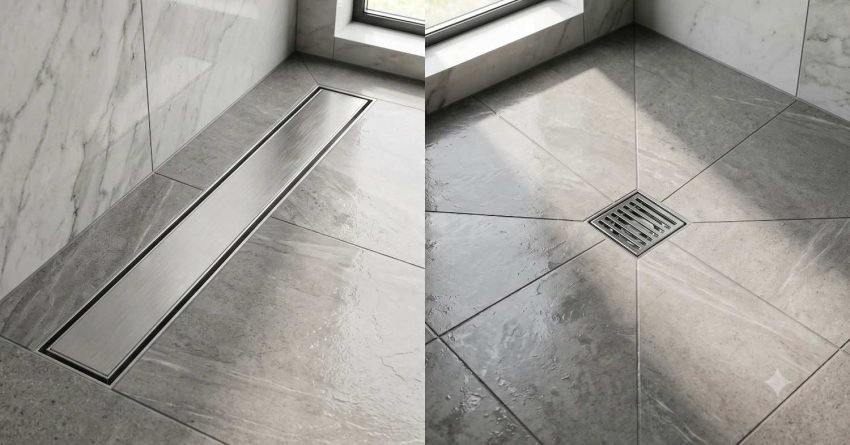
A linear shower drain is a long, narrow channel drain installed along one edge of the shower floor, typically against a wall or at the entry threshold. Instead of water flowing toward a central point, the entire floor slopes in a single direction toward the channel.
The drain body sits recessed into the substrate, and a grate covers the top. Grate options include stainless steel, tile-insert (where a tile sits inside the grate to blend with the floor), and slotted profiles for a near-invisible finish.
Linear drains are the defining feature of contemporary wet-room and open-plan shower designs. They create a clean, uninterrupted floor plane that reads as intentional and considered.
How Linear Drains Work
Water flows across a single-plane sloped floor toward the channel. The gradient runs in one direction only, typically 1:80 fall toward the drain side. From the channel, water travels through the drain body to the waste outlet connected to your plumbing stack.
The single-slope design is structurally simpler than a four-way fall. It also means the tiler works with one consistent gradient across the entire floor, which reduces the risk of pooling.
Common Linear Drain Configurations
The most common configurations are wall-side placement (drain flush against one wall), threshold placement (drain at the shower entry), and niche placement (drain recessed into a tiled niche). Tile-insert grates are the most popular finish choice in Sydney renovations right now; they let large-format tiles run continuously across the floor with only a thin slot visible.
What Is a Centre Drain?
A centre drain, also called a point drain or square drain, is positioned at the centre of the shower floor. Water drains from all four directions toward a single central outlet. It is the traditional shower drain configuration and remains the most common type in Australian homes.
Centre drains come in square, round, and tile-over profiles. Chrome grates are standard, though brushed nickel and matte black finishes are available to match tapware.
The centre drain is a proven, reliable system. It works with standard tile sizes, suits most shower footprints, and is straightforward for any licensed plumber and tiler to install.
How Centre Drains Work
The floor is built with a four-directional fall; each side of the shower floor slopes down toward the central drain point. The gradient on each plane is typically 1:60 to 1:80. Water from all four sides converges at the drain body, passes through the waste trap, and exits to the plumbing stack.
The four-way fall requires more precision from the tiler. Each plane must meet cleanly at the drain without creating ridges or flat spots that cause pooling.
Common Centre Drain Configurations
Square chrome grates are the most common in Sydney bathrooms. Tile-over centre drains are available; a small tile sits inside the grate, but the small format of the grate limits how seamless the result looks compared to a linear tile-insert. Round drains are less common in residential renovations but appear in older homes and some contemporary designs.
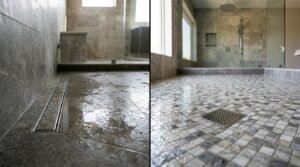
Linear vs Centre Drain: Key Differences at a Glance
The core difference comes down to slope direction, tile layout, cost, and aesthetic outcome. Linear drains create a single-slope floor and suit large-format tiles and modern design. Centre drains require a four-way fall, work with standard tile sizes, and cost less to supply and install.
Neither drain type is universally better. The right choice depends on your floor size, tile selection, budget, and design intent.
Comparison Table: Linear Drain vs Centre Drain
| Feature | Linear Drain | Centre Drain |
| Floor slope direction | Single plane (one direction) | Four-way fall (all directions) |
| Tile layout | Large format tiles – minimal cuts | Standard tiles: more cuts at centre |
| Aesthetic | Contemporary, minimal, seamless | Traditional, functional |
| Supply cost (Sydney) | $150–$800+ depending on finish | $40–$200 depending on finish |
| Installation complexity | Moderate–High | Standard |
| Waterproofing | Single upstand at drain side | Central membrane bond |
| Accessibility | Barrier-free entry possible | Raised lip or hob typically required |
| Cleaning | Single grate removal | Central grate removal |
| Retrofit suitability | Difficult – substrate rebuild required | Easier – existing fall may suit |
Installation Requirements and Waterproofing
Both drain types must comply with AS 3740:2021 Waterproofing of Domestic Wet Areas, the Australian Standard governing wet area waterproofing in residential construction. The standard specifies membrane type, upstand heights, and bond requirements around drain bodies. Non-compliant waterproofing is the single most common cause of shower leaks in Sydney homes.
Installation complexity differs significantly between the two drain types. Getting this right from the start protects your renovation investment for decades.
Linear Drain Installation Considerations
A linear drain requires the entire shower floor substrate to be built or reformed to a single-plane fall. In a new build or full bathroom strip-out, this is straightforward; the concreter or tiler sets the fall during the substrate pour or bed. In a renovation where the existing substrate is being retained, the floor often needs to be rebuilt entirely to achieve the correct single-direction gradient.
The drain body is set into the substrate with a membrane upstand bonded around the full perimeter of the drain channel. The membrane must also run up the wall on the drain side to the required height. Tile-insert grates require precise substrate height coordination so the tile sits flush with the surrounding floor; this adds time to the tiling phase.
Centre Drain Installation Considerations
A centre drain works with the traditional four-way fall substrate that most Sydney shower floors already have. In a like-for-like renovation where you are replacing an existing centre drain, the existing substrate fall is often retained, which reduces labour time and cost significantly.
The membrane bonds around the drain body at the centre of the floor, with upstands running up all four walls. This is a well-understood waterproofing sequence for any licensed waterproofer in Sydney. The tiler then works outward from the drain, cutting tiles to meet the central point, a process that requires skill but is standard practice.
Cost Comparison: Linear Drain vs Centre Drain in Sydney
Cost is one of the most common deciding factors for Sydney homeowners and renovators. The difference between the two drain types is that real linear drains cost more to supply and typically add labour time to both the waterproofing and tiling phases.
That said, the total cost difference is often smaller than people expect when you factor in the full scope of a bathroom renovation.
Linear Drain Cost Breakdown
| Item | Typical Sydney Cost Range |
| Linear drain unit (standard stainless) | $150–$350 |
| Linear drain unit (tile-insert / premium) | $350–$800+ |
| Additional substrate preparation | $200–$600 |
| Waterproofing (linear configuration) | $400–$700 |
| Tiling (large format, single slope) | $600–$1,200+ |
| Total linear drain addition to project | $1,500–$3,500+ |
The premium for a linear drain over a centre drain in a full Sydney bathroom renovation typically sits between $800 and $2,000 depending on the drain unit selected, the floor size, and whether the substrate needs rebuilding.
Centre Drain Cost Breakdown
| Item | Typical Sydney Cost Range |
| Centre drain unit (standard chrome) | $40–$120 |
| Centre drain unit (premium finish) | $120–$200 |
| Substrate preparation (standard) | $0–$200 |
| Waterproofing (four-way fall) | $350–$600 |
| Tiling (standard format, four-way fall) | $400–$900 |
| Total centre drain addition to project | $800–$2,000 |
A centre drain is the lower-cost option at every line item: supply, waterproofing, and tiling. For budget-conscious renovations or investment properties where cost control is the priority, a centre drain delivers a fully functional, compliant shower at a lower total spend.

Which Drain Is Right for Your Bathroom Renovation?
The decision comes down to four factors: your design intent, your tile selection, your budget, and your floor size. There is no single correct answer; both drain types produce excellent results when installed correctly.
We help Sydney homeowners work through this decision on every bathroom renovation we take on. Here is how we frame it.
When to Choose a Linear Drain
Choose a linear drain when you want a contemporary, minimal aesthetic, and you are using large-format tiles (600x600mm or larger). Linear drains are the only practical way to run large tiles continuously across a shower floor without breaking the pattern at a central drain point.
They are also the right choice for barrier-free or accessibility-focused showers; the single-slope floor and wall-side drain eliminate the need for a hob or raised entry lip, making the shower accessible for all ages and mobility levels. If you are renovating with long-term liveability or ageing-in-place in mind, a linear drain is worth the additional cost.
When to Choose a Centre Drain
Choose a centre drain when you are working to a tighter budget, renovating an investment property, or replacing an existing centre drain where the substrate fall is already in place. The lower supply cost, faster installation, and compatibility with standard tile sizes make it the practical choice for straightforward renovations.
Centre drains also suit smaller shower footprints in a 900x900mm shower recess; the aesthetic difference between a linear and centre drain is minimal, and the cost saving is meaningful. For a rental property renovation in Sydney, a quality centre drain with a brushed nickel or matte black grate finish delivers a clean, modern result at a fraction of the linear drain premium.
Conclusion
Linear drains and centre drains both deliver compliant, functional shower floors; the difference is in cost, tile layout, and design outcome. Linear drains suit larger showers, contemporary aesthetics, and accessibility goals. Centre drains suit tighter budgets, standard tile formats, and straightforward renovation scopes.
The right drain for your bathroom depends on what you are trying to achieve, not on which type is objectively better. Both work. Both last. The decision is about fit.
At Sydney Home Renovation, we help you make that call with clear pricing and honest advice. Get in touch, and we will walk you through the right drain choice for your bathroom renovation.
Frequently Asked Questions
Is a linear drain more expensive than a centre drain?
Yes, a linear drain costs more at every stage: supply, waterproofing, and tiling. In a Sydney bathroom renovation, the total premium for a linear drain over a centre drain typically sits between $800 and $2,000 depending on the drain unit, floor size, and substrate condition.
Which drain type is easier to clean?
Both are straightforward to clean. A linear drain has a single long grate that lifts out for access to the channel. A centre drain has a small central grate. Linear drains with tile-insert grates require slightly more care to avoid grout damage when removing the grate insert.
Can I retrofit a linear drain into an existing shower?
Retrofitting a linear drain into an existing shower is possible but rarely straightforward. The existing substrate almost always needs to be rebuilt to achieve the correct single-plane fall, which adds high cost and time. A centre drain retrofit is far simpler; the existing four-way fall substrate often suits a direct replacement.
Does drain placement affect tile layout?
Yes, significantly. A linear drain allows large-format tiles to run continuously across the floor in one direction with minimal cuts. A centre drain requires tiles to be cut and mitred toward the central point, which increases waste and labour time, particularly with larger tile formats.
Which drain type suits a small bathroom?
A centre drain suits small shower footprints well. In a 900x900mm or 1000x1000mm shower, the practical and aesthetic advantages of a linear drain are less pronounced, and the cost saving from a centre drain is more meaningful. Linear drains deliver their greatest benefit in larger, open shower formats.
Do linear drains require a special waterproofing membrane?
No special membrane is required, but the waterproofing configuration differs from a centre drain. A linear drain requires a continuous membrane upstand along the full length of the drain channel and up the adjacent wall. The membrane specification must still comply with AS 3740:2021. Any licensed waterproofer in Sydney works to this standard.
Which drain type adds more value to a property?
A linear drain with a tile-insert grate and large-format floor tiles adds stronger visual impact and is associated with higher-end bathroom finishes, which can support property value in owner-occupier markets. For investment properties, a quality centre drain in a modern finish delivers a clean result without the premium spend, which typically produces a better renovation ROI.