A shower mixer blends hot and cold water to deliver a controlled temperature at the outlet. A shower diverter redirects water flow between two or more outlets; it does not control temperature at all.
These two components do completely different jobs, and confusing them leads to the wrong product, the wrong quote, and the wrong installation. I see it happen on renovation projects more often than it should.
This guide covers what each component does, how they differ, what they cost, and which one your bathroom renovation actually needs.
What Is a Shower Mixer?
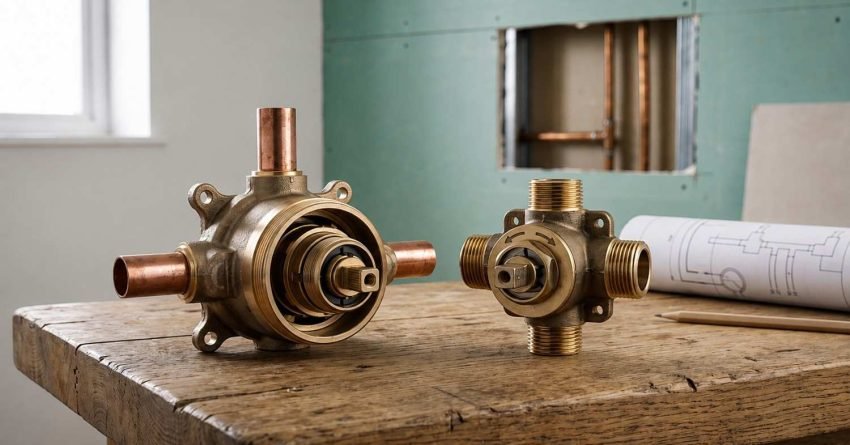
A shower mixer is a valve that combines hot and cold water supplies into a single, temperature-controlled stream before it reaches the showerhead. It sits at the heart of your shower’s water delivery system and gives you direct control over both temperature and flow rate.
Without a mixer, you are working with two separate water lines and no way to blend them at the point of use. The mixer solves that problem cleanly and permanently.
How a Shower Mixer Works
Cold water enters from one inlet, hot water from another. The mixer valve blends them internally before releasing a single stream at the set temperature through the outlet. Turn the handle one way, and the water gets hotter. Turn it the other and it cools down.
Thermostatic mixers go a step further. They hold the temperature steady even when water pressure fluctuates elsewhere in the house; if someone flushes a toilet, the temperature does not spike. That consistency is what makes thermostatic models the preferred choice in most quality bathroom renovations.
Types of Shower Mixers
Manual mixers are the most common and the most affordable. You adjust temperature and flow by hand each time you shower, and the valve holds no memory of your last setting.
Thermostatic mixers maintain a pre-set temperature automatically and include a built-in safety stop to prevent scalding. Concealed mixers sit behind the wall with only the trim plate and controls visible, a clean, modern finish. Exposed mixers mount directly on the wall surface and are easier to install in a bathroom renovation where opening the wall is not practical.
What Is a Shower Diverter?
A shower diverter is a valve that redirects water flow from one outlet to another. It does not blend water, control temperature, or regulate pressure. Its only function is to switch the path water travels from a bath spout to a showerhead, for example, or from a fixed overhead to a handheld.
Think of it as a traffic controller for water, not a temperature regulator.
How a Shower Diverter Works
When the diverter is in its default position, water flows to the primary outlet, usually a bath spout or a fixed showerhead. Activate the diverter and the valve closes off that path and opens another, sending water to the secondary outlet instead.
The mechanism is simple: a gate or cartridge inside the valve body physically blocks one channel and opens the other. No blending happens. No temperature change occurs. The water arrives at the new outlet at exactly the same temperature it left the mixer.
Types of Shower Diverters
Tee diverters are the simplest type: a pull-up knob on the bath spout that redirects flow to the showerhead when lifted. Two-valve diverters use a separate handle to switch between two outlets. Three-valve diverters manage three outlets and are common in bath-shower combination setups where a fixed head, handheld, and bath spout all need independent control.
Push-pull diverters are built into the mixer body itself on some models, making them a compact solution for smaller bathrooms where wall space is limited.
Shower Mixer vs Diverter: Core Differences Explained
The confusion between these two components comes from the fact that they often appear together in the same fitting. But their functions are entirely separate, and understanding that separation is what makes a renovation brief accurate.
Function and Purpose
A mixer controls the water’s temperature and flow rate. A diverter controls where the water goes. One is about quality of delivery. The other is about direction of delivery.
You need a mixer in every shower. You only need a diverter when you have more than one outlet to switch between.
Installation Complexity
A mixer requires connection to both hot and cold supply lines and a properly sized rough-in in the wall. In a full bathroom renovation, this is standard work: the plumber sets the rough-in during the framing stage, and the mixer trims out at the end.
A diverter is simpler to install in most cases. A tee diverter on a bath spout is a straightforward swap. A three-valve diverter built into a wall requires more planning and adds labour time, but it is still less complex than a full mixer installation from scratch. Both require a licensed plumber in New South Wales; this is not DIY territory.
Cost Comparison
Shower mixer supply costs in Sydney typically range from $150 for a basic manual unit to $800 or more for a quality thermostatic concealed mixer. Installation labour adds $200 to $400 depending on access and whether the rough-in is already in place.
Diverter valves are generally less expensive to supply, $50 to $300 for most residential models. Installation labour is comparable for simple tee types but rises to $150 to $350 for multi-outlet wall-mounted diverters. According to Fair Trading NSW, all plumbing work in NSW must be carried out by a licensed plumber, so factor that into every budget line.
When Do You Need a Mixer, and When Do You Need a Diverter?
Every shower needs a mixer. That is not a choice; it is a plumbing requirement. The question of whether you also need a diverter depends entirely on your outlet configuration.
One showerhead, one outlet: a mixer alone is sufficient. Two or more outlets: a fixed head plus a handheld, or a shower over a bath, a diverter is what makes switching between them possible.
Renovation Scenarios That Determine the Right Choice
A full bathroom renovation from scratch gives you the most flexibility. The plumber sets the rough-in for whatever configuration you choose, and the cost difference between a single-outlet and dual-outlet setup is relatively small at that stage.
A partial upgrade replacing an existing mixer without touching the wall means working within the existing rough-in. Adding a diverter to an existing single-outlet setup requires additional plumbing work and adds cost. For landlords and investment property owners, a quality manual mixer with a single outlet is often the most cost-effective and durable choice. For owner-occupiers doing a full renovation, a thermostatic mixer with a diverter for a handheld shower adds genuine daily comfort and long-term value.
Can You Use Both a Mixer and a Diverter Together?
Yes, and in most modern bathroom renovations, that is exactly what happens. A thermostatic mixer controls the temperature, and a diverter built into the same valve body or installed as a separate unit switches flow between the fixed overhead and a handheld.
This combined configuration is standard in bath-shower setups. The mixer handles the bath fill and the shower temperature. The diverter switches between the bath spout and the showerhead. Both components work together, but they remain functionally independent: the mixer does not care where the water goes, and the diverter does not care what temperature it is.
Specifying both correctly from the start avoids costly mid-project changes. I always recommend locking in the outlet configuration before the plumber sets the rough-in; moving it later adds time and money.

Which One Should You Choose for Your Bathroom Renovation?
The answer is almost always both, but in the right configuration for your specific bathroom layout and budget.
Start with the mixer. Choose manual for a straightforward, budget-conscious renovation. Choose thermostatic if comfort, safety, and long-term performance matter more than upfront cost. Then decide on outlets. One outlet keeps costs down. Two outlets with a diverter add flexibility and daily usability, particularly in a family bathroom or a property you plan to hold long-term.
The biggest mistake I see is homeowners choosing the mixer and diverter separately without thinking about how they work together. Specify them as a system, confirm the rough-in position before the wall closes, and get a licensed plumber to install both in one visit. That approach saves time, reduces labour costs, and delivers a result that works properly from day one.
At Sydney Home Renovation, we help homeowners and investors make these decisions before the project starts, not after the wall is tiled. Getting the specification right early is what keeps a bathroom renovation on budget and on schedule.
Conclusion
Shower mixers and diverters are not interchangeable; they serve completely different functions within the same plumbing system. Understanding that difference is what separates a well-specified renovation from one that needs costly corrections mid-build.
The right combination depends on your layout, your outlets, and your renovation goals. Both components need to be specified together, not independently, to deliver a system that works.
At Sydney Home Renovation, we guide homeowners and investors through exactly these decisions from the planning stage. Reach out to our team and get your bathroom renovation specified correctly from the start.
Frequently Asked Questions
What is the main difference between a shower mixer and a diverter?
A shower mixer blends hot and cold water to control temperature and flow. A diverter redirects water between two or more outlets without affecting temperature. They perform completely separate functions within the same shower system.
Do I need a plumber to install a shower diverter?
Yes. All plumbing work in New South Wales requires a licensed plumber. This applies to both mixer and diverter installations, regardless of how straightforward the job appears.
Can a shower diverter replace a mixer?
No. A diverter only redirects water flow; it cannot control temperature or blend hot and cold supplies. Every shower requires a mixer. A diverter is an addition to the system, not a substitute for it.
What type of shower mixer is best for a bathroom renovation?
A thermostatic mixer is the best long-term choice for most bathroom renovations. It holds a consistent temperature, includes a scald-prevention stop, and performs reliably over time. Manual mixers are a solid, cost-effective option for simpler or budget-focused projects.
How much does it cost to install a shower mixer in Sydney?
Supply costs range from around $150 for a basic manual mixer to $800 or more for a quality thermostatic concealed model. Licensed plumber installation adds $200 to $400 depending on access and whether the rough-in is already in place.
Is a diverter valve the same as a mixer valve?
No. A diverter valve switches water between outlets. A mixer valve blends hot and cold water to a set temperature. Some fittings combine both functions in a single body, but the two valves remain mechanically and functionally separate components.