
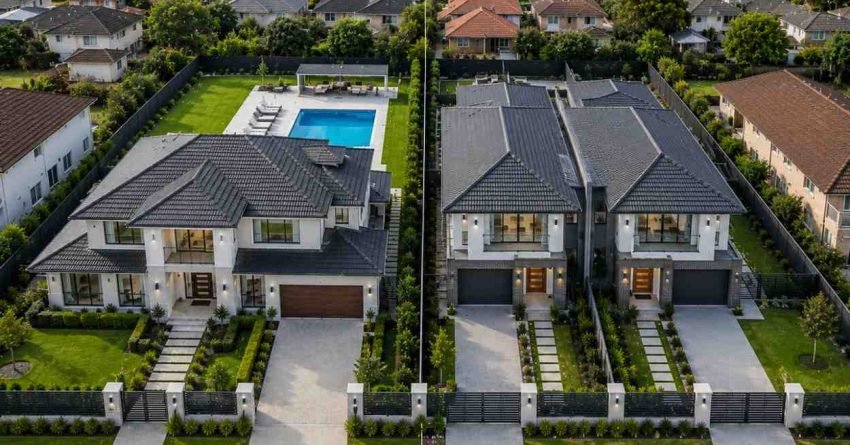
A knockdown rebuild suits homeowners wanting one premium custom home on their block, while a duplex maximises rental yield or capital return through two dwellings. Your land size, zoning, and financial goals determine which path delivers better long-term value.
Sydney’s tight housing supply and rising land values make this one of the most consequential property decisions a homeowner or investor faces today. This guide compares costs, council approvals, timelines, investment returns, and lifestyle outcomes so you can choose the option that matches your goals and budget.
Knockdown Rebuild vs Duplex at a Glance
A knockdown rebuild replaces your existing home with one new custom-designed dwelling on the same lot. A duplex demolishes the old home and builds two attached or detached dwellings, creating two separately titled or strata-titled properties on a single block. The right answer depends on three variables: how much land you own, what your zoning permits, and whether you want a forever home or an income-producing asset.
Both options use the same land you already own, which removes stamp duty on a fresh purchase and unlocks equity from your most valuable asset.
Quick Comparison Snapshot
| Factor | Knockdown Rebuild | Duplex Build |
| Number of dwellings | 1 custom home | 2 dwellings |
| Typical lot size | 400m²+ | 600m²+ in most LGAs |
| Build timeline | 9–14 months | 12–18 months |
| Best for | Owner-occupiers | Investors, downsizers, multi-generational families |
| Resale flexibility | Single property | Sell or rent one, keep the other |
| Council complexity | Moderate | Higher |
What Is a Knockdown Rebuild?
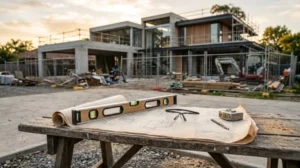
A knockdown rebuild is the process of demolishing an existing dwelling and constructing a brand-new home on the same land. It is the preferred path for homeowners who love their suburb, school zone, or street but have outgrown a tired or structurally compromised house. Instead of renovating around limitations, you start fresh with modern energy ratings, contemporary layouts, and design choices tailored to how your family actually lives.
How the Knockdown Rebuild Process Works
The project moves through five stages: site assessment, design and engineering, demolition, construction, and handover. Demolition typically takes one to two weeks, while construction runs nine to twelve months for most single-dwelling builds. Asbestos inspections, service disconnections, and tree-removal approvals must all be completed before demolition begins.
Each stage involves coordinated trades, council inspections, and sign-offs that keep the project moving on schedule. Understanding the full sequence before you commit prevents the delays that push timelines and budgets beyond original estimates.
Energy Ratings and NCC 2022 Compliance
Every new home built in NSW must meet the National Construction Code 2022 energy efficiency requirements, which mandate a minimum 7-star NatHERS rating for new dwellings. A knockdown rebuild gives you a clean slate to design insulation, glazing, and orientation for maximum thermal performance from day one. Retrofitting an existing home to the same standard almost always costs more and delivers a less efficient result than building new.
This compliance requirement is built into every knockdown rebuild contract, so there are no surprises at the certification stage. It also adds genuine long-term value: energy-efficient homes attract stronger buyer interest and lower ongoing utility costs.
Who a Knockdown Rebuild Suits Best
This option suits owner-occupiers planning to stay long-term, families who value location over land subdivision, and homeowners on smaller lots where dual-occupancy is not permitted. It also suits anyone who wants a single high-end finish rather than splitting their budget across two builds.
What Is a Duplex Development?
A duplex is two dwellings built on a single block, either side-by-side, front-and-back, or stacked. Each unit functions as an independent home with its own entrance, utilities, and outdoor space. Once complete, the duplex can remain on a single title, be strata-titled, or in some cases be Torrens-titled into two fully separate lots.
Torrens title subdivision creates two independent freehold lots, each with its own certificate of title, council rates, and mortgage capacity. This is the most valuable outcome for a duplex because each lot can be sold, financed, or transferred independently without the shared-ownership complexity of strata. Strata title is more common on narrower blocks and still allows separate sale, but buyers and lenders treat it differently to a freehold Torrens lot.
Attached vs Detached Duplex Designs
Attached duplexes share a central party wall and suit narrower blocks. Detached duplexes are two standalone homes on the same lot, typically requiring wider frontage but offering better privacy and stronger market appeal. Detached duplexes generally command higher resale prices because they feel like individual houses rather than units.
The choice between attached and detached design affects fire rating requirements, acoustic separation costs, and the feasibility of Torrens title subdivision all factors worth resolving in the design phase before lodging any approval.
Who a Duplex Build Suits Best
A duplex suits investors seeking rental yield, families wanting to live in one half while renting or selling the other, and multi-generational households needing independent but adjacent living spaces. It also suits owners of larger blocks in zones permitting dual-occupancy who want to unlock land value without selling.
Cost Comparison: Knockdown Rebuild vs Duplex in Sydney
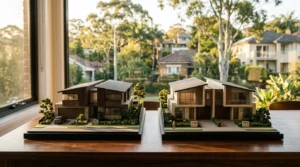
A knockdown rebuild in Sydney generally ranges from $450,000 to $1.2 million depending on size, finish level, and site complexity. A duplex typically ranges from $900,000 to $1.8 million for the complete two-dwelling build. On a per-dwelling basis, duplexes are often cheaper because shared, single mobilisation, and bulk material orders create efficiencies.
Demolition, Site Costs, and Hidden Expenses
Both options share demolition costs of roughly $15,000 to $30,000, asbestos removal if applicable, soil testing, contour surveys, and service connections. Sloping sites, rock excavation, and difficult access driveways add substantial cost to either pathway. Duplex builds carry additional expenses for separate metering, fire-rated party walls, acoustic separation, and dual driveways.
Construction Cost Per Square Metre
Sydney construction costs in 2025 typically sit between $3,200 and $5,500 per square metre for quality custom builds, with premium finishes pushing well beyond that. Pricing varies widely based on inclusions, slope, and finish level. Reviewing detailed quotes from qualified builders gives you a true picture of total project cost.
Holding Costs and Rent During the Build
One cost both pathways share that rarely appears in builder quotes is the holding cost during construction. If you are renting elsewhere while your block is being built out, you are paying rent plus your existing mortgage or land holding costs simultaneously, often $2,000 to $5,000 per month depending on your suburb and loan structure.
A knockdown rebuild typically runs nine to fourteen months, meaning holding costs can add $18,000 to $70,000 to the real project total. A duplex runs twelve to eighteen months, extending that exposure further. Factoring holding costs into your feasibility model before signing a building contract is essential; they are real costs that affect your break-even point on either path.
Financing, Loans, and Stamp Duty Considerations
Building on land you already own removes stamp duty on a new purchase, one of the most significant financial advantages both pathways share. On a Sydney property valued at $1.5 million, stamp duty savings alone can exceed $60,000 compared to buying an equivalent finished property.
Construction loans work differently to standard mortgages. Lenders release funds in progressive drawdowns tied to build milestones rather than as a lump sum, which means interest accrues only on the drawn portion during construction. Most lenders will fund a knockdown rebuild to 80–90% LVR on the completed value, while duplex construction loans often require a stronger equity position, typically 70–80% LVR because the lender is assessing two dwellings and a more complex approval pathway.
Torrens title subdivision after a duplex build can unlock separate financing on each lot, allowing you to sell one dwelling and retain a clean mortgage on the other. This exit strategy is worth discussing with a construction-specialist lender before you commit to a design, because the titling outcome affects your financing options from day one.
Timeline Breakdown: Stage by Stage
Understanding the full timeline for each pathway helps you plan temporary accommodation, financing drawdowns, and your move-in date with accuracy.
Knockdown Rebuild Typical Timeline
| Stage | Duration |
| Design, engineering, and approvals | 2–6 months |
| Demolition | 1–2 weeks |
| Construction | 9–12 months |
| Practical completion and handover | 2–4 weeks |
| Total | 11–18 months |
Duplex Build Typical Timeline
| Stage | Duration |
| Feasibility, design, and DA lodgement | 3–6 months |
| DA assessment and approval | 3–9 months |
| Demolition | 1–2 weeks |
| Construction | 12–16 months |
| Strata or Torrens subdivision | 2–4 months post-completion |
| Total | 18–30 months |
The DA pathway for a duplex is the single biggest timeline variable. A straightforward DA in a cooperative council area can resolve in three months; a contested DA with neighbour objections in a heritage-sensitive suburb can run nine months or longer. Engaging a town planner for a pre-lodgement meeting before finalising your design is the most effective way to compress this stage.
Council Approvals, Zoning, and DA Requirements in NSW
Approval pathways differ significantly between the two options. Knockdown rebuilds often qualify for Complying Development Certificates (CDC) under the NSW Housing Code, allowing approval in as little as 20 days when the design meets all standards. Duplexes face stricter scrutiny, longer timeframes, and stronger neighbour notification requirements in most local government areas.
Lot Size, Frontage, and Setback Rules
Each Sydney council sets minimum lot sizes and frontage requirements for dual-occupancy. Common thresholds sit around 600m² with 15-metre frontage, but rules vary by zone and council. Setbacks, height limits, floor space ratios, and landscaped-area minimums all shape what your duplex can legally be. The NSW Planning Portal publishes current zoning maps and development standards for every property in the state.
Complying Development vs DA Pathway
CDC is faster, cheaper, and more predictable but requires strict compliance with prescriptive standards. A full Development Application (DA) allows flexibility on design but takes three to nine months and exposes the project to community objections.
Neighbour notification is a real risk on duplex DAs. Adjoining owners have the right to lodge objections, and councils must consider them. Objections citing bulk, scale, privacy, or neighbourhood character can trigger design amendments, extended assessment periods, or in rare cases, refusal. A pre-lodgement meeting with the council’s duty planner and a design that genuinely responds to the local streetscape is the most effective way to reduce objection risk before you spend money on full DA documentation.
Investment Return, Resale Value, and Long-Term Equity
Duplex developments generally deliver stronger short-term financial outcomes because you create two saleable or rentable assets from one block. A well-located strata-titled duplex in inner or middle-ring Sydney can produce significant uplift beyond build cost, depending on land value and finished product quality. Knockdown rebuilds deliver value through lifestyle, longevity, and capital growth on a premium single-home asset.
Capital Growth vs Rental Yield Outcomes
Duplexes shine for yield-focused investors because rental income from two dwellings often outperforms a single comparable house. Knockdown rebuilds win on capital growth in blue-chip suburbs where buyers pay a premium for one-of-a-kind custom homes. Matching your build decision to your exit strategy, whether that is long-term hold, sell-one-keep-one, or full divestment, determines which path generates the better financial outcome for your specific situation.
Depreciation Schedules and Tax Advantages
A duplex built as an investment property qualifies for Division 43 building depreciation under the Australian Tax Office’s capital works rules. On a new duplex with a construction cost of $900,000, the annual Division 43 deduction runs at 2.5%, or $22,500 per year, for up to 40 years. Plant and equipment depreciation on fixtures, fittings, and appliances adds further deductions in the early years of ownership.
A knockdown rebuild used as a primary residence does not generate depreciation deductions. If you later convert it to a rental, depreciation applies from the date it becomes income-producing. Investors comparing the two pathways should model the after-tax cash flow, not just the gross yield, to get an accurate picture of real returns.
Which Option Is Right for You? Decision Framework
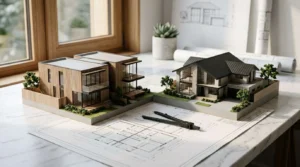
Choose a knockdown rebuild if you plan to stay long-term, want one premium custom home, sit on a smaller lot, or live in a suburb where buyers value detached houses. Choose a duplex if your block is 600m² or larger, your zoning permits dual-occupancy, and you want to generate income, sell one half to fund the other, or accommodate extended family.
A feasibility study, preliminary design, and council pre-lodgement meeting before committing to either option will save tens of thousands of dollars and months of frustration. The cheapest mistake to fix is the one you avoid by planning properly upfront.
Conclusion
Knockdown rebuilds and duplex developments both transform an underperforming block into a higher-value asset, but they serve fundamentally different goals around lifestyle, income, and equity. The right choice comes down to your land size, zoning, financial strategy, and how long you plan to hold the property.
Sydney’s planning landscape, construction market, and lending environment all reward owners who match their build choice to their zoning, land size, and long-term strategy. Getting the feasibility right before you commit to a design is what separates a profitable project from an expensive one.
We work with Sydney homeowners and investors every day to compare both pathways with transparent costings and honest feasibility advice. Contact Sydney Home Renovation today, and we will help you build the right case for your block before you spend a dollar on design.
Frequently Asked Questions
Is a duplex more profitable than a knockdown rebuild?
A duplex usually generates stronger short-term financial returns because you create two saleable dwellings from one block. A knockdown rebuild often delivers better capital growth in premium suburbs.
How long does a knockdown rebuild take in Sydney?
A typical knockdown rebuild takes nine to fourteen months from demolition to handover. Approval timelines add two to six months depending on whether you use CDC or a full DA pathway.
What lot size do you need for a duplex in Sydney?
Most Sydney councils require a minimum lot size of around 600m² with at least 15-metre frontage for dual-occupancy. Requirements vary by local government area and zoning.
Can you live in one duplex and sell the other?
Yes. A strata-titled or Torrens-titled duplex allows you to live in one dwelling and sell or rent the other, offsetting build costs while staying in your preferred suburb.
Is it cheaper to renovate or knockdown rebuild?
Knockdown rebuilds become cheaper than major renovations when the existing structure has serious issues such as failing foundations, asbestos, or a dated footprint. Cosmetic upgrades on a sound home almost always cost less.
Do duplex builds need a DA in NSW?
Most duplex builds require a Development Application because they exceed the prescriptive standards of the NSW Housing Code. Some councils permit duplex CDC approvals under specific conditions.
Will a duplex hurt the value of my street?
Well-designed duplexes that match the streetscape can lift surrounding property values by introducing new modern stock. Poorly designed duplexes that ignore local character may attract objections and reduce neighbourhood appeal.


