The bathroom is the hardest room to renovate in any Australian home. This compact space packs more complexity per square metre than any other room, combining plumbing, electrical, waterproofing, ventilation and structural work into one project that demands precise sequencing.
I have watched more budgets unravel in bathrooms than in every other room combined. The reason is rarely the tiles or the vanity. It is the six trades, the two mandatory inspections, and the fact that one shortcut in a hidden layer costs tens of thousands to undo.
Knowing which rooms carry the most risk changes how we budget, how we sequence trades, and how much contingency we hold back before demolition starts.
Why Bathrooms Top the Difficulty Rankings
Bathrooms rank hardest because they compress six licensed trades, mandatory waterproofing and electrical compliance, and two council-stage inspections into roughly 5 to 8 square metres. Every trade depends on the one before it. A single error in a concealed layer forces demolition of finished work, which is why bathrooms carry the highest rework rate of any room.
The average Australian bathroom needs plumbers, electricians, waterproofers, tilers, carpenters and painters. A bedroom of three times the floor area typically needs a painter and, occasionally, an electrician for new outlets.
That trade density is the whole story.
Waterproofing Failure: The Most Expensive Mistake in the Room
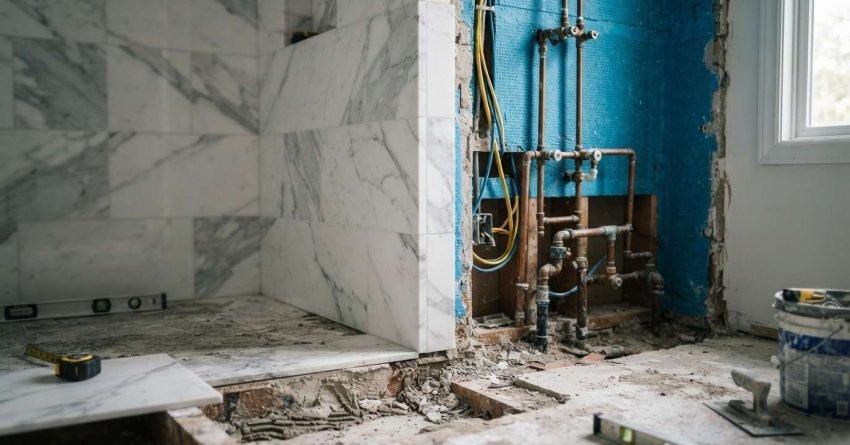
Waterproofing is the most critical and most frequently botched element of any bathroom renovation. AS 3740 sets the membrane requirements for internal wet areas, and failures cause structural damage that runs into tens of thousands.
Waterproofing defects are the leading cause of building defect claims in Australian residential construction. The Insurance Council of Australia reports water damage as a persistent top-tier claim category among Australian home insurance claims.
The process allows no shortcuts:
- Complete removal of existing floor and wall surfaces
- Substrate preparation and priming to manufacturer specification
- Multiple membrane coats with specified drying time between each
- Bond breaker installation at all corners and junctions
- Mandatory inspection before any tiling commences
Small bathrooms make this harder, not easier. Under 5 square metres, the ratio of corners, junctions and penetrations to flat surface area climbs sharply, and every one of those junctions is a failure point that needs a bond breaker and a detailed membrane termination.
Skip one step and water reaches framing, subfloors and adjacent rooms.
Plumbing Relocation Costs and Regulatory Limits
Moving a toilet even 30 centimetres adds thousands to the budget. Bathroom plumbing involves supply lines, waste pipes and venting that must comply with AS/NZS 3500 under the Plumbing Code of Australia.
Relocating fixtures means cutting into concrete slabs or modifying floor joists. Older Sydney homes still carry galvanised pipe that needs full replacement once opened up. Waste pipe falls must hold specific gradients, and venting requirements sometimes force a roof penetration.
Licensed plumbers in Sydney charge roughly $100 to $150 per hour based on current Fair Work plumbing award rates plus standard trade margins, and a bathroom rough-in typically lands between $3,000 and $8,000 depending on fixture count and whether pipework moves.
Electrical Zoning in Wet Areas
Bathroom electrical work carries safety requirements that raise both cost and complexity. Every circuit needs residual current device protection under AS/NZS 3000, and defined zones dictate which fittings go where.
Exhaust fans need ducting to an external wall or roof space rather than a ceiling cavity. Heated towel rails need dedicated circuits. Luminaire placement depends on IP rating and zone restriction.
These constraints mean most bathroom electrical work becomes a rewire rather than a modification. We plan for that from day one rather than discovering it at rough-in.
Kitchen Renovations Rank a Close Second
Kitchens rival bathrooms for difficulty, though the pressure comes from a different direction. Plumbing, electrical, gas fitting and joinery all converge on one room, and the joinery arrives on a fixed date whether the rest of the site is ready or not. Second-storey additions and larger extensions carry a comparable level of coordination risk, though the failure points sit in structural sequencing rather than wet-area compliance, engineering sign-off and propping schedules replace membrane curing as the critical path.
Why Kitchens Carry Higher Financial Risk
Kitchen renovations usually cost more than bathrooms because of scale and the price of cabinetry and appliances. A mid-range Sydney kitchen runs $25,000 to $45,000, and high-end projects clear $80,000 comfortably. Housing Industry Association kitchen and bathroom market data has tracked this upward cost trend across recent reporting periods.
Gas line modifications need a licensed gas fitter and a compliance certificate. Rangehood ducting frequently demands structural modification through a ceiling or wall. Electrical loads for induction cooktops and modern ovens routinely exceed existing circuit capacity, which pushes work back to the switchboard.
The Cabinetry Measurement Trap
Custom cabinetry needs precise measurement after demolition but before the other trades finish. That creates a scheduling squeeze. Measure early and dimensions shift; measure late and the whole program slides.
Lead times for quality cabinetry run 4 to 8 weeks, so a measurement delay pushes handover by the same margin. Flat-pack reduces that pressure and replaces it with assembly time and tighter tolerance problems.
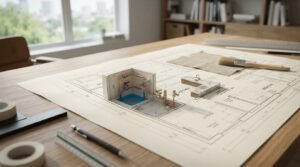
Comparing Renovation Difficulty Across Rooms
I score difficulty on four variables rather than gut feel: trade count, mandatory inspections, consequence of failure, and typical duration. That produces a ranking a homeowner can actually act on.
| Room | Trades Required | Mandatory Inspections | Consequence of Failure | Typical Duration | Difficulty Score |
| Bathroom | 6 | 2 (waterproofing, plumbing) | Structural water damage | 3–6 weeks | 10/10 |
| Kitchen | 6 | 1–2 (gas, electrical) | Gas and electrical safety | 4–8 weeks | 9/10 |
| Laundry | 4 | 1 (waterproofing) | Localised water damage | 2–3 weeks | 7/10 |
| Living area with structural change | 4–5 | 1 (structural) | Structural failure | 3–5 weeks | 7/10 |
| Home office | 2–3 | 0 | Rework only | 1–2 weeks | 4/10 |
| Bedroom | 1–2 | 0 | Cosmetic only | 3–7 days | 2/10 |
High-Difficulty Rooms and Why They Rank There
Bathrooms demand the widest trade coordination with the highest consequence for error. Waterproofing failure, plumbing defects and electrical non-compliance each carry both repair cost and genuine safety exposure.
Kitchens match that trade complexity and add joinery timing plus appliance integration. Higher material spend also means a mistake destroys more value.
Laundries share the bathroom problem set of waterproofing, plumbing and electrical work in a simpler layout. We budget them at roughly 60 to 70 percent of bathroom complexity.
Medium-Difficulty Rooms
Living areas turn complex the moment a wall comes down. Load-bearing removal needs certification from a structural engineer, temporary propping, and usually a steel beam. Engineering documentation alone runs $1,500 to $4,000, and supply and installation of a structural beam commonly adds $3,000 to $10,000 depending on span.
Home offices needing dedicated circuits, data cabling, and climate control sit in the middle band. The individual work is straightforward; coordinating three trades around a small room across a short program is what creates the friction.
Lower-Difficulty Rooms
Bedrooms usually need cosmetic work only. Paint, flooring and a lighting change finish inside 3 to 7 days with one or two trades on site.
Living rooms without structural change follow the same pattern. New flooring, paint and updated lighting complete in 1 to 2 weeks, and neither room triggers a mandatory inspection.
Resale behaviour follows the same curve. Kitchens and bathrooms move buyer perception the hardest, which is exactly why they justify the difficulty and the contingency they demand.
Warning Signs Your Renovation Is Becoming High-Risk
A few signals tell us a project is sliding toward trouble before the budget confirms it. Repeated schedule slips around inspection bookings, trades leaving without clear handover notes, and vague answers about waterproofing method all point the same direction.
We treat any one of these as a reason to pause and review scope before the next trade starts.
Hidden Costs That Make Hard Renovations Harder
The hardest rooms also hide the most budget risk. Every hidden cost below sits behind a surface that stays closed until demolition day.
Asbestos in Pre-1990 Homes
Homes built before 1990 contain asbestos in wall linings, floor tiles and pipe lagging. Testing runs $50 to $150 per sample, and removal adds $50 to $100 per square metre for bonded material and considerably more for friable material, consistent with Safe Work Australia removal licensing requirements.
Bathrooms and kitchens uncover asbestos more often than other rooms because both underwent material changes during the peak asbestos era. We hold $2,000 to $5,000 in contingency for any pre-1990 wet area.
Structural Surprises Behind the Linings
Stripping wall and floor coverings exposes problems invisible at quoting stage. Water damage to framing from an earlier leak means timber replacement before new work proceeds, and subfloor deterioration under a bathroom sometimes forces full floor reconstruction.
Non-compliant previous work also has to be rectified before an inspection passes, and that work was never in anyone’s quote.
These discoveries add 10 to 25 percent to project cost. That is precisely why experienced renovators carry 15 to 20 percent contingency on any bathroom or kitchen.
Compliance Upgrades You Did Not Plan For
Older homes rarely meet current code. Renovating triggers an obligation to bring affected work up to the National Construction Code standard even where the original installation was compliant when built.
This is where most Sydney budget blowouts actually originate. A bathroom rewire exposes a switchboard without RCD protection, and the switchboard upgrade becomes mandatory rather than optional at $1,200 to $3,500. Plumbing modifications trigger backflow prevention, and ventilation minimums have risen so an existing fan often fails and needs a larger unit plus new ducting.
The scope creeps outward from the room you started in.
Approval Pathways Most Renovators Get Wrong
Most bathroom renovations qualify as exempt development because they change neither the building footprint nor the external appearance. That exemption covers the room, not the trades.
Complying Development Certificate pathways apply once a renovation touches structure, moves external walls or adds an ensuite that changes the layout. A full Development Application applies to anything beyond CDC criteria, and NSW Planning publishes the current thresholds under the Codes SEPP. Strata properties add a by-law approval layer before any of this begins.
Every plumbing and electrical component still requires a licensed tradesperson and a compliance certificate, regardless of which pathway applies.
Strategies for Managing Difficult Renovations
Difficult rooms reward preparation far more than they reward optimism. Three disciplines carry the most weight.
Trade Sequencing That Cannot Be Shortcut
The order of trades in a bathroom follows a fixed sequence:
- Demolition completes before plumbing rough-in
- Plumbing rough-in precedes electrical rough-in
- Both pass inspection before waterproofing starts
- Waterproofing passes inspection before tiling starts
- Tiling cures before fixture installation
Breaking that order creates rework, and rework in a waterproofed room means removing finished tiling. Professional project management earns its fee at exactly this point.
Realistic Timeline Planning Stage by Stage
Bathroom renovations run 3 to 6 weeks in practice, and complex projects run longer. The fixed delays matter more than the labour days.
Membrane curing needs a minimum of 72 hours between coats and before tiling. Custom vanity and frameless screen lead times run 2 to 6 weeks and must be ordered before demolition, not after.
Council inspection booking adds 3 to 5 business days per inspection in most Sydney LGAs. Tile adhesive needs 24 hours before grouting, and grout needs a further 24 to 48 hours before sealing and wet use.
Add those together, and roughly two weeks of any bathroom program is waiting, not working.
Budget Structure for Complex Projects
I structure difficult-room budgets around three allocations. 40 to 50 percent goes to labour, because trade-intensive rooms carry high labour ratios.
15 to 20 percent sits as contingency, reserved strictly for discoveries and compliance. The remaining 5 to 10 percent covers project management, whether paid or absorbed as our own time.
That structure accepts the premise: the hardest rooms are hard because they need more skilled labour and carry more uncertainty than simple cosmetic work.
Living Through a Bathroom Renovation
A single-bathroom home loses its only bathroom for 3 to 6 weeks. That reality shapes the decision more than the budget does for most families.
Dust containment matters because tile cutting and demolition push silica dust through a whole house. We seal the work zone, run negative pressure where practical, and protect the path from the front door to the room.
Water isolation also means the mains get shut off during rough-in stages, usually for a few hours at a time on scheduled days. Plan alternative bathing arrangements before demolition rather than during week two.

When Professional Management Makes Sense
Self-managing works well on cosmetic renovations and turns risky on bathrooms and kitchens. The coordination load and the cost of a sequencing error justify bringing someone in.
Signals That You Need a Builder or Project Manager
Professional management pays for itself once the project involves:
- Coordination across plumbing, electrical and waterproofing trades
- Structural modification requiring engineering input
- A fixed timeline where delay carries real financial cost
- Limited daily availability to run the site
Professional management typically costs 10 to 15 percent of project value and recovers that through avoided rework, better trade pricing and a shorter program.
DIY Versus Professional: The Real Cost Difference
Self-managing a bathroom saves the management fee and exposes you to the rework risk it was buying. On a $25,000 bathroom, that fee sits around $2,500 to $3,750.
One failed waterproofing inspection costs the membrane, the tiling above it and the labour twice, landing between $4,000 and $9,000 on a standard bathroom. One missed joinery measurement on a kitchen pushes handover by the full lead time; the maths turns on a single mistake, not on the fee.
DIY suits the finishing trades. Tiling, painting and fixture installation carry recoverable error costs. Waterproofing, plumbing, gas and electrical do not, and three of those four legally require a licence anyway.
Insurance and Warranty Obligations
Residential building work in NSW over $20,000 requires Home Building Compensation Fund cover, and NSW Fair Trading requires the builder to provide that certificate before work starts and before taking any deposit.
Statutory warranty runs 6 years for major defects and 2 years for other defects. Waterproofing failure sits squarely inside the major defect category, which is exactly why the certificate matters more on a bathroom than anywhere else in the house.
I also confirm public liability cover and check that the licence class actually covers wet area work rather than general building only.
Choosing a Contractor for Wet Area Work
For bathrooms and kitchens, look for demonstrated wet area experience. General builders sometimes lack the specific compliance knowledge these rooms demand.
Verify the current licence through NSW Fair Trading. Request references for bathroom or kitchen projects specifically rather than for renovations generally, and confirm insurance including HBCF cover above the threshold.
Then ask how they handle waterproofing and inspection. The quality of that answer tells you everything about whether they understand the room.
Conclusion
The bathroom is the hardest room to renovate, and the ranking holds for structural reasons rather than sentiment. Six trades, two mandatory inspections, a concealed membrane that fails expensively, and a fixed curing schedule that no amount of scheduling pressure shortens.
Every one of those difficulties exists to protect the building and the people in it. Waterproofing prevents structural damage, electrical zoning prevents injury, and plumbing compliance keeps the room working for decades rather than years.
At Sydney Home Renovation, we manage exactly this complexity for Sydney homeowners, coordinating every trade, booking and passing each inspection, and pricing the discoveries that make wet areas unpredictable. Talk to us before demolition, and we will give you a sequenced program and transparent pricing, so the hardest room in your home stops being the riskiest one.
Frequently Asked Questions
How much should I budget for a bathroom renovation in Sydney?
We budget $15,000 to $25,000 for a basic bathroom and $25,000 to $45,000 for mid-range work. Premium projects exceed $50,000. Add a 15 to 20 percent contingency.
Why do bathroom renovations take so long?
Sequential trades, curing times, and inspections drive the timeline. Waterproofing alone needs 72 hours of curing, and each inspection adds booking delay. A straightforward bathroom takes 3 to 4 weeks minimum.
Can I renovate my bathroom without council approval?
Most bathroom renovations qualify as exempt development because they change neither footprint nor external appearance. All plumbing and electrical work still requires licensed trades and compliance certificates under Australian Standards.
What’s the most expensive part of a bathroom renovation?
Labour takes 40 to 50 percent of total cost because of the trade count. Among materials, tiling and waterproofing together usually exceed fixture spend. Custom vanities and frameless screens add heavily.
Should I renovate my bathroom or kitchen first?
We prioritise by condition. Any bathroom with waterproofing failure or plumbing defects goes first to stop structural damage. Where both rooms function, kitchens deliver stronger lifestyle and resale gains.
How do I find reliable bathroom renovation contractors?
Verify the licence through NSW Fair Trading and request bathroom-specific references. Ask about their waterproofing method and who performs inspections. Vague answers on that question are the clearest warning sign.
What mistakes should I avoid in a bathroom renovation?
The costliest errors are inadequate waterproofing, undersized ventilation, and a budget without contingency. Confirm fixture specifications and trade sequencing before demolition begins.