
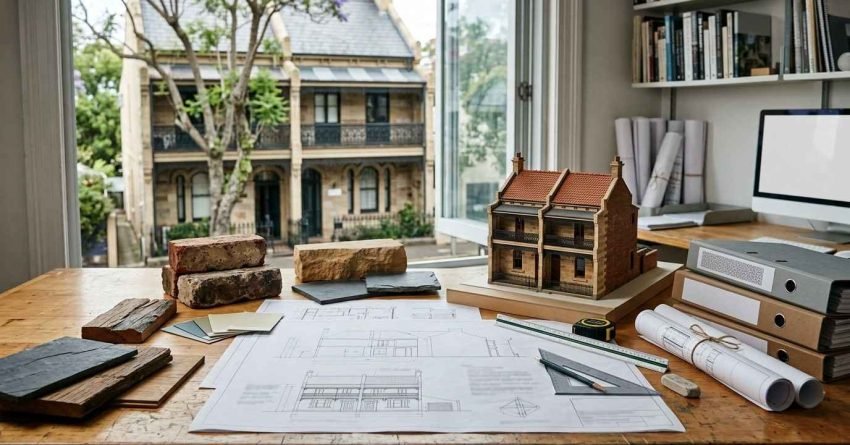
Renovating a heritage property in Sydney means working within one of Australia’s most carefully regulated approval frameworks a process designed to protect the architectural and cultural fabric of our built environment while still allowing owners to modernise, repair, and improve their homes.
Getting this wrong carries real consequences. Unapproved works on a heritage-listed property can result in stop-work orders, mandatory reinstatement of original fabric, and significant financial penalties all of which are entirely avoidable with the right preparation.
This guide covers every dimension of the heritage renovation permit process: listing types, what work triggers consent, the DA application pathway, regulatory bodies, heritage impact statements, common challenges, costs, timeframes, and available grants.
What Is the Heritage Renovation Permit Process?
The heritage renovation permit process is the formal approval pathway that property owners in New South Wales must follow before carrying out works on a heritage-listed building or within a heritage conservation area.
It exists because heritage properties carry significance beyond their individual owners. They represent shared cultural, architectural, and historical value and the permit process is the mechanism through which that value is assessed, protected, and balanced against the legitimate needs of renovation.
We see this process misunderstood constantly. Many homeowners assume it applies only to grand historic mansions or government-listed landmarks. In practice, it applies to thousands of ordinary Sydney homes terraces, cottages, interwar bungalows, and Federation houses that sit within local heritage conservation areas or carry individual heritage listings.
How Heritage Listings Work in Australia
Heritage listings in Australia operate across multiple tiers of government. A property can be listed at the federal level under the Environment Protection and Biodiversity Conservation Act 1999, at the state level on the NSW State Heritage Register, or at the local level through a council’s Local Environmental Plan (LEP).
Each tier carries its own consent requirements, assessment criteria, and regulatory bodies. A property listed at the state level faces more stringent controls than one listed only locally but both require careful navigation before any significant works proceed.
Who Needs a Heritage Renovation Permit in Sydney
Any owner of a property that is individually heritage-listed, located within a heritage conservation area, or subject to heritage provisions in a local LEP needs to understand their consent obligations before starting renovation work.
This includes owner-occupiers planning cosmetic updates, investors undertaking structural improvements, and developers proposing significant alterations. The obligation does not disappear because the work feels minor in heritage contexts, even paint colour changes and window replacements can require formal approval.
Types of Heritage Listings and What They Mean for Renovators
Not all heritage listings carry the same weight, and understanding the distinction between listing types is the first practical step in planning any heritage renovation in Sydney.
The type of listing determines which regulatory body assesses your application, what documentation you need to prepare, and how much flexibility you have in your renovation scope. Conflating state and local listings is one of the most common mistakes we see early in the planning process.
State Heritage Register vs. Local Heritage Listings
Properties listed on the NSW State Heritage Register are considered to have heritage significance at a state level. These properties are managed under the Heritage Act 1977 (NSW), and any works affecting their heritage significance require approval from Heritage NSW not just the local council.
Local heritage listings, by contrast, are managed through individual council LEPs. They apply to properties of local significance and are assessed by council heritage officers. The controls are generally less prescriptive than state-level listings, but they are still legally binding and must be respected in any DA.
Heritage Conservation Areas in Sydney
A heritage conservation area (HCA) is a defined geographic precinct a street, suburb, or neighbourhood where the collective character of the built environment is considered significant, even if individual buildings within it are not separately listed.
Living or investing within an HCA means your property is subject to heritage controls regardless of whether it appears on any individual listing. Heritage NSW’s mapping tools allow owners to check whether their property falls within a conservation area before committing to any renovation scope.
Curtilage and How It Affects Your Renovation Scope
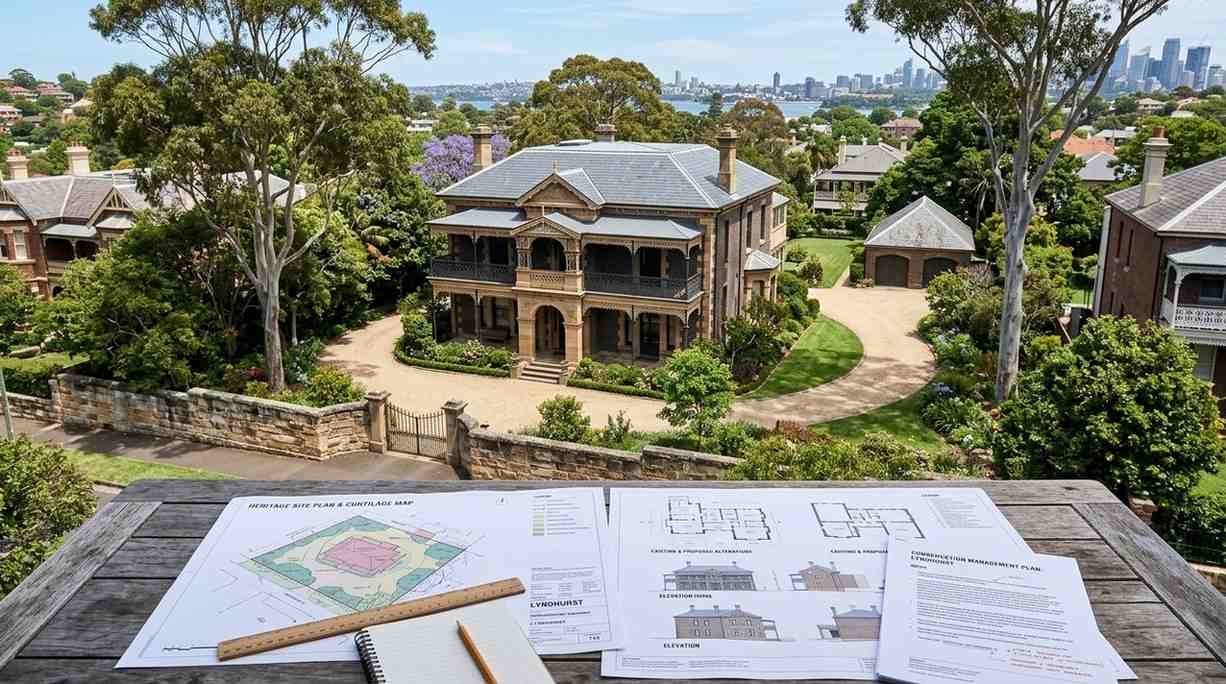
Curtilage refers to the land and structures immediately surrounding a heritage item that contribute to its significance. In practical terms, it means the heritage controls on your property may extend beyond the main building to include fences, outbuildings, gardens, driveways, and ancillary structures.
Understanding your property’s curtilage is essential before scoping any renovation. Works within the curtilage of a heritage item even if they do not touch the building itself may still require consent.
What Work Requires a Heritage Permit in NSW?
This is the question we get asked most often, and the honest answer is: it depends on your listing type, your council’s LEP, and the specific nature of the works you are proposing.
The NSW planning framework distinguishes between exempt development, complying development, and works requiring full development consent. Heritage properties sit in a more restricted category than standard residential properties many works that would be exempt or complying on a non-heritage property require full DA consent on a heritage-listed one.
Exempt Development vs. Complying Development
Exempt development covers minor works that can proceed without any approval things like internal painting, minor repairs using like-for-like materials, and routine maintenance. For heritage properties, the exempt development provisions are significantly narrower than for standard residential properties.
Complying development is a faster approval pathway that bypasses the full DA process, provided the works meet a prescribed set of standards. Heritage-listed properties and properties within heritage conservation areas are generally excluded from the complying development pathway for any works that affect heritage fabric.
Works That Always Require Consent
Certain categories of work on heritage properties will almost always require full development consent in NSW. These include:
- Demolition of any part of a heritage item or contributory building
- Alterations to the external fabric, form, or appearance of a heritage item
- New structures within the curtilage of a heritage item
- Subdivision of land containing a heritage item
- Changes of use that affect the heritage significance of a building
The NSW Environmental Planning and Assessment Act 1979 provides the legislative foundation for these consent requirements, and individual council LEPs specify the precise controls that apply to locally listed properties.
Internal vs. External Alterations Under Heritage Rules
A common misconception is that internal works are always exempt from heritage controls. This is not accurate. While external alterations are more consistently regulated, internal works that affect significant heritage fabric original joinery, decorative plasterwork, heritage-era tiling, structural elements can also require consent.
The key test is whether the proposed works affect the heritage significance of the item. If they do internally or externally consent is likely required. We always recommend confirming this with a heritage consultant or council heritage officer before committing to any scope.
The Heritage Renovation Permit Application Process
The heritage DA process follows the same broad structure as a standard development application in NSW, but with additional documentation requirements and a more detailed assessment framework. Understanding each step before you begin saves significant time and cost downstream.
We work through this process regularly, and the single biggest factor in a smooth approval is preparation specifically, engaging the right consultants early and understanding what the assessing authority needs to see before you lodge.
Step 1 Pre-Application Research and Heritage Advisor Consultation
Before preparing any documentation, we recommend a pre-application meeting with your local council’s heritage advisor. Most Sydney councils offer this service, and it gives you direct guidance on what the council expects to see in your application, what heritage values they will be assessing, and whether your proposed works are likely to be supported.
This step also involves researching your property’s heritage listing, understanding its Statement of Significance, and reviewing any existing Conservation Management Plan (CMP) that may already be in place. The NSW Heritage Office’s online resources are a useful starting point for this research.
Step 2 Preparing a Statement of Heritage Impact
A Statement of Heritage Impact is the central document in any heritage DA. It assesses the likely impact of the proposed works on the heritage significance of the item and demonstrates that the works are consistent with the conservation principles set out in the Burra Charter and relevant heritage guidelines.
Preparing this document requires a qualified heritage consultant typically a heritage architect or heritage planner. It is not a document that can be prepared by a general building designer or the property owner without specialist knowledge.
Step 3 Lodging Your Development Application (DA)
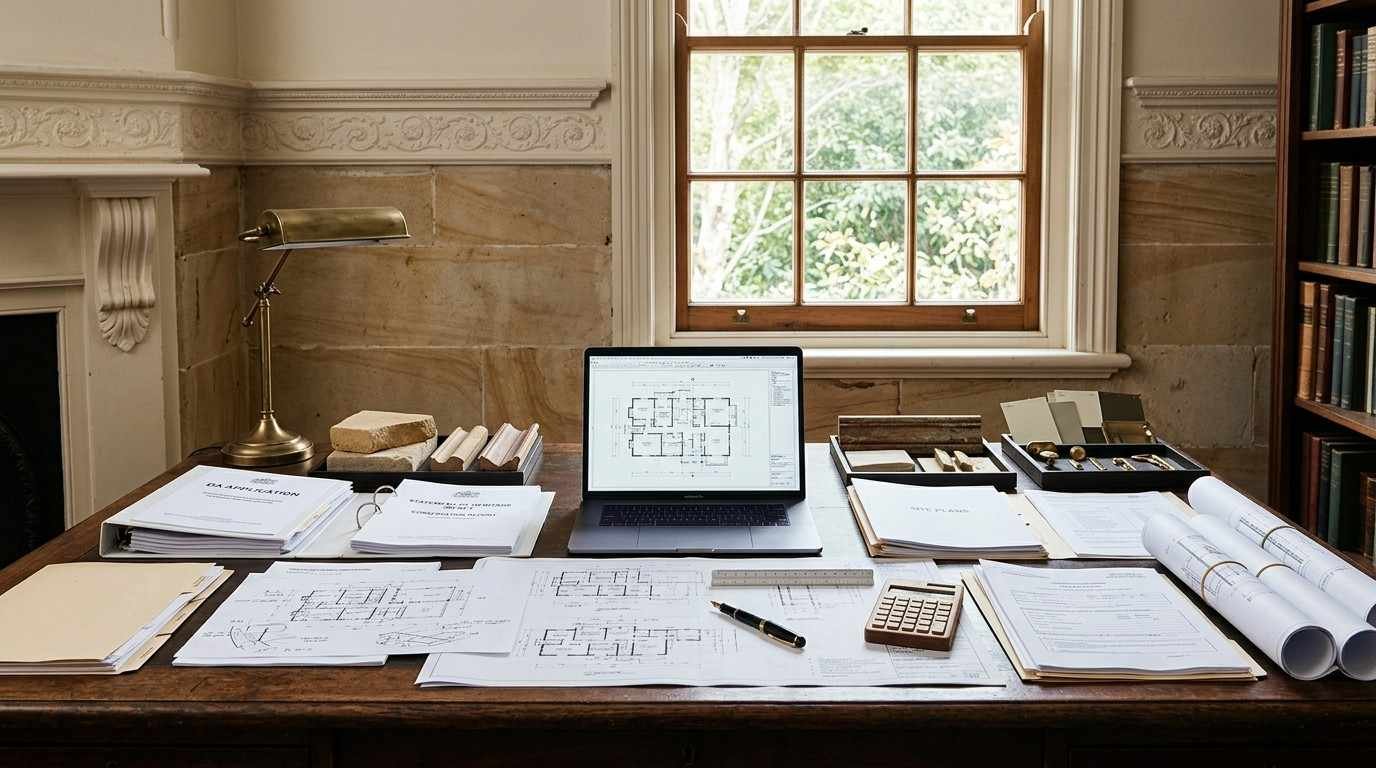
Once your Statement of Heritage Impact and supporting documentation are complete, the DA is lodged through the NSW Planning Portal. The application must include architectural drawings, a site analysis, the Statement of Heritage Impact, and any other documents specified by the council’s DA checklist.
For state-listed properties, the application may also need to be referred to Heritage NSW for comment or concurrence, which adds an additional layer to the assessment process and can extend timeframes.
Step 4 Assessment, Conditions, and Approval Timeframes
Council assesses the DA against the relevant heritage provisions in the LEP, the objectives of the Heritage Act, and the specific heritage values of the property. The assessment may involve notification to neighbours, referral to Heritage NSW, and review by the council’s heritage advisory committee.
Approval, when granted, typically comes with conditions of consent that specify how the works must be carried out including requirements for archival recording, use of specific materials, and retention of particular heritage elements. These conditions are legally binding and must be complied with throughout the construction process.
Key Regulatory Bodies and Approval Pathways in Sydney
The heritage regulatory landscape in NSW involves multiple bodies, and knowing which one has jurisdiction over your property is essential for directing your application correctly.
Sending a state heritage matter to a local council, or failing to seek Heritage NSW concurrence when it is required, are errors that cause significant delays and can result in applications being returned or refused on procedural grounds.
The NSW Heritage Office and Heritage NSW
Heritage NSW is the state government body responsible for administering the Heritage Act 1977 and managing the NSW State Heritage Register. For state-listed properties, Heritage NSW plays a direct role in the assessment of DAs either as a referral body providing comments, or as the consent authority for certain categories of works.
Heritage NSW also publishes technical guidelines, conservation policies, and practice notes that inform how heritage assessments are conducted across the state. These documents are essential reading for anyone preparing a heritage DA.
Local Council Heritage Officers
For locally listed properties and properties within heritage conservation areas, the primary point of contact is the local council’s heritage officer. Heritage officers assess DAs against the council’s LEP heritage provisions, provide pre-application advice, and can be a valuable resource in understanding what the council will and will not support.
In the Greater Sydney region, councils including the City of Sydney, Inner West Council, North Sydney Council, and Woollahra Municipal Council all have dedicated heritage teams with significant experience in assessing heritage renovation applications.
The Land and Environment Court (Appeals)
If a heritage DA is refused by council, or if conditions of consent are considered unreasonable, applicants have the right to appeal to the NSW Land and Environment Court. The Court has jurisdiction to review the merits of the decision and can uphold, vary, or overturn the council’s determination.
Appeals are a legitimate part of the process, but they add cost and time. We always recommend exhausting pre-application consultation and negotiation with council before pursuing this pathway.
The quality of your supporting documentation is the single most influential factor in the outcome of a heritage DA. A well-prepared Statement of Heritage Impact that clearly articulates the significance of the property and demonstrates that the proposed works are sympathetic to that significance gives the assessing authority confidence to approve.
Poorly prepared documentation vague significance assessments, inadequate justification for proposed works, or missing archival records is the most common reason heritage DAs are delayed, conditioned heavily, or refused.
What a Statement of Heritage Impact Must Include
A Statement of Heritage Impact must, at minimum, describe the heritage significance of the item using the criteria set out in the Heritage Act 1977, assess the impact of the proposed works on each aspect of that significance, and demonstrate that the works are consistent with the conservation principles of the Burra Charter.
It should also include a description of the existing condition of the property, a clear explanation of the proposed works, and a justification for why the works are necessary and appropriate in the heritage context.
Conservation Management Plans
A Conservation Management Plan (CMP) is a more comprehensive document than a Statement of Heritage Impact. It establishes the significance of a heritage item in detail, sets out conservation policies for its ongoing management, and provides a framework for assessing future works.
CMPs are typically required for complex or significant heritage properties, and for properties where ongoing works are anticipated over time. Where a CMP already exists for a property, it must be referenced and followed in any subsequent DA.
Archival Recording Requirements
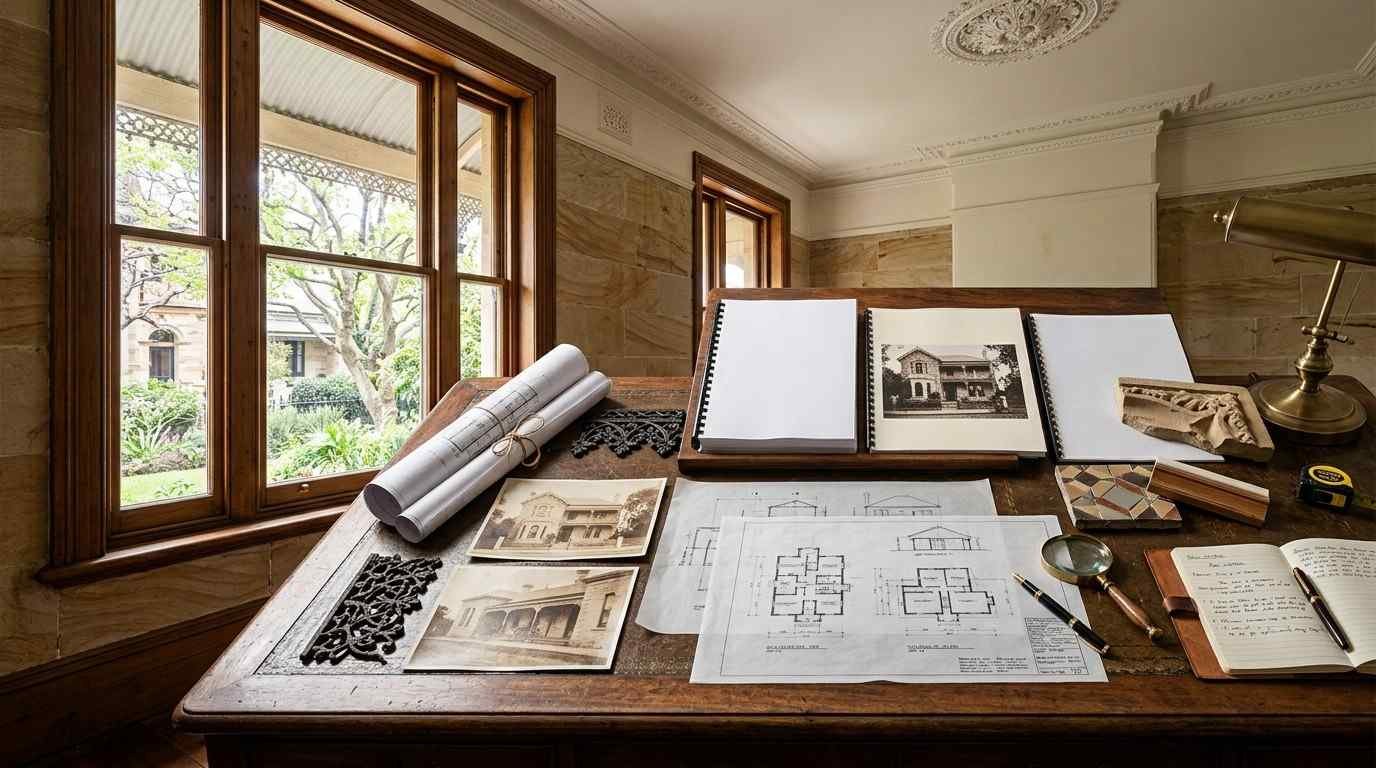
Many heritage DAs include conditions requiring archival recording of the existing fabric before works commence. This typically involves photographic documentation of the building’s current condition, and in some cases measured drawings or written descriptions of significant elements.
Archival recording is not just a bureaucratic requirement it creates a permanent record of the heritage fabric that existed before the works, which has value for future owners, researchers, and the broader heritage community.
Common Challenges in the Heritage Permit Process
The heritage permit process is more complex and less predictable than a standard residential DA. We have worked through enough of these applications to know where the friction points are and most of them are avoidable with the right preparation and the right team.
Understanding the common challenges before you begin puts you in a much stronger position to manage them when they arise.
Delays, Objections, and Neighbour Notifications
Heritage DAs are typically notified to adjoining owners and, in some cases, to the broader community. Objections from neighbours particularly in heritage conservation areas where residents have a strong interest in the character of the streetscape can extend assessment timeframes and, in some cases, trigger referral to a council heritage committee or panel.
According to the NSW Planning Portal’s 2024 performance data, heritage DAs take on average 40% longer to determine than standard residential DAs, with complex state heritage matters sometimes exceeding 12 months from lodgement to determination.
Conditions of Consent That Affect Renovation Scope
Approval conditions on heritage DAs can be extensive and specific. They may require the use of particular materials, mandate the retention of elements you had planned to remove, specify construction methodologies, or require ongoing inspections by a heritage consultant during the works.
We always review draft conditions carefully before accepting an approval. Conditions that are unclear, overly prescriptive, or inconsistent with the approved plans can be negotiated with council or, if necessary, challenged through a Section 8.3 review under the Environmental Planning and Assessment Act 1979.
Working With Heritage Architects and Consultants
A qualified heritage architect or heritage consultant is not optional in most heritage DA processes they are essential. They prepare the Statement of Heritage Impact, liaise with council heritage officers, and ensure that the design of the proposed works is sympathetic to the heritage significance of the property.
Choosing the right consultant matters. We recommend engaging someone with demonstrated experience in the specific listing type and council area relevant to your property. The Australian Institute of Architects’ heritage register is a useful resource for identifying qualified practitioners.
Heritage Renovation Permit Costs and Timeframes
One of the first questions we get from homeowners and investors planning a heritage renovation is: how much will the permit process cost, and how long will it take? The honest answer is that both vary significantly depending on the complexity of the works, the listing type, and the council involved.
What we can say with confidence is that underestimating these costs and timeframes is one of the most common causes of budget blowouts and project delays in heritage renovation.
DA Fees, Consultant Costs, and Hidden Expenses
Council DA fees for heritage applications are calculated based on the estimated cost of works, using the fee schedule set out in the Environmental Planning and Assessment Regulation 2021. For a typical heritage renovation in Sydney, DA fees alone can range from $1,500 to $5,000+ depending on the scale of the project.
Beyond DA fees, the consultant costs associated with a heritage application are substantial. A Statement of Heritage Impact from a qualified heritage consultant typically costs between $3,000 and $8,000 for a standard residential project. Architectural drawings, arborist reports, structural engineering assessments, and other supporting documents add further to the pre-lodgement cost.
Realistic Timeframes From Application to Approval
A straightforward heritage DA for a locally listed property in Sydney typically takes between three and six months from lodgement to determination, assuming the application is complete and well-prepared at lodgement. Complex applications, state heritage matters, or applications that attract objections can take considerably longer.
Pre-application preparation research, consultant engagement, documentation adds a further two to four months before lodgement. Factoring in a total pre-construction timeline of six to twelve months for a heritage renovation is realistic and prudent planning.
Grants, Incentives, and Financial Support for Heritage Renovations
The cost and complexity of the heritage permit process is real but so is the financial support available to heritage property owners in NSW. Grants and incentive programs exist at both the state and local level, and many owners are unaware of them until well into the process.
We make a point of raising these options early in our conversations with heritage renovation clients, because accessing available funding can meaningfully offset the cost of compliance and conservation works.
NSW Heritage Grants Program
Heritage NSW administers a grants program that provides financial assistance to owners of state-listed heritage properties for conservation and maintenance works. Grants are competitive and typically cover a portion of eligible works costs, with owners required to contribute matching funds.
The program prioritises works that address urgent conservation needs, improve public access, or contribute to the ongoing maintenance of significant heritage fabric. Applications open annually, and the program is consistently oversubscribed early preparation and a strong application are essential.
Local Council Heritage Assistance Funds
Many Sydney councils operate their own heritage assistance funds, providing smaller grants typically between $500 and $5,000 to owners of locally listed properties for conservation and maintenance works. These programs are less competitive than the state grants program and can be a practical source of funding for targeted conservation works.
Councils including the City of Sydney, Woollahra, Mosman, and Lane Cove all operate heritage assistance programs. Eligibility criteria, funding amounts, and application processes vary by council checking directly with your local council heritage officer is the most reliable way to understand what is available for your property.
Conclusion
The heritage renovation permit process in Sydney spans listing types, consent pathways, regulatory bodies, documentation requirements, and financial planning each dimension interconnected and each requiring careful navigation.
Deeper resources on specific components of this process from preparing a Statement of Heritage Impact to understanding NSW heritage grants are available through the cluster guides linked throughout this article.
At Sydney Home Renovation, we guide heritage property owners through every stage of this process from pre-application research to construction compliance so your renovation moves forward with confidence, clarity, and full regulatory approval.
Frequently Asked Questions
Do I need a permit to paint the exterior of my heritage-listed home in Sydney?
Yes, in most cases. Exterior painting on a heritage-listed property or within a heritage conservation area typically requires council approval, as colour and finish are considered part of the heritage character. Check with your local council heritage officer before proceeding.
How long does a heritage DA take to be approved in Sydney?
A standard heritage DA for a locally listed property typically takes three to six months from lodgement to determination. State heritage matters or applications attracting objections can take considerably longer sometimes exceeding twelve months.
What is a Statement of Heritage Impact and do I need one?
A Statement of Heritage Impact is a formal document assessing how proposed works affect a property’s heritage significance. It is required for most heritage DAs in NSW and must be prepared by a qualified heritage consultant or heritage architect.
Can I do any renovation work on a heritage property without council approval?
Some minor works like routine maintenance using like-for-like materials may qualify as exempt development. However, the exempt development provisions for heritage properties are significantly narrower than for standard residential properties. Always confirm with council before proceeding.
What happens if I carry out unapproved works on a heritage property?
Unapproved works on a heritage property can result in stop-work orders, mandatory reinstatement of original fabric at your cost, and financial penalties under the Heritage Act 1977 and the Environmental Planning and Assessment Act 1979. The consequences are serious and the risks are not worth taking.
What is the difference between a heritage conservation area and an individually listed heritage item?
An individually listed heritage item is a specific property recognised for its own significance. A heritage conservation area is a precinct where the collective character of the built environment is significant your property may be subject to heritage controls within an HCA even if it is not individually listed.
Are there grants available to help cover the cost of heritage renovation in Sydney?
Yes. Heritage NSW administers a state-level grants program for owners of state-listed properties, and many Sydney councils operate local heritage assistance funds for locally listed properties. Funding amounts and eligibility criteria vary contact Heritage NSW or your local council heritage officer for current program details.


