A professional bathroom renovation in Sydney typically costs $18,000 to $35,000, while a true DIY project ranges from $5,000 to $15,000 but the gap narrows fast once licensed waterproofing, plumbing, and electrical work is factored in. The cheaper option on paper is rarely the cheaper option in practice.
For Sydney homeowners and investors, this decision affects budget, resale value, and legal compliance for the next decade. Choosing wisely matters more than choosing quickly.
This guide compares real costs, skill requirements, hidden risks, timelines, and long-term value so you can decide with full confidence today.
DIY vs Professional Bathroom Renovation at a Glance
A DIY bathroom renovation means the homeowner manages and physically performs most of the work, hiring licensed trades only where the law requires it. A professional bathroom renovation means a contractor coordinates every trade, supplies materials, manages compliance, and delivers a finished space under warranty.
The core difference is risk transfer. With DIY, you hold the budget risk, time risk, compliance risk, and quality risk. With a professional, those risks move to the contractor in exchange for a higher fixed fee.
Understanding the full project scope every stage from planning and design through to costs, fittings, and final handover is the best way to benchmark each option against a realistic baseline before committing to either path.
What “DIY” Really Means in a Bathroom Project
True bathroom DIY is rare in Australia. NSW law restricts plumbing, waterproofing, gas, and most electrical work to licensed trades. So “DIY” usually means doing the demolition, tiling, painting, cabinetry install, and project management yourself while subcontracting the regulated work.
What “Professional Renovation” Includes
A professional renovation is a single fixed-scope contract covering design, demolition, structural changes, waterproofing certification, plumbing rough-in and fit-off, electrical, tiling, cabinetry, fittings, and final clean. One point of contact, one warranty, one timeline.

Cost Breakdown: DIY vs Professional Bathroom Renovation
Cost is the deciding factor for most owners, but headline numbers hide the full picture. The gap between a quoted DIY budget and the final spend is often larger than the gap between DIY and professional pricing.
You can plan a more accurate budget once you understand each cost driver in isolation. The figures below reflect typical Sydney pricing for a standard 4–6 m² bathroom in 2025, which works out to roughly $1,250–$3,750 per square metre for DIY and $3,750–$8,750 per square metre for a professional finish.
Typical DIY Bathroom Renovation Costs in Sydney
| Item | Typical DIY Range |
| Demolition and waste removal | $500–$1,500 |
| Licensed waterproofing | $800–$1,800 |
| Licensed plumbing (rough-in + fit-off) | $2,500–$5,500 |
| Licensed electrical | $800–$2,000 |
| Tiles and tile adhesive | $1,500–$4,500 |
| Vanity, toilet, shower screen, tapware | $1,500–$4,000 |
| Tools, sundries, consumables | $300–$1,000 |
| Total | $5,000–$15,000 |
Typical Professional Renovation Costs in Sydney
| Tier | Typical Range |
| Budget refresh (same layout) | $15,000–$22,000 |
| Mid-range full renovation | $22,000–$35,000 |
| Premium / structural change | $35,000–$60,000+ |
A professional quote bundles labour, materials, project management, compliance certificates, warranty, and contingency. The “extra” cost over DIY is usually 25–40%, not the 200% it appears on first glance.
Hidden Costs Most Homeowners Underestimate
DIY budgets routinely break on the same items: waterproofing failures requiring re-tiling, plumbing relocations discovered after demolition, skip bin overruns, tool purchases, and the cost of fixing mistakes. A 20% contingency is the minimum on any DIY bathroom project.
Asbestos and Structural Surprises in Older Sydney Homes
Sydney homes built before 1990 carry a real risk of asbestos-containing materials in wall sheeting, floor tiles, and ceiling linings. Disturbing these materials without a licensed asbestos removalist is illegal and carries serious health and financial penalties.
Beyond asbestos, demolition in older bathrooms frequently uncovers rotted framing, failed waterproofing membranes, and subfloor damage that was invisible before work began. Each discovery adds cost and time. Budgeting for these surprises upfront is not pessimism it is accurate planning.
Skills, Tools, and Time Required for a DIY Bathroom
A bathroom is the most technically demanding room in a home. Six trades overlap inside a small wet area, and every layer depends on the one beneath it being installed correctly. Mistakes are expensive because they are usually buried behind tiles.
If you are confident with tools, patient with detail, and willing to sequence trades around your own schedule, DIY can work. If any of those are uncertain, the numbers usually favour hiring a professional.
Trade Skills You Need to Self-Manage
Competent DIY requires confident skills in demolition, levelling and screeding, wall straightening, tile setting, silicone work, basic carpentry for cabinetry, painting, and the project management to sequence licensed trades correctly. Tile setting alone takes most beginners three to four attempts to get right.
Realistic Timelines for DIY Projects
A professional team finishes a standard Sydney bathroom in 3–4 weeks. A DIY renovation working weekends and evenings typically takes 8–16 weeks, during which the household has no working bathroom. Time off work, accommodation costs, and family disruption are real budget items that rarely appear in a DIY cost estimate.
What a Professional Bathroom Renovator Brings
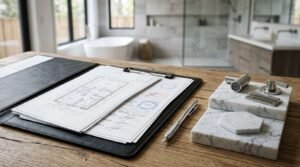
Hiring a professional is not just buying labour. It is buying coordination, compliance, accountability, and a single warranty across every trade involved.
For most homeowners, the value lies in predictability: a fixed quote, a defined timeline, and a finished room that meets Australian Standards and passes any future building inspection.
Licensed Trades and Compliance
A professional contractor manages the licensed waterproofer, plumber, electrician, and tiler under one schedule and produces the compliance certificates required by NSW Fair Trading. These certificates are essential for insurance claims and property sale disclosures.
Fixed-Price vs. Cost-Plus Contracts
Not all professional quotes are structured the same way. A fixed-price contract locks the total cost upfront the contractor absorbs any overruns within scope. A cost-plus contract charges labour and materials at cost, plus a margin, which means the final bill can exceed the estimate if surprises arise.
For most homeowners and investors, a fixed-price contract is the lower-risk option. It transfers budget uncertainty to the contractor and makes financial planning straightforward. Always confirm which contract type you are signing before work begins.
How to Choose the Right Bathroom Renovator
The right contractor holds a current NSW Home Building Act licence, carries home building compensation insurance, and provides a written contract for any work over $5,000. Checking the licence number on the NSW Fair Trading register takes two minutes and eliminates the most common source of renovation disputes.
Beyond credentials, look for a contractor who provides a detailed scope of works, a fixed-price quote, and references from completed Sydney projects. A renovator who cannot produce these three things before signing is a risk not worth taking.
Project Coordination and Workmanship Warranty
The contractor sequences trades so waterproofing cures before tiling, plumbing rough-in matches the vanity template, and the electrician’s wall boxes align with the final tile layout. Workmanship warranties typically run six to seven years under NSW Home Building Act requirements a protection that DIY work cannot replicate.
Risks, Compliance, and Warranty Considerations
The risks of DIY bathroom work are not theoretical. They affect insurance, resale, strata approval, and personal liability. This is where most DIY projects quietly lose their cost advantage.
Understanding the legal framework before you start prevents the most expensive type of mistake: the kind that surfaces years later during a property sale or insurance claim.
Waterproofing, Plumbing, and Electrical Laws (NSW)
In NSW, waterproofing of internal wet areas must be performed by a licensed waterproofer and certified to AS 3740. Plumbing must be performed by a licensed plumber who issues a Certificate of Compliance. Electrical work must be performed by a licensed electrician with a Certificate of Compliance for Electrical Work. Doing any of these yourself is illegal and voids most home insurance policies.
Insurance, Resale, and Strata Approval Risks
Undocumented bathroom work can void building insurance, complicate strata approval in apartments, and must be disclosed at sale. Buyers and their conveyancers increasingly request compliance certificates for any wet-area work completed in the last seven years.
In strata buildings, unapproved wet-area work can trigger remediation orders from the owners corporation, with costs falling entirely on the lot owner. The financial exposure from a single undocumented renovation can far exceed the original cost saving. For apartments specifically, obtaining written strata committee approval before any work begins is not optional it is a legal requirement under most strata by-laws.
How a Bathroom Renovation Affects Resale Value in Sydney
A well-executed bathroom renovation consistently ranks among the highest-return upgrades in Sydney’s property market. Real estate agents and valuers typically attribute $1.50 to $2.50 in added value for every $1.00 spent on a professionally completed bathroom, particularly in the mid-range tier where buyers have the strongest expectations.
The key word is “professionally completed.” Unlicensed or undocumented work does not add value it creates a liability. Buyers in Sydney’s current market routinely request compliance certificates as a condition of exchange, and a bathroom without them either kills the sale or forces a price reduction to cover remediation.
For investors, the calculation is sharper still. A certified renovation supports higher rental appraisals, reduces vacancy risk, and protects the asset’s long-term capital value. The compliance certificates that come with a professional renovation are not paperwork they are a financial instrument.
When DIY Makes Sense vs When to Hire a Professional
Neither option is universally better. The right answer depends on your skills, time, budget tolerance, and the scope of the work itself.
Use the framework below to make a clear-headed decision rather than an emotional or budget-driven one.
Best-Fit DIY Scenarios
DIY is realistic when the layout is staying the same, the existing waterproofing is sound, you have genuine trade-level skills, the property is owner-occupied long-term, and you can accept a longer timeline. Cosmetic refreshes painting, replacing a vanity, swapping tapware, re-grouting are excellent DIY territory.
When Professional Help Pays for Itself
Hire a professional when the bathroom is being reconfigured, when waterproofing needs to be redone, when the property is an investment or will be sold within five years, when strata approval is required, or when the household cannot lose a bathroom for two months.
The same logic applies to any multi-trade room in the home. Kitchen and laundry renovations share the same licensed-trade requirements as bathrooms, and combining wet-area projects under one contractor typically reduces total trade callout costs and shortens the overall programme. Investors renovating multiple rooms benefit most from this coordination.
Conclusion
DIY bathroom renovation saves money on labour but transfers significant cost, time, and compliance risk to the homeowner. A professional renovation costs more upfront but delivers certified work, a fixed timeline, and a warranty that protects long-term value.
For most Sydney homeowners and investors, the smarter financial decision is a professional renovation supported by a transparent fixed-price quote. The premium over DIY is small once hidden costs are counted, and the resale and insurance benefits are substantial.
At Sydney Home Renovation, we help homeowners weigh both paths honestly and deliver fixed-price bathroom renovations built for long-term value. Get a transparent quote and start with confidence.
Frequently Asked Questions
Is it legal to do my own bathroom renovation in NSW?
You can legally perform demolition, tiling, painting, and cabinetry installation yourself in NSW. Waterproofing, plumbing, gas, and most electrical work must be performed by licensed trades and certified accordingly.
How much can I really save by doing my bathroom DIY?
Most homeowners save 25–40% on labour, not the 60–70% they expect. Hidden costs, tool purchases, mistakes, and longer timelines typically erode the savings further on a first DIY project.
What is the most common DIY bathroom renovation mistake?
Waterproofing failure is the single most expensive mistake. Incorrect membrane application or unlicensed waterproofing causes leaks that destroy tiling, framing, and ceilings below, often costing more to fix than the original renovation.
How long does a professional bathroom renovation take in Sydney?
A typical professional bathroom renovation takes 3 to 4 weeks from demolition to handover. Custom designs, structural changes, or supply delays on imported fittings can extend timelines to 5 to 6 weeks.
Will DIY bathroom work affect my home insurance?
Yes. Unlicensed plumbing, waterproofing, or electrical work can void building and contents insurance entirely. Insurers require compliance certificates for any wet-area work to honour future water-damage claims.
Do I need council approval for a bathroom renovation?
Most like-for-like bathroom renovations in Sydney do not require council approval, but strata buildings usually require committee approval. Structural changes, window relocations, or extensions to wet areas may need a development application.
When should an investor choose professional over DIY?
Investors should almost always choose professional renovation. Compliance certificates, warranty, faster completion, and proven workmanship protect rental income, tenant safety, and resale value far more than the DIY cost saving justifies.