
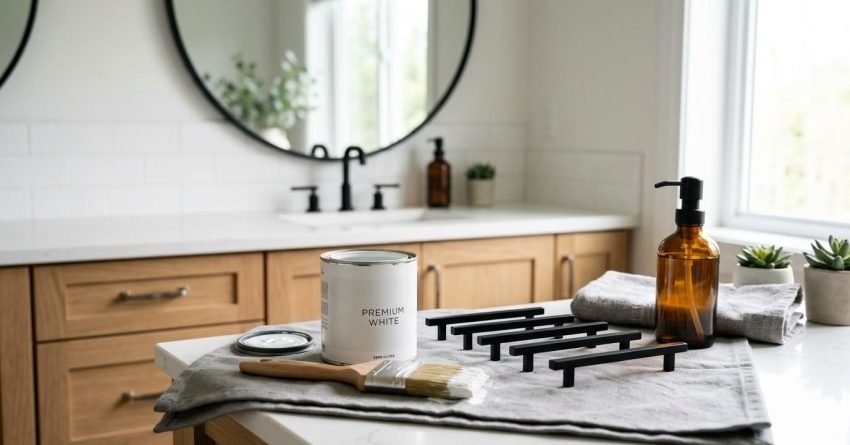
You can update a Sydney bathroom from as little as $300 to $5,000 by focusing on cosmetic upgrades paint, tapware, vanity, lighting, and resurfacing without touching plumbing, waterproofing, or wall tiles. A smart refresh delivers up to 80% of the visual impact of a full renovation at a fraction of the cost.
Sydney’s rising labour rates and material costs have made full bathroom renovations harder to justify for many homeowners, especially in older properties or rental investments where a budget-conscious refresh delivers stronger returns.
This guide breaks down every realistic update under $5,000, compares DIY versus licensed trades, flags hidden costs, and shows where to spend and where to save for maximum impact.
What “Updating Without Renovating” Actually Means
A bathroom update keeps the existing layout, plumbing rough-ins, floor tiles, and waterproofing membrane intact. The goal is improving how the room looks and functions without opening walls, relocating fixtures, or disturbing wet-area compliance zones. This is the line that separates a few hundred dollars of paint and tapware from a $25,000+ full renovation.
Cosmetic Refresh vs Structural Renovation
A cosmetic refresh covers surface-level changes: painting walls, replacing the vanity unit, swapping tapware, upgrading the mirror, fitting a new toilet seat or showerhead, regrouting, and resurfacing tubs or tiles. A structural renovation involves removing tiles, relocating plumbing, replacing the shower base, redoing waterproofing, or moving walls all of which trigger licensed trades, certificates, and significantly higher costs.
Why Sydney Homeowners Choose Budget Updates
Sydney’s median bathroom renovation cost now sits in the $20,000 to $35,000 range for a standard family bathroom. For rental properties, holiday homes, or bathrooms that are dated but functional, a $1,500 to $4,000 refresh often delivers the look prospective buyers and tenants respond to without the capital outlay.
Owner-occupiers typically prioritise the vanity, lighting, and tapware the elements they interact with daily. Investors and landlords get stronger returns by focusing on durability and neutral finishes that appeal to a broad tenant pool, keeping spend closer to the $1,500 to $2,500 range. A project that crosses into waterproofing, layout changes, or wet-area tiling replacement has moved beyond a cosmetic update and into full renovation territory.
Budget-Friendly Bathroom Updates Ranked by Cost
Not every dollar spent on a bathroom delivers equal visual impact. Below is a realistic Sydney price ladder showing what each budget tier achieves, ranked from cheapest to most ambitious within a cosmetic-only scope.
Under $500: Paint, Sealant, and Hardware Swaps
Painting walls and ceilings with a quality bathroom-grade paint costs $80 to $200 in materials. Resealing the silicone around the bath, basin, and shower runs $30 to $60. Replacing the toilet seat, towel rails, robe hooks, and showerhead typically lands between $150 and $350.
Changing grout colour with a grout pen or fresh regrouting is one of the most underrated upgrades at this tier it visually resets the entire room for under $50 in materials. Water-saving showerheads also qualify for rebates through Sydney Water’s WaterFix program, reducing the net cost further. This tier alone makes a tired bathroom look meaningfully cleaner and brighter.
$500–$2,000: Vanity, Mirror, and Tapware Upgrades
A flat-pack vanity unit in Sydney costs $400 to $1,200 installed by a handyman. New mirrors range $150 to $500. Replacing basin and shower mixers with mid-range tapware adds $300 to $800 plus a licensed plumber for connections ($150 to $400 in labour). A new toilet suite installed sits around $500 to $900.
Vanity sizing matters as much as style in Sydney’s typically compact bathrooms. A 600mm wall-hung vanity suits most standard bathrooms and creates the illusion of more floor space. For finish selection, chrome remains the most cost-effective option; matte black and brushed brass add $200 to $600 to tapware costs but deliver a significantly more contemporary result. Lock in your finish across tapware, towel rails, and accessories before ordering mixing finishes is the most common and most visible mistake at this budget tier.
$2,000–$5,000: Resurfacing, Re-grouting, Lighting, and Shower Screens
Bath resurfacing in Sydney costs $500 to $900 and extends a tub’s life by 10 to 15 years. Tile resurfacing or epoxy painting wall tiles runs $1,000 to $2,500 depending on size and this is where the resurfacing-vs-retiling decision matters most. Resurfacing is the right call when tiles are structurally sound but visually dated; retiling is necessary only when tiles are cracked, hollow, or lifting. Full regrouting costs $400 to $1,200.
Shower screen replacement is one of the highest-impact upgrades in this tier. A frameless or semi-frameless shower screen costs $800 to $1,800 supplied and installed, and it transforms the perceived quality of the entire bathroom more than almost any other single change. New LED lighting, an exhaust fan upgrade, and a heated towel rail typically add $600 to $1,500 once electrical work is included LED downlights deliver the strongest ROI, improving both brightness and energy efficiency.
Bath Resurfacing vs. Full Replacement: Which Costs Less?
Resurfacing and replacement are not interchangeable they suit different situations, and choosing the wrong one wastes money.
Bath resurfacing costs $500 to $900 and takes one day. The finish lasts 10 to 15 years with proper maintenance and is the right choice when the bath is structurally intact but stained, discoloured, or visually outdated. Full bath replacement costs $2,500 to $4,500 installed, requires a licensed plumber, and often disturbs surrounding tiles and waterproofing which can push total costs higher.
Tile resurfacing follows the same logic. Epoxy coating over existing wall tiles costs $1,000 to $2,500 and avoids the $3,000 to $8,000 cost of full retiling, which triggers waterproofing compliance requirements. Resurfacing wins on cost every time the substrate is sound. The decision point is simple: if tiles or the bath are cracked, hollow, or water-damaged, resurfacing is not an option and replacement is unavoidable.
DIY Updates vs Hiring a Sydney Tradie
Knowing what you can legally and safely tackle yourself versus what requires a licensed tradesperson is the single biggest factor in whether a cheap update stays cheap.
What You Can Safely DIY
Painting, replacing toilet seats, fitting towel rails, installing flat-pack vanities (where plumbing connections are existing and isolated), changing showerheads on existing fittings, regrouting, applying silicone sealant, and bath resurfacing kits are all within DIY scope. These tasks can save $400 to $1,500 in labour for a typical refresh.
What Legally Requires a Licensed Tradesperson
In NSW, any plumbing work behind the wall, replacing tapware that disconnects from the water supply, electrical work including new lighting circuits, exhaust fans hardwired to mains, and any change to waterproofing must be done by a licensed plumber or electrician. Doing this work without a licence voids insurance, fails compliance, and gets flagged on resale. Licensed trades across multiple areas effectively turn a refresh into a small managed project and the costs stack accordingly.
Where to Spend and Where to Save
Strategic allocation matters more than total spend. The same $3,000 can transform a bathroom or leave it looking only marginally improved depending on where the money lands.
Value-Adding Upgrades Worth the Money
Spend on the vanity, tapware, lighting, and mirror first. These are the four elements buyers, tenants, and visitors notice immediately. A quality mixer tap and a well-lit vanity unit elevate a room more than any other single change. Bath or tile resurfacing also delivers strong visual returns when the underlying surfaces are structurally sound.
For investors, the priority order shifts slightly: shower screen, tapware, and lighting deliver the strongest tenant appeal and the lowest ongoing maintenance cost. Owner-occupiers get more daily value from a quality vanity and heated towel rail. The spend hierarchy is not universal it depends on who uses the bathroom and why.
Low-Return Spends to Avoid
Avoid expensive feature tiles applied as overlays, novelty fixtures, premium toilet suites in rental properties, and decorative items that date quickly. Anything that requires touching the waterproofing membrane belongs in a full renovation budget, not a cosmetic refresh. Bathroom and kitchen upgrades share the same value-adding logic for resale spend on what buyers and tenants see first, and save on what they never notice.
How to Get Accurate Quotes for a Bathroom Refresh
Getting a quote that holds is as important as choosing the right upgrades. Vague scopes produce vague quotes and vague quotes produce budget blowouts.
Before approaching any tradie, list every item by model number and finish. Specify the vanity brand and dimensions, the tapware range and colour, the mirror size, and the lighting type. A quote built around “tapware allowance: $400” is not a fixed price it is an invitation for cost creep when you choose brushed brass over basic chrome.
Ask for an itemised quote that separates labour from materials, and confirm whether the price includes waste removal, any patching required after fixture removal, and the cost of a licensed plumber or electrician if needed. A 15% to 20% contingency on top of the quoted total is standard for any bathroom work, regardless of scope.
Hidden Costs That Sink “Cheap” Bathroom Updates
The gap between a quoted budget and the final invoice often comes from issues that emerge mid-project. Knowing these in advance protects your budget.
Waterproofing, Plumbing, and Compliance Risks
A tap leaking behind the wall when removed, old copper pipework cracking during a vanity change, or waterproofing membrane disturbed during fixture removal can move a project from a $1,500 refresh to a $6,000 partial renovation overnight. These are not rare outcomes they are common in Sydney homes built before the 1990s. Always budget a 15% to 20% contingency on any bathroom work.
Compliance costs add up quickly once licensed trades are involved. A licensed plumber call-out in Sydney runs $150 to $300 before any work begins. Waterproofing rectification in a wet area costs $800 to $2,500 depending on the extent of membrane damage. Knowing these numbers before starting means a surprise does not become a crisis.
Material Allowance Blowouts
Bathroom hardware pricing varies enormously. A “tapware allowance” of $400 in a quote covers basic chrome; designer matte black or brushed brass can triple that. Confirm exact model numbers before signing any quote, and lock in finishes before work starts to prevent allowance creep.
Realistic Sydney Budget Examples for a Bathroom Refresh
A $1,200 refresh in a Sydney rental typically covers paint, new vanity, mirror, toilet seat, towel rails, showerhead, and regrouting most of it owner-installed. Timeline: one to two weekends for a capable DIYer.
A $3,000 refresh adds professional tapware installation, LED lighting, exhaust fan, and bath resurfacing. Timeline: three to four working days with a handyman and licensed plumber coordinated in sequence. A $5,000 refresh adds tile resurfacing, a higher-tier vanity, frameless shower screen replacement, and a heated towel rail. Timeline: four to six working days, with resurfacing cure time the main scheduling constraint.
Each tier keeps plumbing locations and waterproofing untouched. That single constraint is what keeps the cost down. The moment a project requires moving a drain, relocating a fixture, or replacing the waterproofing membrane, it crosses into full renovation territory and the budget changes accordingly.
Conclusion
A cosmetic bathroom update delivers most of the visual impact of a full renovation at 10% to 20% of the cost when scoped correctly around paint, tapware, vanity, lighting, and resurfacing.
The cheapest path is rarely the absolute lowest spend. It is the spend that avoids triggering licensed trades, waterproofing, and structural work while maximising what buyers, tenants, and your daily experience actually notice.
At Sydney Home Renovation, we help homeowners and investors scope cost-effective refreshes with transparent pricing, itemised quotes, and honest advice on when a refresh is enough and when a full renovation makes better financial sense. Get in touch to talk through your bathroom and what a well-planned refresh realistically costs.
Frequently Asked Questions
What is the absolute cheapest way to update a bathroom in Sydney?
Paint the walls, regrout existing tiles, replace the toilet seat, fit a new showerhead, and resilicone the wet areas. Done as DIY, this costs $250 to $500 and visibly modernises a tired bathroom.
Can I replace a bathroom vanity without a plumber?
A flat-pack vanity installs without a plumber when the existing waste and water connections align with the new unit. Any disconnection from the wall supply pipes legally requires a licensed plumber in NSW.
How much does bath resurfacing cost in Sydney?
Professional bath resurfacing in Sydney costs $500 to $900 and takes one day. The finish typically lasts 10 to 15 years if maintained properly, making it a strong alternative to a $3,000 bath replacement.
Will a budget bathroom update increase my property value?
A well-executed $2,000 to $4,000 refresh can lift perceived value by $10,000 to $20,000 at resale or improve rental yield, particularly when the existing bathroom looks dated but is functionally sound.
Do I need council approval for a cosmetic bathroom update?
No. Cosmetic updates that do not alter plumbing locations, waterproofing, or structural elements do not require council approval in NSW. Full renovations involving wet-area changes typically do.
How long does a budget bathroom refresh take?
A DIY refresh takes one to two weekends. A tradie-assisted refresh with vanity, tapware, lighting, and resurfacing typically takes three to five working days, depending on resurfacing cure times.
What is the best order to tackle a budget bathroom refresh?
Start with any resurfacing work bath or tiles since cure times dictate the schedule. Then install the vanity and tapware, followed by lighting and exhaust fan, and finish with accessories, mirrors, and silicone sealing. Sequencing trades correctly avoids rework and keeps the project on time.


