
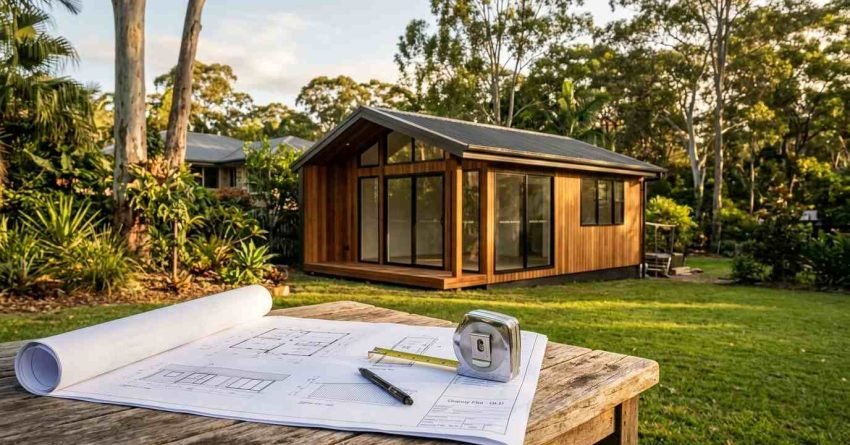
We find that building a granny flat in Queensland typically costs between $80,000 and $250,000, depending on size, construction method, site conditions, and finish level. Modular builds sit at the lower end of that range. Custom site-built structures push toward the top.
Understanding what drives that spread is what separates a well-planned project from a budget blowout. This guide breaks down the real numbers, the variables that move them, and the hidden costs most homeowners miss before they start.
What Is the Typical Cost to Build a Granny Flat in QLD?
Building a granny flat in QLD costs between $80,000 and $250,000 for most residential projects. A basic modular or prefabricated one-bedroom unit starts around $80,000 to $120,000. A custom site-built two-bedroom granny flat with quality finishes typically ranges from $150,000 to $250,000.
Site conditions, council requirements, and utility connections add to the base build cost in almost every project we quote.
Cost by Construction Type: Modular vs. Site-Built
Modular granny flats are factory-built and craned onto your property. They are faster to install and generally cheaper, with costs starting around $80,000 to $130,000 fully installed, a range consistent with the Housing Industry Association’s build cost data.
Site-built or custom-constructed granny flats are built on-site from the ground up. They offer greater design flexibility and typically cost $130,000 to $250,000 or more depending on complexity. The right choice depends on your block, your budget, and how long you plan to hold the property.
Cost by Size: 1-Bed vs. 2-Bed Configurations
A one-bedroom granny flat in QLD averages between $90,000 and $150,000 depending on construction type and inclusions. A two-bedroom configuration adds floor area, additional wet areas, and more structural work.
That pushes costs to $140,000 to $250,000. We always recommend locking in the right floor plan early, since layout changes mid-project are what quietly blow out budgets.
Granny Flat Cost Comparison Table
| Configuration | Construction Type | Typical Cost Range |
| 1-Bedroom | Modular | $80,000–$120,000 |
| 1-Bedroom | Site-Built | $110,000–$150,000 |
| 2-Bedroom | Modular | $110,000–$150,000 |
| 2-Bedroom | Site-Built | $150,000–$250,000+ |
Understanding the base cost range is only part of the picture. The factors that push a project from $100,000 to $200,000 are almost always found in council approval requirements and the site-specific conditions that no two properties share in exactly the same way.
QLD Size Limits and Regulations to Know
Queensland councils generally cap secondary dwellings at 60 to 90 square metres, though the exact limit depends on your local government area’s planning scheme. We always check this figure before finalising a floor plan, because exceeding it can trigger a full development application instead of a simpler building approval.
Most QLD granny flats also need to remain self-contained, meaning a separate kitchen, bathroom, and living space are required by code. Some LGAs restrict standalone rental use of a secondary dwelling, so we recommend confirming your council’s occupancy rules before budgeting for one as a rental asset.
What Drives the Cost of a Granny Flat in QLD?
Several variables move the final cost significantly beyond the base build price. We find that identifying them early gives homeowners real control over the budget before construction begins.
Site Preparation, Council Approvals, and Utility Connections
Site preparation costs in QLD vary based on slope, soil type, and existing infrastructure. Sloped blocks require additional earthworks, retaining walls, and engineered footings, adding $5,000 to $20,000 to the base cost.
Council approval fees and building certifier costs typically range from $3,000 to $8,000 depending on your local government area, a figure broadly reflected in the Queensland Government’s planning and building guidance.
Connecting water, sewerage, and electrical services to a new structure can add another $5,000 to $15,000. This is particularly common on larger blocks where the connection point sits well away from the main dwelling.
Inclusions, Finishes, and Fit-Out Allowances
The specification level you choose has a direct and significant impact on cost. A basic fit-out with entry-level fixtures, standard flooring, and builder-grade cabinetry keeps costs lower.
Mid-range finishes, stone benchtops, quality tapware, and split-system air conditioning add $15,000 to $40,000 over a basic specification. Fully custom interiors with premium appliances and high-end finishes can add $50,000 or more.
We always recommend setting a clear finish level before pricing begins. This single step prevents scope creep from inflating your budget once construction is underway.
Fixed-Price vs Cost-Plus Contracts
The contract structure you sign shapes how much budget risk you carry. A fixed-price contract locks in the total cost upfront, which we find gives homeowners the most predictable outcome for a granny flat build.
A cost-plus contract charges for actual materials and labour plus a margin, which can work well for highly custom builds but carries more exposure to price movement. We recommend fixed-price agreements for most granny flat projects, since the scope is well-defined and the risk of unexpected variations is lower than on a full home renovation.
How to Finance Your Granny Flat Build
Most homeowners fund a granny flat through a construction loan, a home equity redraw, or a dedicated renovation loan product. Lenders typically release funds in stages tied to construction milestones, similar to financing a standard home build.
We often see property owners use the equity in their existing home to cover the deposit, then service the balance through the rental income the new dwelling generates. Getting a pre-approval before finalising your design helps confirm your realistic budget ceiling early.
What Return Can You Expect?
A granny flat in QLD commonly rents for $300 to $450 per week depending on location, size, and finish quality. Against a $120,000 build cost, that can represent a gross rental yield well above what the main house alone typically returns.
We always frame the build cost as a capital decision rather than a pure expense. For most owners, the combination of rental income and added property value is what makes the upfront cost worthwhile over time.
Hidden Costs That Blow Granny Flat Budgets in QLD
Several costs catch homeowners off guard because they fall outside the standard builder’s quote. Demolition of existing structures, tree removal, and retaining walls are rarely included in base pricing.
Bushfire attack level (BAL) ratings in certain QLD zones require upgraded construction materials, adding $5,000 to $20,000 depending on the rating. Flood overlay requirements in some council areas trigger additional engineering and elevated slab costs.
Owner-supplied items like appliances, blinds, and landscaping are also excluded from most contracts but still draw from your total budget. We recommend building in a contingency of 10 to 15 percent of your total project cost to absorb these variables without derailing the project.
Conclusion
Granny flat costs in QLD range from $80,000 to $250,000, shaped by construction type, size, site conditions, and finish level. Knowing where the variables sit gives you a realistic starting point for planning.
For homeowners and investors, understanding the long-term return on a granny flat helps frame the build cost as a capital decision, not just a construction expense.
At Sydney Home Renovation, we help you plan, price, and build with full transparency from day one. Contact us to start your granny flat project with a clear budget and no surprises.
Frequently Asked Questions
Do I need council approval to build a granny flat in QLD?
Yes. Most granny flats in QLD require a building approval and, in some cases, a development application. Requirements vary by local government area, block size, and zoning classification.
How long does it take to build a granny flat in QLD?
Modular granny flats typically take 8 to 16 weeks from approval to completion. Site-built structures generally take 16 to 30 weeks depending on complexity, weather, and trade availability.
Can I build a granny flat on any property in QLD?
Not always. Minimum lot sizes, setback requirements, and zoning rules vary by council. A pre-application check with your local government area confirms whether your block is eligible before you commit to design costs.
Is a granny flat a good investment in QLD?
For most property owners, yes. A granny flat adds rentable floor space, increases land utility, and can generate consistent rental income. Return depends on location, build cost, and local rental demand.
What is the cheapest way to build a granny flat in QLD?
A modular or prefabricated one-bedroom unit on a flat, well-serviced block with standard finishes offers the lowest entry cost, typically starting around $80,000 to $100,000 fully installed and approved.


