A bathroom renovation is moderately to highly disruptive, typically affecting water access, noise levels, and daily household routines for two to four weeks, depending on the scope of work and your home’s layout.
For homeowners in Sydney planning their first renovation, understanding the disruption helps you prepare the household, manage expectations, and reduce stress throughout the project.
This guide walks through realistic timelines, daily life impacts, water and access challenges, trade sequencing, and practical strategies to keep your home functional during your bathroom renovation.
What “Disruption” Really Means During a Bathroom Renovation
A bathroom renovation is disruptive for two to four weeks because the space is non-negotiable your household uses it multiple times a day. Disruption covers noise, dust, lost water access, trade foot traffic, and the decision fatigue that builds across a multi-week project. Most Sydney renovations hit peak disruption in the first week during demolition and rough-in work.
Disruption goes beyond noise. It covers every way a construction project interrupts your normal routine, from losing access to a primary wet area to managing trades, deliveries, dust, and waste throughout your home. For most Sydney homeowners, disruption falls into four overlapping categories: physical (demolition, dust, debris), functional (no shower or toilet), logistical (trades arriving, materials staged in hallways), and emotional (decision fatigue, schedule pressure).
A bathroom renovation is particularly disruptive because the space is non-negotiable. Unlike a guest room or living area, your household uses the bathroom multiple times a day. When it’s offline, daily life genuinely changes.
Cosmetic refreshes replacing fixtures and repainting sit at the low end of disruption. Full strip-outs involving waterproofing, plumbing relocations, tiling, and electrical work sit at the high end. Most renovations land somewhere in between, with peak disruption concentrated in the demolition and rough-in phases during the first week.

How Long the Disruption Typically Lasts in a Sydney Home
Timelines vary widely based on scope, trade availability, and material lead times. Here is what most Sydney homeowners can realistically expect.
Cosmetic Refresh Timeline
A cosmetic upgrade new tapware, vanity, mirror, and paint takes around three to seven days. Disruption is low because plumbing rough-ins stay in place and tiling is minimal. The bathroom may remain partially functional during evenings.
Mid-Range Renovation Timeline
A mid-range renovation, including new tiling, a reconfigured layout, and updated fixtures, takes two to three weeks. Expect four to six days of heavy disruption during demolition, waterproofing, and tiling, when the bathroom is completely unusable and dust travels further through the home.
Full Strip-Out and Custom Build Timeline
A full strip-out involving structural changes, custom joinery, niche showers, underfloor heating, or moving wet walls typically runs three to six weeks. This is the most disruptive scenario, with multiple trades, longer drying times for waterproofing and screeds, and frequent decisions required mid-project.
Why Waterproofing and Screeds Add Days to Your Timeline
Waterproofing is not a same-day process. Once applied, membrane systems require a minimum 24 to 48 hours of cure time before tiling can begin and in cooler or humid Sydney conditions, that window extends. Screeds poured over underfloor heating or to level a substrate need three to five days before they are ready for tiles.
These cure periods are non-negotiable. Rushing them causes waterproofing failure, which is one of the most expensive defects a bathroom can develop. A well-run renovation builds these windows into the schedule from day one rather than treating them as delays.

What Happens Each Week of a Bathroom Renovation
Understanding the week-by-week trade sequence helps you plan around the worst disruption windows rather than being caught off guard.
Week 1 Demolition and Rough-In This is the loudest, dustiest, and most disruptive week. Tiles are removed, walls are opened, and the plumber and electrician complete their rough-in work repositioning pipes, drains, and cables before anything is enclosed. The bathroom is completely offline. Expect skip bin deliveries, early starts, and significant dust migration.
Week 2 Waterproofing, Screeds, and Tiling The work zone quietens considerably. Waterproofing is applied and left to cure, screeds are poured where needed, and tiling begins once surfaces are ready. The bathroom remains unusable, but noise drops and trade hours become more predictable. This is the week most homeowners find their rhythm.
Week 3 Fit-Off and Finishing Fixtures, tapware, vanities, mirrors, and accessories are installed. The electrician and plumber return for final connections. Grouting is completed and sealed. By the end of this week, most mid-range renovations are functional. Full strip-outs with custom elements may extend into a fourth or fifth week for joinery installation and final inspections.
Knowing which week carries which work lets you schedule around the worst days booking alternative shower arrangements for Week 1, and planning quieter work-from-home days for Weeks 2 and 3.
Daily Life Impact: Water, Noise, Dust, and Access
The day-to-day reality of a bathroom renovation comes down to four sensory and practical impacts.
Water and Plumbing Interruptions
Mains water is rarely shut off for the full duration. Expect short outages during plumbing rough-ins and final connections. If you have only one bathroom, you need a backup plan for showering and toilet use whether that’s a portable solution, a temporary basin in the laundry, or staying with family during the worst few days.
Noise, Dust, and Air Quality
Demolition is the loudest phase, with jackhammers, tile removal, and skip bin loading typically running between 7am and 5pm under NSW EPA construction noise guidelines. Dust is a constant challenge during demolition, tile cutting, and sanding.
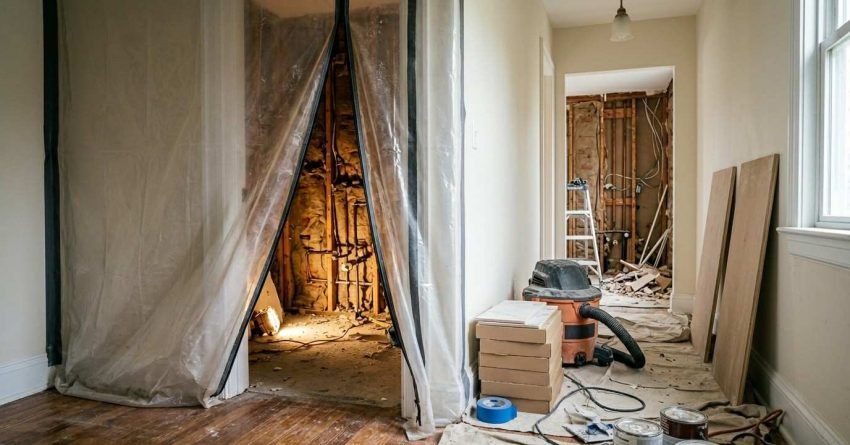
Effective containment makes a real difference. Sealing the work zone with heavy-duty plastic sheeting and zip-door systems reduces dust migration significantly. Closing internal doors, covering furniture in adjacent rooms, and switching off ducted air conditioning during demolition days stops fine particles from spreading through ceiling cavities. Even with good containment, plan to wipe down surfaces in nearby rooms at the end of each demolition day.
Access and Foot Traffic Through the Home
Trades, deliveries, and waste removal create steady foot traffic throughout the project. Hallways become staging zones for tiles, vanities, and tools. Pets are particularly vulnerable construction sites carry real hazards, and the noise causes significant stress for animals. Arrange a secure, separate space for pets during work hours, ideally away from the main traffic route.
Young children and work-from-home routines need deliberate planning. Demolition days are genuinely loud and unsuitable for video calls or focused work. Identify the two or three worst days in Week 1 and arrange to work offsite or schedule lighter tasks. Parents with young children often find it easier to plan school-holiday renovations when routines are already flexible.
Disruption Levels by Renovation Type
Understanding which type of renovation you’re undertaking sets accurate expectations.
Cosmetic vs Structural Work
Cosmetic work avoids touching waterproofing, plumbing rough-ins, and wall cavities, so disruption stays contained. Structural work moving walls, relocating drainage, or replacing subfloors multiplies disruption because more trades are involved and the work zone expands beyond the bathroom itself.
Single Bathroom vs Multiple Bathrooms
Households with two bathrooms experience dramatically less disruption. One bathroom stays online while the other is renovated. Single-bathroom homes face the toughest scenario, where temporary arrangements become essential during the seven to ten days when no shower or toilet is available.
How to Minimise Disruption During Your Renovation
Smart preparation reduces disruption by a meaningful margin. The most effective strategies start before demolition begins.
Finalise every selection before work starts. Tiles, tapware, vanities, mirrors, lighting, and paint colours should be locked in and either on-site or scheduled for confirmed delivery dates. Mid-project decisions are the single biggest cause of delays and the most common source of stress a missing tile order can stall tiling for days.
Schedule the renovation during a quieter household period. School holidays often suit families because routines naturally relax and children are easier to manage offsite. Property investors benefit from scheduling between tenancies to avoid disrupting rental income. Avoid renovating during major work deadlines or family events.
Set up a temporary wet zone before demolition begins. A laundry tub serves as a functional basin for hand-washing and basic hygiene. Gym memberships, family arrangements, or short-term portable shower hire cover the days without a working shower. Some homeowners arrange a temporary outdoor shower where the layout and privacy allow a practical option for Sydney’s warmer months.
Communicate the weekly schedule with your contractor at the start of each week. Knowing which days involve demolition, plumbing rough-in, waterproofing cure, tiling, and fit-off lets you plan around the worst noise and dust windows. Confirm trade start and finish times so you can manage pets, children, and work commitments without surprises.

Planning Tips to Keep Your Household Functional
Small logistical wins add up across a multi-week project. Move clothing, toiletries, and personal items out of the bathroom and any adjacent rooms before demolition begins. Cover furniture in nearby rooms even if the work zone is sealed, because fine dust travels through air conditioning ducts and ceiling cavities regardless of containment.
Establish a clear pathway for trades that avoids your main living zones where possible. Side access, garage entry, or a dedicated hallway minimises foot traffic through bedrooms and kitchens. Keep pets in a separate, secure area during work hours this protects them and keeps the work zone clear.
Plan for emotional fatigue as much as physical disruption. Renovations are demanding, and even well-run projects test patience by the end of Week 2. Build buffer time into your work and personal commitments for the full duration. The households that finish the project feeling positive are almost always the ones that planned for the emotional load, not just the construction schedule.
When a bathroom upgrade is part of a larger renovation, sequencing trades across rooms sharing plumbers and electricians between the bathroom and kitchen, for example reduces total project time and limits the number of weeks your household is in construction mode.
Conclusion
A bathroom renovation creates real disruption, but the impact is predictable and manageable when you plan around water access, noise windows, and trade schedules from day one.
The households that cope best are the ones that finalise selections early, prepare a temporary wet zone, and treat disruption as a defined three-week event rather than an open-ended inconvenience.
We help Sydney homeowners and investors plan smarter renovations with transparent timelines, honest pricing, and clear daily schedules. Talk to Sydney Home Renovation to map your project and minimise disruption from the start.
Frequently Asked Questions
How long is a bathroom unusable during a renovation?
Most bathrooms are unusable for seven to fourteen days during demolition, waterproofing, and tiling. Cosmetic upgrades may keep the bathroom partially functional, while full strip-outs require complete shutdown for the entire works period.
Can I live at home during a bathroom renovation?
Yes, most homeowners stay during a bathroom renovation. With a second bathroom available, disruption is manageable. Single-bathroom households need to arrange alternative showering for the seven to ten days when no facilities are available family stays or portable shower hire are the most practical options.
What is the noisiest part of a bathroom renovation?
Demolition is the noisiest phase, involving jackhammers, tile removal, and waste removal. This usually lasts one to three days at the start of the project and is followed by quieter trades like plumbing, waterproofing, and tiling.
Does dust spread beyond the bathroom?
Yes, fine dust travels through air gaps, air conditioning, and ceiling cavities even with the work zone sealed. Covering nearby furniture, closing internal doors, and using plastic zip barriers significantly reduces dust migration during demolition and tiling.
Will the water be shut off during the renovation?
Mains water is rarely shut off for the full duration. Expect short outages during plumbing rough-ins and final connections, usually planned in advance with your contractor so you can prepare for a few hours without running water.
How can I reduce stress during a bathroom renovation?
Finalise all selections before demolition, set up a temporary wet zone, communicate the weekly schedule with your contractor, and build buffer time into work and family commitments. Most stress comes from mid-project decisions and unmet expectations.
Is a bathroom renovation worth the disruption?
For most Sydney homeowners, yes. A well-planned bathroom renovation adds long-term property value, improves daily comfort, and resolves issues like waterproofing failure or outdated layouts. The disruption is temporary, but the upgrade benefits last decades.