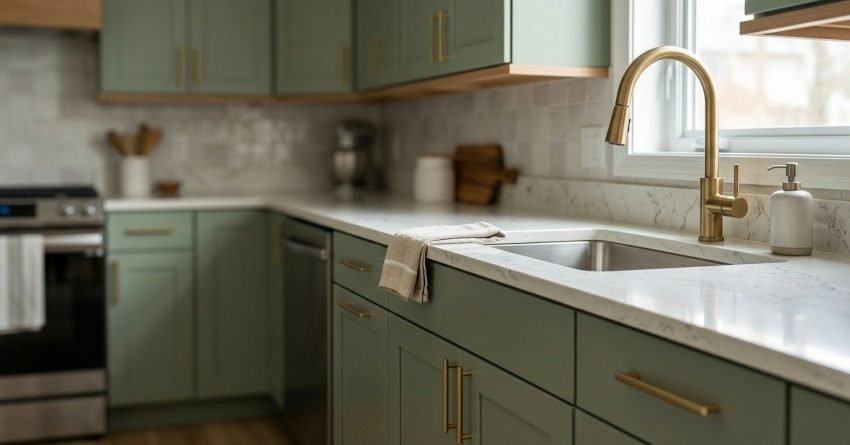
The cheapest way to redo a kitchen in Sydney is to work with your existing layout, reface or repaint cabinets, replace benchtops, and upgrade fixtures — delivering a near-new result for $8,000 to $15,000 rather than $30,000 or more. Smart sequencing and targeted upgrades separate a budget renovation that looks great from one that simply looks cheap.
Kitchen renovations are one of the highest-return investments in any Sydney property, but only when costs are controlled from the start. Without a clear plan, budgets spiral fast.
This guide breaks down real Sydney costs, the highest-value upgrades for the lowest spend, hidden cost traps, and a practical step-by-step planning framework — everything you need to renovate with confidence.
How Much Does It Cost to Redo a Kitchen in Sydney?
Understanding where your budget sits before you start is the single most important step in any kitchen renovation. Sydney renovation costs vary significantly based on scope, materials, labour, and whether structural or services work is involved. Knowing the three budget tiers helps you set realistic expectations and make smarter decisions about where to spend and where to save.
Budget Kitchen Renovation (Under $15,000)
A budget kitchen renovation in Sydney typically falls between $8,000 and $15,000 and focuses on cosmetic upgrades rather than structural changes. This tier covers cabinet refacing or repainting, new benchtops, updated tapware, a new splashback, and basic appliance replacements — all while keeping the existing layout, plumbing, and electrical positions intact.
At this price point, flatpack cabinetry from suppliers like IKEA or Kaboodle replaces custom joinery, and laminate or reconstituted stone benchtops replace engineered stone. Labour costs are lower because trades are not relocating services or removing load-bearing elements. For investment properties, rental upgrades, or kitchens that are functionally sound but visually dated, this tier delivers strong results.
The key constraint is scope discipline. Every decision to move a wall, shift plumbing, or upgrade to premium materials pushes the project out of this tier immediately.
Mid-Range Kitchen Renovation ($15,000 to $40,000)
The mid-range tier covers a full kitchen replacement — new semi-custom or custom cabinetry, engineered stone benchtops, quality appliances, new flooring, updated lighting, and professional installation across all trades. In Sydney, this typically costs between $15,000 and $40,000 depending on kitchen size, material selections, and whether any layout changes are required.
This is the most common renovation tier for owner-occupiers upgrading a primary residence. It allows for meaningful design improvements, better material quality, and a longer functional lifespan — typically 15 to 20 years with quality cabinetry and benchtops.
Labour accounts for a significant portion of mid-range budgets. A licensed kitchen installer, electrician, plumber, and tiler each carry separate costs, and coordinating those trades efficiently is where an experienced renovation contractor adds real value.
Premium Kitchen Renovation ($40,000 and Above)
Premium kitchen renovations in Sydney start at $40,000 and can exceed $100,000 for large, architecturally designed spaces with custom joinery, stone benchtops, integrated appliances, and structural modifications. This tier involves bespoke cabinetry, high-end European appliances, complex lighting design, and often layout reconfiguration that requires council approval or structural engineering.
For most homeowners focused on budget renovation, this tier is not the target — but understanding it clarifies why certain decisions, like moving a kitchen island or opening a wall, can rapidly escalate costs even in an otherwise modest project.
What Is the Cheapest Way to Redo a Kitchen Without a Full Renovation?
A full kitchen strip-out and replacement is not always necessary to achieve a dramatically improved result. For kitchens with sound cabinet boxes, functional plumbing, and a workable layout, targeted cosmetic upgrades deliver the highest return for the lowest spend. These strategies are particularly effective for investment properties, pre-sale renovations, and homeowners working within a strict budget.
Reface or Paint Existing Cabinet Doors
Cabinet door replacement or repainting is one of the most cost-effective kitchen upgrades available. If the cabinet carcasses — the structural boxes fixed to the wall — are in good condition, replacing only the doors and drawer fronts can transform the entire kitchen aesthetic for a fraction of full replacement cost.
In Sydney, professional cabinet door replacement typically costs between $2,500 and $6,000 depending on the number of doors and material selection. Two-pack polyurethane painting of existing doors costs between $1,500 and $3,500 and delivers a factory-smooth finish that is durable and easy to clean. Both options avoid the cost of new carcasses, installation labour, and the disruption of a full strip-out.
New handles and hinges, added at the same time, complete the transformation for minimal additional spend — typically $200 to $600 for a standard kitchen.
Replace Benchtops Without Moving Plumbing
Benchtop replacement is the second highest-impact cosmetic upgrade in a kitchen renovation. Old laminate or damaged benchtops age a kitchen significantly, and replacing them without altering plumbing positions keeps costs controlled.
In Sydney, laminate benchtop replacement costs approximately $800 to $1,500 for a standard kitchen. Reconstituted stone (such as Caesarstone or Silestone) ranges from $2,000 to $4,500 installed, depending on the linear metres and edge profile selected. Engineered stone at the premium end of this range delivers a high-end aesthetic at a mid-range price point when the rest of the kitchen is being refreshed simultaneously.
The critical cost control here is keeping the sink in its existing position. Moving a sink requires a licensed plumber to relocate waste and water supply lines — adding $800 to $2,000 to the project cost for what is often an unnecessary change.
Upgrade Tapware, Handles, and Fixtures Only
For kitchens that are structurally and functionally sound, a fixture-only upgrade — new tapware, cabinet handles, a new sink, and updated power points — can refresh the space for under $2,000. This is the lowest-cost intervention available and is particularly effective when combined with a fresh coat of paint on walls and ceiling.
Quality tapware from brands like Methven, Caroma, or Oliveri ranges from $150 to $600 for a kitchen mixer, and installation by a licensed plumber typically costs $150 to $300. Cabinet handles across a full kitchen cost $200 to $800 depending on the style and quantity selected.
While fixture upgrades alone will not transform a heavily dated kitchen, they are a legitimate first step for landlords managing tight renovation budgets or homeowners staging a property for sale.
Which Kitchen Upgrades Add the Most Value for the Least Cost?
Not all kitchen upgrades deliver equal return. When working within a budget, prioritising upgrades that buyers, tenants, and valuers notice first — and that have the lowest installation cost relative to visual impact — is the most effective strategy. Three upgrades consistently deliver the highest value-to-cost ratio in Sydney kitchens.
New Splashback Installation
A new splashback is one of the most visually impactful and cost-effective kitchen upgrades. It draws the eye immediately, protects the wall behind the cooktop and sink, and signals a renovated, well-maintained kitchen to anyone entering the space.
In Sydney, a standard subway tile splashback costs approximately $600 to $1,500 installed, including tiles and tiling labour. A glass splashback — a single panel of toughened, painted glass — costs between $800 and $2,000 depending on size and colour. Both options are installed without moving plumbing or electrical services in most cases, keeping labour costs low.
For investment properties, a simple white subway tile splashback is the most cost-effective choice. For owner-occupiers, a feature tile or coloured glass panel adds personality without significant additional cost.
Lighting Upgrades and Under-Cabinet Lighting
Kitchen lighting is consistently underestimated as a renovation upgrade. Replacing a single overhead fluorescent fitting with recessed LED downlights, and adding LED strip lighting under wall cabinets, transforms the perceived quality of a kitchen at minimal cost.
In Sydney, a basic lighting upgrade — three to five recessed LED downlights installed by a licensed electrician — costs approximately $600 to $1,200. Under-cabinet LED strip lighting adds $300 to $700 installed. The total investment of $900 to $1,900 delivers a result that makes even a budget kitchen feel considered and well-finished.
Lighting also improves the functionality of the workspace, which is a genuine value-add for both owner-occupiers and tenants.
Flooring Replacement or Overlay
Kitchen flooring takes significant wear and is one of the first elements to show age. Replacing damaged vinyl, cracked tiles, or worn timber with a new floating floor or vinyl plank overlay is a high-impact upgrade that can be completed without removing cabinetry in most cases.
In Sydney, vinyl plank flooring (LVP) installation costs approximately $35 to $65 per square metre installed, making a standard 12 to 15 square metre kitchen floor replacement cost between $420 and $975 in materials, plus $400 to $800 in labour. Porcelain tile replacement costs more — typically $60 to $120 per square metre installed — but delivers a longer lifespan and higher perceived quality.
For budget renovations, vinyl plank is the recommended choice. It is waterproof, durable, available in realistic timber and stone finishes, and can be installed over most existing subfloors without costly preparation work.
What Are the Biggest Cost Drivers in a Kitchen Renovation?
Understanding what drives kitchen renovation costs in Sydney allows you to make informed decisions about where to allocate budget and where to pull back. Three categories account for the majority of kitchen renovation spend: labour, cabinetry, and appliances.
Labour Costs in Sydney
Labour is typically the largest single cost in any Sydney kitchen renovation, often accounting for 35 to 50 percent of the total project budget. Sydney trade rates are among the highest in Australia, and a kitchen renovation requires multiple licensed trades — a kitchen installer, electrician, plumber, and tiler at minimum, with a plasterer and painter often required as well.
As a general guide, Sydney trade rates in 2025 sit at approximately $85 to $120 per hour for a licensed electrician, $90 to $130 per hour for a licensed plumber, and $60 to $90 per hour for a tiler. Kitchen installation labour for a standard flatpack kitchen costs approximately $1,500 to $3,500 depending on complexity.
The most effective way to reduce labour costs is to minimise the number of trades required — which means keeping the layout unchanged, avoiding structural modifications, and selecting materials that do not require specialist installation.
Cabinetry and Joinery Pricing
Cabinetry is typically the second largest cost in a kitchen renovation, and the range is significant. Flatpack cabinetry from IKEA, Kaboodle, or Bunnings costs approximately $3,000 to $8,000 in materials for a standard kitchen. Semi-custom cabinetry from a local joiner costs $8,000 to $18,000. Fully custom cabinetry from a bespoke joinery workshop costs $18,000 to $40,000 or more.
For budget renovations, flatpack cabinetry is the clear choice. Modern flatpack products have improved significantly in quality and finish, and when installed by an experienced kitchen fitter, they are difficult to distinguish from semi-custom alternatives at a fraction of the cost.
The decision between flatpack and semi-custom becomes relevant when the kitchen has non-standard dimensions, corner configurations, or ceiling heights that require custom sizing — situations where flatpack products cannot fill the space cleanly.
Appliance Allowances and Selections
Appliances represent a significant and often underestimated portion of kitchen renovation budgets. A basic appliance package — freestanding oven and cooktop, rangehood, and dishwasher — costs approximately $2,500 to $5,000 for entry-level brands. A mid-range package with integrated appliances from brands like Bosch, Fisher and Paykel, or Smeg costs $6,000 to $15,000.
For budget renovations, retaining existing appliances where they are functional is the most cost-effective approach. If replacement is necessary, freestanding appliances cost significantly less than integrated alternatives and do not require custom cabinetry modifications to accommodate them.
Rangehood selection also carries hidden costs. Ducted rangehoods require a licensed electrician to install ducting through the wall or ceiling — adding $400 to $1,200 to the installation cost. Recirculating rangehoods avoid this cost entirely and are a legitimate budget alternative in kitchens where external ducting is difficult or expensive to install.
How to Cut Kitchen Renovation Costs Without Cutting Corners
Reducing kitchen renovation costs does not mean accepting a lower-quality result. It means making smarter decisions about layout, materials, and procurement. The following strategies are used by experienced renovation contractors to deliver high-quality outcomes within tight budgets.
Keep the Existing Kitchen Layout
The single most effective cost-saving decision in any kitchen renovation is keeping the existing layout. Moving the sink, relocating the cooktop, or reconfiguring the cabinet arrangement requires a licensed plumber to move waste and water supply lines, a licensed electrician to relocate power points and appliance connections, and often a plasterer to repair walls after services are moved.
In Sydney, a layout change that moves the sink by even one metre can add $1,500 to $3,500 to the project cost in plumbing labour alone. Keeping services in their existing positions eliminates this cost entirely and allows the full budget to be directed toward visible upgrades.
This is the most important piece of advice for any homeowner planning a budget kitchen renovation: design around your existing plumbing and electrical positions, not the other way around.
Choose Flatpack or Semi-Custom Cabinets
As outlined above, flatpack cabinetry delivers the most significant cost saving in kitchen renovations without compromising the finished result when installed correctly. The key is selecting a quality flatpack product — IKEA SEKTION, Kaboodle, or Bunnings Kaboodle — and investing in professional installation rather than attempting a DIY fit-out.
A poorly installed flatpack kitchen looks worse than a well-installed one, regardless of the material quality. Doors that are not level, gaps between cabinets and walls, and poorly fitted benchtops undermine the entire renovation. Allocating $1,500 to $2,500 for professional installation on a flatpack kitchen is money well spent.
Semi-custom cabinetry is worth considering when the kitchen has non-standard dimensions or when the homeowner wants a specific finish — such as a two-pack polyurethane door — that is not available in flatpack ranges. The cost premium over flatpack is typically $3,000 to $8,000 for a standard kitchen, which is justifiable for owner-occupiers but rarely warranted for investment properties.
Source Materials and Fixtures Independently
One of the most effective ways to reduce kitchen renovation costs is to source materials, tiles, tapware, and fixtures independently rather than purchasing through the contractor. Most renovation contractors apply a margin of 15 to 30 percent on materials they supply, which is a legitimate business practice — but one that adds cost to the project.
By purchasing tiles, tapware, handles, and appliances directly from suppliers — and providing them to the contractor for installation only — homeowners can reduce material costs meaningfully. Sydney suppliers including Beaumont Tiles, Reece Plumbing, and Harvey Norman Commercial offer trade-quality products at competitive retail prices.
The important caveat is that independently sourced materials must be confirmed as correct before the contractor begins work. Incorrect tile quantities, incompatible tapware fittings, or delayed appliance deliveries can cause costly delays and additional labour charges. Confirm specifications with your contractor before purchasing.
What Hidden Costs Should You Budget for in a Kitchen Redo?
Hidden costs are the most common cause of kitchen renovation budget overruns in Sydney. These are costs that are not visible during the planning phase but emerge once work begins — and they are far more common than most homeowners expect. Budgeting for them in advance is the difference between a renovation that finishes on budget and one that does not.
Electrical and Plumbing Compliance Work
Older Sydney homes — particularly those built before 1990 — frequently have electrical and plumbing systems that do not meet current Australian Standards. When a licensed electrician or plumber opens walls or ceilings during a kitchen renovation, they are legally required to bring any non-compliant work up to current standards before closing up again.
Common compliance issues include outdated wiring without earth conductors, insufficient power point circuits for modern kitchen appliances, and copper or galvanised steel plumbing that requires partial replacement. These compliance costs are not optional — they are a legal requirement under the National Construction Code and NSW Fair Trading licensing conditions.
Budgeting $1,000 to $3,000 for electrical and plumbing compliance work in any kitchen renovation older than 20 years is a prudent approach. In some cases, costs are lower. In others — particularly in homes with original 1960s or 1970s wiring — they can be significantly higher.
Waterproofing, Subfloor, and Structural Repairs
When existing flooring is removed during a kitchen renovation, the condition of the subfloor is revealed. Damaged, soft, or uneven subfloors require repair before new flooring can be installed — and the cost of that repair depends entirely on the extent of the damage.
In Sydney homes with timber subfloors, moisture damage, termite activity, or simple age-related deterioration can require partial subfloor replacement costing $500 to $2,500 depending on the area affected. Concrete subfloors may require grinding or levelling compounds before new flooring is installed, adding $300 to $800 to the project.
Waterproofing under the sink area — while not a mandatory requirement in kitchens as it is in bathrooms — is a recommended investment in any kitchen renovation. A waterproofing membrane under the sink cabinet costs approximately $200 to $400 and prevents costly water damage if a leak occurs in the future.
Council Approvals and Permit Fees in NSW
Most cosmetic kitchen renovations in NSW — cabinet replacement, benchtop replacement, new splashback, flooring, and fixture upgrades — do not require council approval and can proceed under the owner’s general rights to maintain and improve their property.
However, kitchen renovations that involve structural changes — removing or modifying a wall, changing the roofline, or altering the building footprint — require a Development Application (DA) or Complying Development Certificate (CDC) from the local council or a private certifier. In Sydney, DA fees vary by council but typically range from $500 to $2,500 for residential alterations. CDC applications through a private certifier cost approximately $1,500 to $3,500.
If your renovation involves any structural work, confirm approval requirements with your local council or a licensed building certifier before committing to a design. Proceeding without required approvals creates significant legal and financial risk at the time of property sale.
Should You DIY or Hire a Contractor for a Budget Kitchen Renovation?
The DIY versus contractor question is one of the most common decisions homeowners face in kitchen renovations. The honest answer depends on the scope of work, the homeowner’s skill level, and — critically — what is legally permitted in NSW without a licence.
What You Can Legally DIY in NSW
In NSW, homeowners can legally perform a range of kitchen renovation tasks without a contractor licence, provided the work does not involve licensed trades. Permitted DIY work includes painting walls and ceilings, installing flatpack cabinetry (non-structural), laying floating floors and vinyl plank, installing tile splashbacks (non-electrical), replacing cabinet handles and hinges, and assembling and installing freestanding appliances.
These tasks represent a meaningful portion of a budget kitchen renovation and can save $2,000 to $5,000 in labour costs for a homeowner with reasonable DIY skills and the time to complete the work properly.
The important qualifier is quality. A poorly installed flatpack kitchen, uneven tiling, or badly painted surfaces will undermine the entire renovation and may cost more to rectify than the original labour saving. Honest self-assessment of skill level is essential before committing to DIY installation.
What Requires a Licensed Tradesperson
In NSW, all electrical work — including installing new power points, relocating existing circuits, connecting hardwired appliances, and installing lighting — must be performed by a licensed electrician. All plumbing work — including connecting tapware, relocating waste lines, and installing dishwashers with plumbed connections — must be performed by a licensed plumber. Structural work requires a licensed builder.
Performing licensed trade work without the appropriate licence is illegal in NSW and creates serious liability issues, particularly at the time of property sale when a Section 149 certificate or building inspection may reveal unlicensed work. Insurance policies also typically exclude claims arising from unlicensed work.
The cost of licensed trade work in a kitchen renovation is not optional — it is a fixed cost that must be included in any realistic budget.
Cost Comparison: DIY vs. Contractor in Sydney
For a standard budget kitchen renovation in Sydney — cabinet refacing, new benchtops, splashback, flooring, and fixture upgrades — the cost comparison between full DIY (where legally permitted) and full contractor engagement looks approximately like this:
| Scope | Full Contractor | DIY (Where Permitted) |
| Cabinet door replacement | $2,500 to $4,500 | $800 to $1,500 (materials only) |
| Benchtop replacement | $2,000 to $4,500 | $1,200 to $2,500 (materials + plumber) |
| Splashback (tiles) | $800 to $1,500 | $300 to $700 (materials only) |
| Vinyl plank flooring | $900 to $1,800 | $400 to $900 (materials only) |
| Fixture upgrades | $600 to $1,200 | $300 to $600 (materials + plumber) |
| Total estimate | $6,800 to $13,500 | $3,000 to $6,200 |
The DIY saving of $3,000 to $7,000 is real — but it assumes competent execution, correct material quantities, and no rectification work required. For first-time renovators, a hybrid approach — DIY on painting and flooring, contractor for cabinetry and trades — often delivers the best balance of cost saving and quality outcome.
How to Plan a Budget Kitchen Renovation in Sydney Step by Step
A well-planned kitchen renovation stays on budget. A poorly planned one does not. The following three-step framework is the foundation of every successful budget kitchen renovation — and the approach used by experienced renovation contractors to deliver consistent results for Sydney homeowners.
Step 1: Set a Realistic Budget and Contingency
Before selecting a single tile or cabinet door, establish a firm budget based on the scope of work you intend to undertake. Use the cost ranges in this guide as a starting point, then add a contingency of 15 to 20 percent for hidden costs, compliance work, and scope changes that emerge during construction.
A $15,000 budget with a 15 percent contingency means committing $12,750 to planned work and holding $2,250 in reserve. This is not pessimism — it is the standard practice of every experienced renovation contractor and project manager. Renovations that proceed without contingency are the ones that run out of money before completion.
Write the budget down. Assign a dollar amount to every line item — cabinetry, benchtops, splashback, flooring, tapware, appliances, electrical, plumbing, and contingency. A line-item budget makes trade-off decisions clear and prevents the gradual scope creep that turns a $15,000 renovation into a $22,000 one.
Step 2: Prioritise High-Impact, Low-Cost Changes
Once the budget is established, rank every planned upgrade by its visual impact relative to its cost. Upgrades that are seen immediately — cabinet doors, benchtops, splashback, and flooring — should be prioritised over upgrades that are functional but less visible, such as new cabinet carcasses or premium appliances.
A useful exercise is to walk into your kitchen and note the first three things you see. Those are the upgrades that will have the greatest impact on how the renovated kitchen is perceived — by you, by guests, and by potential buyers or tenants. Allocate the largest portion of your budget to those three elements.
Conversely, identify what does not need to be replaced. Cabinet carcasses in good structural condition, functional appliances, and sound flooring that can be overlaid rather than replaced are all legitimate cost savings that do not compromise the finished result.
Step 3: Get Itemised Quotes and Compare Contractors
Never accept a single lump-sum quote for a kitchen renovation. Always request itemised quotes that break down labour and materials separately for every scope item. Itemised quotes allow you to compare contractors accurately, identify where costs differ, and make informed decisions about where to reduce scope if the total exceeds your budget.
In Sydney, obtaining three itemised quotes from licensed renovation contractors is the recommended minimum. Quotes should specify the brand and grade of materials being supplied, the number of labour hours allocated to each trade, and the payment schedule tied to project milestones rather than calendar dates.
Be cautious of quotes that are significantly lower than others. In Sydney’s renovation market, a quote that is 30 to 40 percent below the median typically reflects either unlicensed labour, inferior materials, or a scope that excludes items the other contractors have included. Ask for clarification on any quote that appears unusually low before proceeding.
How Long Does a Budget Kitchen Renovation Take in Sydney?
Timeline is a practical concern for every homeowner planning a kitchen renovation — particularly those with families who rely on the kitchen daily. Understanding realistic timeframes by scope helps with planning, temporary kitchen arrangements, and contractor scheduling.
Typical Timelines by Renovation Scope
| Renovation Scope | Typical Duration |
| Fixture and handle upgrade only | 1 to 2 days |
| Cabinet door replacement + benchtop | 3 to 5 days |
| Full cosmetic renovation (no layout change) | 1 to 2 weeks |
| Full kitchen replacement (flatpack, same layout) | 2 to 3 weeks |
| Full kitchen replacement (layout change) | 3 to 5 weeks |
| Premium renovation with structural work | 6 to 12 weeks |
These timelines assume materials are on-site before work begins and that all trades are coordinated and available. In Sydney’s current renovation market, lead times for cabinetry, benchtops, and appliances can add 4 to 12 weeks to the overall project timeline — meaning the total time from decision to completion for a full kitchen replacement is often 8 to 16 weeks, even when the physical construction takes only 2 to 3 weeks.
Planning material procurement early — ideally before finalising the contractor — is one of the most effective ways to compress the overall project timeline.
Is It Worth Renovating a Kitchen Before Selling in Sydney?
Kitchen renovations are consistently cited by Sydney real estate agents as one of the highest-return pre-sale improvements available to vendors. But the return depends heavily on the renovation scope, the property price bracket, and the condition of the existing kitchen relative to comparable properties in the area.
ROI on Kitchen Renovations for Sydney Properties
A well-executed budget kitchen renovation — cabinet refacing, new benchtops, splashback, and flooring for $10,000 to $15,000 — can add $20,000 to $40,000 to the sale price of a Sydney property in the right market segment, according to renovation and real estate industry guidance. The return is highest in the $700,000 to $1.5 million price bracket, where buyers expect a functional, presentable kitchen but are not necessarily seeking a premium custom fit-out.
In the sub-$600,000 market — typically units and entry-level houses — a basic fixture upgrade and fresh paint may deliver a better return than a full renovation, as buyers in this segment are often planning their own upgrades post-purchase. In the $1.5 million and above market, a budget renovation may actually detract from value if it appears inconsistent with the quality of the rest of the property.
The most reliable approach is to consult with a local Sydney real estate agent before committing to a pre-sale renovation. An agent with recent comparable sales data can advise on the specific upgrades that buyers in your suburb are responding to — and those they are not.
What Buyers in Sydney Actually Want in a Kitchen
Sydney buyers consistently prioritise benchtop quality, storage capacity, and appliance condition when evaluating kitchens. A 2024 survey of Sydney real estate agents identified stone benchtops, integrated dishwashers, and adequate overhead storage as the three most frequently cited kitchen features influencing buyer decisions in the $800,000 to $1.5 million price bracket.
Buyers are also increasingly sensitive to the quality of finishes — specifically, whether a renovated kitchen looks professionally completed or DIY. Poorly fitted cabinet doors, visible gaps between benchtops and walls, and mismatched fixtures signal a renovation that was done cheaply rather than done well. In a competitive Sydney market, presentation quality matters as much as the scope of the renovation itself.
For vendors, this reinforces the value of professional installation even on a budget renovation. A flatpack kitchen installed by an experienced kitchen fitter looks significantly better than the same product installed by a homeowner without experience — and that difference is visible to buyers.
Conclusion
Redoing a kitchen on a budget in Sydney is entirely achievable when the right strategies are applied in the right sequence. Keeping the existing layout, choosing flatpack cabinetry, prioritising high-impact cosmetic upgrades, and budgeting realistically for hidden costs are the foundations of a renovation that delivers genuine value without financial overrun.
The difference between a budget renovation that looks great and one that looks cheap comes down to planning, material selection, and the quality of installation. Getting those three elements right requires honest budgeting, itemised quotes, and experienced tradespeople who understand how to deliver results within tight constraints.
At Sydney Home Renovation, we help homeowners and property investors plan and deliver kitchen renovations that stay on budget, on schedule, and built to last. Contact us today for a transparent, itemised quote and practical advice on the smartest way to redo your kitchen.
Frequently Asked Questions
What is the cheapest way to update a kitchen on a tight budget?
The cheapest way to update a kitchen is to reface or repaint existing cabinet doors, replace the benchtop, and upgrade tapware and handles — all without changing the layout. This approach typically costs $4,000 to $8,000 in Sydney and delivers a significantly refreshed result without the cost of a full renovation.
Can I redo a kitchen for under $10,000 in Sydney?
Yes, a kitchen can be redone for under $10,000 in Sydney if the scope is limited to cosmetic upgrades — cabinet door replacement, new benchtop, splashback, and flooring — and the existing layout, plumbing, and electrical positions are retained. Flatpack cabinetry and independent material sourcing are the most effective ways to stay within this budget.
How much do new kitchen cabinets cost in Sydney?
New kitchen cabinets in Sydney cost approximately $3,000 to $8,000 for flatpack products installed, $8,000 to $18,000 for semi-custom cabinetry, and $18,000 to $40,000 or more for fully custom joinery. The right choice depends on your budget, kitchen dimensions, and the finish quality you require.
What is the most expensive part of a kitchen renovation?
Labour is typically the most expensive component of a kitchen renovation in Sydney, accounting for 35 to 50 percent of the total project cost. Cabinetry is the second largest cost, followed by appliances and benchtops. Structural changes — moving walls, relocating plumbing, or reconfiguring the layout — add significant cost to any of these categories.
How do I renovate my kitchen cheaply without replacing cabinets?
To renovate a kitchen cheaply without replacing cabinets, focus on repainting or refacing the existing cabinet doors, replacing the benchtop, installing a new splashback, upgrading tapware and handles, and refreshing the flooring. These four upgrades address the most visible elements of the kitchen and can be completed for $4,000 to $9,000 in Sydney.
Do I need council approval for a kitchen renovation in NSW?
Most cosmetic kitchen renovations in NSW — including cabinet replacement, benchtop replacement, new splashback, and flooring — do not require council approval. Renovations that involve structural changes, such as removing a wall or altering the building footprint, require a Development Application or Complying Development Certificate. Confirm requirements with your local council before beginning any structural work.
How do I find a reliable kitchen renovation contractor in Sydney?
To find a reliable kitchen renovation contractor in Sydney, request itemised quotes from at least three licensed contractors, verify their licence through the NSW Fair Trading licence check, ask for references from recent kitchen renovation projects, and confirm they carry current public liability and home warranty insurance. Avoid contractors who provide lump-sum quotes without itemised breakdowns or who request large upfront deposits before work begins.