The cheapest foundation for a house is a concrete slab-on-ground. It requires less labour, fewer materials, and a shorter construction timeline than any other foundation type. We work with Sydney homeowners and property investors planning new builds and ground-up renovations, and we always start foundation conversations here.
Getting this decision right protects the entire project budget from the ground up. In this guide, we break down why slab foundations cost less, what they actually cost in Sydney, and when that cost advantage stops applying.
The Cheapest Foundation Type for a House
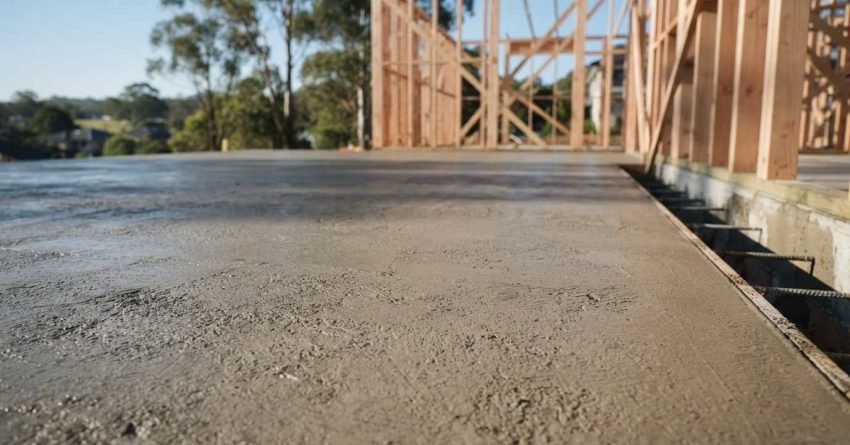
A concrete slab-on-ground foundation is the most cost-effective option for residential construction in Australia. It is poured directly onto prepared ground, eliminating the need for deep excavation, suspended structural framing, or complex formwork.
The result is a faster pour, a simpler build process, and a lower overall cost compared to pier-and-beam, strip footing, or raft slab systems on difficult terrain. For most standard residential blocks in Sydney with stable, classified soil, we treat a concrete slab as the default choice. It delivers structural reliability at the lowest price point.
Why Concrete Slabs Cost Less Than Other Foundation Types
Concrete slabs reduce cost across three areas: excavation, materials, and labour. A slab requires minimal site excavation, typically surface preparation and compaction rather than deep trenching.
The formwork is straightforward, the pour is completed in a single stage, and the curing timeline is predictable. Pier-and-beam systems, by contrast, require individual footing excavations, more steel reinforcement, and significantly more on-site labour hours. Strip footings add material volume, and every alternative adds cost that a slab avoids.
Foundation Cost Comparison at a Glance
We find clients understand the decision faster when they see the numbers side by side. Here is how the main residential foundation types compare on a typical Sydney block.
| Foundation Type | Typical Cost Range (Sydney) | Best Suited To |
| Concrete slab-on-ground | $8,000–$15,000 | Flat, stable, well-classified sites |
| Waffle pod slab | $12,000–$20,000 | Reactive clay soils requiring reinforcement |
| Strip footing | $15,000–$25,000 | Stable ground, impractical for a full pour |
| Pier-and-beam | $18,000–$35,000 | Sloping blocks, elevated sites |
| Basement foundation | $40,000–$100,000+ | Sites requiring below-ground living space |
These figures shift with site access, block size, and engineering requirements, but the ranking rarely changes. A standard slab remains the cheapest starting point in almost every Sydney scenario.
What a Concrete Slab Foundation Costs in Sydney
In Sydney, we typically see standard concrete slab foundations cost between $8,000 and $15,000 for a single-storey residential home. The final figure depends on slab size, thickness, reinforcement requirements, and site preparation needs.
Broken down per square metre, a basic slab generally costs $65 to $85 per square metre on a stable, flat block, according to Master Builders Australia. Reactive or unstable soil conditions, common across parts of Western Sydney and the Hills District, push costs higher and often require engineer-specified reinforcement or a waffle pod slab design. A basic slab on a flat, well-classified block remains the most affordable starting point in the Sydney market.
When a Concrete Slab Is and Isn’t the Right Choice
A concrete slab is the right foundation when a site has stable, well-classified soil, a relatively flat profile, and no significant drainage or flood risk. These conditions are common across many Sydney suburbs, which is why we see slab construction dominate residential builds in the region.
A slab is not always the cheapest option once site-specific factors apply, though. Sloping blocks require either cut-and-fill earthworks or a pier-and-beam system, both of which add cost. Highly reactive clay soils require a more heavily reinforced slab design, which narrows the cost gap with alternative systems.
Site Conditions That Affect Foundation Type and Cost
Sydney’s soil classifications range from Class A, stable and non-reactive, through to Class E, extremely reactive, and Class P, problem sites. A Class A or S site supports a standard slab at the lowest cost.
A Class M, H, or E site requires an engineer-designed slab with additional steel reinforcement, thickened edges, or a waffle pod configuration. Each step up in soil reactivity adds cost. We always recommend a geotechnical report, typically $500 to $1,500 in Sydney according to Engineers Australia, as the only reliable way to confirm site classification before committing to a foundation type.
Permits and Approvals for Foundation Work in Sydney
Foundation work in Sydney generally falls under a Construction Certificate or Complying Development Certificate, depending on the scope of the build. Councils and private certifiers assess soil reports, structural drawings, and drainage plans before approving slab or footing work.
We factor certifier and council timelines into every project schedule, since approval delays are one of the most common causes of foundation-stage budget blowouts. Confirming approval pathways early keeps the foundation timeline, and the wider construction schedule, on track.
How Long a Concrete Slab Takes to Pour and Cure
A standard residential slab takes one to two days to pour, depending on size and crew. Full structural curing takes around 28 days, though most builders can begin light framing work after 7 days once the concrete reaches sufficient strength.
Weather, slab thickness, and reinforcement complexity all affect this timeline. We build curing time into every project schedule so it never becomes a surprise delay later.
Other Low-Cost Foundation Options Worth Knowing
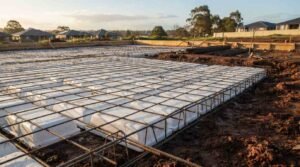
Where a concrete slab is not suitable, two alternatives offer the next most cost-effective solutions. Strip footings are continuous concrete beams poured along load-bearing wall lines, and they suit sites where a full slab pour is impractical but ground conditions remain stable.
Pier-and-beam foundations use individual concrete or steel piers driven to stable ground, with a suspended floor structure above. They cost more than a slab on flat ground but can be more economical than extensive earthworks on a sloping site. A waffle pod slab, essentially a reinforced slab variant with polystyrene void formers beneath it, sits between a standard slab and a fully engineered raft slab in both cost and capability, and we specify it often on reactive clay sites across Western Sydney.
Neither strip footings nor pier-and-beam match a standard slab for cost on a suitable block, but both outperform a slab when site conditions make a direct pour impractical. We always assess foundation cost as part of the total construction budget for a new home, never as an isolated line item.
Conclusion
A concrete slab-on-ground is the cheapest foundation for a house on a suitable, well-classified site, combining low labour, minimal excavation, and a straightforward construction process.
For Sydney homeowners and investors, the real cost variable is site condition. Soil classification, slope, and drainage determine whether that cost advantage holds or whether a more engineered solution is required.
We help Sydney homeowners and investors assess their site, understand their foundation options, and build a realistic budget before construction begins. Contact Sydney Home Renovation to get started on your project.
Frequently Asked Questions
How deep does a concrete slab foundation need to be?
A standard residential concrete slab in Sydney is typically 100 to 150mm thick, with thickened edge beams of 300 to 600mm depending on soil classification and engineer specifications.
Can you build any house type on a concrete slab?
Most single and double-storey residential homes suit a concrete slab. Heavily sloping blocks, reactive soils, or flood-prone sites may require an alternative foundation system based on engineering assessment.
What is the most expensive type of house foundation?
Basement foundations are the most expensive, requiring deep excavation, waterproofing, and significant structural work. Pier-and-beam systems on difficult terrain are the next most costly residential option.
Does soil type affect foundation cost in Sydney?
Yes. Reactive clay soils, classified M, H, or E, require more heavily reinforced slab designs, increasing material and engineering costs. A geotechnical report confirms site classification before design begins.
How long does a concrete slab foundation last?
A correctly designed and poured concrete slab foundation typically lasts 50 years or more. Longevity depends on soil preparation, reinforcement quality, drainage management, and ongoing maintenance of surrounding ground conditions.
Do I need council approval for a concrete slab foundation?
Most slab foundations require a Construction Certificate or Complying Development Certificate before work begins. Requirements depend on your council area and the scope of your broader building project.
How much does a concrete slab cost per square metre in Sydney?
A basic concrete slab typically costs $65 to $85 per square metre on a stable, flat Sydney block. Reactive soil or difficult access can increase this rate significantly.