The upgrades that add the most value to a bathroom are those that combine structural integrity, quality finishes, and functional design — improvements that buyers, tenants, and valuers can see, feel, and trust. In Sydney’s competitive property market, a well-executed bathroom renovation consistently ranks among the highest-returning home improvements available to owners and investors.
Understanding which specific upgrades drive that return — and which ones drain your budget without lifting your property’s appeal — is the difference between a renovation that pays for itself and one that simply costs money.
The Upgrades That Add the Most Value to a Bathroom
The highest-value bathroom upgrades address waterproofing, surface finishes, fixtures, and layout efficiency. These are the elements buyers and tenants assess first, valuers factor into comparable assessments, and tradespeople flag most often during pre-sale inspections. Getting these right creates a bathroom that performs structurally and presents beautifully — the combination that drives genuine property value.
Wet Area Waterproofing and Tiling
Waterproofing is the single most critical investment in any bathroom renovation. It is invisible once complete, but its absence causes the most expensive damage — water ingress, structural rot, mould, and failed inspections. In New South Wales, wet area waterproofing must comply with AS 3740 standards, and licensed waterproofing is non-negotiable for any renovation that involves a shower, bath, or floor waste.
Beyond compliance, quality tiling transforms the visual weight of a bathroom. Large-format tiles in neutral tones read as premium, reduce grout lines, and are easier to maintain. Rectified porcelain tiles in 600x600mm or 600x1200mm formats are consistently popular in Sydney renovations because they photograph well, age gracefully, and appeal to a broad buyer demographic. Tile selection and installation quality are among the first things a buyer notices — and among the first things a poor renovation exposes.
Fixtures, Fittings, and Tapware Quality
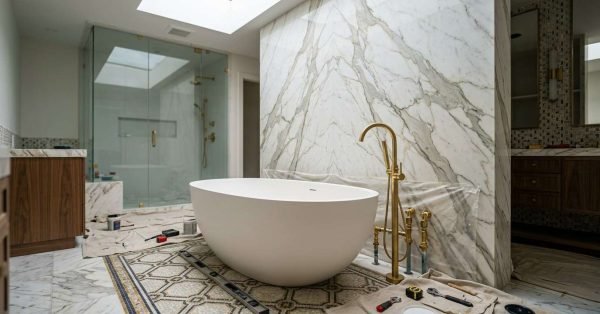
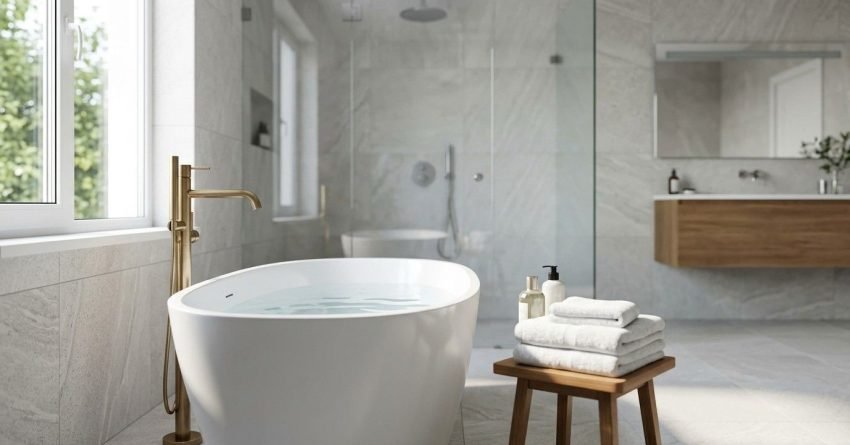
Fixtures and tapware are the jewellery of a bathroom renovation. Upgrading to wall-hung vanities, frameless shower screens, and brushed nickel or matte black tapware signals quality without requiring a full structural overhaul. These upgrades are visible, tactile, and immediately legible to buyers as indicators of renovation standard.
A wall-hung vanity creates the perception of space by exposing floor area — particularly valuable in Sydney’s smaller apartment and terrace bathrooms. Frameless shower screens eliminate the visual clutter of aluminium frames and are far easier to clean. Tapware in a consistent finish across basin, shower, and bath creates a cohesive, considered aesthetic that distinguishes a professional renovation from a budget refresh.
How your renovation budget is structured determines how much of this quality you can realistically deliver — and where trade-offs become necessary.
Where to Spend and Where to Save in a Bathroom Renovation
Not every dollar spent in a bathroom renovation returns equal value. The principle that guides smart renovation budgeting is simple: spend on what is structural, functional, or immediately visible — and save on what is incidental, decorative, or easily replaced later.
Spend confidently on waterproofing, tiling, shower screens, vanities, and tapware. These are the elements that define the renovation’s quality ceiling and directly influence buyer perception. Cutting costs here creates problems that are expensive to fix and immediately obvious to anyone who looks closely.
Save strategically on accessories, mirrors, towel rails, and toilet suites. These items are visible but replaceable. A mid-range toilet suite from a reputable brand performs identically to a premium model in most residential applications. A frameless mirror from a tile supplier costs a fraction of a designer equivalent and reads just as well in photographs.
Prioritising Upgrades That Maximise Return on Investment
The renovations that consistently deliver the strongest return in Sydney bathrooms share three characteristics: they address a functional problem, they improve the visual presentation, and they align with what comparable properties in the same suburb already offer. Renovating above the suburb’s ceiling rarely returns full value. Renovating to match or slightly exceed the local standard almost always does.
Maximising return on your renovation spend requires understanding the relationship between renovation cost, comparable sales data, and the specific expectations of your target buyer or tenant profile.
What Reduces Bathroom Value — and How to Avoid It
Certain renovation decisions actively reduce bathroom value, regardless of how much was spent. Overly personalised tile choices — bold patterns, dark feature walls, or highly specific colour palettes — narrow buyer appeal and can make an otherwise quality renovation feel dated or difficult to live with. Buyers discount for taste they cannot easily change.
Poor workmanship is the most damaging value reducer of all. Uneven grout lines, poorly sealed shower recesses, misaligned fixtures, and visible silicone failures signal a renovation that was done cheaply or without proper trade supervision. In Sydney’s property market, buyers and their building inspectors are experienced enough to identify these issues — and they negotiate accordingly.
Choosing unlicensed trades to reduce costs is a false economy. Waterproofing and electrical work completed without the required licences creates compliance issues that must be disclosed on sale and can void building insurance. The cost of rectification almost always exceeds the original saving.
Conclusion
The upgrades that add the most value to a bathroom are waterproofing, quality tiling, and well-chosen fixtures — the elements that signal structural soundness and visual quality simultaneously.
For homeowners and investors planning a bathroom renovation in Sydney, the strongest returns come from disciplined spending on what matters most, not from maximising the total budget.
At Sydney Home Renovation, we help you identify the right upgrades for your property, your budget, and your goals — so every dollar you spend works harder.
Frequently Asked Questions
Does a bathroom renovation add value to a property?
Yes. A well-executed bathroom renovation is one of the highest-returning home improvements in Sydney, consistently improving both sale price and rental yield when upgrades align with local market expectations.
What bathroom features do buyers look for most?
Buyers prioritise waterproofing integrity, quality tiling, frameless shower screens, wall-hung vanities, and consistent tapware finishes. Clean, neutral, and functional presentations outperform highly personalised designs.
Is it worth upgrading bathroom fixtures before selling?
Yes, if the existing fixtures are dated or visually inconsistent. Tapware, vanities, and shower screens have a strong visual impact relative to their cost and directly influence buyer perception of renovation quality.
How much should I spend on a bathroom renovation to add value?
In Sydney, a mid-range bathroom renovation typically costs between $15,000 and $25,000. Spending within this range on the right upgrades generally returns strong value, provided the result aligns with comparable properties in your suburb.
Does a second bathroom add more value than renovating the main one?
In most Sydney properties, adding a second bathroom adds more value than upgrading an already functional main bathroom — particularly in homes with three or more bedrooms where a second bathroom is expected by buyers.