
A bathroom renovation in Sydney is a multi-stage construction project involving licensed trades, compliance requirements, and sequenced decisions that directly affect cost, timeline, and the quality of the finished result. Whether you are renovating a compact ensuite or a full family bathroom, understanding each stage of the process before work begins is what separates a smooth, on-budget renovation from one that stalls, blows out, or requires costly rework.
Getting the sequence wrong starting tiling before waterproofing is certified, or ordering fixtures before the layout is confirmed creates delays and expenses that compound quickly.
This guide covers every stage of the bathroom renovation process in sequence: planning and budgeting, design and approvals, demolition, rough-in trades, tiling and fit-out, final inspections, timeline expectations, cost ranges, common mistakes, and how to choose the right contractor in Sydney.
What Does a Bathroom Renovation Actually Involve?
A bathroom renovation is not a single trade job. It is a coordinated construction project that requires a licensed plumber, a licensed electrician, a waterproofer, a tiler, and often a carpenter or joiner, each working in a specific sequence, with inspections required at key stages before the next trade can begin.
The scope of a renovation determines which trades are involved and in what order. A cosmetic refresh involves fewer trades and fewer compliance requirements. A full renovation that relocates the shower, moves the toilet, or reconfigures the layout requires structural decisions, council consideration in some cases, and a complete sequence of rough-in work before any finishes are applied.
The Bathroom Renovation Sequence at a Glance
| Stage | Trade | Compliance Checkpoint |
| 1. Demolition | Builder / Labourer | Asbestos clearance (if applicable) |
| 2. Plumbing rough-in | Licensed Plumber | Certificate of Compliance Plumbing and Drainage |
| 3. Electrical rough-in | Licensed Electrician | Certificate of Compliance Electrical Work |
| 4. Waterproofing | Licensed Waterproofer | Waterproofing inspection certificate (third-party certifier) |
| 5. Tiling and fit-out | Tiler, Plumber, Electrician | Visual inspection at practical completion |
| 6. Final sign-off | Builder / Certifier | All compliance certificates issued; defects schedule cleared |
Each stage must be completed and certified before the next begins. Skipping or overlapping stages is the most common cause of non-compliant, costly-to-rectify bathroom renovations in Sydney.
The Scope of a Full Bathroom Renovation
A full bathroom renovation typically involves stripping the room back to the structural substrate, removing all tiles, fixtures, cabinetry, and fittings, and rebuilding from the floor and walls up. This includes repositioning or upgrading plumbing and drainage, installing new electrical circuits and exhaust ventilation, applying a certified waterproofing membrane, laying new tiles, and fitting out with new fixtures, vanity, toilet, shower, and accessories.
The result is a bathroom that is effectively new from the inside out, built to current Australian Standards and compliant with NSW building regulations.
Partial vs. Full Renovation: Knowing the Difference
A partial renovation retains the existing plumbing layout and focuses on surface-level upgrades: new tiles over existing substrate (if structurally sound), replacement fixtures in the same positions, updated lighting, and new accessories. This approach reduces cost and timeline significantly but is only appropriate when the existing waterproofing, substrate, and plumbing are in sound condition.
A full renovation is required when waterproofing has failed, the substrate is damaged, the layout needs to change, or the existing installation does not meet current compliance standards. Attempting a partial renovation over a compromised substrate is one of the most common and costly mistakes in residential bathroom work.
Ensuite vs. Full Bathroom: How Scope Differs
An ensuite renovation typically involves a smaller footprint, a shower-only wet area, and a single vanity, which reduces tiling time, waterproofing area, and fixture costs. A full family bathroom with a bath, separate shower, and double vanity involves more trades, more compliance checkpoints, and a longer timeline.
The sequencing rules are identical regardless of size. What changes is the volume of work at each stage, not the order in which it is done.

Step 1: Planning Your Bathroom Renovation
The planning stage is the most important phase of any bathroom renovation. Every decision made here, about scope, budget, contractor, and sequencing, has a direct effect on what happens on site. Renovations that run smoothly do so because the planning was thorough.
Setting Renovation Goals and Priorities
Before engaging a contractor or visiting a showroom, define what you are trying to achieve. Are you renovating to improve daily liveability, to increase the property’s resale value, or to address a compliance or maintenance issue? The answer shapes every decision that follows, from the level of finish you choose to the trades you need and the timeline you can realistically commit to.
Property investors typically prioritise durable, low-maintenance finishes that appeal to a broad rental market. Owner-occupiers often prioritise comfort, storage, and personal preference. First-time renovators benefit most from keeping the layout simple and the scope clearly defined before any work begins.
Does a Bathroom Renovation Add Value in Sydney?
A well-executed bathroom renovation consistently ranks among the highest-return home improvements in the Sydney property market. A mid-range renovation in a well-located property typically returns more than its cost at resale, particularly when the existing bathroom is dated, non-compliant, or visually out of step with the rest of the home.
The return depends on the quality of the finish, the relevance of the design to the target buyer, and whether the renovation addresses genuine functional or compliance issues. Renovating purely for aesthetics in a property where the bathroom is already functional delivers a lower return than renovating to fix a waterproofing failure or a non-compliant layout.
Establishing a Realistic Budget Before You Start
A realistic budget accounts for more than the visible finishes. Labour, waterproofing, compliance, waste removal, and the contingency for hidden defects all need to be factored in before you commit to a scope of work. In Sydney, a full bathroom renovation typically ranges from $15,000 to $35,000 or more depending on size, layout complexity, and finish level, with labour often representing 40 to 50 percent of the total cost.
Setting a budget without understanding these cost components leads to scope reductions mid-project, which disrupts trade sequencing and often costs more than getting the budget right at the start.
Choosing Between a Builder, Bathroom Renovator, or DIY
In NSW, any work involving plumbing, electrical, or waterproofing must be carried out by a licensed tradesperson. A licensed builder or bathroom renovation contractor coordinates all trades under a single contract, manages the sequencing, and takes responsibility for the finished result.
Engaging individual trades separately is possible but requires you to manage scheduling, sequencing, and compliance, which is a significant undertaking without construction experience. DIY is limited to non-licensed work: painting, accessory installation, and some cabinetry. Attempting licensed work without the appropriate licence is illegal in NSW and voids insurance.
Before You Start: A Pre-Renovation Checklist
Before engaging a contractor, work through these decisions:
- Define the scope: cosmetic refresh, partial renovation, or full renovation
- Set a total budget including a 10 to 15 percent contingency
- Confirm whether the existing layout stays or changes
- Identify whether asbestos testing is required (homes built before 1990)
- Decide on fixture and tile selections before demolition begins
- Confirm the contractor’s licence number via NSW Fair Trading
- Establish a realistic timeline and arrange alternative bathroom access
Completing this checklist before the first site meeting puts you in a far stronger position to evaluate quotes accurately and hold the project to its agreed scope.
Step 2: Design, Layout, and Council Approvals
Once the scope and budget are established, the design stage translates your renovation goals into a buildable plan. Design decisions at this stage have a direct and lasting impact on both the cost of construction and the liveability of the finished bathroom.
Working With a Designer or Using a Bathroom Showroom
Many bathroom renovation contractors offer an in-house design service or work with a preferred designer. Bathroom showrooms provide a useful reference point for fixture selection and layout inspiration, but the design must be validated against the existing plumbing layout and structural constraints before it is finalised.
A designer who understands construction constraints, not just aesthetics, will produce a design that is both liveable and buildable within your budget. Designs that ignore plumbing positions, ceiling heights, or structural elements often require expensive modifications on site.
Plumbing Layout Constraints and Wet Area Compliance
The position of existing drainage and water supply points is one of the most significant cost drivers in bathroom renovation. Keeping fixtures in their existing positions, or close to them, avoids the need to break into the concrete slab or reposition drainage stacks, which can add $2,000 to $8,000 or more to the project cost depending on the extent of the relocation.
Wet area compliance under AS 3740 requires that all wet areas, including shower recesses, bath surrounds, and areas adjacent to floor waste, are waterproofed to a certified standard. The design must account for these requirements from the outset, including the height of waterproofing membranes on walls and the fall of the floor to the waste.
When You Need Council Approval or a Building Permit
Most bathroom renovations in NSW do not require council development approval, provided the work is internal and does not alter the building’s footprint or structural elements. However, a complying development certificate or building permit may be required for certain types of work, and all licensed trade work requires the relevant compliance certificates upon completion.
Your contractor should be able to advise on the approval requirements for your specific project before work begins. Proceeding without the required approvals creates liability for you as the homeowner and can affect insurance coverage and future resale.
Step 3: Demolition and Site Preparation
Demolition is the first physical stage of a bathroom renovation and the point at which the true condition of the existing bathroom is revealed. What is found during demolition often determines whether the project stays on budget or requires scope adjustments.
What Gets Removed During Demolition
A full demolition involves removing all tiles from floors and walls, stripping out the vanity, toilet, shower screen, bath (if present), and all fixtures, and removing the existing waterproofing membrane and substrate if it is damaged or non-compliant. Plasterboard or compressed fibre cement sheeting in wet areas is typically replaced as part of a full renovation, as existing sheeting may be moisture-affected even if it appears sound.
Waste removal is a cost that is often underestimated. Tile waste, fixture disposal, and substrate materials require a skip bin or multiple trailer loads, and this cost should be included in the project budget from the outset.
Asbestos, Waterproofing Failures, and Hidden Defects
In Sydney homes built before 1990, asbestos-containing materials may be present in floor tiles, wall sheeting, or adhesives. If asbestos is suspected or identified during demolition, work must stop and a licensed asbestos removalist must be engaged before any further demolition proceeds. This is a legal requirement under NSW Work Health and Safety regulations and cannot be bypassed.
Waterproofing failures, evidenced by damp substrate, mould growth, or rotted framing, are common in bathrooms that have not been renovated for 15 to 20 years. The extent of the damage determines the additional cost and time required to remediate before the renovation can proceed.
Step 4: Rough-In Trades Plumbing, Electrical, and Waterproofing
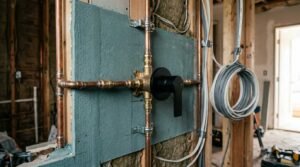
The rough-in stage is where the structural and services work is completed before any finishes are applied. This is the most technically complex phase of the renovation and the one where sequencing errors are most costly to correct.
Plumbing Rough-In and Drainage Positioning
The plumber is typically the first trade on site after demolition. Rough-in plumbing involves positioning drainage outlets, water supply lines, and any relocated waste points to match the approved design layout. If drainage is being relocated, the slab may need to be cut and re-poured, which requires careful coordination with the structural requirements of the building.
All plumbing rough-in work must comply with AS/NZS 3500 and be carried out by a licensed plumber. A Certificate of Compliance for Plumbing and Drainage is issued upon completion and forms part of the project’s legal documentation.
Electrical Rough-In and Exhaust Fan Placement
The electrician installs new circuits, power points, lighting, heated towel rail connections, and exhaust fan wiring during the rough-in stage. In bathrooms, all electrical work must comply with AS/NZS 3000 and the specific requirements for wet area zones under AS/NZS 3003, which restrict the types of fittings and the positioning of power outlets relative to water sources.
Exhaust ventilation is a mandatory requirement in NSW bathrooms without openable windows. The exhaust fan must be ducted to the exterior of the building, not into a roof cavity, and must meet the minimum airflow requirements for the room size.
Waterproofing: The Most Critical Step in Any Bathroom
Waterproofing is applied after the rough-in trades have completed their work and before any tiling begins. Under AS 3740, a licensed waterproofer applies a liquid membrane to the floor, the lower sections of walls, and all junctions and penetrations in the wet area. In a shower recess, the membrane must extend a minimum of 1,500mm up the walls from the floor; on walls adjacent to the shower, the minimum is 150mm above the finished floor level.
Two membrane types are commonly used in residential bathrooms: liquid-applied membranes (the most common, brushed or rolled directly onto the substrate) and sheet membranes (bonded to the substrate and used where substrate movement is a concern). Both must comply with AS 3740 and must be inspected and certified by a licensed building inspector or certifier before tiling proceeds.
The inspection certificate is a mandatory document. Without it, the renovation is non-compliant and you carry the liability for any future water damage. Waterproofing failure is invisible until it becomes catastrophic, which is why the inspection step exists and cannot be skipped.
Step 5: Tiling, Fixtures, and Fit-Out
Once waterproofing is certified, the fit-out stage begins. This is the phase that transforms the raw shell of the bathroom into the finished space.
Floor and Wall Tiling Sequence
Floor tiles are typically laid before wall tiles in wet areas, allowing the wall tiles to sit on top of the floor tiles and create a cleaner junction at the base of the wall. The tiler establishes set-out lines to ensure tiles are centred and consistent, and cuts are minimised in the most visible areas of the room.
Grout joint width, tile format, and the choice of adhesive all affect the installation time and the finished result. Large-format tiles (600mm x 600mm and above) require a flatter substrate and more precise installation than smaller formats, and the additional preparation time should be reflected in the project timeline.
Vanity, Toilet, and Shower Installation
After tiling is complete, the plumber returns to connect fixtures: the vanity, toilet, shower mixer, bath (if applicable), and any heated towel rails. The electrician returns to connect lighting, exhaust fan, and power points.
The sequence of these connections matters. The vanity must be in position before the plumber can connect the basin waste and supply lines, and the shower screen cannot be installed until the shower base or hob tiles are complete. Fixture selection should be finalised and all items on site before the fit-out stage begins, as delays caused by back-ordered fixtures are one of the most common causes of project timeline blowouts.
Mirrors, Accessories, and Final Fixtures
The final fit-out includes installing mirrors, towel rails, toilet roll holders, soap dispensers, and any other accessories. These items are typically installed by the contractor or a carpenter and represent the finishing layer that completes the visual result of the renovation.

Step 6: Final Inspections, Sign-Off, and Defect Checks
The final stage of a bathroom renovation involves inspections, compliance documentation, and a thorough defect check before the project is handed over to you.
Trade Inspections and Compliance Certificates
Each licensed trade is required to issue a compliance certificate upon completion of their work. The plumber issues a Certificate of Compliance for Plumbing and Drainage. The electrician issues a Certificate of Compliance for Electrical Work. The waterproofer’s inspection certificate is issued by the certifying inspector, not the waterproofer themselves.
These certificates are legal documents that confirm the work was carried out by a licensed tradesperson and meets the relevant Australian Standards. Retain them as part of your property’s renovation records; they will be required if the property is sold or if a future renovation is undertaken.
Defect Identification and Practical Completion
Before the project reaches practical completion, you and the contractor should conduct a joint inspection of the finished bathroom to identify any defects: grout inconsistencies, fixture alignment issues, silicone gaps, or incomplete finishes. A defects schedule is documented and the contractor is responsible for rectifying all items before final payment is released.
Practical completion is the point at which the bathroom is fit for its intended use, all compliance certificates have been issued, and all defects have been rectified or scheduled for rectification within an agreed timeframe.
The Defects Liability Period in NSW
Under the NSW Home Building Act 1989, residential building work is covered by a statutory warranty period. For major defects, the warranty period is six years from the date of completion. For all other defects, the period is two years.
During this period, you have the right to require the contractor to return and rectify any defect that arises from the original work, at no additional cost. This protection applies regardless of whether it is written into the contract, because it is a statutory right under NSW law. Keep all compliance certificates and the original contract documentation, as these are the evidence base for any warranty claim.
How Long Does a Bathroom Renovation Take in Sydney?
The timeline for a bathroom renovation in Sydney depends on the scope of work, the availability of trades, the lead time on fixtures and materials, and whether any hidden defects are discovered during demolition. Homeowners who plan their timeline with realistic buffers are far less likely to experience the frustration of a renovation that drags on past its expected completion date.
Typical Timeline by Renovation Scope
A cosmetic refresh, replacing fixtures in existing positions, repainting, and updating accessories without moving plumbing or electrical points, can typically be completed in one to two weeks, assuming trades are available and materials are on site.
A mid-range renovation involving new tiling, a new vanity, updated fixtures, and minor layout adjustments typically runs three to four weeks from demolition to practical completion.
A full renovation involving relocated plumbing, new electrical circuits, full waterproofing, complete tiling, and a new fit-out typically runs four to six weeks, and longer if asbestos removal, slab cutting, or significant structural remediation is required.
Trade availability is a significant variable in Sydney’s renovation market. Booking licensed plumbers, electricians, and waterproofers in advance, ideally before demolition begins, is essential to maintaining the project timeline. Gaps between trades caused by scheduling conflicts are one of the most common sources of timeline blowout.
What Does a Bathroom Renovation Cost in Sydney?
Bathroom renovation costs in Sydney vary significantly depending on the size of the bathroom, the complexity of the layout, the level of finish, and the extent of any remediation work required. Understanding the cost structure before you engage a contractor helps you evaluate quotes accurately and avoid the budget surprises that derail so many renovations.
Cost Ranges by Renovation Type
A cosmetic refresh in Sydney, new fixtures, paint, and accessories without moving plumbing, typically costs between $5,000 and $12,000 depending on the quality of fixtures selected and the condition of the existing substrate.
A mid-range full renovation, complete tile replacement, new vanity, toilet, shower, and updated electrical, typically ranges from $15,000 to $25,000 for a standard bathroom of 5 to 8 square metres.
A premium full renovation, high-specification tiles, custom joinery, freestanding bath, heated floors, and feature lighting, typically ranges from $25,000 to $45,000 or more, depending on the extent of the specification and any structural complexity.
Labour typically represents 40 to 50 percent of the total renovation cost in Sydney. Materials, fixtures, and fittings account for 30 to 40 percent, with the remainder covering compliance, waste removal, and project management. Hidden defects, including waterproofing failures, asbestos, and rotted substrate, can add $2,000 to $10,000 or more to the final cost, which is why a contingency of 10 to 15 percent of the total budget is strongly recommended.
Common Mistakes That Derail Bathroom Renovations
Understanding where bathroom renovations go wrong is as valuable as understanding how they proceed. The most costly mistakes are almost always avoidable, and they almost always originate in the planning stage, not on the tools.
Planning Errors, Trade Sequencing Failures, and Budget Blowouts
Choosing tiles and fixtures before the layout is confirmed is one of the most common planning errors. If the layout changes after tiles have been ordered, because a drain relocation is more expensive than anticipated or because the design is not buildable within the budget, the tiles may not suit the revised layout, and the cost of returning or replacing them adds to an already strained budget.
Skipping the waterproofing inspection is a compliance failure that creates long-term liability. Some homeowners and contractors attempt to proceed to tiling before the waterproofing certificate is issued to save time. This is illegal in NSW and leaves you with no legal protection if the waterproofing fails.
Hiring unlicensed trades to reduce cost is a false economy. Unlicensed plumbing and electrical work is illegal, uninsured, and non-compliant. If discovered during a future renovation or property sale, you are liable for the cost of rectification, which typically involves demolishing and rebuilding the affected areas.
Underestimating the contingency is the most common budget mistake. Renovations that proceed without a contingency buffer are one hidden defect away from a financial crisis. A 10 to 15 percent contingency is not pessimism it is standard practice in residential construction.

How to Choose the Right Bathroom Renovation Contractor in Sydney
Choosing the right contractor is one of the most consequential decisions in the bathroom renovation process. The contractor you engage determines the quality of the trade coordination, the accuracy of the budget, the reliability of the timeline, and the standard of the finished result.
Licensing, Insurance, and What to Ask Before You Sign
In NSW, any contractor carrying out or coordinating residential building work valued at more than $5,000 must hold a valid contractor licence issued by NSW Fair Trading. You can verify a contractor’s licence at no cost through the NSW Fair Trading licence check tool. A contractor who cannot provide a valid licence number should not be engaged for any licensed work.
Insurance is equally important. A licensed contractor should hold public liability insurance and home warranty insurance (also known as home building compensation insurance) for projects over $20,000. Home warranty insurance protects you if the contractor fails to complete the work, becomes insolvent, or dies before the defects liability period expires.
Before signing a contract, ask the contractor for a detailed written quote that itemises labour, materials, fixtures, compliance costs, and waste removal separately. Ask how they manage trade sequencing and what their process is for handling hidden defects. Ask for references from recent bathroom renovation projects in Sydney and follow up on those references directly.
A fixed-price contract is preferable to a cost-plus arrangement for most homeowners, as it provides cost certainty and places the risk of trade cost increases on the contractor rather than you.
How to Read and Compare Renovation Quotes
When comparing quotes, the total price is only one data point. A quote that itemises labour, materials, waterproofing, compliance, and waste removal separately gives you far more information than a single lump-sum figure.
Look for whether the quote includes the waterproofing inspection fee, the cost of compliance certificates, and a provisional sum for hidden defects. A quote that omits these items is not cheaper it is incomplete, and the missing costs will appear as variations once work begins.
If two quotes differ significantly in price, ask each contractor to walk you through their line items. The difference is almost always in what one contractor has included and the other has not, rather than a genuine difference in trade rates.
Your Rights Under the NSW Home Building Act
The NSW Home Building Act 1989 gives you statutory protections that apply to all residential building work, regardless of what the contract says. These include the right to a written contract for work over $5,000, the right to statutory warranties covering defects for up to six years, and the right to home warranty insurance for projects over $20,000.
If a dispute arises, NSW Fair Trading offers a free dispute resolution service before the matter proceeds to the NSW Civil and Administrative Tribunal (NCAT). Knowing these rights before you sign a contract puts you in a stronger position throughout the project.
Conclusion
A bathroom renovation in Sydney is a sequenced construction project, from planning and design through demolition, rough-in trades, waterproofing, tiling, and final compliance sign-off. Each stage depends on the one before it, and the decisions made in the planning room determine what happens on the tools.
Understanding the full process gives you the clarity to make better decisions, set realistic budgets, and hold contractors accountable at every stage of the project.
At Sydney Home Renovation, we deliver end-to-end bathroom renovations with transparent pricing, licensed trades, and clear communication from first consultation to practical completion. If you are ready to move forward, get in touch with our team today.
Frequently Asked Questions
What is the correct order of trades in a bathroom renovation?
The correct sequence is demolition, plumbing rough-in, electrical rough-in, waterproofing and inspection, tiling, fixture installation, and final compliance sign-off. Each trade must complete and be certified before the next begins.
Do I need council approval for a bathroom renovation in Sydney?
Most internal bathroom renovations in NSW do not require council development approval. Licensed trade work requires compliance certificates, and some structural changes may require a complying development certificate or building permit.
How much should I budget for a contingency on a bathroom renovation?
A contingency of 10 to 15 percent of the total project budget is standard practice in residential construction. Hidden defects, including waterproofing failures, asbestos, and rotted substrate, are common and can add significant cost once demolition begins.
Can I use my bathroom during a renovation?
No. Once demolition begins, the bathroom is not functional until the fit-out stage is complete and fixtures are connected. For a full renovation, this typically means the bathroom is out of use for three to six weeks.
What compliance certificates should I receive at the end of a bathroom renovation?
You should receive a Certificate of Compliance for Plumbing and Drainage, a Certificate of Compliance for Electrical Work, and a waterproofing inspection certificate. These are legal documents and should be retained with your property records.
How do I know if my existing bathroom needs a full renovation or just a refresh?
If the existing waterproofing is intact, the substrate is sound, and the plumbing and electrical work is compliant, a cosmetic refresh may be sufficient. If there is evidence of water damage, mould, or non-compliant work, a full renovation is required.
What is the most common reason bathroom renovations go over budget?
The most common cause of budget overruns is hidden defects discovered during demolition, particularly waterproofing failures and moisture-damaged substrate, combined with an insufficient contingency allowance in the original budget.
What is the defects liability period for a bathroom renovation in NSW?
Under the NSW Home Building Act 1989, major defects are covered for six years from completion and all other defects for two years. The contractor is required to rectify any defect that arises from their work within this period at no additional cost to you.


