
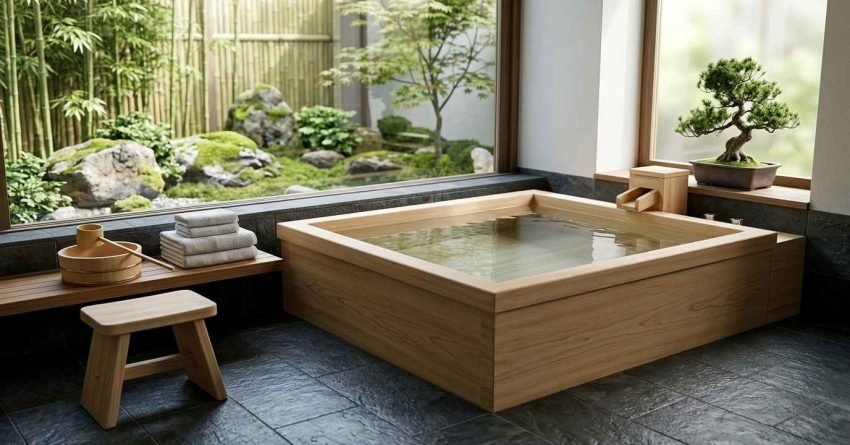
Japanese-style bathroom design brings together deep soaking tubs, minimalist layouts, natural materials, and a deliberate separation of bathing and washing zones, creating a bathroom that functions as a genuine retreat rather than a purely functional space. In Sydney homes, this aesthetic translates beautifully across a range of bathroom sizes and renovation budgets.
Getting the design right requires more than choosing the right tiles. It demands a clear understanding of the spatial principles, material choices, and construction details that make the style work in an Australian context.
This guide covers the core features, materials, local design considerations, and renovation costs you need to plan a Japanese-style bathroom in Sydney with confidence.
What Is Japanese-Style Bathroom Design?
Japanese-style bathroom design is a residential design philosophy rooted in the concept of the bathroom as a place of ritual cleansing and relaxation. Unlike Western bathroom layouts that combine all functions in a single space, the Japanese approach separates the toilet, washing area, and soaking tub into distinct zones, each serving a specific purpose.
The design draws from the principles of wabi-sabi, which values simplicity, natural imperfection, and the beauty of understated materials. The result is a bathroom that feels calm, uncluttered, and intentional, with every element chosen for both function and sensory quality.
Core Principles Behind the Aesthetic
Three principles define the Japanese bathroom aesthetic: functional separation, material honesty, and spatial restraint. Functional separation means each activity washing, soaking, and using the toilet happens in its own dedicated zone. Material honesty means surfaces are left in their natural state, with stone, timber, and ceramic used without heavy ornamentation. Spatial restraint means every fixture and fitting earns its place, with no decorative excess.
Wabi-sabi extends beyond surface aesthetics into the concept of ma, the Japanese principle of negative space. In a bathroom context, ma means deliberate emptiness: a bare wall left unadorned, a floor plane kept clear, a shelf with a single object rather than many. This intentional restraint is what separates an authentic Japanese-style bathroom from one that simply uses dark tiles and a freestanding tub.
Key Features of a Japanese-Style Bathroom
The defining features of a Japanese-style bathroom are not simply decorative choices. Each element serves a functional purpose rooted in the original design philosophy, and understanding what each feature does helps you decide which elements to include in your renovation.
The Soaking Tub (Ofuro)
The ofuro is the centrepiece of a Japanese bathroom. It is a deep, freestanding or built-in soaking tub designed for full-body immersion rather than reclining. Standard ofuro dimensions are typically deeper and shorter than a Western bathtub, around 600–700mm deep and 1,000–1,200mm long, allowing the bather to sit upright with water at shoulder height. The experience is meditative rather than recreational, and the tub is used after washing, not during it.
In Sydney renovations, the ofuro is most commonly installed as a freestanding stone resin or timber-clad unit. Custom stone versions are available but carry a significant cost premium.
Wet Room Layout and Separation Zones
A traditional Japanese bathroom separates the wet washing area from the soaking tub using a low partition or a distinct floor zone. The washing area where you shower or wash before entering the tub is fully waterproofed and designed to drain freely.
This wet room approach requires a tanking membrane applied to the full floor and lower walls before any tile is laid, not just a shower recess treatment. Linear drainage channels are the preferred solution because they allow large-format stone tiles to run uninterrupted across the floor, which is central to the aesthetic. Point drains require tile cuts that interrupt the visual plane and are generally avoided in this style. Non-slip floor surfaces, correctly specified waterproofing, and a licensed waterproofer are all non-negotiable elements that add to the construction scope but deliver a genuinely functional and durable result.
Lighting Design and Atmosphere
Lighting is one of the most overlooked elements in a Japanese-style bathroom renovation, and one of the most impactful. The style calls for warm, indirect light recessed ceiling fixtures on a dimmer, low-level LED strip lighting at floor or vanity height, and where possible, a natural light source such as a skylight or frosted window.
Avoid bright overhead downlights as the primary source. Harsh, direct light breaks the calm atmosphere the style depends on and flattens the texture of natural stone and timber surfaces. Layered lighting ambient, accent, and task gives you control over the mood at different times of day and is worth specifying at the design stage rather than retrofitting later.
Natural Materials and Minimalist Fixtures
Japanese bathroom design relies on a restrained palette of natural materials: hinoki cypress timber, slate, basalt, river stone, and matte ceramic. Fixtures are wall-mounted where possible to keep floor lines clean. Tapware is typically matte black or brushed nickel in simple geometric forms.
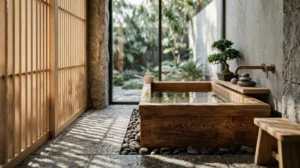
Japanese Bathroom Design Elements for Sydney Homes
Translating Japanese bathroom design into a Sydney home requires adapting the original principles to local building conditions, spatial realities, and climate. The aesthetic translates well, but the execution needs to account for factors that do not apply in Japan.
Adapting the Style to Australian Bathrooms
Most Sydney bathrooms were not designed with zone separation in mind. Adapting the Japanese layout typically means reconfiguring the floor plan to create a distinct wet zone, relocating drainage points, and sometimes moving walls to accommodate an ofuro. In older homes, particularly Federation and post-war properties, this reconfiguration is achievable but requires a licensed plumber and a building approval for any structural changes.
Heritage-listed properties add another layer of complexity. External wall changes, window alterations, or any work visible from the street may require a heritage impact statement in addition to standard building approval. We work through this process regularly on Federation-era homes across inner Sydney, and the approval pathway is well-established; it simply needs to be factored into the project timeline from the outset.
Many Sydney homes have compact bathrooms that suit the minimalist proportions of Japanese design. In bathrooms under 6 square metres, the full zone-separation layout is often not achievable, but the aesthetic absolutely is through material selection, a freestanding Japanese soaking tub, and restrained fixture choices that honour the spatial principles without requiring a full reconfiguration.
Climate and Spatial Considerations in Sydney
Sydney’s humid subtropical climate makes ventilation a critical design consideration in any wet room layout. Adequate exhaust ventilation, moisture-resistant materials, and properly sealed timber surfaces are non-negotiable in a Japanese-style bathroom.
Hinoki cypress, while beautiful and naturally resistant to moisture, requires sealing before installation and resealing every 12–18 months in Sydney’s climate to prevent warping and discolouration. Stone surfaces travertine, limestone, and basalt need sealing on installation and annually thereafter to prevent staining and water ingress. Slate is the most forgiving of the natural stone options in a wet environment and requires the least ongoing maintenance, which makes it a practical choice for floor tiles in a high-use bathroom.
Materials and Finishes That Define the Look
Material selection is where a Japanese-style bathroom renovation either succeeds or falls short. The palette is deliberately limited, which means every choice carries significant visual weight. Getting the combination right requires understanding how each material behaves in a wet environment and how different textures interact under the lighting conditions of your specific bathroom.
Stone, Timber, and Ceramic Tile Choices
The most commonly used materials in Sydney Japanese-style renovations are:
- Slate and basalt for floor tiles: naturally non-slip, dark in tone, and highly durable in wet conditions
- Travertine and limestone for feature walls: warm, textured, and visually grounding
- Hinoki cypress or teak for timber accents used on bath surrounds, benchtops, and wall panels
- Large-format matte ceramic for wet room walls: easier to maintain than natural stone and available in tones that closely replicate stone
Choosing the right tile is one of the most consequential decisions in a Japanese-style renovation. The format matters as much as the material; large-format tiles (600x600mm and above) reduce grout lines and create the unbroken surface planes the style depends on. Smaller mosaic or subway formats read as Western and undermine the aesthetic, regardless of the material.
Colour Palette and Texture Combinations
The Japanese bathroom palette is anchored in earth tones: charcoal, warm grey, sand, deep brown, and off-white. Contrast comes from texture rather than colour: a rough-hewn stone wall against a smooth ceramic floor, or a timber bath surround against a matte plaster wall.
Avoid high-gloss surfaces, bright whites, and chrome fixtures, which break the visual calm the style depends on. Matte and honed finishes throughout create the cohesive, grounded atmosphere that defines the aesthetic.
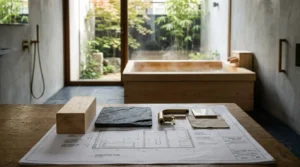
Cost of a Japanese-Style Bathroom Renovation in Sydney
Japanese-style bathroom renovations in Sydney typically cost more than a standard renovation at the same size because of the specialised materials, wet room waterproofing requirements, and the precision installation that natural stone and timber demand. Understanding the cost drivers helps you allocate your budget to the elements that deliver the most impact.
Budget, Mid-Range, and Premium Price Ranges
As a general guide for Sydney renovations:
- Budget Japanese-style renovation (ceramic tile approximations, standard ofuro, basic wet room): $18,000–$28,000
- Mid-range renovation (natural stone tiles, quality ofuro, full wet room with linear drainage): $28,000–$45,000
- Premium renovation (custom stone, hinoki timber, bespoke fixtures, full zone separation): $45,000–$80,000+
These ranges reflect a standard Sydney bathroom of 5–8 square metres. Larger bathrooms, structural changes, or heritage property constraints will affect the final figure.
What Drives Cost in This Style
The primary cost drivers in a Japanese-style renovation are material quality, wet room construction, and fixture specification. Natural stone costs significantly more than ceramic alternatives and requires specialist installation. Wet room waterproofing adds $2,000–$5,000 to the construction scope depending on the floor area. A quality ofuro, particularly a stone resin or timber-clad unit, typically costs $3,000–$12,000 for the fixture alone, before installation.
We provide fixed-price quotes that break down material, labour, and waterproofing costs line by line, so you know exactly where your budget is going before work begins. Understanding the full bathroom renovation cost breakdown in Sydney helps you allocate spend to the elements that deliver the most lasting value.
Planning Your Japanese Bathroom Renovation
A successful Japanese-style bathroom renovation in Sydney depends on thorough planning before a single tile is laid. The design decisions, material lead times, and construction sequencing all need to be resolved before work begins to avoid costly changes mid-project.
Working With a Renovation Contractor
Japanese-style bathrooms require a contractor who understands both the aesthetic intent and the technical demands of the style. Wet room construction, natural stone installation, and ofuro fitting all require specific trade skills and sequencing. A contractor who has delivered this style before will know how to manage the waterproofing, drainage, and material handling that a standard bathroom renovation does not require.
We have delivered Japanese-style bathroom renovations across Sydney from compact inner-city apartments to Federation homes in the inner west, and we understand the construction sequencing that makes the difference between a bathroom that looks right and one that performs correctly for decades. The end-to-end bathroom renovation process covers what to expect from first consultation through to final handover.
Common Mistakes to Avoid
The most common mistakes in Japanese-style bathroom renovations are: choosing materials that look right in a showroom but perform poorly in a wet environment; underestimating the waterproofing scope of a wet room layout; and trying to replicate the full zone-separation layout in a bathroom that is too small to support it.
A bathroom under 5 square metres can still achieve the aesthetic through material and fixture choices without attempting a full wet room reconfiguration. Prioritise the elements that deliver the most visual and functional impact within your actual space and budget.
Conclusion
Japanese-style bathroom design offers Sydney homeowners a renovation approach that combines genuine functional improvement with a calm, considered aesthetic. The key elements the ofuro, wet room layout, and natural material palette work together to create a bathroom that feels meaningfully different from a standard renovation.
Getting the material selection, wet room construction, and fixture specification right requires both design knowledge and construction expertise. The investment is higher than a standard renovation, but the result is a bathroom built for long-term use and lasting value.
At Sydney Home Renovation, we deliver Japanese-style bathroom renovations across Sydney with fixed-price quotes, licensed tradespeople, and clear communication from first consultation to final handover. Contact us today to discuss your renovation.
Frequently Asked Questions
What makes a bathroom Japanese-style?
A Japanese-style bathroom is defined by zone separation between washing and soaking areas, a deep soaking tub (ofuro), natural materials such as stone and timber, and a minimalist approach to fixtures and colour. The design prioritises calm and function over decoration.
Can a small Sydney bathroom be renovated in a Japanese style?
Yes. While full zone separation requires adequate floor area, the Japanese aesthetic is achievable in compact bathrooms through material choices, a freestanding ofuro, matte finishes, and restrained fixture selection. We can advise on which elements work within your specific floor plan.
What is an ofuro and how does it differ from a standard bathtub?
An ofuro is a deep Japanese soaking tub designed for upright immersion rather than reclining. It is shorter and deeper than a Western bathtub, typically 600–700mm deep, and is used after washing, not during it. It is the centrepiece of a Japanese bathroom layout.
What materials are used in a Japanese-style bathroom?
Common materials include slate, basalt, travertine, and limestone for tiles; hinoki cypress or teak for timber accents; and matte ceramic for wet room walls. The colour palette is anchored in earth tones: charcoal, warm grey, sand, and deep brown with matte and honed finishes throughout.
How much does a Japanese-style bathroom renovation cost in Sydney?
Costs range from approximately $18,000–$28,000 for a budget renovation using ceramic approximations, $28,000–$45,000 for a mid-range renovation with natural stone and a quality ofuro, and $45,000–$80,000+ for a premium renovation with custom stone, timber, and bespoke fixtures.
Do I need council approval for a Japanese-style bathroom renovation in Sydney?
Cosmetic renovations replacing tiles, fixtures, and fittings without moving walls or drainage generally do not require council approval. Structural changes, wet room reconfigurations, or drainage relocations may require a building approval and a licensed plumber. Your contractor can advise on what applies to your specific project.
How long does a Japanese-style bathroom renovation take in Sydney?
A standard Japanese-style bathroom renovation in Sydney typically takes four to eight weeks from demolition to completion, depending on the scope of work, material lead times, and whether structural changes are involved. Custom stone or imported fixtures can extend lead times by two to four weeks.


