A restaurant renovation in Sydney moves through seven distinct phases from planning and permits through to final inspection and handover. Understanding each step before work begins is what separates a smooth project from a costly one.
This guide walks through every stage of the process in the order it happens on site, so you know what to expect, what decisions to make early, and where the real risks sit. From defining your scope and securing council approvals to coordinating equipment installation and passing final inspection, here is the complete step-by-step process for renovating a restaurant in Sydney, NSW.
What to Do Before You Start a Restaurant Renovation
The work that happens before a single tool is picked up determines how well the rest of the project runs. Pre-renovation planning is not a formality; it is the foundation every subsequent decision is built on.
Define Your Renovation Scope and Goals
Start by documenting exactly what the renovation needs to achieve. Are you doing a full strip-out and rebuild, or a targeted refresh of the kitchen and front-of-house? Is the goal to meet updated food safety compliance, increase seating capacity, rebrand the space, or all three?
A clearly defined scope prevents scope creep, one of the most common causes of budget overruns in commercial renovation projects. Write down what is included, what is excluded, and what the non-negotiables are before you brief any contractor or designer.
Set a Realistic Budget Before Work Begins
Restaurant renovations in Sydney vary significantly in cost depending on the size of the space, the extent of structural work, and the quality of finishes and equipment. A cosmetic refresh of an existing tenancy typically starts from $80,000–$150,000, while a full commercial fit-out from shell condition regularly exceeds $300,000–$600,000 for a mid-sized venue.
Build a contingency of at least 15 percent into your budget from the start. Commercial projects regularly surface unexpected conditions: asbestos, outdated electrical infrastructure, and non-compliant plumbing that add cost and time. A contingency is not pessimism; it is professional budgeting.
Understand Your Lease Before You Renovate
Your lease terms directly affect what you can build, how long you have to build it, and what you must remove when you leave. Review your fitout contribution clause, make-good obligations, and permitted use definition before committing to a design.
Signing a lease and then discovering the permitted use does not cover your intended operation or that the make-good clause requires full strip-out on exit can fundamentally change the economics of the project. Get legal advice on the lease before the design brief is written.
How to Choose the Right Commercial Builder for a Restaurant Renovation
Not every builder who works in commercial construction has experience with licensed commercial restaurant fitouts. Restaurant renovations involve food safety compliance, grease trap installation, commercial kitchen ventilation, and trade sequencing that general builders regularly underestimate.
Ask for demonstrated experience with food premises fitouts in NSW, references from completed restaurant projects, and evidence of familiarity with your local council’s requirements. A builder who has navigated a DA or CDC for a food business in your area is worth more than a lower quote from one who has not.
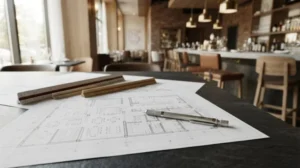
Step 1: Plan Your Restaurant Layout and Design
With scope and budget confirmed, the next step is translating your goals into a buildable design. This is where an architect or experienced commercial designer becomes essential.
Kitchen Workflow and Compliance Requirements
Commercial kitchen design is governed by food safety standards and the Building Code of Australia (BCA). The layout must support an efficient workflow from food storage and preparation through to cooking, plating, and dishwashing without cross-contamination risks between raw and cooked food zones.
Ventilation, exhaust canopy placement, and the location of hand-washing facilities are all compliance-driven decisions that must be resolved at the design stage, not during construction. Changes made after rough-in begins are expensive.
Front-of-House Design Priorities
Front-of-house design balances customer experience with operational efficiency. Seating capacity, traffic flow between tables and service areas, accessibility compliance under the Disability Discrimination Act, and the placement of the bar or service counter all need to be resolved in the design drawings before construction documentation is produced.
Lighting, acoustic treatment, and material finishes are also decided at this stage. Changing these selections mid-build adds cost and delays procurement.

Step 2: Obtain Permits and Council Approvals
No commercial renovation in NSW proceeds legally without the correct approvals in place. Attempting to build without them risks stop-work orders, fines, and the cost of undoing completed work.
What Approvals Are Required in Sydney, NSW
Most restaurant renovations in Sydney require either a Development Application (DA) through the relevant local council or a Complying Development Certificate (CDC) through a private certifier, depending on the scope of work and the zoning of the property.
Works that affect the building’s structure, change its use classification, or alter its external appearance typically require a DA. Internal fit-out works within an existing approved use may qualify for a CDC, which is faster to obtain.
Food business registration with your local council and a food safety supervisor certification are also required before trading. These are separate from the building approval process but must be factored into your pre-opening timeline.
DA vs CDC: Which Approval Pathway Applies to Your Project
A DA is assessed by council and typically takes 12 to 26 weeks in Sydney, depending on the council area and the complexity of the application. It is required when the work changes the building’s use classification, affects its external appearance, or involves structural alterations.
A CDC is assessed by a private certifier and is generally resolved in 2 to 6 weeks. It applies to internal fitout works within an already-approved use, where no structural changes or external alterations are involved. Your architect or certifier will confirm which pathway applies; do not assume CDC eligibility without professional advice.
The cost difference matters too. DA fees vary by council and project value; CDC fees are set by the certifier and are generally lower. Budget for both the approval fee and the time cost when planning your pre-construction period.
Step 3: Demolition and Site Preparation
Once approvals are in hand, the physical work begins with demolition and site preparation. This phase clears the existing space to create the conditions the new fit-out requires.
What Gets Removed and What Gets Protected
A commercial strip-out typically involves removing existing wall linings, flooring, ceilings, joinery, fixtures, and redundant. Structural walls, load-bearing elements, and any that are being retained are identified and protected before demolition begins.
Pre-demolition asbestos testing is mandatory for buildings constructed before 1990 in NSW. If asbestos-containing materials are identified, licensed asbestos removalists must complete that work under a licensed asbestos removal plan before general demolition proceeds. On completion, an independent hygienist issues a clearance certificate confirming the site is safe for re-occupation. This certificate is a legal requirement before any other trade enters the space.
Waste management and skip bin logistics are coordinated during this phase. In inner-city Sydney locations, access restrictions and council requirements around waste disposal on public land need to be managed carefully.
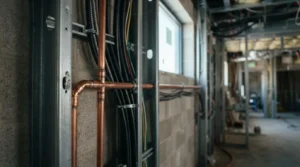
Step 4: Structural, Electrical, and Plumbing Rough-In
With the site cleared, the rough-in phase installs the infrastructure that everything else is built around. This is the most technically complex phase of the renovation and the one where errors are most expensive to fix.
Electrical Upgrades for Commercial Kitchens
Commercial kitchens have significantly higher electrical load requirements than residential or light commercial spaces. Three-phase power is standard for commercial cooking equipment, and the switchboard must be sized to handle the total connected load of all equipment, including refrigeration, cooking appliances, exhaust systems, and lighting.
A load calculation completed at the design stage determines whether the existing switchboard can be upgraded or must be replaced entirely. Switchboard replacement is one of the most frequently underestimated costs in restaurant renovation budgets. Getting a licensed electrician’s assessment before construction documentation is finalised avoids mid-project surprises.
All electrical work must be completed by a licensed electrician and inspected before wall linings are installed. In NSW, a Certificate of Compliance for Electrical Work (CCEW) is required on completion.
Plumbing Rough-In and Gas Line Considerations
Plumbing rough-in establishes the positions of all water supply lines, drainage, and gas connections. Grease trap installation or connection to an existing grease trap is a mandatory requirement for commercial food premises in most Sydney council areas.
The size and type of grease trap required depends on the volume of food preparation, the number of covers, and the specific requirements of your local council. Some councils specify minimum capacity in litres; others assess by equivalent population load. Confirm sizing requirements with your council or hydraulic engineer before rough-in begins, as undersized traps fail inspection.
Gas line installation and any modifications to existing gas infrastructure must be completed by a licensed gas fitter. All gas work requires a Certificate of Compliance for Gas Fitting Work on completion.
Step 5: Fit-Out: Walls, Flooring, and Ceilings
With rough-in complete and inspected, the fit-out phase begins. This is where the space starts to take visible shape: wall linings, flooring, and ceiling systems are installed, and the finishes that define the look and feel of the restaurant are applied.
Material Selection for Commercial Durability
Material selection in a commercial restaurant environment is driven by durability, hygiene, and compliance as much as aesthetics. In kitchen areas, wall surfaces must be smooth, impervious, and easy to clean to meet food safety requirements.
Epoxy resin flooring, ceramic tiles with sealed grout, and stainless steel splashbacks are common choices for commercial kitchen flooring and wall finishes in Sydney. Front-of-house finishes have more flexibility but must still meet fire rating requirements where applicable, and slip-resistance ratings under Australian Standard AS 4586 apply to all wet areas.
Acoustic ceiling systems, bulkheads, and feature elements are installed during this phase. Coordination between trades is critical; electricians, plumbers, and HVAC installers all need access to ceiling cavities before linings are closed.
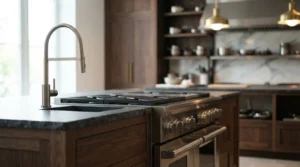
Step 6: Kitchen Equipment Installation and Joinery
Commercial kitchen equipment is installed once the fit-out shell is complete and is in its final positions. This phase includes the installation of cooking equipment, refrigeration, exhaust canopies, joinery, and service counters.
Coordinating Equipment Delivery with the Build Schedule
Equipment lead times for commercial kitchen appliances can range from two to twelve weeks depending on the supplier and whether items are imported. Imported equipment, particularly European cooking suites and refrigeration systems, regularly runs at the longer end of that range, and shipping delays can push lead times further.
Order equipment at the design stage, not the fit-out stage. Confirm delivery windows with suppliers when orders are placed, and build those windows into the construction programme so joinery installation is sequenced around confirmed delivery dates.
Joinery installation follows a strict sequence: base units and benchtops are installed before equipment is positioned, and equipment is connected after joinery is complete. Attempting to compress this sequence to recover time lost earlier in the project is a common cause of installation errors and rework.
Front-of-house joinery bar counters, service stations, booth seating, and display elements are typically installed during this phase as well, coordinated with the final trades working in the dining area.
Step 7: Final Fit-Out, Inspections, and Handover
The final phase brings together all remaining trades, completes the finishing work, and moves the project through the inspection and certification process required before the space can legally trade.
Final Trades, Fixtures, and Finishing
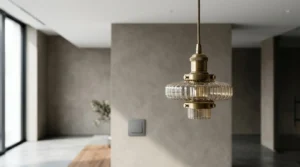
Final trades include the installation of light fittings, switches, and power outlets; connection of plumbing fixtures; installation of signage; painting and touch-up; and the commissioning of all mechanical systems including exhaust, HVAC, and refrigeration.
A pre-inspection defect review, sometimes called a practical completion inspection, is conducted before the certifier’s final inspection. This is the contractor’s opportunity to identify and rectify any items that would otherwise result in a failed inspection or a defect list at handover.
Council Inspection and Compliance Sign-Off
The final building inspection is conducted by the certifier who issued the CDC, or by council if the project proceeded via DA. The inspection confirms that the completed work matches the approved drawings and meets all BCA requirements.
For food businesses, a separate inspection by the local council’s environmental health officer is required before a food business licence is issued. This inspection assesses the fit-out against the Food Standards Code and the council’s specific requirements for food premises.
Once all inspections are passed and certificates are issued, the space is handed over to the operator. A defects liability period, typically 12 months for commercial projects, begins at practical completion, during which the contractor is responsible for rectifying any defects that emerge from the completed work.
How Long Does a Restaurant Renovation Take?
A restaurant renovation in Sydney typically takes between 8 and 20 weeks from the start of construction, depending on the scope of work. This does not include the pre-construction period for design, documentation, and approvals, which can add a further 8 to 16 weeks to the overall project timeline.
| Phase | Typical Duration | Notes |
| Design and documentation | 4–8 weeks | Longer for complex venues or structural work |
| DA approval | 12–26 weeks | Varies significantly by council area |
| CDC approval | 2–6 weeks | Faster pathway for eligible internal fitouts |
| Demolition and site prep | 1–2 weeks | Longer if asbestos is present |
| Rough-in (electrical, plumbing, gas) | 2–4 weeks | Dependent on complexity |
| Fit-out (walls, floors, ceilings) | 2–4 weeks | Trade coordination critical |
| Equipment installation and joinery | 2–4 weeks | Equipment lead times must be pre-managed |
| Final trades, inspections, handover | 1–3 weeks | Council and certifier availability affects timing |
The most reliable way to protect your opening date is to complete design and approvals before committing to a lease commencement date. Signing a lease and then beginning the design process is one of the most common and costly sequencing errors in restaurant fit-out projects.
Common Mistakes That Blow Out Restaurant Renovation Timelines
Understanding where projects go wrong is as useful as knowing the correct sequence. The most common causes of timeline and budget blowouts in Sydney restaurant renovations are consistent across project types.
Underestimating the approvals timeline is the most frequent error. DA processes in Sydney can take 12 to 26 weeks depending on the council and the complexity of the application. Projects that assume a four-week approval window and plan construction accordingly are almost always delayed.
Ordering equipment late is the second most common cause of delays. Equipment that arrives after joinery is installed, or that requires service connections that have already been closed in, creates expensive rework and pushes the handover date.
Inadequate contingency planning leaves projects exposed when unexpected site conditions are discovered during demolition. Asbestos, structural deficiencies, and non-compliant existing conditions are discovered regularly in older Sydney commercial tenancies and add both cost and time when they are not budgeted for.
Underestimating trade coordination complexity is the fourth mistake we see consistently. When electricians, plumbers, HVAC installers, and joiners are not sequenced correctly or when one trade runs late and the next cannot start, the compounding effect on the programme is significant. A principal contractor who manages sequencing actively, not reactively, is the single biggest protection against this.
Conclusion
A restaurant renovation in Sydney follows a clear sequence: planning, approvals, demolition, rough-in, fit-out, equipment installation, and handover, and each phase depends on the one before it being completed correctly. Skipping steps or compressing the sequence to save time almost always costs more in rework and delays than the time saved.
The decisions made before construction begins scope definition, budget setting, design, and approvals have the greatest influence on how smoothly the build phase runs. Getting these right is where experienced contractors and project managers add the most value.
We manage the complete restaurant renovation process from initial planning through to compliance sign-off. Contact the Sydney Home Renovation team to discuss your project scope, timeline, and budget, and get a clear picture of what your renovation will involve from day one.
Frequently Asked Questions
Do I need council approval to renovate a restaurant in Sydney?
Yes. Most restaurant renovations in Sydney require either a Development Application or a Complying Development Certificate before construction begins. The correct pathway depends on the scope of work, the building classification, and the property’s zoning.
How much does a restaurant renovation cost in Sydney?
A cosmetic refresh typically starts from $80,000–$150,000. A full strip-out and rebuild of a mid-sized venue regularly costs $300,000–$600,000 or more. Detailed quotes from licensed commercial contractors give the most accurate figure for your specific project.
How long does a restaurant renovation take from start to finish?
Construction typically takes 8 to 20 weeks depending on scope. Adding the pre-construction period for design, documentation, and council approvals, the total project timeline from brief to handover is commonly 16 to 36 weeks for a full commercial renovation in Sydney.
What trades are involved in a restaurant renovation?
A full restaurant renovation involves builders, architects or designers, certifiers, electricians, plumbers, gas fitters, HVAC technicians, tilers, painters, joiners, and equipment installers. A principal contractor coordinates all trades and manages the sequencing of work across each phase.
What is a grease trap and is it required for my restaurant?
A grease trap is a plumbing device that intercepts fats, oils, and grease before they enter the stormwater or sewer system. Grease trap installation is a mandatory requirement for most commercial food premises in Sydney. The size and type required are determined by the volume of food preparation and your local council’s specific requirements.
Can I stay open during a restaurant renovation?
In most cases, no. A full restaurant renovation requires the premises to be vacated for demolition, rough-in, and fit-out work. Partial renovations such as a front-of-house refresh while the kitchen remains operational may allow limited trading, but this must be assessed against safety requirements and the construction programme before committing to it.