
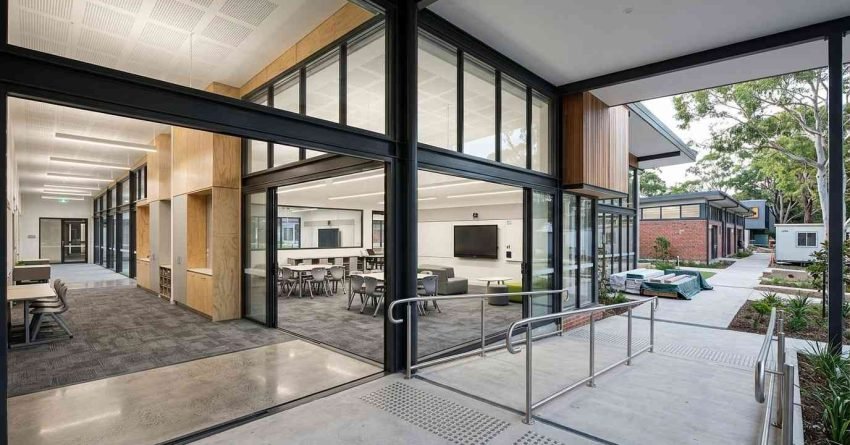
School building renovation is the process of upgrading, refurbishing, or structurally improving an existing educational facility to meet current safety standards, modern learning requirements, and the long-term needs of students, staff, and the broader school community. In Sydney, we see renovations range from targeted classroom refurbishments and amenities upgrades to full-scale structural overhauls involving compliance works, new learning environments, and major capital investment.
Getting a school renovation right requires more than a capable builder. We need a clear understanding of NSW planning requirements, realistic cost expectations, thoughtful design for educational environments, and a project delivery approach that keeps the school operational throughout construction.
This guide covers everything school administrators, facility managers, and education sector decision-makers need, from the types of renovation projects most commonly undertaken in Sydney schools, through planning approvals, cost benchmarks, design principles, contractor selection, disruption management, funding options, and sustainability upgrades.
What Is School Building Renovation?
School building renovation refers to any works that modify, restore, upgrade, or improve an existing school facility as distinct from new construction or demolition. The scope can be narrow, such as replacing flooring and repainting a single classroom block, or it can be comprehensive, involving structural repairs, full fitout replacement, accessibility upgrades, and the reconfiguration of entire learning precincts.
In the NSW education context, school building renovation is driven by several overlapping pressures. Ageing building stock, much of which was constructed in the 1950s through 1980s, requires ongoing maintenance and periodic capital investment to remain safe, functional, and compliant. Changing pedagogical approaches have created demand for flexible, technology-integrated learning environments that older buildings were never designed to accommodate.
Rising expectations around accessibility, sustainability, and student wellbeing have made renovation a strategic priority for both government and independent schools across Sydney.
The distinction between renovation and maintenance matters for planning and budgeting. Routine maintenance repainting, replacing fixtures, repairing damage is typically managed through operational budgets. Renovation, by contrast, involves capital works that materially improve the building’s condition, functionality, or compliance status, and usually requires formal planning approvals and a licensed builder.
Understanding the full scope of what a school renovation involves and which category of works applies to your facility is the essential first step in planning a successful project.
Types of School Renovation Projects
School renovation projects in Sydney span a wide range of building types, scales, and complexity levels. Understanding the most common project categories helps administrators and facility managers scope works accurately, allocate budgets appropriately, and engage the right contractor for the job.
Structural and Building Envelope Upgrades
Structural works address the fundamental integrity of the school building foundations, load-bearing walls, roof structures, and the building envelope. Many Sydney schools built before the 1990s have roofing systems, cladding, and structural elements that have reached or exceeded their design life.
Structural renovation works often uncover additional compliance requirements, particularly around fire safety, waterproofing, and energy performance, which we address as part of the same project.
Classroom and Learning Space Refurbishment
Classroom refurbishment is the most frequently undertaken renovation category in Sydney schools. Works typically include new flooring, ceiling systems, lighting upgrades, acoustic treatment, joinery replacement, and the integration of technology infrastructure.
Modern classroom design increasingly prioritises flexibility, movable walls, varied furniture configurations, and breakout spaces that support different learning modes within a single building footprint. We also integrate structured cabling, interactive display systems, and wireless access point infrastructure as standard components of any contemporary classroom refurbishment. Technology infrastructure installed at the fitout stage costs a fraction of what it costs to retrofit into a completed space, making it one of the highest-value decisions in the design process.
Amenities, Canteens, and Toilet Block Upgrades
Amenities upgrades including toilet blocks, canteen facilities, and change rooms are among the highest-priority renovation categories from a compliance and student wellbeing perspective. Older toilet blocks in particular frequently fail to meet current DDA accessibility requirements, and canteen facilities often require full commercial kitchen upgrades to satisfy food safety regulations.
Administration and Staff Area Renovations
Administration and staff areas are often overlooked in school renovation planning but play a critical role in operational efficiency, staff retention, and the professional presentation of the school to prospective families. Works in this category include reception and front-of-house upgrades, staff room refurbishments, principal and counsellor office improvements, and the integration of secure entry and visitor management systems.
We find that investing in administration areas delivers an outsized return in staff satisfaction and community perception. A well-designed reception creates the first impression for every prospective family, and a functional staff room directly supports teacher retention both outcomes that matter well beyond the construction phase.
Outdoor Learning Areas and COLA Structures
Covered outdoor learning areas (COLAs) and upgraded playground environments are an increasingly common component of school renovation projects in Sydney. These works extend usable learning space, improve weather protection, and support the outdoor and physical education programs that are central to contemporary school curricula.
COLA structures require building approval and must meet BCA requirements for structural performance and wind loading. We assess site drainage, existing paving, and proximity to buildings as part of every outdoor learning area scope, since these factors directly affect both cost and approval pathway. Outdoor learning upgrades also present strong opportunities for community fundraising contributions, given their high visibility and direct student benefit.
Planning and Compliance for School Renovations in NSW
Planning and compliance is the most complex and consequential dimension of any school building renovation in NSW. Getting the approval pathway wrong or failing to identify compliance obligations early can result in project delays, cost overruns, stop-work orders, and the need to redo completed works.
Understanding the regulatory landscape before engaging a contractor is not optional. It is the foundation of a well-managed project.
Development Applications and Exempt Development
Whether a school renovation requires a Development Application (DA) depends on the nature and scale of the works. Under the NSW Environmental Planning and Assessment Act 1979, some renovation works qualify as exempt development, meaning they can proceed without formal council approval, provided they meet specific criteria around size, location, and impact. More substantial works, including structural changes, additions, or works that alter the building’s external appearance, typically require either a DA or a Complying Development Certificate (CDC).
For government schools, the NSW Department of Education has specific approval pathways that differ from those applicable to independent and Catholic schools. Government school capital works are often approved under State Significant Development provisions or through the Department’s own internal approval processes, which operate alongside but separately from local council DA requirements.
Building Code of Australia (BCA) Requirements
All renovation works in NSW must comply with the National Construction Code (NCC), which incorporates the Building Code of Australia (BCA). For school buildings, the BCA sets minimum standards across structural performance, fire safety, energy efficiency, accessibility, and health and amenity. Renovation works that trigger BCA compliance, particularly works to existing buildings classified as Class 9b (assembly buildings, which include schools), must meet current code requirements, even where the existing building was constructed under older standards.
The extent to which BCA upgrades are required depends on the scope and value of the proposed works relative to the existing building. We engage a principal certifier or building certifier at the earliest stage of project planning; their assessment of compliance obligations shapes the scope and budget before any works are committed.
DDA Accessibility Compliance
The Disability Discrimination Act 1992 (DDA) and the associated Disability (Access to Premises Buildings) Standards 2010 require that school buildings provide equitable access for people with disability. Renovation works that involve a change of use, an increase in floor area, or works to an existing access path trigger compliance obligations under the Premises Standards.
For many older Sydney school buildings, this means that a renovation project, even one focused on a single building, requires accessibility upgrades to pathways, toilets, ramps, and entry points across a broader area of the campus. We map the full DDA compliance picture before scoping works, so there are no surprises mid-project.
Heritage Considerations for Older School Buildings
A significant number of Sydney’s older school buildings, particularly those constructed in the late nineteenth and early twentieth centuries, are listed on the NSW State Heritage Register or identified as heritage items under local environmental plans. Heritage listing does not prevent renovation, but it does impose additional approval requirements, including Heritage Impact Statements and, in some cases, approval from the NSW Heritage Office.
Works to heritage-listed school buildings must demonstrate that they conserve the building’s heritage significance while meeting contemporary functional and compliance requirements. We work with heritage architects and conservation specialists on these projects to navigate the approval process efficiently.
School Building Renovation Costs in Sydney
Cost is the primary decision-making variable in any school renovation project, and it is also the area where expectations most frequently diverge from reality. Sydney’s construction market is characterised by high labour costs, strong trade demand, and material pricing that has increased significantly since 2022.
Building a realistic budget that accounts for both known and unknown expenses is essential before any works are committed.
Cost Per Square Metre Benchmarks
School building renovation costs in Sydney vary considerably depending on the type of works, the condition of the existing building, and the specification level of the fitout. As a general orientation benchmark, light refurbishment works including new flooring, painting, lighting, and minor joinery typically range from $800 to $1,500 per square metre. Mid-range renovation works involving structural repairs, new ceiling systems, acoustic treatment, and full fitout replacement generally fall between $1,500 and $3,000 per square metre. Complex renovation projects involving structural upgrades, full BCA compliance works, and high-specification educational fitouts can exceed $3,500 per square metre in Sydney’s current construction market.
These figures are orientation benchmarks only. Actual costs depend on site-specific conditions, the extent of compliance works required, and the contractor’s preliminaries and margin.
Labour and Trade Costs
Labour represents the largest single cost component in most school renovation projects. Sydney trade rates for carpenters, electricians, plumbers, and tilers have increased by an estimated 15–20% since 2022 in response to strong construction demand and skilled labour shortages across NSW. Projects on occupied school sites carry additional labour cost premiums, as works must often be staged outside school hours, during holiday periods, or under enhanced safety and noise management protocols.
Materials and Fitout Allowances
Material costs for school renovations are influenced by specification level, supply chain conditions, and the volume of materials required. Educational-grade flooring, acoustic ceiling systems, commercial joinery, and technology infrastructure all carry higher unit costs than equivalent residential-grade products.
We approach material selection through a lifecycle cost lens rather than a lowest-upfront-cost lens. A commercial-grade vinyl plank floor that costs 30% more than a standard product but lasts twice as long delivers significantly better value over a ten-year horizon and in a school environment, durability under heavy foot traffic is not optional. Specifying materials that balance durability, acoustic performance, and lifecycle cost is one of the most important disciplines in school renovation budgeting.
Asbestos and Hazardous Materials
Asbestos is present in a significant proportion of Sydney school buildings constructed before 1990, and its identification and management is one of the most consequential hidden cost categories in school renovation projects. Before any demolition or invasive works commence, we commission a comprehensive asbestos survey from a licensed asbestos assessor. The survey identifies the location, type, and condition of all asbestos-containing materials (ACMs) in the affected areas.
Removal of friable asbestos, the most hazardous type, must be carried out by a licensed Class A removalist under strict WorkSafe NSW protocols. Lead paint is a parallel concern in buildings of the same era. Both asbestos removal and lead paint encapsulation or removal add directly to project cost and timeline, and both must be factored into the budget before works are tendered. Discovering either material mid-project without a prior survey is one of the most common causes of cost blowouts in school renovation.
Hidden and Contingency Costs
Beyond asbestos and lead paint, hidden cost categories include unforeseen structural defects identified during demolition and compliance upgrade requirements triggered by the scope of works. A contingency allowance of 15–20% of the base construction cost is standard practice for school renovation projects in Sydney, and we treat it as a required budget line not an optional buffer.
Design Considerations for Educational Environments
School building design is a specialist discipline that sits at the intersection of architecture, pedagogy, and construction. The design decisions made during a renovation around acoustics, light, spatial flexibility, safety, and material selection have measurable effects on student learning outcomes, teacher effectiveness, and the long-term performance of the building.
Treating school renovation design as equivalent to standard commercial fitout is a common and costly mistake.
Acoustic Design and Noise Management
Acoustic performance is one of the most critical and most frequently underspecified design elements in school renovation projects. Research consistently demonstrates that poor classroom acoustics characterised by high reverberation times and elevated background noise levels negatively affect speech intelligibility, student concentration, and learning outcomes, particularly for students with hearing impairment or English as a second language.
The Australian Building Codes Board’s acoustic requirements for school buildings specify maximum reverberation times and background noise levels that must be met in renovated learning spaces. Achieving these standards requires careful selection of ceiling systems, wall treatments, flooring materials, and HVAC equipment, and we engage an acoustic consultant on every school renovation project where learning spaces are involved.
Natural Light and Ventilation
Natural light and ventilation are foundational elements of healthy, high-performing learning environments. Renovation projects that improve glazing, introduce skylights, or reconfigure internal layouts to increase daylight penetration consistently report improvements in student wellbeing and energy performance.
Passive ventilation strategies cross-ventilation, stack effect design, and operable windows reduce reliance on mechanical air conditioning and lower ongoing operating costs. This is a significant consideration for school facilities managers managing tight operational budgets.
Flexible and Future-Ready Learning Spaces
Contemporary educational research supports the design of learning spaces that can be reconfigured to support different pedagogical approaches: individual study, collaborative group work, teacher-led instruction, and project-based learning within the same physical environment. Renovation projects that incorporate movable partitions, varied furniture zones, integrated technology infrastructure, and breakout spaces adjacent to main classrooms deliver significantly greater long-term value than those that simply replicate the fixed-desk, single-mode classroom model of earlier decades.
Safety, Security, and Wayfinding
School buildings have specific safety and security design requirements that must be integrated into any renovation project. These include controlled entry points with clear sightlines to reception, safe pedestrian pathways separated from vehicle access, age-appropriate play and outdoor learning environments, and clear wayfinding systems that support emergency evacuation.
Renovation works that alter circulation paths, entry configurations, or outdoor areas must be assessed against the school’s existing emergency management plan and updated accordingly. We treat safety design as a non-negotiable component of every school renovation scope, not an afterthought.
Procurement and Contractor Selection for School Renovations
Selecting the right contractor for a school renovation is one of the most consequential decisions in the entire project. The procurement process how you go to market, evaluate responses, and engage a builder directly affects project cost, quality, timeline, and the experience of the school community throughout construction.
Public vs. Private School Procurement Pathways
Public schools in NSW are subject to NSW Government procurement policies, which require competitive tendering for works above specified financial thresholds. The NSW Department of Education maintains a panel of pre-qualified contractors for school building works, and projects above the relevant threshold must be awarded through a formal tender process.
Independent and Catholic schools have greater flexibility in their procurement approach but are still subject to their own governance requirements and, where applicable, the conditions attached to government funding grants.
What to Look for in a School Renovation Contractor
Experience with educational facilities is the single most important differentiating criterion when evaluating school renovation contractors. A contractor who understands the unique constraints of working on an occupied school site, including the need for strict site safety protocols, noise management, dust control, and communication with school leadership, delivers a fundamentally different project experience from one whose primary experience is in residential or standard commercial construction.
Other critical evaluation criteria include a current contractor’s licence and relevant insurance coverage, demonstrated experience with BCA and DDA compliance works, and the capacity to manage specialist subcontractors including structural engineers, acoustic consultants, and fire safety engineers. We also look for a track record of delivering projects on time and within budget in Sydney’s current construction market, and we ask for references from school clients specifically.
Tendering and Quoting Process
A well-structured tender process begins with a detailed scope of works document ideally prepared with input from an architect or building consultant that clearly defines the works required, the specification standards to be met, and the compliance obligations that apply. Providing all tenderers with the same information base is essential for obtaining comparable quotes and avoiding scope disputes during construction.
The scope of works document should include a full schedule of finishes, a compliance obligations register, a site access protocol, and a staging plan where works are to be carried out on an occupied site. Tenderers who receive a thorough brief return more accurate quotes and the time invested in preparing that brief pays back many times over in reduced variation claims during construction.
Contract Types: Lump Sum vs. Cost-Plus
The two most common contract structures for school renovation projects are lump sum (fixed price) and cost-plus (time and materials). A lump sum contract fixes the total price for a defined scope of work, giving the school certainty on cost but placing the risk of unforeseen conditions on the contractor who prices that risk into their margin.
A cost-plus contract charges the school for actual labour and materials plus an agreed margin, which can deliver savings where the scope is genuinely uncertain but exposes the school to cost escalation if the project runs longer than anticipated. For most school renovation projects with a well-defined scope, we recommend a lump sum contract with a clearly documented variation process and a separately held contingency budget controlled by the school.
Managing School Renovations Without Disrupting Operations
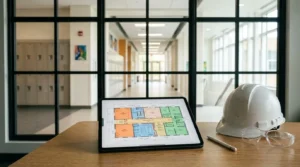
One of the defining challenges of school building renovation is that the building must, in most cases, remain operational throughout the works. Students need to learn, teachers need to teach, and the school community needs to feel safe and informed all while construction is underway.
Managing this tension effectively requires deliberate planning, experienced site management, and a contractor who treats the school community as a genuine stakeholder in the project.
Staging and Sequencing Works
Staging is the practice of dividing a renovation project into discrete phases that can be completed sequentially, allowing different parts of the school to remain in use while works proceed in others. Effective staging requires a detailed understanding of the school’s timetable, the interdependencies between different work packages, and the minimum lead times required for each trade.
Works that generate significant noise, dust, or disruption structural demolition, concrete cutting, roof works are typically scheduled during school holiday periods wherever possible.
Typical Project Timelines by Scope
Understanding realistic timelines before committing to a renovation program is essential for school planning. A single classroom refurbishment new flooring, ceiling, lighting, and joinery typically takes four to six weeks from site mobilisation to practical completion. A full toilet block upgrade, including DDA compliance works and new hydraulic, generally runs eight to twelve weeks.
A multi-classroom block renovation involving structural works, acoustic upgrades, and full fitout replacement typically spans three to six months. Whole-building or multi-building renovations, particularly those involving heritage approvals, asbestos removal, or staged occupation, commonly run twelve to twenty-four months. These timelines assume works proceed during school holidays for high-impact phases; projects constrained to term-time-only access will run longer.
Temporary Accommodation and Relocatable Classrooms
Where renovation works require the temporary vacation of classrooms or other teaching spaces, relocatable classrooms provide a practical short-term solution. Modern relocatable classrooms are available in configurations that meet BCA requirements for teaching spaces, including acoustic performance, natural light, and ventilation standards.
The cost of relocatable classroom hire is typically $15,000 to $30,000 per unit per year in Sydney and should be factored into the project budget as a direct cost of the renovation.
Communication with Staff, Students, and Parents
Proactive communication is as important as physical site management in maintaining school community confidence during a renovation. A communication plan developed before works commence and updated throughout the project should include regular progress updates to staff and parents, clear information about any changes to access, parking, or drop-off arrangements, and a nominated point of contact for questions and concerns.
Schools that communicate well during renovation projects consistently report higher levels of community satisfaction with the outcome, regardless of the inevitable inconveniences that construction involves.
Funding and Grants for School Building Renovations in NSW
Funding is a critical enabler of school renovation projects, and understanding the full landscape of available programs at both state and federal levels can significantly reduce the financial burden on a school’s operating budget. NSW schools have access to a range of capital works funding mechanisms, though eligibility, application processes, and funding quantum vary considerably between programs and school types.
NSW Government Capital Works Programs
The NSW Department of Education allocates capital works funding to government schools through its annual capital program, which prioritises projects based on building condition assessments, enrolment growth pressures, and strategic priorities. Schools seeking capital works funding must engage with their regional infrastructure team and demonstrate need through the Department’s asset management framework.
The NSW Government’s Schools Infrastructure NSW agency oversees the planning and delivery of major capital works projects across the government school system.
Federal Education Infrastructure Funding
The Australian Government provides capital funding to both government and non-government schools through a range of programs administered by the Department of Education. The Building the Education Revolution (BER) program, which delivered over $16 billion in school infrastructure investment between 2009 and 2012, demonstrated the scale of federal investment that is possible when political will aligns with infrastructure need.
Current federal funding for school infrastructure is delivered through the Capital Grants Program for non-government schools and through direct funding agreements with state and territory governments for government schools.
P&C and Community Fundraising Contributions
Parents and Citizens (P&C) associations play an important supplementary role in funding school facility improvements, particularly for smaller-scale projects that fall below the threshold for government capital works funding. P&C fundraising contributions are most effectively directed toward projects with high community visibility and direct student benefit: new outdoor learning areas, upgraded canteen facilities, or technology infrastructure improvements where the connection between community investment and student experience is clear and immediate.
Sustainability and Energy Efficiency in School Renovations
Sustainability has moved from a desirable feature to a core design requirement in school building renovation. NSW government schools are subject to the NSW Government’s net zero emissions target, and independent schools face increasing pressure from school communities, boards, and accreditation bodies to demonstrate environmental responsibility.
Beyond the policy imperative, sustainability upgrades deliver measurable financial returns through reduced energy and water costs savings that directly benefit school operating budgets.
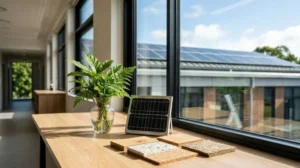
The most impactful sustainability upgrades in school renovation projects include roof-mounted solar photovoltaic systems, LED lighting replacement with occupancy and daylight sensors, building envelope improvements (insulation, glazing upgrades, and draught sealing), and water-efficient fixtures in amenities and canteen facilities. Passive design improvements optimising natural ventilation, increasing thermal mass, and improving solar shading deliver ongoing performance benefits without ongoing operating costs, making them particularly valuable in the school context.
For schools seeking formal recognition of their environmental performance, the NABERS for Schools rating tool and the Green Star Buildings framework both provide structured pathways to benchmark and certify sustainability outcomes. We incorporate these frameworks into the design brief where schools have a board-level commitment to sustainability reporting, as the rating process also identifies upgrade priorities that might otherwise be missed.
The NSW Government’s Sustainability Advantage program provides resources and support for organisations including schools seeking to improve their environmental performance. The Clean Energy Finance Corporation (CEFC) offers financing options for energy efficiency upgrades that may be relevant to larger school renovation projects, particularly where the capital cost of solar or building envelope works exceeds what is available through grant programs.
Conclusion
School building renovation in Sydney encompasses a broad and interconnected set of disciplines: planning and compliance, cost management, educational design, contractor procurement, disruption management, funding strategy, and sustainability, each of which shapes the outcome of the project and the long-term value it delivers to the school community.
The schools that achieve the best renovation outcomes are those that approach the process with clear scope, realistic budgets, and a contractor who brings both construction expertise and genuine understanding of the educational environment.
We are ready to help you move forward. At Sydney Home Renovation, we bring transparent cost planning, deep compliance knowledge, and hands-on experience managing school renovations on occupied sites. Contact our team today for an obligation-free consultation and cost assessment tailored to your facility and project goals.
Frequently Asked Questions
What does a school building renovation typically include?
A school building renovation includes structural repairs, classroom refurbishment, amenities upgrades, accessibility improvements, technology integration, and sustainability works. The scope depends on the building’s age, condition, and the school’s strategic priorities.
How much does a school renovation cost in Sydney?
School renovation costs in Sydney range from $800 to $3,500 or more per square metre, depending on scope and specification level. We always include a 15–20% contingency allowance to cover hidden costs and compliance requirements.
Do school renovations require DA approval in NSW?
Many school renovation works require a Development Application or Complying Development Certificate in NSW. The approval pathway depends on the scale of works, the school’s ownership type, and whether the building is heritage-listed. Some minor works qualify as exempt development.
How long does a school renovation take?
A targeted classroom refurbishment takes four to eight weeks, while a comprehensive multi-building renovation spans twelve to twenty-four months or more. Timeline depends on scope, staging requirements, approval processes, and site access constraints.
How do you renovate a school without disrupting classes?
We rely on careful staging of works, scheduling high-impact activities during school holidays, using relocatable classrooms for displaced teaching spaces, and maintaining proactive communication with staff, students, and parents throughout the project.
What grants are available for school building renovations in NSW?
NSW government schools access capital works funding through the NSW Department of Education’s annual capital program. Non-government schools are eligible for federal Capital Grants Program funding. P&C fundraising and community contributions supplement formal grant programs for smaller projects.
What should I look for when choosing a school renovation contractor?
Prioritise contractors with demonstrated experience on educational facilities, a current builder’s licence, relevant insurance, and a track record on occupied school sites. Experience with BCA and DDA compliance, acoustic design, and staged construction is particularly important.


