
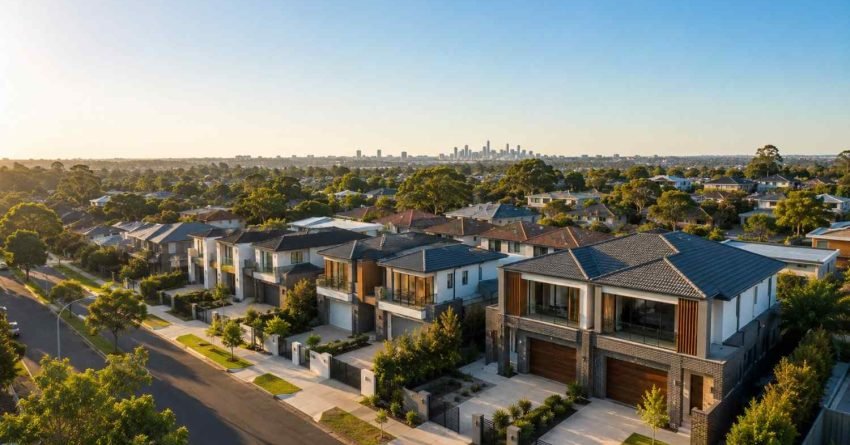
Sydney’s strongest duplex suburbs in 2026 sit in the city’s western and south-western growth corridors, where larger block sizes, supportive R2 and R3 zoning, and rising rental demand create the best conditions for dual-occupancy returns.
For investors and owner-builders, choosing the right suburb is the single biggest decision before design or construction even begins. Suburb selection drives feasibility, profit margins, and resale potential.
This guide breaks down the top suburbs, the zoning rules that matter, realistic build costs, and the pitfalls that derail first-time duplex developers across the Sydney market.
Why Sydney Is a Strong Market for Duplex Development
Sydney’s housing shortage, ageing detached stock, and steady population growth have pushed duplexes from a niche product into a mainstream investment strategy. NSW continues to lead the country in dual-occupancy approvals, with councils across Greater Sydney actively encouraging medium-density infill to ease pressure on housing supply.
Demand for medium-density housing continues to climb across NSW, and the design, approval, and build stages of a duplex construction project in Sydney are worth understanding in full before locking in a suburb.
Housing Demand and Population Growth
Greater Sydney is forecast to absorb a significant share of NSW’s population growth over the coming decade. That demand is concentrated in middle-ring and outer-ring suburbs where land is still available, and zoning permits two dwellings on a single lot. Duplexes meet this need with two separate titles, two rental incomes, and stronger combined valuations than the original single dwelling.
Duplex ROI vs Single Dwelling
A well-located duplex typically delivers a higher gross return than a single home on the same land. Investors benefit from two rental streams, the option to sell one half and retain the other, and stronger uplift on the original land value once subdivision is registered. The trade-off is a larger upfront capital requirement and more complex council approval.
What Makes a Sydney Suburb Duplex-Friendly
Not every Sydney suburb supports profitable duplex development. The right location combines suitable zoning, generous block dimensions, and infrastructure that supports rental demand from families and professionals.
Block Size and Frontage Requirements
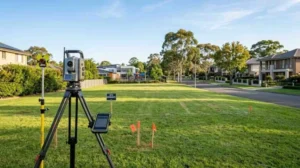
Most Sydney councils require a minimum lot size of around 600 to 700 square metres for an attached dual occupancy, with a frontage of at least 15 to 20 metres. Some councils set higher thresholds for detached duplexes. Always confirm the minimum directly with the relevant local environmental plan before purchasing.
Zoning and Council Overlays
R2 Low Density Residential and R3 Medium Density Residential are the two zones most commonly permitting duplex development under the NSW Standard Instrument LEP. Overlays such as flood, bushfire, heritage, and acid sulfate soils can disqualify otherwise attractive lots, so a thorough due diligence check is essential.
Attached vs Detached Duplex: What the Difference Means for Suburb Choice
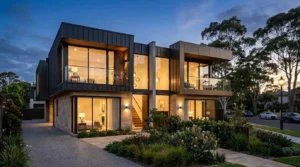
An attached duplex shares a common wall and typically requires a smaller lot, making it the more achievable option in most Sydney suburbs. A detached duplex, two fully separate dwellings on one title, demands a larger block and stricter council controls, but commands higher resale values and greater tenant appeal. We find that attached duplexes suit the western and south-western corridors, while detached configurations are more viable in The Hills and Sutherland Shire where larger lots are more common.
Infrastructure, Transport, and Amenities
Strong duplex suburbs sit within reach of train lines, major roads, schools, hospitals, and town centres. Tenants and future buyers pay a premium for short commutes and walkable amenities, which directly lifts both rental yield and resale value. Block size and existing dwelling condition both feed into this assessment; a large lot on a poorly connected street rarely performs as well as a tighter lot near a train station.
Top Sydney Suburbs to Build a Duplex in 2026
The suburbs below combine the right zoning, lot sizes, and growth fundamentals for duplex development in 2026. Each offers a different entry price, target tenant, and projected return profile.
Blacktown
Blacktown remains one of the most consistently profitable duplex suburbs in Sydney. Large post-war lots, R2 zoning that permits dual occupancy under most local controls, and strong rental demand from families relocating from inner-ring suburbs all support healthy margins. We see median house prices in the $850,000–$950,000 range, with gross duplex yields typically landing between 5.5% and 6.5%. Land entry is moderate, build costs are predictable, and completed duplexes typically sell or lease quickly.
Penrith
Penrith and surrounding suburbs such as St Marys, Cambridge Park, and Werrington offer some of the largest residential blocks in Greater Sydney. With the Western Sydney Airport and Aerotropolis driving infrastructure investment, the area is one of the strongest medium-term growth plays for duplex investors. Median prices sit around $750,000–$850,000, and the infrastructure pipeline supports above-average capital growth over the next five to seven years.
Liverpool
Liverpool’s mix of R2 and R3 zoning, its established health and education precincts, and proximity to the M5 and future M12 motorways make it a reliable duplex market. Suburbs such as Casula, Moorebank, and Chipping Norton frequently feature lots that meet duplex minimums with achievable purchase prices in the $800,000–$950,000 range. Gross yields for completed duplexes in this corridor typically run between 5.0% and 6.0%.
Campbelltown
Campbelltown and adjacent suburbs including Leumeah, Ingleburn, and Minto offer the lowest land entry of any Sydney duplex region, with median prices often below $750,000. Rental demand is strong, the new Western Sydney rail link is reshaping connectivity, and many older homes sit on oversized lots ideal for knock-down rebuild duplex projects. We consistently recommend this corridor to investors working with tighter feasibility budgets.
The Hills District (Kellyville, Baulkham Hills)
The Hills offers a premium duplex market driven by family tenants, strong schools, and the Sydney Metro Northwest line. Land prices are higher; median house prices range from $1.2 million to $1.6 million, but completed duplexes command significantly higher rents and sale values. Council planning controls are stricter, so design and approval require experienced consultants.
Bankstown and Canterbury
Bankstown, Punchbowl, and Canterbury sit on the Sydney Metro City and Southwest line. Improved transport will lift values across the corridor once the line is fully operational. Older fibro homes on 700 square metre lots continue to provide strong duplex feasibility for investors who act before line completion, with median prices currently in the $950,000–$1.1 million range.
Hornsby and Surrounding Suburbs
Hornsby, Asquith, and Mount Colah offer a more established northern alternative with R2 zoning, mature streetscapes, and consistent rental demand from professional families. Bushfire overlays apply to many lots, so site assessment is essential before purchase. Gross yields here typically run between 4.5% and 5.5%, reflecting the premium tenant profile and higher land values.
Sutherland Shire
The Shire suburbs of Engadine, Miranda, and Gymea attract premium tenants and owner-occupier buyers. Strict council controls and lower land turnover make opportunities rarer, but completed duplexes consistently outperform on resale due to lifestyle appeal and proximity to beaches and the national park. We treat Sutherland Shire as a hold-and-rent market rather than a quick-flip corridor.
Sydney Duplex Suburb Comparison at a Glance
| Suburb | Zone | Min Lot (approx.) | Median Price Range | Gross Yield (est.) | Best For |
| Blacktown | R2 | 600 m² | $850K–$950K | 5.5%–6.5% | Reliable returns, family tenants |
| Penrith | R2 | 600 m² | $750K–$850K | 5.0%–6.0% | Growth play, large blocks |
| Liverpool | R2/R3 | 600 m² | $800K–$950K | 5.0%–6.0% | Infrastructure-driven demand |
| Campbelltown | R2 | 600 m² | <$750K | 5.5%–6.5% | Budget entry, KDR candidates |
| The Hills | R2/R3 | 700 m² | $1.2M–$1.6M | 4.0%–5.0% | Premium rents, high resale |
| Bankstown/Canterbury | R3 | 700 m² | $950K–$1.1M | 5.0%–6.0% | Metro uplift play |
| Hornsby | R2 | 650 m² | $1.0M–$1.2M | 4.5%–5.5% | Professional tenants, stability |
| Sutherland Shire | R2 | 650 m² | $1.1M–$1.4M | 4.0%–5.0% | Lifestyle premium, hold strategy |
Price and yield estimates are indicative for 2026 and should be verified against current comparable sales before committing to a purchase.
How to Evaluate a Duplex Lot Before You Buy
We recommend running every potential lot through five checks before exchanging contracts. Skipping any one of these is the most common reason a promising suburb produces a poor result.
- Confirm zoning and permissibility. Check the lot’s zone in the relevant council LEP and confirm that dual occupancy is a permitted use, not just a permissible use with consent. These are different, and the distinction affects your approval pathway.
- Measure the lot against minimum controls. Pull the exact minimum lot size and frontage from the council’s Development Control Plan. Do not rely on agent representations or general suburb averages.
- Search for overlays. Run the lot through the NSW Planning Portal to identify flood, bushfire, heritage, acid sulfate soils, or biodiversity overlays. Any one of these can add high cost or kill feasibility entirely.
- Assess the slope. A sloping block adds site works costs that can erode margins by $50,000 to $150,000 or more. Confirm sewer, stormwater, and power connection points before committing.
- Run a preliminary feasibility. Add land cost, build cost, design and approval fees, council contributions, and holding costs. Compare the total against completed duplex sales in the same street. If the margin is below 15%, the numbers need to improve before you proceed.
Council Zoning and Duplex Regulations Across Sydney
Every Sydney council operates under its own Local Environmental Plan and Development Control Plan, layered on top of the NSW Standard Instrument LEP. Minimum lot sizes, setback requirements, height limits, floor-space ratios, and parking provisions all vary between councils.
Some councils permit duplexes under complying development through the State Environmental Planning Policy, which dramatically shortens approval timelines. Others require a full Development Application with neighbour notification. Checking the planning controls for a specific lot through the NSW Planning Portal is a non-negotiable first step.
Complying Development vs Full DA: What It Means for Your Timeline
A Complying Development Certificate (CDC) under the NSW Low Rise Housing Diversity Code is the faster pathway; approval typically takes 20 business days and does not require neighbour notification. The trade-off is strict compliance with all controls; there is no room for variation. A full Development Application (DA) allows more design flexibility and can accommodate non-standard lots, but adds three to nine months to the approval timeline and introduces neighbour objection risk. We help clients assess which pathway suits their lot before design begins, because choosing the wrong route costs time and money.
Council Minimum Lot Size Reference by LGA
| Council LGA | Min Lot (Attached) | Min Frontage | Primary Zone | CDC Eligible? |
| Blacktown City | 600 m² | 15 m | R2 | Yes (where compliant) |
| Penrith City | 600 m² | 15 m | R2 | Yes (where compliant) |
| Liverpool City | 600 m² | 15 m | R2/R3 | Yes (where compliant) |
| Campbelltown City | 600 m² | 15 m | R2 | Yes (where compliant) |
| The Hills Shire | 700 m² | 18 m | R2/R3 | Yes (where compliant) |
| Canterbury-Bankstown | 600 m² | 15 m | R3 | Yes (where compliant) |
| Hornsby Shire | 650 m² | 15 m | R2 | Yes (where compliant) |
| Sutherland Shire | 650 m² | 16 m | R2 | Yes (where compliant) |
Always verify current controls directly with the relevant council or through the NSW Planning Portal before purchasing. Controls are subject to amendment.
Estimated Build Costs and Profit Margins for Sydney Duplexes
Duplex construction costs in Sydney typically range from around $2,800 to $4,500 per square metre in 2026, depending on specification, site complexity, and finishes. A standard four-bedroom attached duplex with two dwellings totalling around 360 to 420 square metres generally lands in the $1.1 million to $1.8 million build cost range, before land, design, council fees, and site works.
Profit margins depend almost entirely on the gap between completed market value and total project cost. In the strongest suburbs, developers target a 15 to 25 percent margin on total project costs. Tighter margins should trigger a rework of suburb selection, design efficiency, or build specification.
Section 7.11: contributions the infrastructure levies councils charge on new dwellings add a cost that many first-time developers underestimate. In western Sydney councils, these contributions typically run between $20,000 and $50,000 per dwelling, meaning a duplex project can carry $40,000 to $100,000 in contributions alone before a slab is poured. We always include this figure in our preliminary feasibility models.
Common Mistakes When Choosing a Duplex Suburb
Even strong suburbs produce poor results when investors skip due diligence. The most common errors include buying a lot before confirming the minimum lot size and frontage, ignoring overlays such as flood and bushfire, underestimating site works on sloping blocks, and over-capitalising on finishes that the suburb’s buyer pool will not pay for.
Other frequent mistakes include relying on outdated comparable sales, underestimating council fees and Section 7.11 contributions, and choosing a builder based on price alone rather than verified duplex builder experience in Sydney. We see these errors most often from investors who treat suburb selection as a secondary decision rather than the primary one.
Conclusion
Choosing the right Sydney suburb for a duplex comes down to zoning, lot dimensions, infrastructure, and realistic margin analysis. The western and south-western corridors continue to deliver the strongest combination of feasibility and return for most investors in 2026.
Whether you target Blacktown’s reliability, Penrith’s growth runway, or The Hills’ premium rents, the fundamentals stay the same: confirm the zoning, run the numbers, and verify every assumption before committing capital.
At Sydney Home Renovation, we help homeowners and investors evaluate sites, plan budgets, and deliver duplex builds that stay on schedule and on budget. Contact our team to map your project from suburb selection to handover.
Frequently Asked Questions
What is the minimum block size to build a duplex in Sydney?
Most Sydney councils require between 600 and 700 square metres with a minimum frontage of 15 to 20 metres for an attached duplex. Always confirm the exact figures in the relevant council LEP.
Which Sydney suburbs offer the best duplex ROI in 2026?
Blacktown, Penrith, Liverpool, and Campbelltown consistently deliver the strongest ROI due to affordable land, supportive zoning, and rental demand. We also see strong premium returns in The Hills for higher-budget investors.
Can I build a duplex under complying development in Sydney?
Yes, many duplexes qualify under the NSW Low Rise Housing Diversity Code, which allows approval through a Complying Development Certificate. This is faster than a full DA but requires strict compliance with all controls.
How long does it take to build a duplex in Sydney?
A standard Sydney duplex typically takes 10 to 14 months from contract signing to handover, including design, approval, and construction. Complex sites or DA pathways can extend this timeline by several months.
Do I need to subdivide my duplex into separate titles?
Subdivision into separate titles is optional but strongly recommended for investors. Strata or Torrens title subdivision allows each dwelling to be sold individually, significantly increasing the project’s exit flexibility and total value.


