
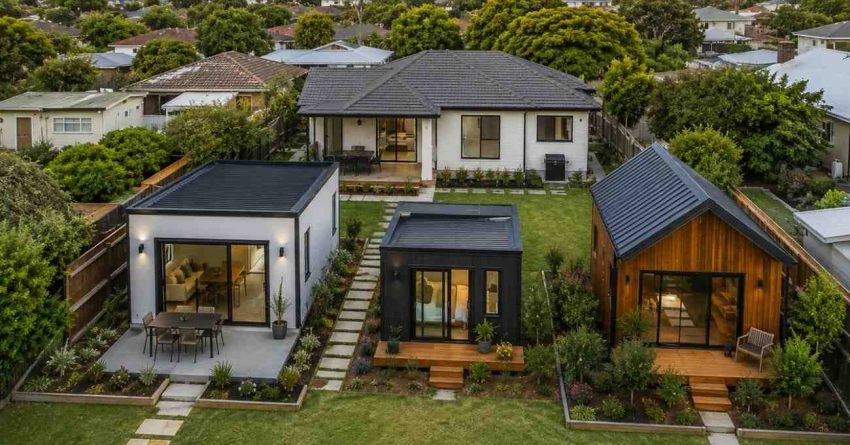
A detached granny flat is the most permanent, council-approved, and value-adding option for Sydney homeowners. Tiny houses offer mobility and lower entry costs, and cabins sit between the two as a flexible, low-regulation backyard structure suited to lifestyle uses rather than full-time living.
Choosing between these three structures shapes build cost, approval pathway, resale value, and how the space can legally be used on your Sydney property. This guide compares each option across costs, NSW regulations, use cases, and long-term value so you can choose the right secondary structure with confidence.
Quick Comparison Snapshot
| Feature | Detached Granny Flat | Tiny House | Cabin |
| Typical cost (Sydney) | $120,000–$200,000+ | $60,000–$150,000 | $25,000–$90,000 |
| Approval pathway | CDC or DA | Often classed as caravan/vehicle | DA exempt under 20m² (varies) |
| Permanent dwelling? | Yes | Conditional | Usually no |
| Rental income legal | Yes | Restricted | No (storage/lifestyle only) |
| Resale value impact | High | Low to moderate | Low |
| Build time | 12–20 weeks | 8–16 weeks | 2–8 weeks |
| Lifespan | 50+ years | 15–30 years | 10–25 years |
What Is a Detached Granny Flat?
A detached granny flat is a self-contained secondary dwelling built on the same lot as a primary home, with its own kitchen, bathroom, bedroom, and living area. In New South Wales, it must meet the State Environmental Planning Policy (Affordable Rental Housing) and comply with structural, fire, and energy standards under the National Construction Code.
These structures are permanent, fully council-approved, and treated as legal habitable dwellings, which makes them eligible for long-term rental and significantly boosts property value. Of the three options, a detached granny flat carries the most rigorous regulatory requirements under NSW planning law.
Key Features and Build Standards
Detached granny flats require concrete slab foundations, rated insulation, BASIX-compliant energy ratings, and connection to mains water, sewer, and electricity. Internal layouts typically range from 50m² to 60m², which is the maximum allowed under NSW complying development rules.
Typical Use Cases in Sydney
Most Sydney homeowners build a detached granny flat for rental income, multigenerational living, or as a home office with full amenities. Average weekly rents across Sydney suburbs sit between $450 and $650 depending on location and finish quality.
What Is a Tiny House?
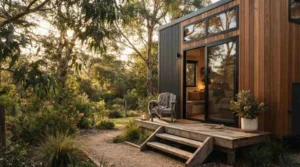
A tiny house is a compact dwelling, usually between 15m² and 40m², designed to deliver essential living functions in a smaller footprint. In Australia, tiny houses are often classified as caravans or movable dwellings, which changes their legal status compared to a fixed granny flat.
That classification affects whether they can be lived in full-time, leased out, or counted as a permanent dwelling for resale purposes.
Fixed vs Movable Tiny Homes
Fixed tiny houses on foundations are treated like granny flats and need full council approval, while tiny houses on wheels are regulated as vehicles and fall under Roads and Maritime guidelines. The mobility comes with a trade-off: limited financing options and stricter occupancy rules.
How They Fit Australian Backyards
Tiny houses suit narrow lots, sloping blocks, and properties where homeowners want a movable asset. They typically include a kitchenette, compact bathroom, and a loft sleeping zone, with build times of 8 to 16 weeks for prefab models.
What Is a Cabin?
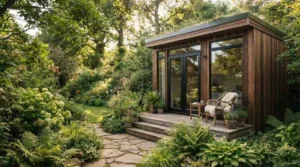
A cabin is a single-room or two-room standalone structure used for storage, hobbies, guest accommodation, or studios. Cabins are usually exempt from full council approval when kept under 20m² and not used as permanent living space, although exemption thresholds vary by council.
Cabins are the fastest and cheapest of the three options to build, but they cannot legally function as a self-contained dwelling without significant upgrades.
Kit Cabins vs Custom Builds
Kit cabins are pre-cut, flat-packed timber or steel structures assembled on site in days, with prices starting around $15,000. Custom-built cabins use site-specific materials, insulation, and finishes, and can include plumbing or electrical with the right approvals.
Common Uses and Limitations
Sydney homeowners typically use cabins as backyard offices, teenage retreats, art studios, or short-stay guest rooms. They cannot be rented out, do not add significant resale value, and rarely meet the energy and structural standards required for permanent occupation.
Cost Comparison: Build, Approvals, and Long-Term Value
Pricing differs sharply across the three options once site works, approvals, fittings, and finishes are factored in. A turnkey detached granny flat in Sydney typically lands between $120,000 and $200,000, while a fixed tiny house ranges from $60,000 to $150,000, and a fitted cabin sits between $25,000 and $90,000.
Approval and connection fees add another layer. Granny flats carry CDC certification costs of around $2,000 to $5,000 plus utility connections; tiny houses on wheels avoid most approval fees but face caravan registration, and cabins under 20m² usually skip approval entirely.
Insurance Considerations by Structure Type
Insurance treatment differs significantly between the three structures. A detached granny flat is covered under standard home and contents or landlord insurance as a permanent dwelling. A tiny house on wheels is typically insured as a caravan or motorhome, which carries different premium structures and exclusions. A cabin usually falls under a home contents or outbuilding extension, with limited cover for habitation-related claims.
Getting the wrong insurance classification can void a claim entirely, so we always recommend confirming structure type with your insurer before construction begins.
NSW Council Approval and Regulation Differences
Each structure follows a different regulatory pathway in New South Wales, and choosing the wrong one can stall a project or void insurance.
Detached Granny Flat: Most are approved through the Complying Development Certificate (CDC) pathway under SEPP rules, which is faster than a full Development Application. The lot must be at least 450m², the dwelling capped at 60m², and setbacks must comply with council standards.
Tiny House on Wheels: Treated as a caravan under NSW law. Residents can occupy them on private property for up to two consecutive days without approval, with longer-term occupation requiring council consent under the Local Government Act.
Cabin: Falls under “exempt development” if under 20m², single-storey, set back appropriately, and not used as a dwelling. Anything larger or used for sleeping typically triggers DA requirements.
Approval pathways differ significantly between dwelling types, and the CDC route for granny flats is the most predictable. Lot size, setbacks, and dwelling size are the three variables that determine eligibility.
Financing a Granny Flat, Tiny House, or Cabin
Financing options vary as much as the structures themselves, and this is one of the most overlooked differences in the comparison.
A detached granny flat can be financed through a construction loan, home equity release, or a mortgage top-up, because it is classified as a permanent improvement to real property. Lenders treat it the same way they treat a home extension. A tiny house on wheels is typically financed through a personal loan or specialist caravan finance, with shorter terms and higher interest rates than a home loan. A cabin is usually funded from savings or a personal loan, since most lenders do not treat it as a structural improvement to the property.
The financing gap matters for long-term cost. A granny flat financed at home-loan rates over 20 years carries a significantly lower total repayment than a tiny house financed at personal-loan rates over 5 to 7 years, even if the upfront build cost is higher.
Best Use Cases: Which Option Suits Your Property?
The right choice depends on goals, lot size, and how the structure will be used day to day.
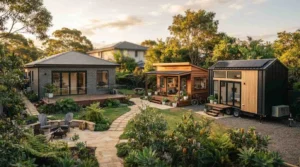
A detached granny flat is the right call for rental income, a permanent space for family members, or a long-term asset that adds resale value. A tiny house suits homeowners who prioritise mobility, a lower upfront cost, or off-grid living over permanence. A cabin makes sense for a fast, affordable backyard space for non-residential use, a studio, office, or guest room.
Many Sydney families build a second dwelling to house ageing parents or adult children. Privacy, accessibility, and layout decisions matter as much as the structure type in those situations, and we factor all three into our design process from day one.
Resale Value, Rental Income, and ROI
A detached granny flat delivers the strongest financial return of the three. Sydney homeowners typically recover 70% to 100% of build costs through added property value, with weekly rental yields often covering loan repayments within five to seven years.
Tiny houses on wheels rarely add property value because they are classified as personal property, not real estate. They can generate short-stay income on platforms where local rules allow, but financing is harder, and depreciation is faster than a permanent structure. For tax purposes, the ATO treats a tiny house on wheels as a depreciating asset rather than a capital improvement, which affects how investors account for it.
Cabins add minimal resale value because they are not classified as habitable dwellings, although a well-built studio or home office can support buyer appeal in suburbs with strong work-from-home demand. A permanent dwelling on title consistently outperforms a movable or exempt structure when Sydney property values are measured at resale.
How to Choose the Right Option for Your Sydney Home
Start with the legal use. A detached granny flat is the only fully compliant option for a permanent dwelling with rental potential. A tiny house fits the brief when flexibility, mobility, or a lower starting budget matters more than permanence. A cabin is the right tool for a low-cost backyard lifestyle space.
Next, look at lot constraints. Granny flats need a minimum 450m² block and clear access for trades and materials. Tiny houses suit narrow or irregular lots, and cabins can be tucked into corners other structures cannot reach.
Finally, weigh long-term value.
A detached granny flat compounds value through rent and resale, while tiny houses and cabins deliver lifestyle benefits without lifting property price meaningfully. The structure that fits your lot, your legal requirements, and your financial goals is always the right one, and we help Sydney homeowners work through exactly that decision before a single plan is drawn.
Conclusion
Detached granny flats, tiny houses, and cabins each solve different problems for Sydney homeowners, and the right choice comes down to legal use, budget, and long-term value goals.
For families chasing rental income or multigenerational living, a granny flat delivers the strongest return. Tiny houses and cabins suit lifestyle and flexibility-driven projects where permanence is not the priority.
At Sydney Home Renovation, we plan, approve, and build detached granny flats with transparent pricing and end-to-end project management. Book a consultation with our team for a tailored site assessment and a clear build estimate before you commit to any structure.
Frequently Asked Questions
Is a detached granny flat better than a tiny house in Sydney?
A detached granny flat is better for permanent living, rental income, and resale value. A tiny house suits homeowners who want lower upfront cost, mobility, or a smaller environmental footprint.
Can I legally live in a tiny house full-time in NSW?
Living full-time in a tiny house on wheels requires council approval under the Local Government Act, since they are classed as caravans rather than permanent dwellings on private property.
Do I need council approval for a backyard cabin?
Cabins under 20m² that are single-storey and not used for sleeping typically qualify as exempt development in NSW. Anything larger or used as living space requires a DA or CDC approval.
Which option adds the most value to a Sydney property?
A detached granny flat adds the most resale value, often recovering 70% to 100% of build cost, because it is classified as a permanent habitable dwelling and registered on title.
What is the cheapest secondary structure to build?
A kit cabin is the cheapest, starting around $15,000 for basic models. Fitted cabins, tiny houses, and granny flats progressively cost more as size, finishes, and approval requirements increase.
How long does it take to build a detached granny flat?
A detached granny flat in Sydney typically takes 12 to 20 weeks from slab to handover, with CDC approval adding another four to six weeks before construction begins.
Can I rent out a tiny house or cabin for income?
Renting out a tiny house depends on its classification and council rules. Cabins generally cannot be legally rented because they do not meet habitable dwelling standards under NSW planning law.


