Building a house for $150,000 in Australia is possible in very limited circumstances. We don’t consider it a realistic budget for most states in 2025, and it falls well short of what’s required to build a standard home in Sydney, NSW. Construction costs have risen sharply across Australia over the past four years, driven by labour shortages, material price increases, and tightening council compliance requirements. For most owner-occupiers and property investors we work with, $150,000 represents a starting point for planning, not a complete build budget.
What Does $150,000 Actually Get You in Australian Construction?
At $150,000, we’re working with a budget that covers a very small footprint or a partial scope of work on a standard residential build. This figure doesn’t include land, site preparation, council fees, or connection to essential services in most Australian markets.
A $150,000 construction budget in Australia in 2025 is generally sufficient for a basic dwelling of approximately 50 to 70 square metres in a low-cost regional area. It can also stretch to a kit home or modular structure on a prepared site, or a granny flat in select states where streamlined approval pathways reduce compliance costs. It doesn’t cover a standard three-bedroom home in any major Australian city.
Current Cost Per Square Metre in Australia
The national average cost to build a new home in Australia sits between $1,500 and $4,000 per square metre, according to Housing Industry Association benchmarking data, depending on location, build quality, and site conditions. A basic project home in a regional area sits at the lower end of that range. A custom build in Sydney typically starts at $3,000 per square metre and rises significantly with design complexity, site access challenges, and premium finishes.
At $150,000, a per-square-metre rate of $2,000 gives us roughly 75 square metres of liveable space, before accounting for site costs, design fees, and statutory charges. That’s a studio or one-bedroom dwelling. It’s not a family home.
How a $150,000 Budget Typically Breaks Down
We map out a $150,000 build budget for clients this way when the numbers genuinely allow for a small regional or modular project:
| Cost Category | Typical Share of Budget | Approximate Amount |
| Structural shell & materials | 45–55% | $67,500–$82,500 |
| Labour (trades, framing, fit-out) | 20–25% | $30,000–$37,500 |
| Fixtures, fittings & basic finishes | 10–15% | $15,000–$22,500 |
| Contingency & project management | 10% | $15,000 |
This table assumes a prepared, serviced site. It excludes land, site works, and connections, which we cover in the next section.
What $150,000 Covers vs. What It Doesn’t
At this budget, we can realistically fund the structural shell and basic fit-out of a small modular or kit home in a regional location, provided the site is already prepared and connected to services. What $150,000 doesn’t cover includes architectural design and engineering, council development application fees, site clearing and foundation work, plumbing and electrical connections to the street, and landscaping or external works. These costs routinely add $50,000 to $120,000 on top of the base build price, even on modest projects. We walk every client through kit home and owner-builder pathways early, because the option that fits a $150,000 budget on paper often carries hidden costs that push the real total well beyond that figure.
Land Costs Are Separate From Your Build Budget
We remind every client that $150,000 is a construction figure, not a total project cost. Land purchase, or the equity value of land already owned, sits entirely outside this number in almost every Australian market. In Sydney and its surrounding suburbs, land value alone frequently exceeds the entire $150,000 build budget, which is one reason this figure only stretches to land already owned outright or in select regional releases.
Where Building for $150,000 Is Most Feasible in Australia
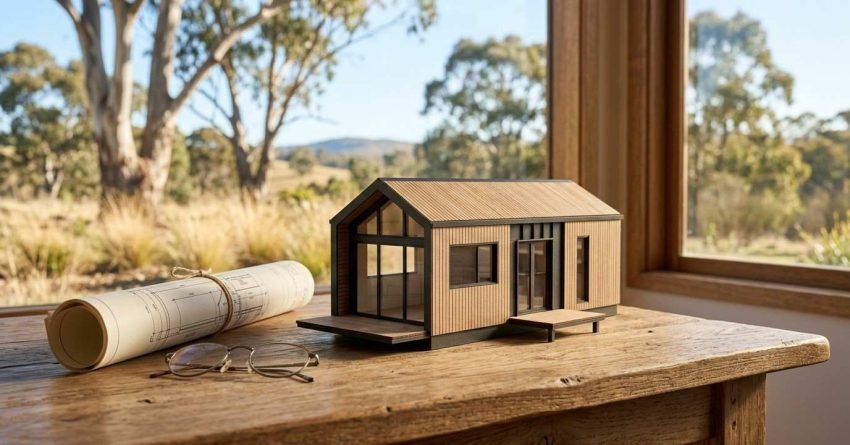
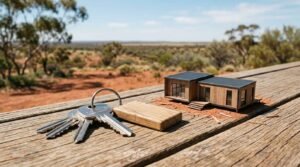
Outside of major metropolitan areas, $150,000 has more purchasing power in the construction market. Regional Queensland, rural South Australia, and parts of Western Australia offer lower labour rates and more affordable site conditions. In these markets, a small kit home or prefabricated modular dwelling on a flat, serviced block represents the most realistic use of a $150,000 build budget.
We’ve seen this play out in practice in towns like Toowoomba, where a serviced block combined with a prefabricated two-bedroom structure has landed close to the $150,000 mark, excluding land. That outcome depends entirely on flat, low-complexity sites with easy service access. Sloped blocks or sites needing significant earthworks push costs beyond this budget quickly, even in regional areas.
Owner-Builder and Kit Home Pathways
Owner-builders who manage their own project and source trades directly can reduce labour costs by 20 to 40 percent compared to engaging a licensed builder under a full construction contract, based on figures from the Housing Industry Association. Kit homes and prefabricated structures further reduce on-site labour time, which is one of the largest cost drivers in residential construction. Companies supplying kit homes in Australia offer packages starting from $80,000 to $130,000 for a basic two-bedroom structure, though this price typically excludes site preparation, footings, and service connections.
These pathways require careful planning. We always recommend realistic contingency budgeting and a clear understanding of local council requirements before committing to a project scope.
Why $150,000 Rarely Works in Sydney, NSW
Sydney operates in a different cost environment to the rest of Australia. Labour costs are among the highest in the country. Council compliance requirements, particularly in established suburbs, add significant time and cost to any residential project. Site conditions across Greater Sydney, including slope, soil type, and access constraints, frequently require engineering solutions that add tens of thousands of dollars before a single wall is framed.
A standard new home build in Sydney starts at approximately $400,000 to $600,000 for a modest project home on a prepared site, excluding land. For homeowners and investors working with a $150,000 budget in Sydney, we find the more practical conversation involves a full construction cost breakdown that identifies where money is best allocated.
We regularly guide Sydney clients toward reallocating a $150,000 budget into a staged renovation, a structural extension, or a secondary dwelling rather than chasing a full new build that the numbers simply won’t support. A kitchen or bathroom renovation, a rear extension, or a granny flat addition can deliver far more livable value at this budget than any attempt at ground-up construction on a Sydney block. We start these conversations with a clear scope assessment, so the budget goes toward the project type that actually works for the site and the numbers.
Conclusion
Building a house for $150,000 in Australia is achievable only in specific regional markets with the right site conditions, build type, and project management approach. It’s not a viable budget for a standard home in Sydney or any major Australian city.
For homeowners and investors in Sydney, we believe a realistic budget assessment and a clear scope of work are the foundation of any successful project. Exploring smaller dwelling options, extensions, or renovations may deliver stronger outcomes within a constrained budget than a full new build ever could.
At Sydney Home Renovation, we help you build with clarity, not guesswork. Contact us today to get an honest assessment of what your budget can deliver.
Frequently Asked Questions
What is the cheapest type of house to build in Australia?
Kit homes and prefabricated modular dwellings are the most affordable build types in Australia. We typically see basic packages starting from $80,000 to $130,000 before site and service costs.
Can you build a granny flat for $150,000 in Sydney?
A granny flat in Sydney typically costs between $120,000 and $200,000 depending on size, site conditions, and finishes. We consider $150,000 achievable for a basic structure on a straightforward site.
What is the average cost to build a house in Australia in 2025?
The average cost to build a standard home in Australia in 2025 ranges from $300,000 to $600,000, depending on location, size, build quality, and site conditions.
Is an owner-builder licence worth it to reduce construction costs?
An owner-builder licence can reduce labour costs by 20 to 40 percent, but it requires significant time, project management skill, and a clear understanding of compliance obligations in your state.
What hidden costs should I budget for when building a house?
Common hidden costs include council fees, site preparation, engineering reports, service connections, landscaping, and builder’s margin. We see these add $50,000 to $120,000 to a base build price.
Does land cost count toward a $150,000 build budget?
No. We always separate land value from construction cost. A $150,000 figure refers to the build only, and land purchase sits entirely outside that number in almost every market.
Can I get finance for a $150,000 owner-builder project?
Financing a small owner-builder project is possible, but we find lenders often require detailed cost breakdowns, fixed-price contracts, or staged drawdowns before approving funds for this project type.