The cheapest way to build a house in Australia is to choose a prefabricated kit home or a volume builder project home package, keep your block flat and accessible, and minimise structural customisation. Where you build, how you manage the project, and which construction method you select will determine how much you genuinely save.
We know that for homeowners, first-time builders, and property investors, understanding these variables before committing to a build path is the difference between a controlled budget and a costly overrun. This guide breaks down each option clearly so you can make a confident, informed decision.
What Is the Cheapest Way to Build a House in Australia?
The cheapest way to build a house in Australia is to use a volume builder or prefabricated kit home on a flat, serviced block in a regional or outer-suburban area. Keeping the design simple, avoiding structural changes after contract signing, and selecting standard inclusions over upgrades protects your budget from the most common cost blowouts.
Kit Homes and Prefabricated Construction
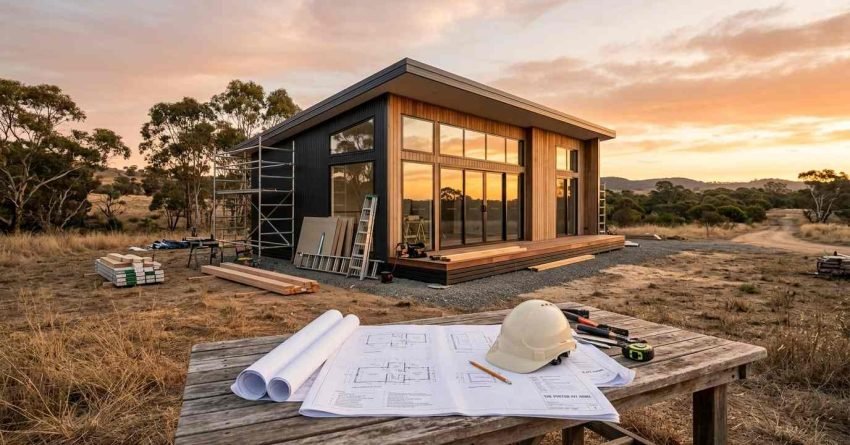
Kit homes and prefabricated builds are among the most cost-effective construction methods we see across Australia. A basic kit home starts from as little as $80,000 to $150,000 for the structure itself, according to Housing Industry Association cost data, though site preparation, foundations, plumbing, electrical, and council approvals are separate costs.
Prefabricated construction reduces on-site labour time significantly because major components are manufactured off-site and assembled on your block. This efficiency translates directly into lower labour costs. The trade-off is limited design flexibility, since standard floor plans and fixed configurations keep costs down but significant modifications erode those savings quickly.
For homeowners exploring an even smaller footprint, a granny flat or secondary dwelling can represent an even cheaper entry point than a full kit home, particularly on existing land. For investors and owner-occupiers working with a tight budget, we find a kit home on a well-prepared site in a regional area is one of the most reliable low-cost build paths available.
Volume Builders and Project Home Packages
Volume builders are large-scale residential construction companies that build hundreds of homes annually. They offer project home packages that leverage bulk purchasing power on materials and standardised construction processes. Entry-level packages from volume builders in Australia typically start between $180,000 and $280,000, depending on size, inclusions, and state, based on Master Builders Australia industry benchmarks.
These packages are designed for efficiency. Standard floor plans, fixed material selections, and streamlined approvals keep costs predictable, though the real risk lies in upgrades. Builders present base packages at attractive price points, but the final contract cost often climbs once site costs, façade upgrades, and inclusion changes are added.
Some volume builders also bundle house-and-land packages, which combine the block and build into a single fixed price. We find these can offer genuine savings in growth corridors, provided you scrutinise what the “standard inclusions” actually cover before signing.
The most cost-effective approach with a volume builder is to select a standard plan, accept the base inclusions, and negotiate site costs upfront rather than discovering them after contract execution.
Fixed-Price vs Cost-Plus Contracts
The contract type you sign has a direct impact on your final cost. A fixed-price contract locks in the build cost before work begins, giving you certainty and protection against unexpected increases. A cost-plus contract charges actual costs plus a builder’s margin, which can suit complex or custom builds but carries more budget risk.
We always recommend a fixed-price contract for anyone prioritising the cheapest possible outcome, since it removes the guesswork around final cost.
Choosing the right build method is only part of the equation. Site conditions, location, and approval requirements affect your budget regardless of which construction method you choose.
What Drives the Cost of Building a House in Australia?
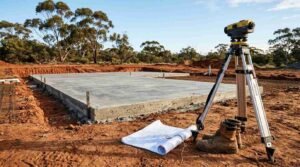
Build method sets your starting point, but site and location variables determine whether your budget holds. Many first-time builders underestimate these costs and find that savings from a low-cost build method are absorbed by site preparation and compliance expenses.
Land, Location, and Site Preparation Costs
Land cost is the single largest variable in any residential build. Regional and outer-suburban blocks are significantly cheaper to purchase than inner-city or coastal land, and they often carry lower site preparation costs due to flatter terrain and simpler soil conditions.
Site preparation, including clearing, levelling, soil testing, and connecting to services, ranges from $15,000 to $50,000 or more depending on slope, soil classification, and distance from existing infrastructure, according to CoreLogic construction cost analysis. A sloping block or reactive soil classification increases your slab or footing costs substantially, regardless of how affordable your build package is.
Beyond the slab, hidden costs often catch first-time builders off guard. Driveway construction, fencing, letterbox and mailbox installation, landscaping, and stormwater connections are frequently excluded from a headline package price and can add $10,000 to $30,000 once totalled.
Choosing a flat, well-serviced block in a growth corridor or regional centre remains one of the most effective ways we’ve seen to keep total build costs low.
Labour, Materials, and Council Approvals
Labour costs in Australia vary by state and trade. Building in Sydney or Melbourne carries higher labour rates than regional Queensland or South Australia. For budget-conscious builds, regional locations offer a meaningful cost advantage on both labour and land.
Material costs have risen sharply since 2020 due to supply chain disruptions and increased construction demand, per Australian Bureau of Statistics building cost data. Selecting standard, readily available materials rather than imported or custom finishes keeps costs manageable and reduces lead times.
Council approval costs, including development applications, building permits, and inspections, typically add $5,000 to $15,000 to a residential build depending on your local government area. We recommend engaging a builder or certifier familiar with your council’s requirements to reduce the risk of delays and additional compliance costs.

Owner-Builder vs. Licensed Builder – Which Saves More?
Taking on the owner-builder path carries real risk alongside its potential savings. Owner-builders in Australia can save on builder margin, typically 10% to 20% of total construction cost, by managing trades directly. This saving comes with full project management responsibility, licensing requirements that vary by state, and reduced access to builder’s warranty insurance.
For most first-time builders, the savings are real but frequently offset by inefficiencies, trade coordination delays, and errors that a licensed builder would normally absorb. We think the owner-builder path is worth understanding in full before committing to it.
For investors and homeowners without construction experience, a volume builder or kit home supplier with a fixed-price contract typically delivers a more predictable financial outcome than self-managing a build from scratch.
Grants and Incentives That Reduce Build Costs
Government grants can meaningfully lower your effective build cost if you qualify. The First Home Owner Grant and various state-based stamp duty concessions apply to new builds in most Australian states and territories.
We suggest checking your state revenue office for current eligibility before finalising your build budget, since grant thresholds and amounts change regularly.
Conclusion
The cheapest way to build a house in Australia combines a low-cost build method, a well-chosen site, and disciplined selection of standard inclusions over costly upgrades.
Homeowners and investors who plan carefully, understand their site costs upfront, and resist unnecessary upgrades consistently achieve better budget outcomes than those who focus on the headline package price alone.
At Sydney Home Renovation, we help you build with clarity and confidence. We invite you to contact our team to discuss your project and get honest, practical guidance from the start.
Frequently Asked Questions
What is the cheapest type of house to build in Australia?
Single-storey, rectangular floor plan homes with standard inclusions are the cheapest to build. Kit homes and prefabricated builds offer the lowest entry points, starting from around $80,000 for the structure.
How much does it cost to build a house in Australia in 2025?
Total build costs in 2025 typically range from $180,000 to $450,000 or more, depending on size, location, build method, and site conditions. Regional builds cost less than metropolitan projects.
Can I build a house in Australia for under $200,000?
Yes, in regional areas using a kit home or basic volume builder package on a flat, serviced block. Site costs, approvals, and connection fees must be budgeted separately and can add $30,000 to $80,000.
Is it cheaper to build or buy a house in Australia?
In most metropolitan markets, buying an established home is currently cheaper when total build costs, land, and holding costs are included. Building offers more value in regional areas or when customisation is a priority.
What council approvals do I need to build a house in Australia?
Most residential builds require a development application or complying development certificate, a construction certificate, and staged inspections. Requirements vary by state and local government area.