
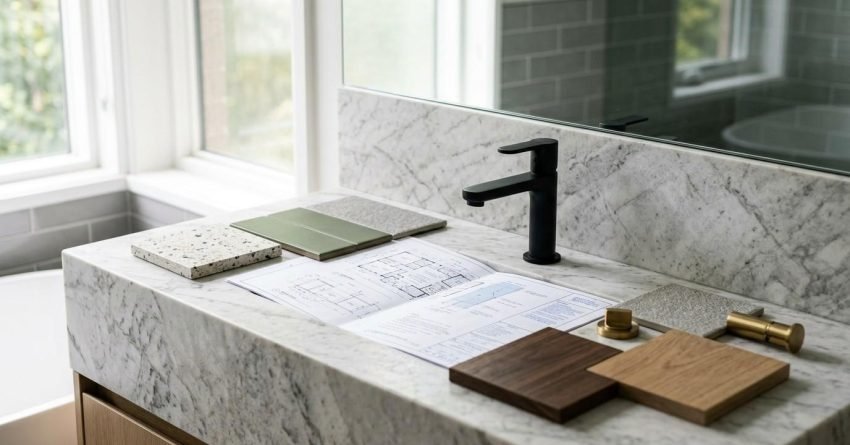
Before starting a bathroom renovation in Sydney, the questions we ask upfront determine whether the project stays on budget, on schedule, and free from costly surprises. Most renovation blowouts are not caused by bad luck. They are caused by gaps in planning that the right questions would have caught early.
Getting clear answers before a single tile is removed protects the budget and the timeline. This guide covers the seven essential questions every homeowner, first-time renovator, and property investor should answer before work begins.
What Is My Total Budget and Where Should It Go?
The budget is the single most important variable in any bathroom renovation. Without a clear number and a clear plan for how to spend it, every other decision becomes harder to make.
In Sydney, a standard bathroom renovation typically ranges from $15,000 to $35,000 depending on size, scope, and finish level. A basic cosmetic refresh sits at the lower end. A full gut renovation with relocated plumbing, new waterproofing, and premium fittings sits at the upper end or beyond.
How to allocate budget across labour, materials, and fittings
A practical starting point for budget allocation is:
- Labour (trades): 40–50% of total budget
- Materials and tiling: 20–30%
- Fittings and fixtures: 15–25%
- Contingency: 10–15%
Labour consistently represents the largest share of any bathroom renovation budget in Sydney, driven by the cost of licensed plumbers, tilers, electricians, and waterproofers. Cutting labour costs by hiring unlicensed trades is one of the most common and most expensive mistakes renovators make.
What contingency allowance should I include?
A 10–15% contingency is the minimum for any bathroom renovation. For older Sydney homes, particularly those built before 1990, a 15–20% buffer is more realistic, as older properties frequently reveal asbestos, deteriorated waterproofing membranes, or substandard plumbing once walls are opened.
A contingency is not pessimism. It is the difference between a renovation that finishes on budget and one that stalls mid-project.
What Is the Scope of My Bathroom Renovation?
Scope defines everything: cost, timeline, trades required, and whether council approval is needed. Getting scope clarity before engaging a contractor prevents the most common source of budget overruns, which is scope creep.
Full gut vs. cosmetic refresh what’s the difference?
A cosmetic refresh replaces surface finishes without touching the layout. New vanity, new tapware, new tiles over existing substrate, and updated accessories. Trades involved are typically limited to a tiler and plumber. Cost range: $8,000–$18,000.
A full gut renovation removes everything back to the frame. New waterproofing, new plumbing rough-in, new electrical, new layout if required. All licensed trades are involved. Cost range: $20,000–$45,000+.
The distinction matters because a cosmetic refresh rarely requires council approval, while structural changes or plumbing relocations may trigger permit requirements.
How does scope affect cost and timeline?
Every change to the original scope, whether moving a drain, adding a heated floor, or upgrading to a freestanding bath, adds cost and time. Locking scope before work begins is the most effective way to control both.
A well-defined scope of works document, agreed in writing before the contract is signed, is the primary protection against cost blowouts. It should specify every trade involved, every material category, the agreed layout, and a clear list of what is excluded. Any change to that agreed scope should require a written variation before work proceeds.
Do I Need Council Approval or Building Permits?
Many homeowners assume bathroom renovations are permit-free. In NSW, that assumption can lead to serious compliance problems, particularly when selling or refinancing.
When does a bathroom renovation require a DA in NSW?
Under NSW planning rules, most standard bathroom renovations qualify as exempt development, meaning no Development Application (DA) is required, provided the work meets specific criteria. These include:
- No structural changes to load-bearing walls
- No change to the building footprint
- Compliance with the Building Code of Australia (BCA)
- Waterproofing completed to AS 3740 standard
Work that involves structural changes, heritage-listed properties, or strata title buildings may require a DA or Complying Development Certificate (CDC). For strata properties specifically, owners corporation consent is typically required before any renovation work begins, regardless of whether a DA is needed. If there is any uncertainty, the local council or a licensed certifier can confirm requirements before work starts.
All licensed contractors are required to obtain the relevant owner-builder or contractor licences through NSW Fair Trading before commencing work. Confirming this before signing any contract is non-negotiable.
Who Should I Hire and What Should I Ask Them?
The contractor chosen determines the quality, compliance, and cost certainty of the renovation. In NSW, bathroom renovation work must be carried out by licensed tradespeople. Verifying this before engagement is not optional.
What licences and insurance should a contractor hold?
Any contractor performing bathroom renovation work in NSW must hold:
- A current contractor licence issued by NSW Fair Trading (for work over $5,000)
- Public liability insurance (minimum $5 million is standard)
- Home Building Compensation (HBC) Fund cover for residential work over $20,000
Never rely on a contractor’s verbal confirmation alone. Licence status can be verified directly through the NSW Fair Trading licence check.
What questions should I ask before signing a contract?
Before signing, ask every contractor:
- Is this a fixed-price contract or a cost-plus arrangement?
- How are variations handled, and what triggers an additional charge?
- What is the payment schedule, and does it align with project milestones?
- Who manages trade scheduling and site coordination?
- What is the process if hidden defects are discovered once walls are opened?
A fixed-price contract with a clearly defined scope of works is the strongest protection against unexpected cost increases.
What should a bathroom renovation quote include?
A detailed quote is not just a price. It is a document that defines the entire project. Before accepting any quote, confirm it includes:
- A full labour breakdown by trade (plumber, tiler, electrician, waterproofer)
- A materials schedule with specified products or allowances
- All provisional sums clearly identified and separated from fixed costs
- A list of exclusions so there are no assumptions about what is covered
- The payment schedule tied to project milestones, not calendar dates
- The process for handling variations in writing
A quote that lacks these elements is not a quote. It is an estimate, and estimates carry no cost certainty.
What are the red flags when hiring a bathroom renovator?
Not every contractor who quotes is qualified to deliver. Watch for these warning signs before signing anything:
- No written quote or a quote that is a single lump-sum figure with no breakdown
- Inability or unwillingness to provide a licence number for verification
- Requests for a large upfront deposit, particularly cash-only payment
- No mention of waterproofing compliance or AS 3740 in the scope
- Vague or verbal-only answers to questions about variations and hidden costs
Any one of these signals warrants walking away and seeking another quote.

What Are the Hidden Costs I Need to Plan For?
Hidden costs are the most common cause of bathroom renovation budget blowouts. They are not unpredictable. They are simply undisclosed until walls come down. Planning for them in advance is the mark of an experienced renovator.
Waterproofing, plumbing relocations, and structural surprises
The most frequent hidden costs in Sydney bathroom renovations include:
- Failed or non-compliant waterproofing older bathrooms often have deteriorated membranes that must be fully replaced to meet AS 3740 compliance. Replacement cost: $1,500–$4,000.
- Plumbing relocation moving a toilet, shower, or bath drain requires a licensed plumber and can add $2,000–$6,000 depending on access and pipe condition.
- Asbestos removal homes built before 1990 frequently contain asbestos in wall sheeting, floor adhesives, or ceiling materials. Licensed removal is mandatory and adds $1,500–$5,000+.
- Structural defects rot, termite damage, or substandard framing discovered once linings are removed requires rectification before tiling can proceed.
How to protect your budget from cost blowouts
Three practices protect the budget from hidden cost exposure.
Commission a pre-renovation inspection before finalising the budget. A licensed builder can identify likely problem areas before demolition begins. Lock the scope of works in writing before signing the contract, with any change requiring a written variation that states the cost and time impact.
Treat provisional sums with caution. A provisional sum is an estimate for work where the final cost cannot be confirmed upfront, typically because the extent of the problem is unknown until walls are opened. They are not fixed prices and carry real budget risk. Minimise them wherever possible by commissioning a pre-renovation inspection, and where they cannot be avoided, negotiate a cap or a defined review process before work on that item begins.

How Long Will My Bathroom Renovation Take?
Realistic timeline expectations prevent frustration and help with planning around the disruption of losing bathroom access.
What affects the renovation timeline in Sydney?
A standard bathroom renovation in Sydney takes 3–6 weeks from demolition to completion. The typical stage sequence runs as follows:
- Demolition: 1–2 days
- Waterproofing and substrate preparation: 3–5 days (including mandatory cure time)
- Plumbing and electrical rough-in: 2–4 days
- Tiling: 3–7 days depending on area and tile format
- Fit-off (vanity, tapware, fixtures, screens): 2–3 days
- Final inspection and sign-off: 1 day
Key variables that extend this sequence include trade scheduling and availability, where delays in one trade push every subsequent trade back. Material and fixture lead times are a significant factor, as imported tiles, custom vanities, and specialty fittings can have 4–12 week lead times, making it essential to order materials before demolition begins. If a DA or CDC is required, add 4–10 weeks to the pre-construction phase. Hidden defect rectification, including asbestos removal, structural repairs, or plumbing upgrades, adds days to weeks depending on severity.
A project manager or head contractor who coordinates all trades and manages the schedule is the most reliable way to keep a bathroom renovation on time.
How Do I Prioritise Upgrades That Add Real Value?
Not every upgrade delivers equal return. For owner-occupiers, the priority is livability and longevity. For property investors, the priority is resale value and rental appeal.
Which bathroom features deliver the best return on investment?
The upgrades that consistently deliver the strongest return in Sydney residential properties are:
- Frameless shower screens high visual impact, low maintenance, strong buyer appeal
- Heated towel rails and underfloor heating perceived luxury at relatively low installation cost
- Quality tapware and fixtures visible quality signals that buyers and tenants notice immediately
- Improved storage and layout efficiency particularly in smaller bathrooms where space optimisation adds functional value
- Neutral, timeless tiling avoids dating the renovation and appeals to the broadest buyer pool
Avoid over-capitalising on fittings that exceed the price bracket of the surrounding property. A $3,000 freestanding bath in a $600,000 property rarely returns its cost at resale.
Conclusion
Asking the right questions before a bathroom renovation begins is what separates projects that finish on budget from those that spiral into cost overruns and delays. Budget clarity, scope definition, permit awareness, and contractor vetting are the foundations of every successful renovation.
The hidden costs, timeline variables, and upgrade decisions covered here are not edge cases. They are the standard reality of bathroom renovations in Sydney. Planning for them is planning for success.
At Sydney Home Renovation, we help homeowners and property investors move from questions to a confident, well-planned renovation. Contact our team today to discuss the project, get transparent pricing, and build a renovation plan that works for the budget and timeline.
Frequently Asked Questions
How much does a bathroom renovation cost in Sydney in 2025?
A standard bathroom renovation in Sydney costs between $15,000 and $35,000. Basic cosmetic refreshes start around $8,000–$15,000, while full gut renovations with relocated plumbing and premium finishes typically range from $25,000 to $45,000 or more.
Do I need council approval for a bathroom renovation in NSW?
Most standard bathroom renovations in NSW qualify as exempt development and do not require a DA. Structural changes, heritage properties, and strata buildings may require council approval or a Complying Development Certificate before work begins.
How long does a bathroom renovation take in Sydney?
A standard bathroom renovation in Sydney takes 3–6 weeks from demolition to completion. Timeline varies based on trade availability, material lead times, scope complexity, and whether hidden defects require rectification once walls are opened.
What hidden costs should I budget for in a bathroom renovation?
Common hidden costs include failed waterproofing replacement ($1,500–$4,000), plumbing relocation ($2,000–$6,000), asbestos removal in pre-1990 homes ($1,500–$5,000+), and structural defect rectification. A 10–15% contingency buffer is the minimum recommended allowance.
What licences should a bathroom renovation contractor hold in NSW?
In NSW, contractors must hold a current contractor licence from NSW Fair Trading, public liability insurance, and Home Building Compensation Fund cover for residential projects over $20,000. Verify licence status directly through the NSW Fair Trading licence check before signing any contract.
What is the difference between a fixed-price contract and a cost-plus contract?
A fixed-price contract sets a defined total cost for an agreed scope of works. A cost-plus contract charges actual costs plus a margin, meaning the final price is not guaranteed. Fixed-price contracts provide stronger budget certainty for homeowners.
Which bathroom upgrades add the most value for resale in Sydney?
Frameless shower screens, quality tapware, heated towel rails, improved storage, and neutral timeless tiling consistently deliver strong resale appeal in Sydney. Avoid over-capitalising on luxury fittings that exceed the price bracket of the surrounding property.


