
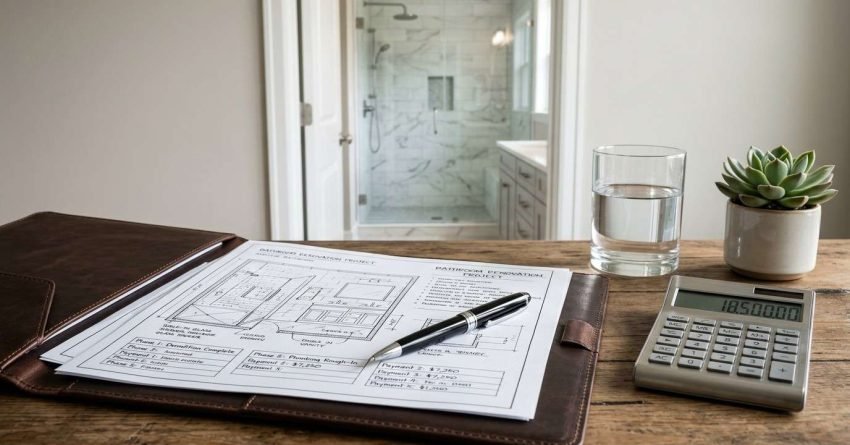
Progress payments are staged payments made to your bathroom renovation contractor as specific work milestones are completed, rather than paying the full price upfront or only at the end. This structure protects both the homeowner and the builder by tying each payment to verifiable work, keeping cash flow predictable and reducing financial risk on both sides.
For Sydney homeowners and first-time renovators, understanding how progress payments work is one of the most important parts of bathroom renovation budgeting. It directly affects cash flow, contract safety, and your protection under NSW law.
This guide explains how progress payments are structured, the standard payment schedule, NSW legal rules, and the practical steps to protect your money throughout the project.
What Are Progress Payments in a Bathroom Renovation?
A progress payment is a partial payment released to your contractor once a defined stage of the bathroom renovation has been completed and inspected. Instead of a single lump sum, the total contract price is broken into smaller instalments tied to physical work milestones such as demolition, waterproofing, tiling, and final fit-off.
This approach is the standard practice for residential renovation contracts in NSW. It gives homeowners visible accountability at every step while giving the contractor the working capital needed to pay tradespeople, order materials, and keep the project moving without delays.
Each milestone is documented in the contract before work begins. That document sets the dollar value of each instalment, the trigger event for payment, and the timeframe in which payment is due once the stage is complete.

How Progress Payments Work: The Standard Process
The process follows a simple, repeatable cycle that runs from contract signing through to final handover. Understanding the sequence helps you spot anything that deviates from accepted practice.
The first step is agreeing the contract and payment schedule in writing. The total price, stages, and payment amounts are documented and signed before any work starts this written record is your primary protection throughout the project. Once that is signed, the deposit is paid to secure your booking and fund initial material orders.
Work then begins on the first stage. When the contractor completes the agreed milestone, you or your representative inspect the site and confirm the work matches the contract specifications before any money moves. The contractor then submits a written payment claim for that stage only, identifying the work completed and the amount being claimed. Payment is released within the contracted timeframe typically five to seven business days and the next stage begins.
The critical point is that payment follows completed work, not the other way around. Paying ahead of progress removes your protection and weakens your leverage if anything needs correcting.
Typical Progress Payment Schedule for Bathroom Renovations
A standard NSW bathroom renovation usually splits the contract price across four to five clearly defined stages. The percentages vary slightly between contractors, but the structure is consistent. Each payment stage maps to specific work, and understanding what triggers each payment helps you stay in control of the budget.
Deposit Stage
The deposit secures your project slot and funds the initial material ordering. In NSW, the deposit is capped by law and is typically the smallest single payment in the schedule it is paid on contract signing, before any work begins on site.
The deposit covers the contractor’s booking costs and the purchase of long-lead items such as tiles, vanities, and tapware that need to be ordered in advance. If the contractor fails to commence work after the deposit is paid, you have grounds to recover it under the Home Building Act 1989 (NSW). Always confirm the deposit amount matches the written contract before transferring funds.
Demolition and Rough-In Stage
This payment is released once strip-out, plumbing rough-in, and electrical rough-in are complete. By this point, walls are open, services are roughed in, and the bathroom is prepared for waterproofing. This stage usually represents 25 to 35 per cent of the contract value.
Before releasing this payment, walk the site and confirm that all old fixtures are removed, waste and supply lines are in their correct positions, and the substrate is clean and ready for the waterproofing membrane. The rough-in is the last point at which plumbing and electrical positions can be adjusted without significant cost sign off only when you are satisfied the layout matches the approved plans.
Waterproofing and Tiling Stage
Waterproofing is a critical milestone because it directly affects the long-term performance of the bathroom. Payment is released after waterproofing has been certified and wall and floor tiling has been completed. This stage typically accounts for around 25 to 30 per cent of the total.
Under Australian Standard AS 3740, bathroom waterproofing must be applied to specified areas and thicknesses, and the work must be inspected and certified before tiling begins. A waterproofing certificate documents that the membrane was applied correctly and passed inspection. We never release this payment until that certificate is in hand tiling over an uncertified membrane locks in any defect and makes rectification extremely expensive.
Fit-Off and Completion Stage
The final progress payment is released at practical completion, once vanities, tapware, toilets, screens, and accessories are installed and the bathroom is functional. A small final amount is often withheld until a defects inspection confirms everything meets the contract specification.
Practical completion is a defined legal concept in NSW residential contracts. It means the work is complete to the point where the bathroom can be used for its intended purpose, even if minor defects remain. The defects liability period typically 13 weeks under standard residential contracts begins at practical completion, giving you the right to have minor issues rectified at no cost.

NSW Legal Rules for Progress Payments
Progress payments for residential work in NSW are governed by specific consumer protections. These rules exist to prevent overpayment, protect homeowners from contractor insolvency, and ensure payments follow completed work.
According to NSW Fair Trading, home building disputes are among the most common complaints received each year, with payment and contract issues consistently in the top categories. Understanding the legal framework before you sign is the most effective way to avoid becoming part of that statistic.
Deposit Caps Under the Home Building Act
Under the Home Building Act 1989 (NSW), the maximum deposit a contractor can request is limited based on the contract value. For most bathroom renovation contracts, the deposit cap is 10 per cent of the total price. For larger contracts above a set threshold, a lower percentage applies. Always check the current rules with NSW Fair Trading before signing.
Written Contracts and Payment Claims
Any residential building work above the prescribed value must be covered by a written contract that includes a clear payment schedule. Each progress payment must be supported by a written payment claim from the contractor, identifying the work completed and the amount being claimed. This paper trail is your evidence if a dispute later arises.
The Security of Payment Act and What It Means for You
The Building and Construction Industry Security of Payment Act 1999 (NSW) known as SOPA gives both homeowners and contractors enforceable rights around payment timelines. Under SOPA, when a contractor issues a payment claim, you have a defined window to respond with a payment schedule if you intend to pay less than the claimed amount. Failing to respond within that window can make the full claimed amount legally due, regardless of whether the work is disputed.
For homeowners, this means reading every payment claim carefully and responding in writing if you have concerns about the work completed. Silence is not a safe response under SOPA.
How Variation Orders Affect Your Payment Schedule
A variation order is a written instruction that changes the scope of work agreed in the original contract adding a heated towel rail, upgrading tiles, or relocating a waste point are common examples. Every variation, no matter how small, must be documented in writing and signed by both parties before the work is carried out.
Variations directly affect your payment schedule. If a variation increases the contract value, the additional amount is typically added to the next progress payment or treated as a separate milestone payment, depending on how your contract is structured. We always confirm the dollar impact and the revised payment trigger in writing before approving any variation verbal agreements on variations are unenforceable and a leading cause of budget blowouts.
If a contractor asks you to approve a variation verbally or after the work has already been done, pause the project and request a written variation order before proceeding. Your right to dispute the cost depends entirely on having a signed document.
What Happens If Your Contractor Abandons the Project
Contractor abandonment where a builder stops work and becomes uncontactable is one of the most stressful situations a homeowner can face mid-renovation. NSW law provides several layers of protection if this happens.
The first step is to check whether your contractor holds current Home Building Compensation (HBC) cover, which is mandatory for residential contracts above $20,000 in NSW. HBC insurance covers incomplete work if the contractor becomes insolvent, dies, disappears, or has their licence suspended. A claim can be lodged directly with the insurer once the contractor is confirmed as unable to complete the work.
In parallel, lodge a complaint with NSW Fair Trading, who can investigate the contractor and take licensing action. If the matter involves a financial dispute, the NSW Civil and Administrative Tribunal (NCAT) handles formal claims for amounts up to $500,000. Document everything photographs, payment records, written communications before engaging a replacement contractor, as this evidence supports both the insurance claim and any tribunal proceedings
How to Protect Yourself When Making Progress Payments
A few practical habits prevent most progress payment problems before they start. The most important is never paying ahead of work completed payment always follows the milestone, not the promise. If a contractor requests payment before the agreed trigger event, ask for a written explanation and compare it against the contract before transferring any funds.
Inspect each stage personally before releasing payment. Walk the site, photograph the work, and confirm it matches the contract specifications. Keep every invoice, receipt, and variation in writing verbal agreements are difficult to enforce and carry no weight in a dispute. Before the deposit is paid, confirm that your contractor holds a current licence with the NSW Building Commission and HBC cover for the contract value.
Hold a retention amount at practical completion typically 2.5 to 5 per cent of the contract value until the defects inspection is complete and any issues are rectified. This modest retention gives you the leverage to ensure quality finishes without losing your ability to negotiate once full payment has been made.

Common Progress Payment Mistakes to Avoid
The same payment mistakes appear in almost every troubled renovation. The most damaging is paying a deposit larger than the legally allowed amount this immediately weakens your position and signals to the contractor that normal rules may not apply.
Releasing payment for work that has not actually been completed is equally serious. Paying for the waterproofing stage before the certificate is issued, for example, removes your only leverage to ensure the membrane is correctly applied. If a defect is later discovered under the tiles, rectification means stripping the entire tiled surface, re-waterproofing, and re-tiling a cost that can equal or exceed the original stage payment. Accepting verbal variations without written quotes and paying the final instalment before defects are rectified are the other two mistakes that consistently turn manageable renovations into costly disputes.
Conclusion
Progress payments turn a major renovation expense into a structured, milestone-driven process that protects homeowners and contractors alike. Each stage ties money to verified work, keeping budgets visible and accountability clear from deposit to handover.
For Sydney homeowners and property investors, a well-structured bathroom renovation payment schedule is one of the strongest tools for keeping a project on budget and on schedule. It transforms uncertainty into a clear, predictable financial plan.
At Sydney Home Renovation, we build every contract on transparent staged payments, written milestones, and honest pricing. Contact us today to plan a bathroom renovation backed by clear costs and confident decisions.
Frequently Asked Questions
What is a progress payment in a bathroom renovation?
A progress payment is a staged payment released to your contractor after a defined milestone is completed, such as demolition, waterproofing, or tiling. It replaces paying one large lump sum upfront.
How many progress payments are typical for a bathroom renovation?
Most bathroom renovations in NSW use four to five progress payments: a deposit, a demolition and rough-in payment, a waterproofing and tiling payment, and a final fit-off payment at practical completion.
What is the maximum deposit for a bathroom renovation in NSW?
Under the Home Building Act 1989 (NSW), the deposit is capped based on contract value. For most bathroom renovation contracts, the maximum deposit is 10 per cent of the total contract price.
Can a contractor demand payment before work is completed?
No. Progress payments must follow completed work, not precede it. Each payment claim must identify the specific milestone reached and match the schedule agreed in the written contract.
What happens if I refuse to pay a progress claim?
If the claimed work is incomplete or defective, you can dispute the payment in writing. For unresolved disputes, NSW Fair Trading offers mediation and NCAT handles formal claims.
Should I hold back a final payment for defects?
Yes. Withholding a small final retention until defects are rectified is standard practice. It protects your right to have minor issues fixed without losing leverage after full payment has been made.
What is a variation order and how does it affect my payment schedule?
A variation order is a written instruction changing the agreed scope of work. It must be signed before work begins and typically adds the extra cost to the next progress payment or creates a separate payment milestone.