Most bathrooms give clear warnings before they fail completely. Persistent mould, cracked tiles, recurring leaks, and layouts that no longer work for the people using them every day are all signals worth taking seriously. Recognising these signs early is the difference between a planned, budget-controlled renovation and an emergency repair that costs significantly more. This guide covers the most common signs your bathroom needs renovating, what each problem means for your property, and how to decide when the right time to act is.
Your Bathroom Is Showing Its Age (And It’s Costing You)
An ageing bathroom does not always announce itself dramatically. More often, the signs accumulate gradually a grout line that keeps staining, a seal that keeps lifting, a surface that no amount of cleaning restores. These are not cosmetic inconveniences. They are indicators of underlying deterioration that will worsen without intervention.
How Old Is Too Old? The 15–20 Year Benchmark
Most bathrooms have a functional lifespan of 15 to 20 years under normal household use. Beyond that threshold, the waterproofing membrane, grout, sealants, and fixture connections have typically degraded to a point where ongoing maintenance becomes a losing battle.
We find that bathrooms past the 20-year mark almost always have substrate damage that is not visible at the surface. Age alone is not a reason to renovate, but age combined with any of the signs below is a strong case for acting sooner rather than later.
Persistent Mould, Mildew, and Water Damage
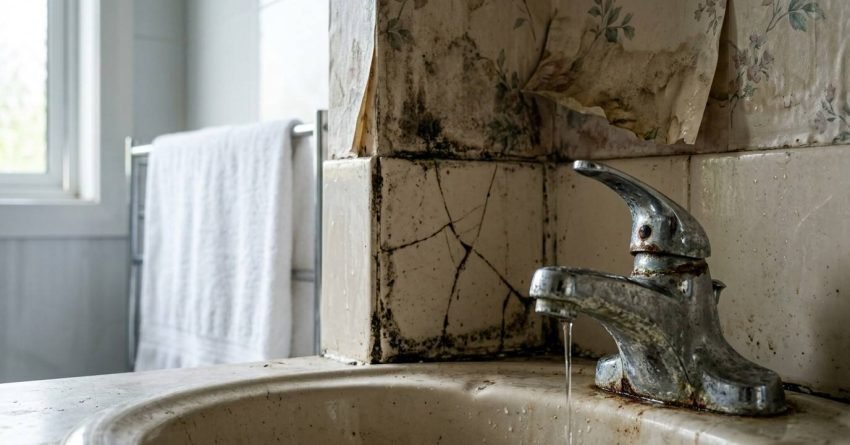
Mould that returns within days of cleaning is not a cleaning problem. It is a ventilation or waterproofing problem. In Sydney bathrooms, where humidity is consistently high, inadequate exhaust fans and failing waterproof membranes allow moisture to penetrate wall cavities and subfloors.
A failed exhaust fan is one of the most commonly overlooked causes of recurring mould. Once water reaches the substrate, mould growth accelerates behind surfaces where it cannot be seen or treated with surface sprays.
Visible water staining on ceilings, walls that feel soft or hollow when tapped, and paint that bubbles or peels repeatedly are all signs that water is moving through your bathroom structure. Left unaddressed, this leads to timber rot, structural damage, and significantly higher remediation costs than a planned renovation would have required.
Cracked, Chipped, or Deteriorating Tiles and Grout
Cracked tiles are more than an aesthetic issue. A crack in a floor or wall tile breaks the waterproof barrier that protects the substrate beneath. Water enters through the crack, saturates the adhesive bed, and begins degrading the surface below.
Grout that has cracked, darkened permanently, or begun to crumble performs the same failure it no longer seals the joints between tiles, allowing moisture ingress at every gap. Regrouting can extend the life of a bathroom in good structural condition.
When tiles are lifting, hollow, or cracking across multiple areas, the substrate itself has likely been compromised. At that point, a full retile and often a full renovation is the more cost-effective path.
Outdated Design That No Longer Functions
Design obsolescence is not purely an aesthetic concern. Bathroom layouts and fixture configurations from the 1990s and early 2000s were built around different household habits, smaller product ranges, and plumbing standards that have since changed.
A bathroom with a combined bath and shower in a space that no longer suits your household, or a vanity with no bench space and inadequate lighting, creates daily friction that accumulates over time. When the design actively works against how you use the space, that is a functional failure not just a style preference.

Functional Problems That Disrupt Daily Life
A bathroom that does not function reliably is not just frustrating. It is a daily cost in time, comfort, and water efficiency. Functional failures are among the clearest signals that a renovation is overdue.
Poor Water Pressure and Outdated Plumbing
Consistently low water pressure, slow-draining basins and showers, and taps that drip or fail to seal properly are symptoms of ageing plumbing infrastructure. In older Sydney homes, galvanised steel pipes corrode from the inside over time, reducing flow and contaminating water quality.
Replacing individual fixtures without addressing the underlying pipework is a short-term fix that delays the inevitable. Outdated plumbing also affects water efficiency older showerheads and cisterns use significantly more water per cycle than current WELS-rated fixtures. A renovation that upgrades the plumbing and fittings simultaneously addresses both the functional failure and the ongoing water cost.
Inadequate Storage and Inefficient Layout
A bathroom that lacks sufficient storage forces workarounds. Products end up stored on the floor, towels hang on door handles, and vanity surfaces stay permanently cluttered. These are not personal organisation failures. They are layout failures that a renovation can resolve through smarter vanity selection, recessed niching, and purpose-built storage solutions.
Layout inefficiency is equally common in older bathrooms designed for different household sizes or usage patterns. A single bathroom serving a growing family, or a layout that places the toilet directly adjacent to the entry with no visual separation, creates daily friction that a reconfigured floor plan can eliminate
Rising Maintenance Costs and Recurring Repairs
One of the clearest financial signals that a bathroom renovation is due is the pattern of recurring repair costs. When the same problems keep returning a leaking tap, a failing seal, a blocked drain the cumulative spend on reactive maintenance often exceeds what a planned renovation would have cost over the same period.
We use two thresholds to help homeowners assess where they stand. First: if your annual bathroom maintenance spend is approaching 10% of what a renovation would cost, the economics of continuing to repair deserve serious scrutiny. Second: if you have spent money on the same problem more than twice in three years, the underlying cause has not been fixed only the symptom.
Each repair also carries the risk of uncovering a larger underlying problem that escalates the cost further. Planned renovations give you control over scope, timing, and contractor selection. Reactive repairs remove all three.

Your Bathroom No Longer Suits Your Household’s Needs
Bathrooms are designed for the households that use them. When the household changes a new baby, ageing parents moving in, adult children returning home, or a shift to working from home the bathroom that worked before may no longer be adequate.
Accessibility is a growing consideration. A bathroom with a high-step shower recess, no grab rails, and limited turning space is a safety risk for elderly or mobility-impaired household members. Renovating to include a step-free shower with a minimum 900mm x 900mm base, grab rails positioned to AS 1428.1 compliance standards, and wider doorways of at least 820mm clear opening is not a luxury upgrade. It is a practical response to changed household needs.
Similarly, a single bathroom serving four or more people creates scheduling pressure and wear patterns that accelerate deterioration. Adding a second toilet, converting a laundry into an ensuite, or reconfiguring an existing bathroom to serve dual access are all renovation responses to household growth.
The Impact on Your Property Value
A dated or poorly functioning bathroom is one of the most consistent factors that reduces buyer confidence and suppresses property valuations in Sydney. Buyers and valuers assess bathrooms as a proxy for overall property maintenance; a bathroom that looks neglected signals that other areas of the property may have been similarly deferred.
Conversely, a well-executed bathroom renovation consistently delivers strong return on investment in the Sydney market. Mid-range bathroom renovations those that address structural issues, update fixtures, and improve the finish without over-capitalising typically recover a significant portion of their cost in added property value, while also improving the property’s appeal and time on market.
For homeowners considering whether to renovate or expand, our home extension guide outlines how additions can complement a bathroom upgrade to maximise overall property value.
The Impact on Your Property Value
A dated or poorly functioning bathroom is one of the most consistent factors that reduces buyer confidence and suppresses property valuations in Sydney. Buyers and valuers assess bathrooms as a proxy for overall property maintenance a bathroom that looks neglected signals that other areas of the property may have been similarly deferred.
A well-executed bathroom renovation consistently delivers strong return on investment in the Sydney market. Mid-range bathroom renovations those that address structural issues, update fixtures, and improve the finish without over-capitalising typically recover a significant portion of their cost in added property value, while also improving the property’s appeal and time on market.
Property investors in particular benefit from renovating before a tenancy change rather than after. A bathroom in good condition commands higher rental yields and reduces vacancy periods
When to Get a Professional Bathroom Assessment
Not every bathroom problem is visible at the surface. Some of the most costly issues failing waterproof membranes, corroded pipework, compromised substrates are only detectable through a professional inspection.
What You Can Self-Assess
We recommend starting with a structured walk-through of your own bathroom. Check for mould that returns within a week of cleaning, tiles that sound hollow when tapped, grout that crumbles when pressed, taps that drip after being fully closed, and drains that are slow to clear. Any two of these present together is a strong signal that a renovation assessment is warranted.
When to Call a Licensed Inspector
If you suspect water damage behind walls, notice soft or discoloured flooring near the shower or bath, or have a bathroom that is more than 15 years old with no documented waterproofing work, a licensed building inspector or bathroom renovation specialist should assess the space before you make any decisions. The cost of an inspection is a fraction of the cost of discovering structural water damage mid-renovation.
When Is the Right Time to Renovate?
The right time to renovate is before a problem becomes an emergency. Emergency repairs burst pipes, failed waterproofing, structural water damage are always more expensive than planned renovations because they remove your ability to control scope, timing, contractor selection, and material choices.
If your bathroom shows two or more of the signs covered in this guide, the case for renovation is strong. If it shows four or more, the renovation is likely already overdue.
The most cost-effective renovations are those planned with sufficient lead time to select the right contractor, source materials at the right price point, and sequence trades efficiently. Rushed renovations driven by failure rather than planning consistently cost more and deliver less.
Conclusion
Bathrooms communicate their condition clearly when you know what to look for. Water damage, failing surfaces, functional breakdowns, and rising repair costs are all signals that a renovation is the more practical and cost-effective path forward. Addressing these signs early protects your property’s structural integrity and prevents minor problems from compounding into major expenses.
For Sydney homeowners and property investors, a well-planned bathroom renovation is one of the highest-returning improvements you can make to a residential property. The key is acting on the evidence before the decision is made for you.
At Sydney Home Renovation, we provide end-to-end bathroom renovation solutions from honest cost planning and detailed budgeting to skilled workmanship and quality finishes that stand the test of time. Reach out to our team when you are ready to move forward with confidence.
Frequently Asked Questions
How do I know if my bathroom needs a full renovation or just repairs?
If your bathroom has isolated issues a single dripping tap or a small grout crack targeted repairs are usually sufficient. When problems are recurring, widespread, or structural, a full renovation is typically the more cost-effective long-term solution.
What are the most common signs a bathroom needs renovating in Sydney?
The most common signs include persistent mould that returns after cleaning, cracked or lifting tiles, low water pressure, outdated plumbing, inadequate storage, and recurring maintenance costs. Any combination of these signals indicates the bathroom has reached the end of its serviceable life.
Can I renovate my bathroom while still living in the house?
Yes. Most bathroom renovations in Sydney are completed while homeowners remain in the property. A well-organised contractor will sequence trades to minimise disruption and ensure at least one functional bathroom remains accessible throughout the project where possible.
How long does a bathroom renovation typically take in Sydney?
A standard bathroom renovation in Sydney generally takes two to four weeks from demolition to completion, depending on scope, the availability of trades, and whether structural changes or plumbing relocations are involved. Complex renovations with layout changes can take longer.
Does a bathroom renovation add value to a Sydney property?
Yes. A well-executed bathroom renovation consistently improves property value in the Sydney market. Buyers and valuers treat bathroom condition as a key indicator of overall property maintenance, and updated bathrooms improve both buyer confidence and sale price outcomes.
What is the biggest mistake homeowners make when renovating a bathroom?
The most common mistake is underestimating the full scope of work required particularly hidden costs such as waterproofing, plumbing upgrades, and substrate repairs. Budgeting only for visible finishes without accounting for structural preparation frequently leads to cost overruns mid-project.
Is it worth renovating a bathroom before selling a property?
In most cases, yes particularly if the bathroom is visibly dated or has functional problems. A bathroom in poor condition suppresses buyer confidence and can reduce offers significantly. A mid-range renovation that addresses structural issues and updates the finish typically recovers its cost and improves time on market.