The minimum legal size for a bedroom in Australia is 7 square metres of floor area, as set by the National Construction Code. This applies to new builds and most residential additions across the country. We work with homeowners planning a renovation, investors assessing a property, and clients adding a bedroom to an existing home, and this standard is always the starting point for a compliant, liveable, legally recognised bedroom design.
The Legal Minimum Bedroom Size Under the NCC
The National Construction Code sets the baseline bedroom size standard that applies to residential construction across Australia. Every new bedroom, whether in a new home, a granny flat, or a residential addition, must meet this standard to receive building approval.
A bedroom must have a minimum floor area of 7 square metres, with no single dimension measuring less than 2 metres in any direction. A room that is 3.5 metres by 2 metres satisfies the area requirement but only just clears the dimension rule. A room that is 4 metres by 1.8 metres fails, regardless of its total area.
These two rules work together. Area alone is not enough. Shape matters.
What the National Construction Code Actually Specifies
The NCC Volume Two governs Class 1 buildings, which include detached houses, townhouses, and similar residential dwellings. Under this framework, a habitable room classified as a bedroom must meet the 7m² floor area minimum and the 2-metre minimum dimension rule simultaneously.
The code does not specify a required shape. A bedroom can be rectangular, L-shaped, or irregular, provided the usable floor area meets the threshold, and no wall-to-wall measurement falls below 2 metres. We always exclude built-in wardrobes and ensuite areas from the habitable floor area calculation when assessing a design, because the 7m² must be clear, usable bedroom space.
Natural Light and Ventilation Requirements for Bedrooms
A room cannot be classified as a legal bedroom on floor area alone. The NCC requires habitable rooms, including bedrooms, to have adequate natural light and ventilation, typically through a window or comparable opening.
We see this trip up renovation projects more often than the size rule itself. A windowless storage room or internal office cannot become a legal bedroom simply by meeting the 7m² threshold. The natural light and ventilation requirement must be satisfied at the same time as the floor area and dimension rules, and it is one of the first things a building certifier checks.
How Floor Area and Ceiling Height Work Together
Floor area is only one part of the compliance picture. The NCC also requires a minimum ceiling height of 2.4 metres for at least two-thirds of the floor area in any habitable room, including bedrooms. The remaining third may have a ceiling height no lower than 2.1 metres.
This matters for attic conversions, mezzanine bedrooms, and rooms built under a sloped roofline. We regularly see rooms that clear the 7m² floor area requirement but still fail compliance because the ceiling drops below 2.1 metres across too much of the space. Both dimensions must be satisfied before a room qualifies as a legal bedroom.

How Minimum Size Rules Apply to Renovations and Additions
The NCC minimums apply to any new bedroom created through construction, including additions, conversions, and significant alterations. When we convert a study, garage, or storage room into a bedroom, the resulting space must meet the same standards as a bedroom in a new build.
This is where many renovation projects run into unexpected compliance issues. A room that functions as a bedroom informally does not become a legal bedroom simply by adding a bed. It must meet the NCC floor area, dimension, ceiling height, and ventilation requirements, and it must be approved through the relevant building consent process before it counts.
When Does Bedroom Size Compliance Become Your Responsibility?
Compliance becomes the homeowner’s direct responsibility the moment a building permit or development approval is lodged to create or formalise a bedroom. In New South Wales, this typically means lodging a development application or a complying development certificate, depending on the scope of work.
The approval process generally runs in three stages. First, we assess the existing room or planned addition against the NCC floor area, dimension, and ceiling height rules. Second, we prepare and lodge the relevant application with council or a private certifier. Third, once approved, the completed work is inspected to confirm it matches the approved plans before an occupation or compliance certificate is issued.
If a bedroom is added without approval and later fails to meet NCC standards, it cannot be legally advertised or sold as a bedroom. This has direct consequences for property valuations, rental income calculations, and resale value, particularly for investors adding bedrooms specifically to increase yield or capital value.

Minimum Size vs. Liveable Size – What Buyers and Investors Should Know
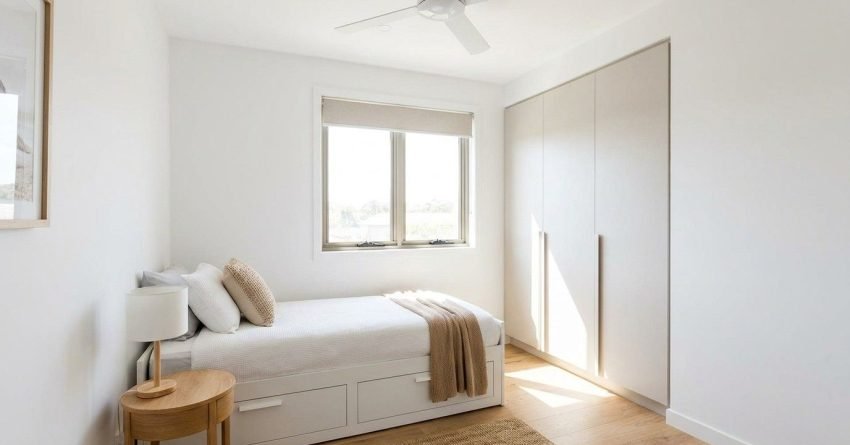
The legal minimum and a genuinely liveable bedroom are not the same thing. A 7m² bedroom meets the code, but it is a tight space. It can accommodate a single bed and limited furniture, but it will not comfortably fit a double bed, wardrobe, and desk simultaneously.
For investors, this distinction matters at the point of rental appraisal and sale. Real estate agents and buyers increasingly apply informal size benchmarks that exceed the legal minimum, and we plan every bedroom addition with those benchmarks in mind.
| Room Size | Market Classification | Typical Furniture Fit |
| 7m² (legal minimum) | Compliant, tight single | Single bed only |
| 8–9m² | Small single room | Single bed + small wardrobe |
| 10–12m² | Functional single or small double | Double bed + limited storage |
| 12–14m²+ | Master bedroom (Sydney market) | Double/queen bed, wardrobe, desk |
We design bedrooms with liveability in mind, not just the minimum required to pass inspection, because rooms built this way consistently perform better at appraisal and resale.
Common Bedroom Size Mistakes We See in Renovations
The most common mistake we encounter is measuring the room’s total footprint instead of the usable habitable floor area, which excludes wardrobes and ensuite space. This gap can be enough to drop a room below the 7m² threshold even when the overall footprint looks compliant on paper.
Another frequent issue is treating a converted study or garage as a bedroom without lodging the correct approval. We also see rooms that meet the floor area rule but fail on ceiling height, particularly in loft or attic conversions where the roofline cuts into more than a third of the usable space.
Conclusion
The minimum legal bedroom size in Australia is 7 square metres, with no dimension below 2 metres and a ceiling height of at least 2.4 metres across two-thirds of the floor area.
For renovators and investors in Sydney, meeting the minimum is the starting point, not the finish line. Rooms designed with liveability in mind consistently outperform minimum-compliant spaces in rental yield and resale value.
We help homeowners and investors at Sydney Home Renovation plan bedroom additions and conversions that meet NCC requirements, satisfy council approval, and deliver spaces worth building. Contact us to discuss your project.
Frequently Asked Questions
Does the minimum bedroom size differ between states in Australia?
The NCC sets a national baseline of 7m², but individual states and local councils can apply additional requirements. We always confirm current local council rules before starting any bedroom addition or conversion.
Can a room without a window legally be called a bedroom?
No. The NCC requires habitable rooms, including bedrooms, to have adequate natural light and ventilation. A room without a compliant window or ventilation source cannot be legally classified as a bedroom.
What is the minimum ceiling height for a bedroom in Australia?
The NCC requires a minimum ceiling height of 2.4 metres across at least two-thirds of the bedroom floor area. The remaining area must have a ceiling no lower than 2.1 metres.
Does a bedroom need a built-in wardrobe to meet legal requirements?
No. A built-in wardrobe is not a legal requirement for a bedroom under the NCC. Wardrobe space is typically excluded from the minimum 7m² habitable floor area calculation.
What happens if a bedroom does not meet the minimum size requirement?
A non-compliant room cannot be legally advertised or sold as a bedroom. This affects property valuations, rental classifications, and resale outcomes, particularly for investors relying on bedroom count for yield calculations.