Cabinet refacing looks like a smart shortcut. It promises a freshened look without the full renovation bill, but for many Sydney homeowners we work with, it delivers less than promised while costing more than expected.
We find that understanding where cabinet refacing falls short helps you avoid a costly mistake. The gap between what refacing can fix and what your kitchen or bathroom actually needs is often wider than a contractor’s quote reveals.
This guide covers the structural limits, hidden costs, long-term value concerns, and real-world scenarios where cabinet refacing simply isn’t the right call, along with what we recommend instead.
What Is Cabinet Refacing? A Quick Definition Before the Downsides
Cabinet refacing is a renovation technique where the visible surfaces of existing cabinets are updated without replacing the underlying cabinet boxes. New door and drawer fronts are installed, and the exposed sides and frames are covered with matching veneer or laminate to create a refreshed appearance.
The process typically includes replacing hinges, handles, and other hardware. The cabinet carcasses, meaning the structural boxes fixed to the wall, remain in place throughout. No plumbing, electrical work, or structural changes are involved, and most jobs run over a few days rather than weeks.
On paper, it sounds efficient. In practice, we see the limitations of this approach create real problems for homeowners who need more than a cosmetic update.
Understanding what refacing does not do is just as important as understanding what it does.
The Core Downsides of Cabinet Refacing Homeowners Overlook
Cabinet refacing is marketed as a cost-effective alternative to full renovation, but the reality is more complicated. The technique works within a narrow set of conditions, and when those conditions aren’t met, the results disappoint and the costs climb.
It Only Changes the Surface, Not the Structure
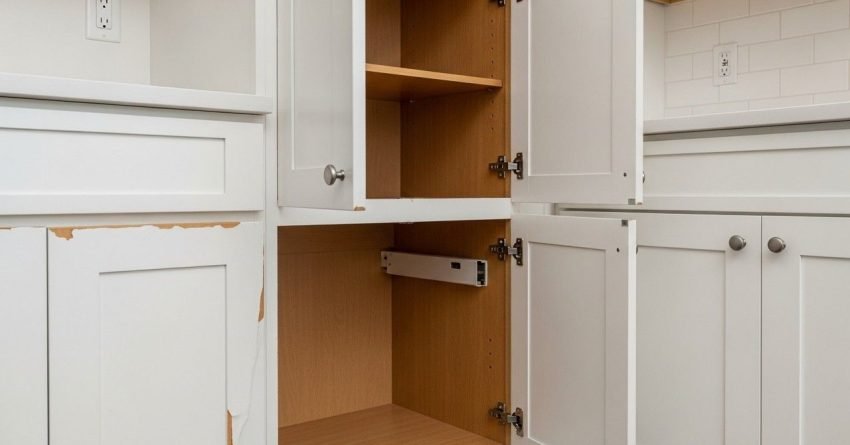
The most significant limitation of cabinet refacing is that it addresses appearance only. New door fronts and fresh veneer can make cabinets look updated, but they do nothing for worn drawer runners, sagging shelves, damaged hinges, or poorly designed internal storage.
If your cabinets feel cramped, inefficient, or poorly laid out, refacing will not solve that. You will spend money on a cosmetic refresh and still live with the same functional frustrations. For homeowners who need better storage, improved accessibility, or a more practical layout, we consider refacing a disguise rather than a renovation.
This distinction matters most in bathrooms, where storage efficiency and moisture resistance are critical. Covering old cabinet boxes with new veneer does not address water damage, swelling, or the structural degradation that comes from years of humidity exposure.
Cabinet Boxes Must Be in Good Condition to Qualify
Cabinet refacing only works when the existing cabinet carcasses are structurally sound. If the boxes are warped, water-damaged, infested with mould, or showing signs of delamination, refacing is not a viable option, and we consider any contractor who tells you otherwise to be cutting corners.
In Sydney bathrooms particularly, we see moisture damage to cabinet boxes often. Years of steam, condensation, and the occasional leak take a toll on particleboard and MDF carcasses, and by the time homeowners consider refacing, the boxes they are trying to save may already be compromised.
We always recommend a thorough inspection before committing to refacing. If the boxes fail that inspection, you are looking at full replacement regardless, and any money spent on refacing quotes and planning is wasted.
Layout and Functionality Stay Exactly the Same
Cabinet refacing locks you into your existing layout. The positions of every cabinet, drawer, and shelf remain fixed, so if your current configuration is awkward, such as a vanity that blocks the door or a cabinet positioned too high, refacing will not change any of it.
For homeowners planning a meaningful renovation, this is a serious constraint. A full cabinet replacement allows us to redesign the layout entirely, optimise storage placement, and bring the space into line with how you actually use it.
This is particularly relevant for property investors in Sydney who are renovating to maximise rental appeal or resale value. A refreshed surface on a poorly designed layout does not move the needle on either.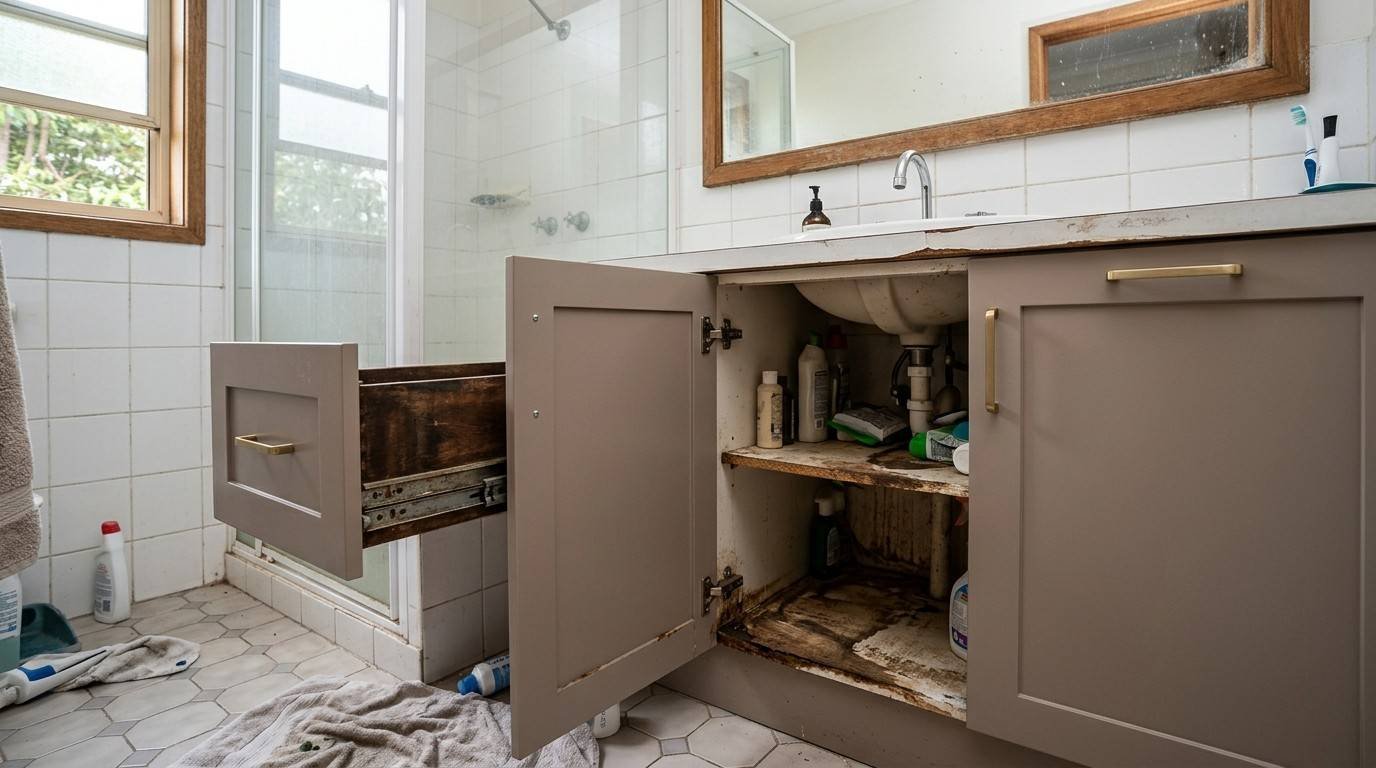
The Hidden Costs That Make Cabinet Refacing Less Affordable Than It Looks
The initial quote for cabinet refacing often looks attractive compared to full replacement, but the final cost frequently tells a different story. Several cost factors are either underquoted, excluded entirely, or only discovered once work begins.
Labour Costs Are Higher Than Most Quotes Suggest
Skilled cabinet refacing requires precise measurement, careful veneer application, and exact alignment of new door fronts. When done properly, it is time-intensive work, and when done quickly, it shows: bubbling veneer, misaligned doors, and visible seams are common complaints from homeowners who chose the cheapest quote.
In Sydney, labour rates for quality cabinet work reflect the city’s broader construction cost environment. A refacing job that appears cheaper than replacement on paper can close that gap quickly once accurate labour hours, travel, site preparation, and work around existing plumbing and fixtures are factored in.
We recommend homeowners who receive unusually low refacing quotes ask detailed questions about what is and is not included. Exclusions around hardware, veneer edges, and internal fittings are common ways for quotes to look competitive while hiding real costs.
Material Quality Varies Wildly, and Cheap Veneers Show It
Not all refacing materials are equal. The market includes everything from high-quality thermofoil and solid timber veneer to low-grade laminate that begins peeling within a few years, and budget refacing jobs almost always use the cheaper end of that range.
In a bathroom environment, material quality is not just an aesthetic concern. It is a durability concern, since low-grade veneers exposed to steam and moisture degrade faster than the cabinet boxes beneath them.
A refacing job that looks fresh on day one can look tired and damaged within three to five years if the wrong materials are used. When comparing quotes, we always ask for the specific materials being used, their moisture resistance rating, and the manufacturer’s warranty.
Mismatched Finishes and Fittings Add Unexpected Expenses
Cabinet refacing rarely happens in isolation. New door fronts and veneer will almost always look different from adjacent surfaces, including benchtops, splashbacks, flooring, and wall tiles that were not part of the refacing scope.
This mismatch often prompts homeowners to update surrounding elements to restore visual cohesion, adding costs that were never part of the original budget. New hardware, such as handles, hinges, and soft-close mechanisms, is typically quoted separately or excluded entirely from base refacing prices.
If existing tapware clashes with the refreshed cabinetry, that pressure to update as well creates budget creep that can push the final cost above what a full renovation would have cost from the start. Depending on scope, we see refacing budgets in Sydney climb from an initially attractive figure to one much closer to a full replacement quote once these extras are included.
Why Cabinet Refacing Can Limit Your Renovation’s Long-Term Value
For homeowners and investors making decisions based on long-term return, cabinet refacing presents a value problem. The investment does not translate into property value the way a full renovation does, and the underlying limitations become more visible over time.
Refacing Does Not Increase Property Value the Way Full Renovation Does
Buyers and renters in Sydney’s competitive property market respond to genuine quality: updated layouts, modern fixtures, and renovations that demonstrate real investment in the property. When identified by a buyer or their building inspector, cabinet refacing is often viewed as a cosmetic patch rather than a substantive upgrade.
A full bathroom renovation that replaces cabinetry, updates plumbing fixtures, installs new tiling, and improves the layout delivers a measurable improvement to a property’s appeal and market value. Refacing delivers a surface-level change that experienced buyers can identify quickly, and discount accordingly.
For property investors calculating renovation ROI, spending on improvements that buyers and tenants can see and value is the foundation of renovation strategy. Spending on cosmetic updates that mask underlying limitations is not.
Dated Cabinet Boxes Undermine New Door and Drawer Fronts
There is an inherent contradiction at the heart of cabinet refacing. The goal is to make cabinets look new, but the boxes beneath the new fronts are still old.
Old cabinet boxes settle, shift, and degrade at a different rate than new door fronts, so alignment issues emerge over time. Drawer runners that were adequate when the refacing was done begin to fail, and the fresh appearance of new doors starts to contrast with the visible age of the cabinet interiors.
For homeowners planning to stay in their property for five or more years, we think this trajectory is worth considering carefully. The lifespan of a refacing job is typically shorter than a full replacement, which means the cost is incurred again sooner.
When Cabinet Refacing Makes Sense, and When It Doesn’t
Cabinet refacing is not always the wrong choice. There are specific circumstances where it represents a reasonable short-term solution, and being clear about them helps homeowners decide based on their actual situation rather than marketing claims.
Signs Your Cabinets Are Beyond Refacing
Several conditions disqualify cabinets from refacing entirely. Water damage that has caused swelling, delamination, or mould growth in the cabinet boxes cannot be resolved by applying new surfaces, and structural damage such as broken frames, collapsed shelves, or cabinets that are no longer level requires replacement, not resurfacing.
Cabinets made from low-density particleboard that has absorbed moisture over many years will not hold new veneer reliably, and the adhesion fails quickly. Similarly, cabinets with significant hinge damage or drawer runner failure need new boxes, not new fronts.
If more than one of these conditions is present, we consider refacing a delay rather than a solution. The money spent on refacing will need to be spent again on replacement within a shorter timeframe than a full renovation would have required.
Situations Where a Full Bathroom Renovation Is the Smarter Investment
We recommend a full bathroom renovation over cabinet refacing when the existing layout is inefficient, when the cabinet boxes show any signs of moisture damage, when the goal is measurable property value, or when the homeowner plans to stay in the property for more than five years.
It also makes more sense when the total cost of refacing, including materials, labour, hardware, and the surrounding updates that inevitably follow, approaches the cost of full replacement. At that point, the cost advantage of refacing has disappeared.
For Sydney homeowners working with a renovation budget, the question is not simply what is cheaper today. It is what delivers the best outcome over the life of the renovation, and in most bathroom cases, that answer points toward full replacement.
Cabinet Refacing vs. Full Cabinet Replacement: A Cost and Value Comparison
| Factor | Cabinet Refacing | Full Cabinet Replacement |
| Upfront cost | Lower initial quote | Higher upfront investment |
| Final cost (with extras) | Often closes the gap | Predictable with detailed scope |
| Layout flexibility | None, existing layout fixed | Full redesign possible |
| Structural improvement | None | Complete |
| Lifespan | 5 to 10 years, material dependent | 15 to 25 years |
| Property value impact | Minimal | Measurable |
| Moisture resistance | Depends on veneer quality | New materials throughout |
| Suitability for damaged boxes | Not suitable | Resolves underlying issues |
| Best for | Short-term cosmetic refresh | Long-term renovation investment |
This comparison makes clear that cabinet refacing and full replacement are not equivalent options at different price points. They are fundamentally different approaches with different outcomes, lifespans, and implications for property value.
For homeowners who need a short-term cosmetic update on structurally sound cabinets with no plans to sell or significantly renovate within five years, we agree refacing can be a reasonable choice. For everyone else, the case for full replacement is stronger than the initial cost difference suggests.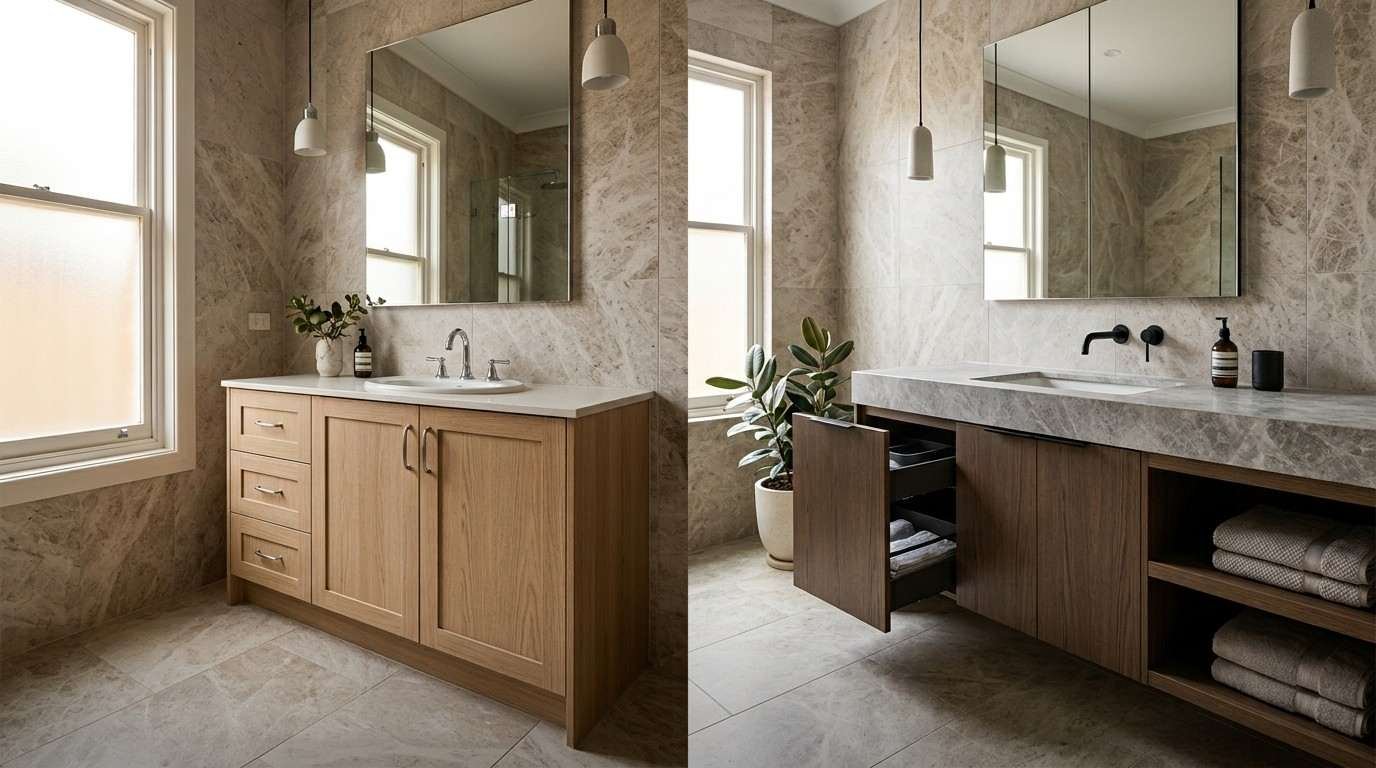
What Sydney Homeowners Should Know Before Choosing Cabinet Refacing
Sydney’s housing market and climate create specific conditions that affect the cabinet refacing decision. The city’s humidity levels, particularly in coastal and inner-city areas, accelerate moisture damage to cabinet materials, and homes built before the 1990s often have cabinet boxes made from materials not well suited to refacing.
Sydney’s renovation costs also affect the calculation. Labour rates here are among the highest in Australia, so the labour component of a refacing job is more expensive than in other markets, and that cost applied to a process delivering limited structural improvement weakens the value proposition further.
In kitchens as much as bathrooms, property values in Sydney mean renovation decisions carry more financial weight. A renovation that genuinely improves a property’s functionality, appeal, and condition contributes to an asset worth significantly more than the national average, and we see cutting corners with cosmetic solutions as a risk experienced investors increasingly recognise.
Before committing to cabinet refacing in Sydney, we suggest getting a detailed written quote that specifies materials, labour hours, hardware inclusions, and warranty terms. Have the existing cabinet boxes inspected by a qualified tradesperson, not just the refacing contractor, before signing anything, and compare that total cost against a full replacement quote with a clear scope of work.
The decision should be based on complete information, not the appeal of a lower number on an initial quote.
Conclusion
Cabinet refacing addresses appearance without resolving structure, layout, or long-term durability. For Sydney homeowners and property investors, the hidden costs, material limitations, and restricted value impact make it a less reliable renovation strategy than it initially appears.
The smarter path starts with an honest assessment of what your cabinets actually need, not just what they look like. When the boxes are compromised, the layout is inefficient, or the goal is genuine property improvement, full replacement delivers outcomes that refacing simply cannot match.
At Sydney Home Renovation, we help homeowners and investors make renovation decisions based on complete information, accurate costs, and long-term value. Contact our team today for a transparent assessment and detailed quote that gives you the full picture before you commit.
Frequently Asked Questions
Is cabinet refacing worth it in Sydney?
Cabinet refacing can be worth it in Sydney only when the existing cabinet boxes are structurally sound, moisture-free, and the goal is a short-term cosmetic update. Given Sydney’s high labour rates and humidity levels, the cost advantage over full replacement is often smaller than expected.
What are the biggest problems with cabinet refacing?
The biggest problems with cabinet refacing include its inability to fix structural damage, its restriction to the existing layout, and the risk of poor-quality veneer materials that degrade quickly in humid environments. Hidden costs for hardware, labour, and surrounding updates frequently push the final price higher.
How long does cabinet refacing last compared to full replacement?
Cabinet refacing typically lasts between five and ten years, depending on material quality and environmental conditions. Full cabinet replacement using quality materials generally lasts fifteen to twenty-five years, with the gap even more pronounced in bathrooms.
Does cabinet refacing add value to a home?
Cabinet refacing adds minimal measurable value to a home compared to full renovation. Experienced buyers and building inspectors can identify refacing as a cosmetic update, and it is typically not factored into property valuations the same way a full renovation is.
Can all cabinets be refaced?
Not all cabinets can be refaced. Cabinets with water damage, mould, structural warping, delamination, or significant wear to the carcass are not suitable candidates, and a thorough inspection is essential before committing.
Is cabinet refacing cheaper than replacing cabinets?
Cabinet refacing has a lower initial quote than full replacement, but the final cost is often closer than it appears. When labour, quality materials, hardware, and surrounding updates are included, the cost gap narrows significantly.
What is the difference between cabinet refacing and cabinet resurfacing?
Cabinet refacing involves replacing door and drawer fronts entirely and covering exposed cabinet frames with new veneer or laminate. Cabinet resurfacing typically refers to painting or coating existing surfaces without replacing components, and both leave the underlying cabinet boxes in place.