
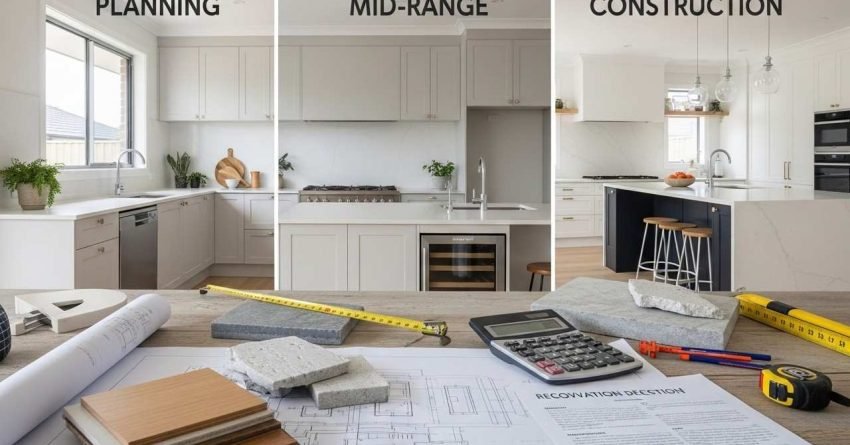
A kitchen renovation in Sydney typically costs between $15,000 and $75,000 in 2026, depending on scope, materials, and labour. Whether you’re refreshing a tired galley kitchen or undertaking a full structural overhaul, understanding where your money goes is the single most important step before you commit to a single tile or cabinet door.
Rising construction costs, tighter labour availability, and shifting material prices have made accurate budgeting more critical than ever for Sydney homeowners. Getting your numbers wrong at the planning stage doesn’t just cause stress. It causes cost blowouts that derail projects and erode property value.
This guide breaks down every cost category we see in a 2026 kitchen renovation, from cabinetry and benchtops to labour rates, hidden expenses, and ROI, so you can plan, prioritise, and renovate with complete financial confidence.
Kitchen Renovation Costs at a Glance
| Budget Tier | Typical Cost Range (Sydney 2026) | Best Suited For |
| Cosmetic refresh | $10,000 to $18,000 | Rentals, investment properties, quick updates |
| Mid-range renovation | $20,000 to $45,000 | Owner-occupiers wanting a genuine transformation |
| Premium renovation | $45,000 to $80,000+ | Custom joinery, structural change, high-end finishes |
| Luxury/architect-designed | $80,000 to $150,000+ | Full architectural reconfiguration |
What Does a Kitchen Renovation Cost in Australia in 2026?
Kitchen renovation costs in Australia vary significantly based on the size of the space, the quality of materials selected, and the extent of structural or layout changes involved. In Sydney specifically, labour costs sit above the national average.
This means your budget needs to account for a premium on trades compared to other states. As a general benchmark, most Sydney homeowners should expect to spend a minimum of $15,000 for a basic cosmetic refresh.
Upwards of $60,000 to $80,000 is realistic for a full premium renovation with structural changes, high-end joinery, and quality appliances.
Average Kitchen Renovation Cost by Scope
The most reliable way to frame kitchen renovation costs is by scope of work. A cosmetic update, new cabinet doors, benchtop, and appliances, sits at a very different price point than a full gut-and-rebuild with new plumbing, electrical, and layout changes.
| Renovation Scope | Typical Cost Range (Sydney 2026) |
| Cosmetic refresh (doors, benchtop, paint) | $10,000 to $18,000 |
| Mid-range full renovation (new cabinets, appliances, tiling) | $20,000 to $45,000 |
| Premium renovation (custom joinery, stone benchtops, structural) | $45,000 to $80,000+ |
| Luxury or architect-designed kitchen | $80,000 to $150,000+ |
These ranges reflect complete project costs including labour, materials, and project coordination. They do not include structural engineering, heritage approvals, or major plumbing relocations, which add cost on top.
Kitchen Renovation Cost Per Square Metre in Sydney
Cost per square metre is a useful cross-check when comparing quotes. It should never be used as the sole pricing method though.
Kitchen renovations in Sydney typically range from $2,500 to $5,500 per square metre for mid-range finishes, rising to $7,000 or more per square metre for premium custom work. A standard 10 to 15 square metre kitchen at mid-range finishes will therefore sit comfortably in the $25,000 to $55,000 range once all trades, materials, and project management are factored in.
Smaller kitchens, particularly those under 8 square metres, often cost more per square metre because fixed costs like plumbing rough-in, electrical upgrades, and project management don’t scale down proportionally with size. A tiny galley kitchen can still cost $18,000 to $30,000 even with modest finishes, simply because the minimum trade call-out and coordination costs stay constant.
What’s Included in a Kitchen Renovation Quote?
A comprehensive kitchen renovation quote should itemise every cost category clearly. When reviewing quotes from Sydney contractors, confirm the following are explicitly included or excluded:
- Demolition and waste removal
- Cabinet supply and installation (joinery)
- Benchtop fabrication and installation
- Splashback supply and installation
- Appliance supply and installation
- Plumbing rough-in and fit-off
- Electrical rough-in, fit-off, and lighting
- Tiling (floor and wall)
- Painting and plastering
- Project management and coordination
Any quote that doesn’t address these line items individually should be treated with caution. Vague lump-sum quotes are a common source of disputes and unexpected charges once work begins.
Kitchen Renovation Cost Breakdown by Budget Tier
Understanding what each budget tier realistically delivers is essential for setting expectations before you speak to a contractor. The three tiers below reflect real-world Sydney pricing in 2026 and are based on typical project scopes rather than theoretical minimums.
Budget Kitchen Renovation: $10,000 to $20,000
A budget kitchen renovation in this range is best suited to cosmetic improvements where the existing layout, plumbing, and electrical positions remain unchanged. Moving a sink, adding a new circuit, or relocating a gas point immediately pushes costs beyond this tier.
Within a $10,000 to $20,000 budget, you can realistically expect:
- Flat-pack or semi-custom cabinets from suppliers like IKEA or Kaboodle
- Laminate or engineered stone benchtop (entry-level)
- Tiled or glass splashback
- Mid-range freestanding appliances
- New flooring (vinyl plank or basic tile)
- Fresh paint and new hardware
This tier suits investment properties, rental upgrades, or homeowners who want a functional refresh without a full structural commitment. The key constraint is that layout changes are off the table. Your sink, cooktop, and dishwasher stay where they are.
Mid-Range Kitchen Renovation: $20,000 to $45,000
The mid-range tier is where most Sydney homeowners land when they want a genuinely transformed kitchen without custom pricing. This budget allows for semi-custom or fully custom flat-pack cabinetry, quality stone benchtops, integrated appliances, and minor layout adjustments.
A well-executed mid-range renovation at this price point typically includes:
- Custom or semi-custom cabinetry with soft-close hardware
- 20mm to 40mm engineered stone or Caesarstone benchtop
- Tiled splashback or feature tile
- Integrated or built-in appliances (oven, cooktop, rangehood, dishwasher)
- Porcelain or timber-look flooring
- Recessed LED lighting and pendant lights
- Minor plumbing and electrical adjustments
This is the most competitive tier in Sydney. The quality of your outcome depends heavily on the contractor’s project management capability and trade relationships, and a well-coordinated mid-range renovation can look and function like a premium result.
Premium Kitchen Renovation: $45,000 to $80,000+
Premium kitchen renovations involve fully custom joinery, high-specification materials, structural changes, and a level of finish that adds measurable property value. At this tier, you’re working with a cabinetmaker rather than a flat-pack supplier.
Every element is designed and built to specification. Expect the following at the premium tier:
- Fully custom cabinetry with two-pack polyurethane or timber veneer finishes
- 40mm or thicker stone benchtops (Calacatta marble, Dekton, or premium Caesarstone)
- Feature splashback (large-format tile, stone slab, or custom glass)
- High-end integrated appliances (Miele, Fisher and Paykel, Smeg, or equivalent)
- Structural changes including wall removal, island bench addition, or layout reconfiguration
- Custom lighting design with dimmable circuits
- Engineered timber or large-format porcelain flooring
At this level, project management, design coordination, and trade sequencing are critical. Delays or poor coordination at the premium tier are expensive, both in direct costs and in the disruption to your household.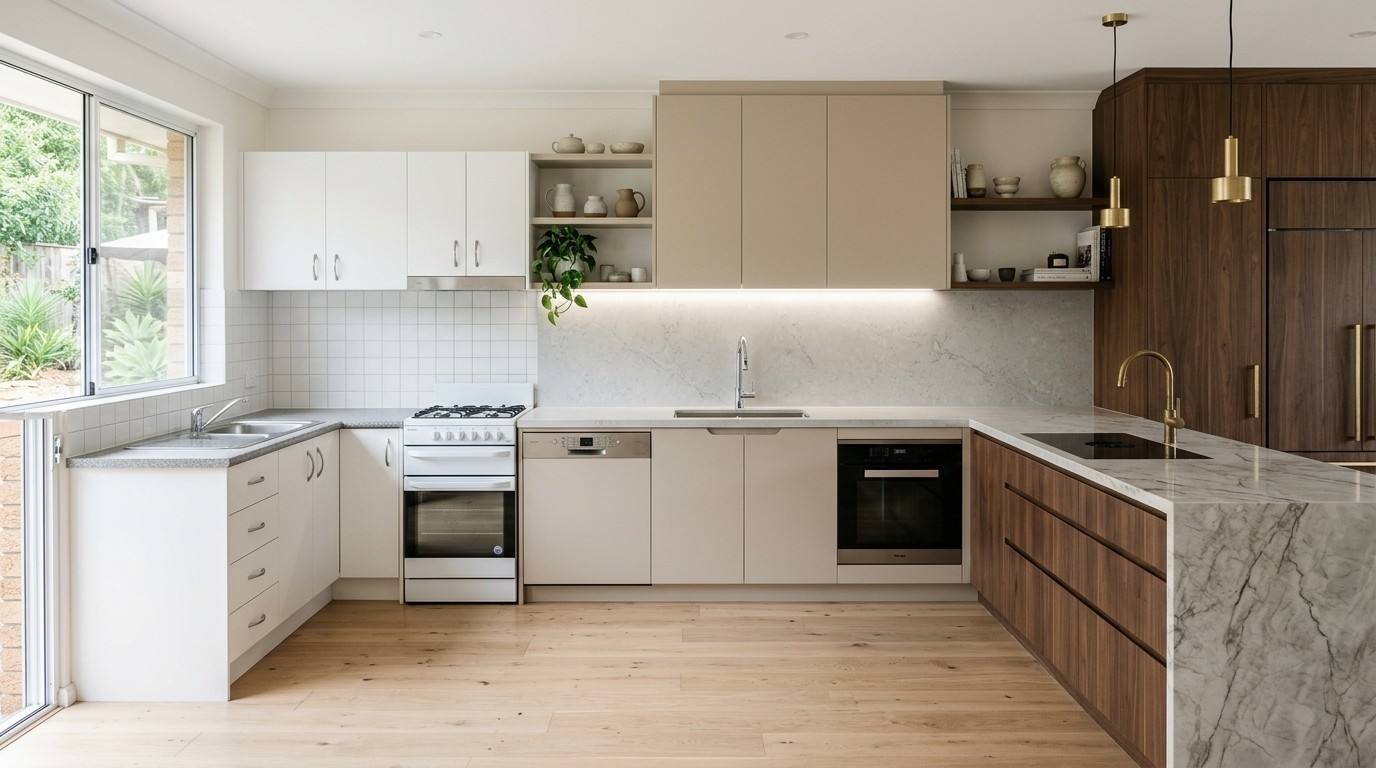
Kitchen Renovation Labour Costs in Sydney 2026
Labour is consistently the largest single cost category in any kitchen renovation, typically accounting for 35% to 50% of the total project budget. In Sydney, trade rates have increased steadily since 2022 due to sustained construction demand, skills shortages, and rising business operating costs.
Understanding individual trade rates helps you assess whether a quote is competitive. It also helps identify where cost savings are genuinely possible versus where cutting corners creates risk.
Builder and Project Manager Costs
A licensed builder or renovation project manager in Sydney typically charges between $85 and $150 per hour in 2026, or a fixed project management fee of 10% to 20% of the total project cost. For a $40,000 kitchen renovation, that translates to $4,000 to $8,000 in project management costs alone.
This fee covers trade coordination, scheduling, compliance oversight, and quality control. On complex projects involving multiple trades and structural work, a skilled project manager pays for themselves by preventing costly sequencing errors and delays.
On simpler cosmetic renovations, some homeowners choose to self-manage. This requires significant time, trade knowledge, and availability.
Electrician and Plumber Costs for Kitchen Renovations
Licensed electricians in Sydney charge between $100 and $160 per hour in 2026, according to the Master Electricians Australia rate guidance. A standard kitchen renovation electrical scope, including new circuits for appliances, recessed lighting installation, rangehood wiring, and a safety inspection, typically costs between $2,500 and $6,000 depending on the complexity of the existing switchboard.
Licensed plumbers charge similar rates, between $110 and $165 per hour. A standard kitchen plumbing scope covering sink relocation, dishwasher connection, and hot water adjustments typically costs between $1,500 and $4,000.
Relocating a sink to a new position on an island bench or opposite wall adds significant cost due to the need to re-route waste and supply lines. This often requires subfloor access.
Cabinetmaker and Joinery Labour Rates
Cabinetmakers in Sydney charge between $80 and $130 per hour for installation labour, though most custom joinery projects are quoted as a fixed price that includes both fabrication and installation. For a full custom kitchen, joinery labour and fabrication combined typically represents 30% to 40% of the total cabinet cost.
Flat-pack cabinet installation by a qualified installer costs between $800 and $2,500 for a standard kitchen. This is a meaningful saving compared to custom joinery installation, but it requires precise planning and accurate measurements to avoid costly adjustments on site.
Kitchen Cabinet and Joinery Costs
Cabinetry is typically the most visible and most expensive single component of a kitchen renovation. The choice between flat-pack, semi-custom, and fully custom joinery has the largest single impact on both your budget and the final aesthetic result.
Flat-Pack vs. Custom Cabinet Pricing
Flat-pack cabinets from suppliers like IKEA, Kaboodle, or Bunnings Kaboodle range from $3,000 to $12,000 in materials for a standard kitchen. When you add professional installation, handles, and internal fittings, the total flat-pack cabinet cost for a Sydney kitchen typically lands between $6,000 and $18,000.
Fully custom cabinetry from a Sydney cabinetmaker starts at approximately $15,000 for a basic kitchen and ranges to $50,000 or more for a large, complex layout with premium finishes. The price difference reflects material quality, construction method, finish options, and the ability to maximise every centimetre of your specific space.
Semi-custom options, where standard cabinet boxes are combined with custom doors and panels, offer a middle ground. This typically costs between $10,000 and $25,000 installed and is a popular choice for mid-range Sydney renovations.
Kitchen Benchtop Material Costs Compared
The benchtop is the most used surface in your kitchen and one of the most visible. Material selection has a significant impact on both cost and long-term durability.
| Benchtop Material | Approximate Cost (Installed, Sydney 2026) |
| Laminate | $800 to $2,500 |
| Engineered stone (entry-level) | $2,500 to $5,000 |
| Caesarstone or equivalent (mid-range) | $4,000 to $8,000 |
| Premium engineered stone (40mm+) | $7,000 to $14,000 |
| Natural marble or granite | $8,000 to $20,000+ |
| Dekton or sintered stone | $9,000 to $18,000 |
| Timber (hardwood or bamboo) | $3,000 to $7,000 |
These costs include fabrication, edge profiling, and installation for a standard kitchen. Waterfall edges, mitred joins, and complex cutouts for undermount sinks add to the fabrication cost.
Splashback Options and Costs
The splashback protects the wall behind your cooktop and sink while contributing significantly to the kitchen’s visual character. Ceramic or porcelain tile splashbacks are the most common choice, typically costing between $800 and $2,500 installed.
Glass splashbacks, either painted or printed, cost between $1,200 and $3,500 installed and offer a seamless, easy-clean surface. Stone slab splashbacks that match the benchtop are the premium option, typically adding $2,000 to $6,000 to the benchtop cost.
Kitchen Appliance Costs and Allowances
Appliances represent a significant portion of the kitchen renovation budget. This is an area where the range between entry-level and premium is enormous.
Setting a realistic appliance allowance early in the planning process prevents the common mistake of over-spending on cabinetry and running out of budget for quality appliances.
Cooking Appliances: Oven, Cooktop, and Rangehood Costs
For a mid-range Sydney kitchen renovation, a realistic appliance allowance for cooking appliances is between $3,000 and $8,000 for the set. This covers a 60cm or 90cm oven, a gas or induction cooktop, and a rangehood.
Entry-level cooking appliance sets from brands like Westinghouse, Chef, or Euromaid start at approximately $1,500 to $2,500 for the three items. Mid-range sets from brands like Bosch, Smeg, or Fisher and Paykel range from $4,000 to $9,000, while premium sets from Miele, Gaggenau, or Wolf start at $10,000 and can exceed $25,000 for a full suite.
Rangehood installation costs between $300 and $800 for a standard installation, rising to $1,500 or more if new ductwork needs to be run through the ceiling or wall.
Dishwasher and Refrigerator Allowances
A quality integrated or built-in dishwasher costs between $1,200 and $4,000 supply-only, with installation adding $200 to $500. Freestanding dishwashers start at approximately $700 but are less suitable for renovated kitchens where a seamless integrated look is the goal.
Refrigerators are often excluded from kitchen renovation quotes because homeowners retain their existing appliance. If a new refrigerator is part of the project, budget between $1,500 and $5,000 for a quality freestanding model, or $4,000 to $12,000 for a fully integrated refrigerator.
Budget vs. Premium Appliance Packages
The decision between budget and premium appliances should be driven by how you use your kitchen and how long you intend to stay in the property. A complete budget appliance package can be assembled for $3,000 to $5,000.
A mid-range package sits between $6,000 and $12,000. A premium integrated package from a single brand like Miele or Fisher and Paykel typically costs $15,000 to $30,000 or more.
Flooring, Lighting, and Finishing Costs
Flooring, lighting, and finishing work are often underestimated in kitchen renovation budgets. These elements collectively define the quality of the final result.
Kitchen Flooring Options and Price Ranges
Kitchen flooring must balance durability, water resistance, and aesthetics. The most common options in Sydney renovations and their installed cost ranges are:
| Flooring Type | Installed Cost Per Square Metre (Sydney 2026) |
| Vinyl plank (LVT) | $60 to $120 |
| Ceramic tile | $80 to $180 |
| Porcelain tile | $100 to $250 |
| Engineered timber | $120 to $280 |
| Polished concrete | $150 to $350 |
For a standard 15 square metre kitchen, flooring costs range from approximately $900 for entry-level vinyl plank to $5,000 or more for large-format porcelain or engineered timber. Subfloor preparation, levelling, waterproofing, or replacing damaged substrate, adds cost and is a common hidden expense in older Sydney homes.
Kitchen Lighting Costs and Electrical Upgrades
Lighting is one of the most cost-effective ways to elevate a kitchen renovation. A well-designed lighting scheme typically costs between $1,500 and $4,500 installed, including electrical labour.
Pendant lights over an island bench are a popular choice in Sydney renovations, with quality fittings ranging from $200 to $1,500 per pendant. If the existing kitchen has outdated wiring, an electrical upgrade to the switchboard may be required, adding $800 to $2,500 to the electrical scope.
Painting, Plastering, and Finishing Allowances
New plasterboard, patching, and a full repaint are standard requirements in most kitchen renovations. Budget between $1,500 and $4,000 for plastering and painting in a standard Sydney kitchen.
If the renovation involves removing a wall or relocating a doorway, additional plastering and cornice work will be required. This adds between $500 and $2,000 depending on the profile complexity and the length of run.
Hidden Costs in Kitchen Renovations Most Homeowners Miss
Hidden costs are the primary cause of kitchen renovation budget blowouts. They are not the result of dishonest contractors.
They are the result of conditions that cannot be fully assessed until demolition begins.
Structural and Waterproofing Surprises
Older Sydney homes, particularly those built before 1990, frequently reveal structural issues once walls and floors are opened up. Common discoveries include termite damage to wall framing, asbestos-containing materials in wall sheeting or floor tiles (common in homes built before 1987, per Asbestos Safety and Eradication Agency guidance), inadequate waterproofing under existing tiles, and rotted subfloor from historic plumbing leaks.
Asbestos removal in a Sydney kitchen typically costs between $1,500 and $5,000 depending on the extent and the type of material. Structural repairs to framing or subfloor range from $1,000 to $8,000 depending on severity.
These costs cannot be avoided. They are legal and safety requirements, but they can be anticipated with a pre-renovation inspection.
Council Approvals, Permits, and Compliance Costs
Most kitchen renovations in NSW that involve cosmetic changes within the existing footprint do not require a Development Application (DA). Certain works do trigger approval requirements though, including structural changes, alterations to external appearance, and plumbing or electrical works requiring permits.
A Complying Development Certificate (CDC) for minor structural works typically costs between $800 and $2,500 through a private certifier. A full DA through your local council costs between $1,500 and $5,000 in fees alone, with processing times of 40 to 100 days, according to NSW Planning Portal guidance.
Temporary Kitchen Setup and Waste Removal Costs
Living without a kitchen during a renovation is a practical challenge that carries real costs. Eating out or ordering meals for four to eight weeks adds up quickly, so budget $1,500 to $3,000 for additional food costs during a full kitchen renovation.
Waste removal is a cost that is sometimes excluded from renovation quotes. Skip bin hire in Sydney costs between $350 and $700 per bin depending on size and location.
Factors That Affect Kitchen Renovation Costs in Sydney
No two kitchen renovations cost the same, even when the scope appears identical on paper. Several key variables drive cost differences between projects.
Kitchen Renovation Cost by Layout Type
Layout complexity often has a greater impact on cost than raw kitchen size. A galley kitchen with a simple linear layout is significantly cheaper to renovate than an L-shaped or U-shaped kitchen of the same square metreage, because the number of corner cabinets and joinery joins increases with layout complexity.
As a general guide, a galley layout typically costs 10% to 15% less than an L-shaped kitchen of equivalent size, while a U-shaped kitchen with multiple corner junctions sits 10% to 20% higher than a straightforward L-shape. An island bench adds further cost, typically $3,000 to $12,000 depending on size, material, and whether it requires new plumbing or electrical connections.
Age of Property and Existing Condition
The age of a Sydney property is one of the strongest predictors of hidden cost risk. Homes built before 1987 have a high probability of containing asbestos, while homes built before 1980 frequently have undersized electrical wiring that cannot support modern appliance loads.
Federation and interwar homes, built before 1940, often have irregular wall angles and heritage-listed features that complicate standard cabinet installation. These properties can be beautifully renovated, but they require experienced contractors and budgets that reflect the additional complexity.
Material Selections and Supply Chain Impacts
Material selections have a compounding effect on cost. Choosing a premium stone benchtop, custom cabinetry, and imported tiles simultaneously pushes every cost category to its upper range.
Supply chain conditions in 2026 continue to affect lead times and pricing for certain materials. Imported tiles, European appliances, and some engineered stone products carry extended lead times of 8 to 16 weeks.
DIY vs. Professional Kitchen Renovation: Cost Comparison
Taking on parts of a kitchen renovation yourself can genuinely reduce costs, but the savings depend heavily on which tasks you take on. Painting, demolition, and hardware installation are the most common DIY-friendly tasks, typically saving $1,500 to $4,000 compared to hiring trades for the same work.
Plumbing, electrical, and gas fitting must be completed by a licensed tradesperson in NSW regardless of your skill level. Attempting these without a licence is illegal and voids insurance, so any savings here are not genuinely available to homeowners.
The real risk with DIY kitchen renovations is sequencing errors. A missed measurement or incorrect rough-in position can cost more to fix after cabinetry installation than it would have cost to hire a professional from the start, which is why most Sydney homeowners choose a hybrid approach: DIY for cosmetic tasks, licensed trades for anything structural, wet, or electrical.
How to Budget for a Kitchen Renovation in 2026
Effective kitchen renovation budgeting is not about finding the cheapest price. It’s about allocating your available funds in a way that delivers the best outcome for your specific goals.
How to Build a Realistic Kitchen Renovation Budget
Start with your total available budget and work backwards. Allocate costs across the major categories before you speak to a contractor, so you have a framework to assess quotes against.
A practical budget allocation for a mid-range Sydney kitchen renovation looks like this:
| Category | Percentage of Total Budget |
| Cabinetry and joinery | 30 to 35% |
| Labour (all trades) | 25 to 35% |
| Appliances | 10 to 15% |
| Benchtop | 8 to 12% |
| Flooring and tiling | 8 to 12% |
| Electrical and plumbing | 8 to 12% |
| Lighting and finishing | 5 to 8% |
| Contingency | 10 to 15% |
These percentages shift depending on your priorities. A homeowner who cooks daily might allocate more to appliances and less to premium cabinetry.
Financing Your Kitchen Renovation
Most Sydney homeowners fund a kitchen renovation through one of three routes: cash savings, a redraw or offset facility against their existing mortgage, or a dedicated renovation loan. Redrawing against an existing home loan is usually the lowest-cost option if equity is available, since renovation-specific personal loans typically carry higher interest rates.
Some contractors offer staged payment plans tied to project milestones rather than requiring full payment upfront. Under the Home Building Act 1989, deposits on projects over $20,000 are capped, which protects you from over-committing funds before work begins.
Contingency Allowances: How Much to Set Aside
A contingency allowance is not optional. It is a fundamental component of any realistic renovation budget.
For a kitchen renovation in an older Sydney home (pre-1990), a 15% contingency is the minimum prudent allowance. For a newer property in good condition, 10% is acceptable.
On a $40,000 kitchen renovation, a 15% contingency represents $6,000. This may feel like a large reserve, but it is consistently the difference between a renovation that completes on budget and one that creates financial stress.
How to Prioritise Spending for Maximum Value
When budget constraints require trade-offs, prioritise spending in the areas that deliver the greatest daily impact and the strongest return on investment. The hierarchy for most Sydney homeowners is cabinetry quality and layout functionality first, benchtop material and durability second, and appliance quality third.
Flooring durability, lighting design, and splashback aesthetics follow in that order. Avoid the common mistake of over-investing in decorative elements like handles and tapware at the expense of structural quality in cabinetry.
Kitchen Renovation ROI: Does It Add Value to Your Property?
A well-executed kitchen renovation is consistently cited by real estate agents and property valuers as one of the highest-return renovation investments available to Sydney homeowners. The kitchen is the room that buyers and tenants evaluate most critically.
How Much Value Does a Kitchen Renovation Add?
The return on a kitchen renovation depends on the property’s existing value, the quality of the renovation, and the local market. As a general guide, a well-executed mid-range kitchen renovation in Sydney can add $1.50 to $2.50 in property value for every $1.00 spent, particularly in the $500,000 to $1.5 million property price bracket.
For investment properties, a kitchen renovation that improves rental appeal can increase weekly rent by $50 to $150 per week in Sydney’s competitive rental market. The key is matching the renovation standard to the property’s price point.
Best Kitchen Upgrades for Return on Investment
Not all kitchen upgrades deliver equal returns. The highest-ROI kitchen improvements for Sydney properties in 2026 are new cabinetry, stone benchtop replacement, new integrated appliances, updated flooring, improved lighting, and fresh neutral paint.
Highly personalised choices, unusual tile patterns, bold colour schemes, or niche appliance brands, tend to deliver lower returns because they appeal to a narrower pool of buyers.
How to Choose the Right Kitchen Renovation Contractor in Sydney
The contractor you choose has more influence over your renovation outcome than any other single decision. A skilled, experienced contractor with strong trade relationships will deliver a better result at a given budget than a cheaper contractor who lacks coordination capability.
What to Look for in a Kitchen Renovation Quote
A trustworthy kitchen renovation quote in Sydney should be detailed, itemised, and specific. Red flags in a quote include lump-sum pricing without line-item breakdown, vague exclusions, no mention of compliance certificates, and payment schedules that front-load large deposits.
For projects over $20,000 in NSW, a written contract is legally required under the Home Building Act 1989. Ensure your contractor is licensed with NSW Fair Trading before signing anything.
Questions to Ask Before Signing a Contract
Before committing to a kitchen renovation contractor in Sydney, ask the following:
- Are you licensed with NSW Fair Trading, and can I verify your licence number?
- Do you carry public liability and workers’ compensation insurance?
- Who will be on site managing the project day-to-day?
- How do you handle variations and unexpected costs?
- Can you provide references from recent kitchen renovation projects?
- What is your process for managing trade scheduling and material lead times?
- What compliance certificates will I receive at the end of the project?
A contractor who answers these questions clearly and confidently, provides verifiable references, and presents a detailed written contract is demonstrating the professionalism that protects your investment.
Conclusion
Kitchen renovation costs in Sydney in 2026 range from $15,000 for a cosmetic refresh to $80,000 or more for a full premium transformation. The difference between a successful renovation and a costly blowout almost always comes down to planning, budgeting, and contractor selection.
Understanding the true cost of labour, materials, hidden expenses, and contingency before you start is the foundation of every renovation that finishes on time and on budget. We’ve seen firsthand how the right preparation changes the outcome.
At Sydney Home Renovation, we bring transparent cost planning, skilled trade coordination, and honest pricing to every kitchen renovation we deliver. We help homeowners and property investors navigate the full cost landscape, from the first budget conversation to the final compliance certificate, and we’d love to help you build a realistic budget and deliver a kitchen that adds lasting value to your home.
Frequently Asked Questions About Kitchen Renovation Costs
How long does a kitchen renovation take in Sydney?
A standard mid-range kitchen renovation in Sydney typically takes four to eight weeks from demolition to completion, depending on the scope of work and material lead times. Complex renovations involving structural changes can take ten to fourteen weeks.
Can I renovate my kitchen for under $15,000?
Yes, a cosmetic kitchen renovation is achievable under $15,000 if the existing layout, plumbing, and electrical positions remain unchanged. Moving any services will push costs beyond this threshold.
What is the most expensive part of a kitchen renovation?
Cabinetry and joinery is typically the most expensive single component, accounting for 30% to 35% of the total budget. Labour across all trades is the second largest cost category at 25% to 35%.
Do I need council approval for a kitchen renovation in NSW?
Most cosmetic kitchen renovations in NSW do not require a Development Application. Structural changes require either a Complying Development Certificate or a DA, and all licensed trade work requires compliance certificates.
How do I avoid cost blowouts on a kitchen renovation?
Set a realistic budget with a 10% to 15% contingency before you start, get a fully itemised quote from a licensed contractor, and avoid making changes to the scope once work has begun.
Is it cheaper to renovate a kitchen or buy a new home?
Renovating an existing kitchen is almost always more cost-effective than buying a new home to access a better kitchen. Stamp duty alone on a Sydney property purchase typically costs $20,000 to $50,000 or more.
How do I get an accurate kitchen renovation quote in Sydney?
Provide contractors with a clear brief including your preferred layout, material selections, and any known structural requirements. Request at least three itemised quotes and verify each contractor’s licence with NSW Fair Trading.
How much does a small kitchen renovation cost in Sydney?
A small kitchen under 8 square metres typically costs $18,000 to $30,000 even with modest finishes, because fixed costs like plumbing and project management don’t scale down with size. Layout simplicity helps keep costs toward the lower end of this range.


