

A kitchen remodel and a kitchen renovation are not the same thing. Confusing the two can lead to serious budget miscalculations before a single tile is laid.
We find that understanding this distinction helps Sydney homeowners, renovators, and property investors plan more accurately, spend more wisely, and avoid the costly surprises that derail so many kitchen projects. The difference matters more than most people realise.
Whether you are refreshing a dated kitchen or completely reimagining the space, the scope of work determines your budget, your timeline, your permit requirements, and ultimately your return on investment. This guide breaks down exactly what separates a kitchen remodel from a renovation, what each typically costs in Sydney, how long each takes, and how to determine which one your kitchen actually needs.
What Is a Kitchen Renovation?
Defining the Scope of a Kitchen Renovation
We define a kitchen renovation as the process of restoring, updating, or improving an existing kitchen without fundamentally changing its layout or structure. The word “renovate” comes from the Latin renovare, meaning to make new again, and that etymology captures the concept precisely.
In practical terms, a renovation works within the existing footprint. Walls stay where they are. Plumbing and electrical services remain in their current positions, and we refresh the kitchen rather than reimagine it.
Typical renovation work includes replacing benchtops, installing new cabinetry in the same configuration, upgrading appliances, retiling splashbacks, and refinishing floors. Our goal is always to modernise the space and improve its function without altering the underlying structure of the home.
Common Kitchen Renovation Work in Sydney Homes
In Sydney, kitchen renovations are one of the most common home improvement projects we see undertaken by owner-occupiers and property investors alike. The city’s large stock of 1970s, 1980s, and 1990s homes means there is significant demand for cosmetic and functional upgrades that bring older kitchens in line with contemporary standards.
Common renovation tasks in Sydney kitchens include:
- Replacing laminate benchtops with stone or engineered stone surfaces
- Swapping outdated cabinet doors and drawer fronts for new profiles
- Installing new tapware, sinks, and fixtures
- Upgrading to energy-efficient appliances
- Retiling floors and splashbacks
- Repainting walls and ceilings
- Improving lighting with recessed downlights or pendant fixtures
These updates dramatically transform the look and feel of a kitchen without requiring structural work, council approval, or extended project timelines.
What Is a Kitchen Remodel?
Defining the Scope of a Kitchen Remodel
A kitchen remodel goes further than a renovation. It involves changing the layout, structure, or configuration of the kitchen itself. Where a renovation refreshes what already exists, a remodel rebuilds or reconfigures the space to create something fundamentally different.
Remodelling typically involves moving walls, relocating plumbing and electrical services, changing the kitchen’s footprint, or integrating the kitchen with adjacent living or dining areas. It is a more complex, more disruptive, and more expensive undertaking than a renovation.
The term “remodel” is used more commonly in North American construction contexts, but it has become widely understood in Australia as shorthand for a structural or layout-changing kitchen project.
When Does a Kitchen Project Become a Full Remodel?
A kitchen project crosses from renovation into remodel territory when it requires changes to the building’s structure or services. We see several specific triggers repeatedly in Sydney homes.
Moving the kitchen sink or cooktop to a different wall means relocating plumbing and gas lines. Removing a wall to open the kitchen to a living area means a structural assessment, and potentially a structural engineer’s report.
Extending the kitchen into an adjacent room changes the building’s internal configuration entirely. Changing the ceiling height or adding skylights brings structural and waterproofing work into scope.
We consider any project involving these elements to be firmly in remodel territory, and we plan the budget, timeline, and approval pathway to reflect that reality from day one.
Kitchen Remodel vs Renovation: The Core Differences Explained
Structural Changes vs Cosmetic Updates
The clearest way we distinguish a remodel from a renovation is to ask one question: are you changing the structure, or are you updating the surfaces?
A renovation is cosmetic and functional. It improves what is already there new benchtops, new cabinets, new appliances, new tiles while the bones of the kitchen remain unchanged.
A remodel is structural and configurational. It changes the layout, the services, or the footprint, and the kitchen becomes fundamentally different from what it was before.
This distinction carries direct consequences for cost, timeline, trades required, and council approval obligations.
| Factor | Renovation | Remodel |
| Layout changes | No | Yes |
| Structural work | No | Often |
| Plumbing relocation | No | Often |
| Electrical relocation | Minor | Significant |
| Council approval | Rarely required | Often required |
| Trades involved | 2-4 | 4-8+ |
| Disruption level | Moderate | High |
Cost Differences Between a Remodel and a Renovation
Cost is where we see the renovation versus remodel distinction become most tangible for homeowners and investors. The scope gap between the two translates directly into a price gap that can be substantial.
A kitchen renovation in Sydney typically involves fewer trades, less demolition, and no structural engineering. The cost is driven primarily by the quality of materials selected and the size of the kitchen.
A kitchen remodel involves structural work, service relocation, extended project timelines, and a larger team of licensed trades. Each of these factors adds cost, and they compound quickly when multiple structural changes land in the same project.
We typically see the cost difference between a basic renovation and a full remodel in Sydney range from tens of thousands of dollars, depending on the extent of structural and service changes involved.
Timeline Differences: How Long Does Each Take?
Timeline is another area where we see the two project types diverge significantly.
A kitchen renovation in Sydney typically takes between two and four weeks from demolition to completion, depending on the size of the kitchen and the lead times for materials and appliances. Because no structural work is involved, trades work in a more predictable sequence with fewer dependencies.
A kitchen remodel takes longer often between four and ten weeks because structural work must be completed and inspected before subsequent trades can proceed. Council approval, when required, can add several weeks to the pre-construction phase alone.
For property investors managing tenancy transitions or homeowners planning around school holidays, this timeline difference becomes a critical planning variable.
How to Know Which One Your Kitchen Actually Needs
Signs Your Kitchen Needs a Renovation, Not a Remodel
Not every dated or dysfunctional kitchen needs a full remodel. We regularly see Sydney kitchens that feel tired, cramped, or outdated transform effectively through a well-planned renovation. The key is an honest assessment of what is actually driving the dissatisfaction.
We consider your kitchen a strong renovation candidate when the layout works well but the surfaces look dated. When the workflow between the sink, cooktop, and refrigerator is functional, there is no structural reason to change it new benchtops, cabinetry, and appliances deliver a significant visual and functional improvement on their own.
We also see this when storage is adequate but the organisation is poor. New cabinet configurations, pull-out drawers, and internal fittings dramatically improve storage without moving a single wall.
A kitchen that feels dark or uninviting fits here too. Improved lighting, lighter benchtop materials, and a fresh paint scheme transform the atmosphere without any structural intervention.
Outdated or inefficient appliances round out the list. Appliance upgrades are a renovation task, not a remodel task, and they deliver immediate functional and energy efficiency benefits.
Signs Your Kitchen Needs a Full Remodel
Some kitchens have problems that surface-level updates cannot solve. When the fundamental layout is the source of the dysfunction, a renovation will not fix it, and we move straight into remodel planning.
We recommend a remodel when the kitchen is isolated from the rest of the living space in a way that no longer suits how the household lives. Open-plan living is now the dominant preference in Sydney homes, and many older properties have kitchens closed off from dining and living areas opening these spaces requires structural work.
A remodel is also the answer when the kitchen is genuinely too small for the household’s needs and adjacent space could be incorporated. Extending a kitchen into a laundry, hallway, or dining room is remodel territory, not renovation territory.
We see this too when plumbing and electrical services sit in positions that fundamentally limit the kitchen’s functionality. Relocating a sink or cooktop to a more practical position is a remodel task by definition.
Structural issues push a project into remodel territory as well water damage to subfloor framing or load-bearing walls that need addressing as part of the broader scope.
Kitchen Remodel and Renovation Costs in Sydney
Typical Kitchen Renovation Costs in Sydney
Kitchen renovation costs in Sydney vary based on the size of the kitchen, the quality of materials selected, and the number of trades required. As a general guide, we see Sydney homeowners budgeting across the following cost ranges for a standard kitchen renovation.
| Renovation Tier | Typical Cost Range (Sydney) | What’s Included |
| Budget renovation | $15,000 – $25,000 | Flat-pack cabinetry, laminate benchtops, basic appliances, standard tiles |
| Mid-range renovation | $25,000 – $45,000 | Semi-custom cabinetry, stone benchtops, quality appliances, feature tiles |
| Premium renovation | $45,000 – $70,000+ | Custom cabinetry, premium stone, integrated appliances, designer fixtures |
These figures are indicative and based on a standard Sydney kitchen of approximately 10-15 square metres. Larger kitchens, heritage properties, and projects requiring asbestos removal or significant waterproofing work attract higher costs.
Labour typically accounts for 30-40% of a kitchen renovation budget in Sydney, according to Master Builders Australia cost benchmarking, with materials and appliances making up the remainder. Trades commonly involved in a kitchen renovation include a cabinetmaker or kitchen installer, tiler, electrician, and plumber.
Typical Kitchen Remodel Costs in Sydney
Kitchen remodel costs in Sydney run higher than renovation costs because they involve additional trades, structural work, and often council approval processes. The cost range for a kitchen remodel reflects this increased complexity.
| Remodel Tier | Typical Cost Range (Sydney) | What’s Included |
| Basic remodel | $40,000 – $65,000 | Minor layout change, service relocation, mid-range finishes |
| Mid-range remodel | $65,000 – $100,000 | Wall removal, significant layout change, quality finishes |
| Premium remodel | $100,000 – $180,000+ | Full structural reconfiguration, premium finishes, custom everything |
These figures include structural work, engineering assessments where required, and the full suite of trades needed to complete a layout-changing kitchen project in Sydney.
What Drives the Cost Difference in Sydney Projects
Several specific factors drive the cost gap between a renovation and a remodel in the Sydney market.
Structural engineering costs are a significant variable. Any project involving wall removal or load-bearing structure changes requires a structural engineer’s assessment and certification, and in Sydney, we see these fees typically range from $1,500 to $5,000 depending on complexity.
Plumbing and gas relocation costs are substantial too. Moving a kitchen sink to a different wall requires new drainage runs, water supply lines, and potentially a new vent stack, while moving a gas cooktop requires a licensed gas fitter to extend or reroute gas lines. These service relocation costs can add $3,000 to $10,000 to a project budget depending on the distance of relocation and the accessibility of existing services.
Council approval and certification costs add both time and money. Development applications in Sydney, per the NSW Planning Portal fee schedule, can cost between $500 and $3,000 in council fees, with additional costs for certifier inspections and compliance documentation.
Extended labour costs reflect the longer project duration and larger trade team a remodel requires. More days on site, more coordination between trades, and more complex sequencing all contribute to higher overall labour costs.
Common Mistakes That Blow the Kitchen Project Budget
We see the same budgeting mistakes repeat across Sydney kitchen projects, regardless of whether the scope is a renovation or a remodel. Recognising them early saves real money.
Underestimating hidden costs behind walls is the most common one. Old wiring, outdated plumbing, or water damage discovered during demolition can add thousands to a project that looked straightforward on paper.
Choosing finishes before locking the layout is another frequent trap. We find that homeowners who select tiles, benchtops, or appliances before confirming whether the project is a renovation or a remodel often need to change selections mid-project, wasting both money and time.
Skipping the contingency allowance causes the most stress. A project without a funded buffer has no room to absorb the unforeseen conditions that construction work regularly uncovers.
How Financing Differs for a Renovation vs a Remodel
The size of the investment changes how most Sydney homeowners choose to fund a kitchen project. We see renovations funded more often through savings, a personal loan, or a redraw on an existing mortgage, since the amounts involved sit within manageable short-term borrowing limits.
Remodels, with their higher cost ceiling and structural scope, more frequently draw on a construction loan or a mortgage top-up. Lenders assessing a remodel loan typically want to see a fixed-price building contract and evidence of council approval where one is required, so we always recommend confirming your approval pathway before finalising finance.
Which Adds More Value: A Kitchen Remodel or Renovation?
This is the question that separates a cosmetic decision from a strategic investment decision, and the answer depends on the current condition of the kitchen, the property’s price point, and the target buyer or tenant profile.
Return on Investment for Kitchen Renovations
We consistently see a well-executed kitchen renovation deliver strong return on investment in the Sydney property market. Real estate agents and property valuers regularly cite the kitchen as one of the two or three rooms that most directly influence a buyer’s perception of value, alongside the bathroom and the master bedroom.
For properties where the kitchen layout is functional but the finishes are dated, a mid-range renovation can deliver a return that exceeds the cost of the renovation itself. Buyers and tenants pay a premium for kitchens that feel modern, clean, and well-appointed, and they discount properties where the kitchen looks tired or worn.
For investment properties in Sydney, a renovation that brings a kitchen up to a contemporary standard supports higher rental yields and reduces vacancy periods. We often see the cost of a $25,000 to $40,000 renovation recovered through improved rental income within three to five years, while also supporting a higher sale price if the property is eventually sold.
The key to maximising renovation ROI is matching the quality of finishes to the price point of the property. Over-capitalising on a renovation in a suburb where the median price does not support premium finishes remains a common and costly mistake.
Return on Investment for Kitchen Remodels
Kitchen remodels deliver strong ROI when the existing layout is genuinely limiting the property’s appeal or functionality, and when the remodel brings the property in line with buyer expectations for its price bracket.
In Sydney’s premium and upper-mid market, open-plan kitchen and living configurations are now a baseline expectation rather than a luxury feature. Properties with closed-off, isolated kitchens in these price brackets are often discounted by buyers who factor in the cost of opening the space, and a remodel that removes a wall and integrates the kitchen with the living area can recover its cost and more in the right property and suburb.
For investment properties, we approach the ROI calculation for a remodel more conservatively. The higher upfront cost and longer payback period mean remodels generally suit owner-occupier renovations or high-value investment properties best, where the structural change delivers a meaningful and measurable improvement in market appeal.
Planning Your Kitchen Project in Sydney: Key Considerations
Council Approvals and Permits for Kitchen Work in NSW
Understanding your approval obligations before starting a kitchen project in Sydney is essential. Getting this wrong can result in stop-work orders, costly rectification work, and complications when selling the property.
In New South Wales, kitchen renovations that avoid structural changes, plumbing relocation beyond minor adjustments, or changes to the building’s external appearance are generally classified as exempt development under the State Environmental Planning Policy (Exempt and Complying Development Codes) 2008. This classification lets them proceed without a development application or council approval.
Kitchen remodels that involve removing or altering walls, relocating plumbing services, or changing the building’s footprint typically require either a Complying Development Certificate (CDC) or a Development Application (DA), depending on the nature and extent of the work.
A CDC is the faster approval pathway for straightforward projects that meet specific standards. A private certifier assesses it rather than council, and we typically see it obtained within 10 to 20 business days. A DA applies to more complex projects or properties with heritage overlays, and the assessment timeline runs longer often eight to twelve weeks or more.
We always recommend engaging a licensed builder or renovation contractor who understands the NSW approval framework, since this is the most reliable way to meet your compliance obligations from the outset.
Choosing the Right Contractor for Your Kitchen Project
The quality of your contractor is one of the most significant determinants of project outcome, regardless of whether you are undertaking a renovation or a remodel. In Sydney’s competitive renovation market, the range of contractor quality and pricing is wide, and the consequences of choosing poorly can be severe.
For a kitchen renovation, we recommend looking for a contractor who demonstrates a clear process for cost planning, material selection, and trade coordination. Ask for a detailed written quote that itemises labour and materials separately, and confirm that all trades involved hold current NSW licences.
For a kitchen remodel, contractor selection matters even more because the project carries greater complexity. You need a contractor with demonstrable experience managing structural work, coordinating with structural engineers, navigating the approval process, and sequencing multiple trades across an extended timeline.
In both cases, we advise asking for references from recent projects of similar scope, reviewing their portfolio, and confirming they carry appropriate public liability and workers compensation insurance.
How to Budget for a Kitchen Remodel or Renovation
Accurate budgeting is the foundation of a successful kitchen project. We find the most common cause of cost overruns in Sydney kitchen projects is not unexpected structural issues or trade price increases it is inadequate initial budgeting that fails to account for the full scope of work.
A realistic kitchen project budget should include direct construction costs covering all labour and materials for the core scope of work. This is the figure most contractors quote against, and it should be itemised in detail.
We always build in a contingency allowance of 10-15% for renovations and 15-20% for remodels. Contingency is not a luxury it is a professional acknowledgement that construction projects encounter unforeseen conditions, and a funded contingency prevents those conditions from derailing the project.
Approval and certification costs need budgeting too, if your project requires a CDC or DA. These costs are real and should be planned from the outset, not treated as an afterthought.
Temporary accommodation or living costs matter if the project makes your home uninhabitable for an extended period. For remodels with timelines of six weeks or more, this can be a significant budget item.
Appliance and fixture procurement costs, including delivery and installation, round out a realistic budget. These are sometimes excluded from contractor quotes and need to be accounted for separately.
Getting a detailed, itemised quote from a reputable contractor before committing to a project remains the single most effective step you can take to keep your budget realistic and your project on track.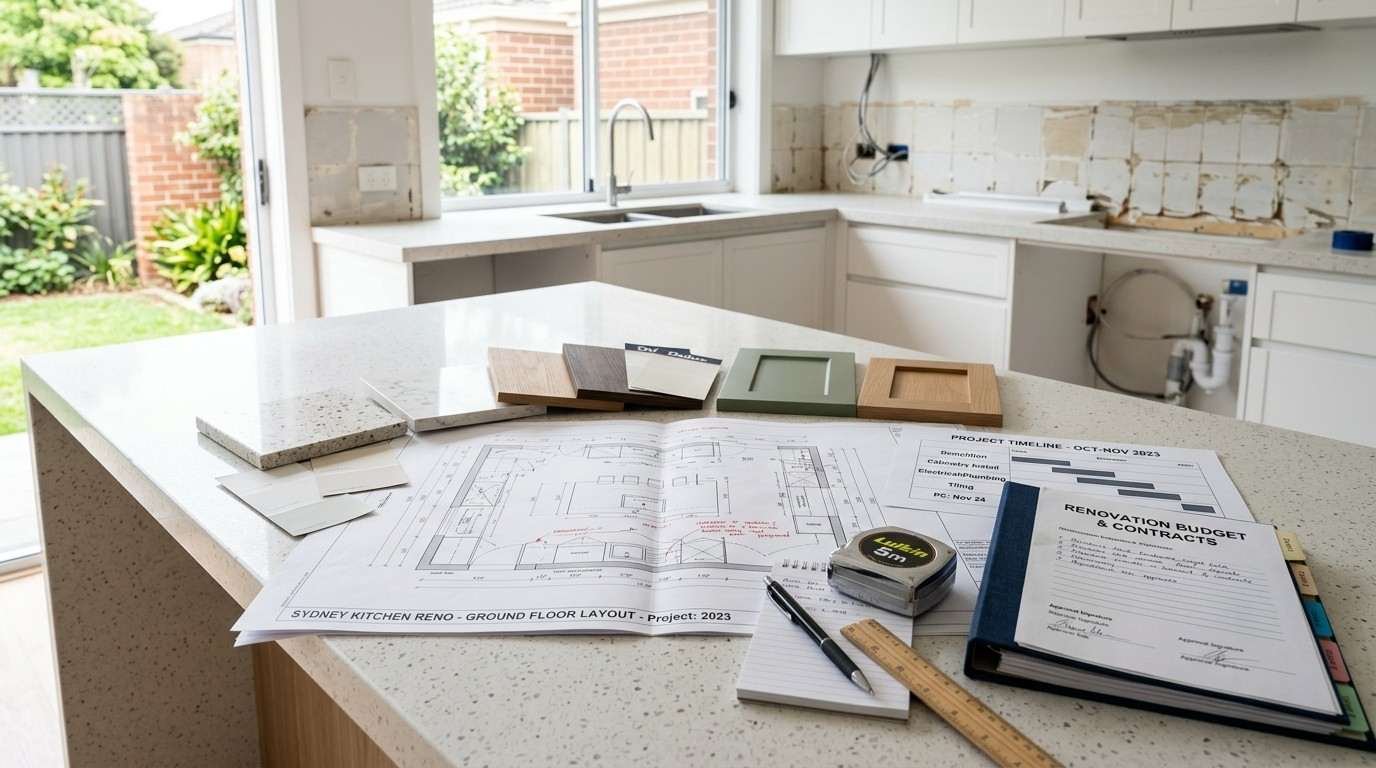
Conclusion
Understanding the difference between a kitchen remodel and a renovation is not just a matter of terminology. It determines your budget, your timeline, your approval obligations, and your return on investment.
A renovation refreshes and updates within the existing structure. A remodel reconfigures and rebuilds, and both can deliver exceptional results when matched to the right project and executed by the right team.
At Sydney Home Renovation, we work with homeowners and property investors across Sydney to plan and deliver kitchen projects that are scoped correctly from the start. If you are ready to move forward with a kitchen renovation or remodel, we are here to help you plan it properly with honest cost planning, transparent pricing, and a clear, itemised quote that reflects the true scope of your project.
Frequently Asked Questions
What is the difference between a kitchen remodel and a kitchen renovation?
A kitchen renovation updates the existing kitchen without changing its layout, such as replacing benchtops, cabinets, and appliances. A kitchen remodel involves structural or layout changes, like removing walls or relocating plumbing. The key distinction is whether you’re changing structure or simply updating surfaces.
Is a kitchen remodel more expensive than a renovation in Sydney?
Yes, a kitchen remodel is generally significantly more expensive than a renovation in Sydney. A mid-range renovation typically costs between $25,000 and $45,000, while a mid-range remodel can range from $65,000 to $100,000 or more. The gap reflects structural work, service relocation, and extended trade involvement.
Do I need council approval for a kitchen renovation in Sydney?
Most kitchen renovations in Sydney do not require council approval, since they’re classified as exempt development under NSW planning legislation. If your project involves structural changes, significant plumbing relocation, or heritage overlays, you will likely need a CDC or DA. We always confirm approval obligations before starting work.
How long does a kitchen renovation take in Sydney?
A standard kitchen renovation in Sydney typically takes between two and four weeks from demolition to completion. This assumes materials and appliances are ordered before work begins, and no unexpected structural issues surface during demolition. Larger kitchens may take slightly longer.
How long does a kitchen remodel take in Sydney?
A kitchen remodel in Sydney typically takes between four and ten weeks, depending on the extent of structural work and whether council approval is required. If a Development Application is needed, the pre-construction phase can add eight to twelve weeks before physical work begins.
Can I renovate my kitchen without moving the plumbing or electrics?
Yes, and in most cases this is the preferred approach for a renovation. Keeping services in their existing positions avoids the cost and complexity of relocation, which can add thousands to a budget. A skilled designer can create a highly functional kitchen without moving a single pipe.
Which adds more value to a Sydney property: a remodel or a renovation?
For most Sydney properties, a well-executed renovation delivers strong ROI because it improves appearance and functionality without high structural costs. A remodel delivers superior value when the existing layout genuinely limits the property’s appeal, particularly where open-plan living is a buyer expectation.