The most energy-efficient house to build is a passive house: a compact, well-oriented structure with a high-performance thermal envelope, minimal air leakage, and mechanical ventilation that recovers heat. This design approach consistently delivers the lowest operational energy use of any residential building type, regardless of climate zone.
In Sydney, where mild winters and warm summers create a mixed-climate challenge, passive house principles translate directly into lower cooling and heating loads. We see this play out on our own projects: reduced reliance on mechanical systems and long-term energy bills that are a fraction of a conventionally built home.
The Most Energy Efficient House Design You Can Build
When we design for energy efficiency, we combine passive solar orientation, a compact building form, continuous insulation, triple-glazed or high-performance double-glazed windows, and an airtight building envelope with controlled mechanical ventilation. Together, these elements reduce the energy demand of the home before any active systems solar panels, heat pumps, or smart controls are added.
A well-executed Passive House can use up to 90% less heating and cooling energy than a standard new build, according to Passive House Institute research. That reduction comes from eliminating the conditions that cause energy loss: thermal bridging, uncontrolled air infiltration, poor solar access, and oversized mechanical systems compensating for an underperforming envelope.
Why Passive House Design Sets the Standard
Passive House is not a style; it is a performance standard. We treat it as a benchmark, not a look. The Passivhaus Institut certifies buildings that meet strict thresholds for heating demand, cooling demand, airtightness, and primary energy use.
A certified passive house must achieve an airtightness result of 0.6 air changes per hour at 50 pascals pressure, roughly ten times tighter than a typical Australian new build, as confirmed by the Australian Passive House Association. Pursuing certification involves design review, on-site verification, and a blower door test before a project can carry the label.
What makes this standard relevant for Sydney homeowners is that it is climate-agnostic. The principles apply equally in cold alpine regions and warm coastal climates. The design variables shift more shading in Sydney, more solar gain in Canberra, but the performance framework remains consistent.
How Building Shape and Orientation Affect Energy Use
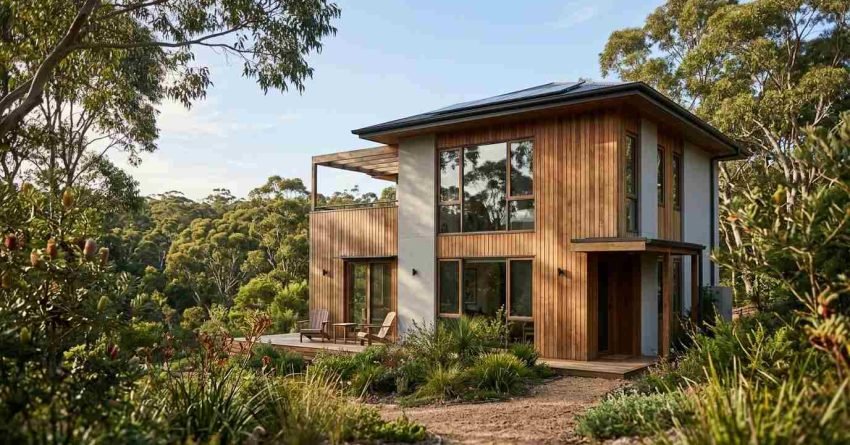
Compact building forms lose less energy than sprawling floor plans. A two-storey home with a simple rectangular footprint has a lower surface-area-to-volume ratio than a single-storey home with multiple wings and offsets. Less external surface means less heat transfer in both directions.
Orientation compounds this effect. In Sydney, we position living areas facing north with correctly sized eaves to capture winter sun for passive heating while blocking summer sun when the solar angle is high. East and west-facing glazing is minimised because low-angle morning and afternoon sun is difficult to shade without blocking light entirely.
South-facing walls carry minimal glazing and maximum insulation. These two decisions compact form and correct orientation cost nothing extra at the design stage. They deliver measurable energy performance for the life of the building.
How NatHERS and BASIX Compliance Fit Into an Energy Efficient Build
Every new home in NSW must meet BASIX (Building Sustainability Index) requirements before approval, and most Sydney builds are also assessed against the NatHERS star rating system. A standard new build typically targets around 6–7 stars, while a well-designed passive house can exceed 8.5 stars on the NatHERS scale, based on figures published by NatHERS.
We find that clients pursuing genuine energy efficiency often exceed the minimum BASIX targets by a wide margin simply because passive house design principles already outperform the baseline. Meeting compliance becomes a formality rather than a design constraint.
Understanding this relationship early helps homeowners avoid redesigning at the approval stage. A home planned around passive principles from day one rarely struggles to pass NSW’s regulatory thresholds.
High-Performance Materials and Systems That Reduce Energy Load
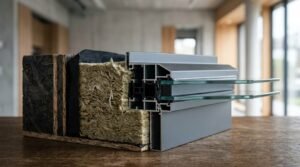
Once the building form and orientation are resolved, material and system selection determines how well the design performs in practice. The envelope walls, roof, floor slab, windows, and doors must function as a continuous, unbroken thermal barrier.
Insulation, Glazing, and Air Sealing
Wall insulation in a high-performance home typically combines bulk insulation within the stud frame with a continuous external layer of rigid foam or mineral wool board. This eliminates thermal bridging through the studs, which accounts for a significant portion of heat loss in standard framed construction.
Windows are the weakest point in any envelope. In Sydney’s climate, double-glazed units with low-emissivity coatings and thermally broken frames are the practical minimum for an energy-efficient build. Passive house projects typically specify triple glazing or high-performance double glazing with argon fill and warm-edge spacers.
Air sealing is the element most often underestimated. Gaps around penetrations, junctions between materials, and poorly detailed window and door installations allow uncontrolled air movement that bypasses insulation entirely. We use a blower door test during construction to identify leakage points before they’re sealed behind linings.
Choosing lower-embodied-energy materials, such as sustainably sourced timber framing, adds a further efficiency layer beyond operational energy savings alone.
Mechanical Ventilation and Renewable Energy Integration
An airtight home requires controlled ventilation. A heat recovery ventilation system extracts stale air from wet areas and supplies fresh filtered air to living spaces, recovering 70–90% of the heat from the outgoing air stream before it’s exhausted, per data from the Passive House Institute. In Sydney’s climate, some systems also provide passive cooling through night purge ventilation.
Renewable energy systems rooftop solar combined with battery storage work most effectively when the underlying building demand is already minimised. A passive house with a 6.6kW solar system and battery storage can achieve near-zero grid dependence in Sydney’s solar conditions.
Common Mistakes That Undermine an Energy Efficient Build
We regularly see well-intentioned designs lose efficiency to a handful of avoidable errors. Oversized glazing on east or west elevations is one of the most common; it looks appealing on paper but creates uncontrollable heat gain in summer.
Skipping the blower door test until after linings are installed is another costly mistake. Leaks found late are far more expensive to fix than leaks caught during the air-sealing stage.
Undersizing insulation to cut upfront costs is a false economy. The insulation premium is small compared to the energy losses it prevents over a 25-year mortgage term.
What Energy Efficient House Design Costs to Build in Sydney
Energy efficient construction carries a cost premium, but the gap is narrowing. A passive house build in Sydney typically costs 10–20% more than a comparable standard new build, depending on the level of certification pursued and the complexity of the design.
That premium is concentrated in three areas, summarised below.
| Cost Area | Impact on Budget | Why |
| Windows and doors | High | Triple/high-performance double glazing, thermally broken frames |
| Insulation and air sealing labour | Medium | Continuous envelope detailing, blower door testing |
| Heat recovery ventilation system | Medium | Ducted system plus commissioning |
| Structural and finishing costs | Minimal change | Largely unaffected by passive house specification |
The financial case rests on operational savings. A well-built passive house in Sydney can reduce annual energy costs by $2,000–$4,000 compared to a standard home of equivalent size, depending on occupant behaviour and energy tariffs, according to figures cited by Renew Australia. Over a 25-year mortgage, that saving compounds significantly.
Conclusion
The most energy-efficient house to build combines passive house design principles, a compact and correctly oriented form, a continuous thermal envelope, and controlled mechanical ventilation. Together, these deliver the lowest possible energy demand before any active system is added.
For Sydney homeowners and property investors, this approach reduces long-term operating costs, improves thermal comfort year-round, and builds a home that holds its value as energy efficiency becomes a stronger factor in property decisions.
At Sydney Home Renovation, we help you plan and build with the right specifications from the start. Contact us to discuss your energy-efficient build or renovation project.
Frequently Asked Questions
What is the most energy efficient house shape?
A compact, two-storey rectangular form with a low surface-area-to-volume ratio is the most energy efficient shape. It minimises heat transfer through external surfaces while maximising usable floor area.
Is a passive house worth building in Sydney’s climate?
Yes. Sydney’s mild winters and warm summers mean a passive house delivers year-round comfort with minimal mechanical heating or cooling, reducing energy bills significantly over the life of the building.
What materials make a house most energy efficient?
Continuous insulation without thermal bridging, high-performance double or triple glazing with low-emissivity coatings, and airtight construction with vapour-permeable membranes are the core material requirements for an energy-efficient home.
How much more does an energy-efficient house cost to build?
In Sydney, a passive house typically costs 10–20% more upfront than a standard new build. The premium is offset by lower energy bills, improved comfort, and stronger long-term property value.
Does an energy-efficient home increase property value?
Yes. Energy ratings, lower running costs, and thermal comfort are increasingly valued by buyers. Homes built to Passive House or high NatHERS ratings consistently attract stronger buyer interest in the Sydney market.
What NatHERS star rating should an energy efficient home target?
We recommend targeting 8+ stars for a genuinely energy efficient home. Passive house designs often exceed this comfortably, well above the typical 6–7 star baseline for standard new builds.
What is the biggest mistake homeowners make when building for energy efficiency?
Oversizing east or west-facing glazing without adequate shading is the most common mistake. It undermines insulation and ventilation efforts by letting in uncontrolled summer heat gain.