
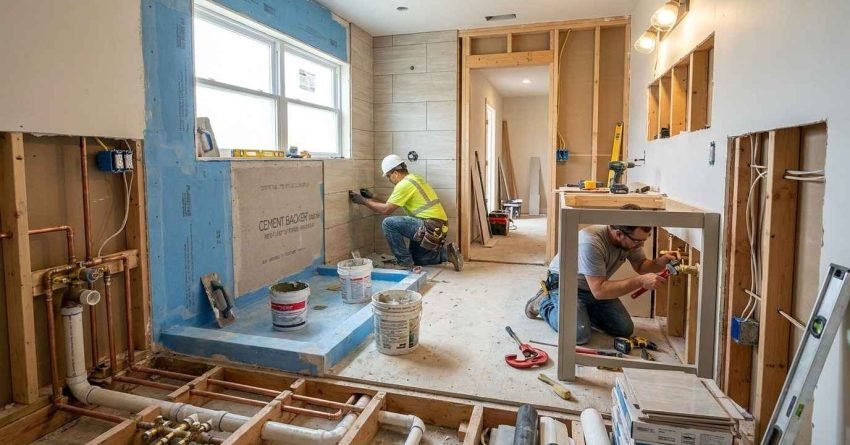
Labour is the most expensive part of adding a bathroom. In Sydney, trade costs — plumbing, electrical, waterproofing, and tiling — typically account for 50% to 65% of the total project budget before a single fixture is purchased. Understanding where that money goes is the first step to building a renovation budget that holds.
Why Labour Costs Dominate Bathroom Addition Budgets
The single largest cost in any bathroom addition is the combined labour of licensed trades. Materials are visible and easy to price. Labour is where budgets quietly expand, especially when a bathroom is being added to a space that was never designed for one.
Adding a bathroom requires coordinating multiple licensed trades across overlapping stages. Each trade has its own scheduling requirements, licensing costs, and minimum call-out rates. In Sydney, those rates are among the highest in Australia, and the complexity of a new bathroom addition — rather than a like-for-like renovation — amplifies every one of them.
The Trades You Cannot Avoid
A bathroom addition requires, at minimum, a licensed plumber, a licensed electrician, a waterproofing applicator, and a tiler. In most Sydney projects, a builder or project manager coordinates these trades, adding another layer of cost that is often underestimated.
Plumbing alone — running new supply lines, installing drainage, and connecting fixtures — can range from $3,000 to $8,000 depending on how far the new bathroom sits from existing services. Electrical work for lighting, exhaust fans, and heated towel rails adds further cost. None of these are optional. They are code requirements.
Why Sydney Labour Rates Push Costs Higher
Sydney’s construction labour market operates under sustained demand pressure. Skilled tradespeople carry full books, and that scarcity is reflected in their rates. A licensed plumber in Sydney typically charges between $120 and $180 per hour, with electricians in a similar range.
Beyond hourly rates, Sydney projects face higher compliance costs. Waterproofing must meet AS 3740 standards. Electrical work requires a Certificate of Compliance. Plumbing requires council notification in many cases. Each compliance step adds time, and time in construction is always money.
Knowing how a full bathroom renovation budget in Sydney breaks down across all cost categories helps homeowners set realistic expectations before committing to a scope of work.
What Drives the Total Cost Beyond Labour
Labour is the largest single line item, but it does not operate in isolation. Several other cost categories compound the total, particularly in bathroom additions where infrastructure does not already exist.
Plumbing Relocation and Wet Area Waterproofing
The cost of relocating plumbing rises sharply when the new bathroom sits far from existing drainage or when floor penetrations require structural modification. Moving a drain even one metre can add thousands to a project because it involves breaking concrete, re-grading falls, and reinstating the substrate.
Waterproofing is non-negotiable and frequently underpriced in early estimates. A compliant wet area membrane system for a standard bathroom typically costs between $800 and $1,500 in materials and labour. Cutting corners here creates long-term liability — failed waterproofing is one of the most expensive defects to remediate after a renovation is complete.
Fixtures, Fittings, and Tile Allowances
Fixtures and fittings are the most visible costs, but they are rarely the largest. A mid-range toilet, vanity, shower screen, and tapware package for a Sydney bathroom addition typically sits between $3,500 and $7,000 depending on brand and specification.
Tiles are where budgets stretch unexpectedly. Large-format tiles require more precise substrate preparation and slower installation, which increases labour time. A realistic tile allowance for a standard bathroom — floor and walls — ranges from $1,500 to $4,000 including supply and installation.
Where Homeowners Lose Budget Control
Most bathroom addition budgets do not blow out on the items that were quoted. They blow out on the items that were not. Structural surprises are the most common culprit. Opening walls to run new plumbing or electrical services frequently reveals substandard framing, asbestos-containing materials in older homes, or inadequate waterproofing in adjacent wet areas that must be remediated before work can proceed.
Scope changes mid-project are the second major cause of cost overrun. Upgrading fixtures after work has started, changing tile selections once substrate preparation is underway, or adding heated flooring after electrical rough-in is complete — each decision carries a disproportionate cost because it disrupts sequencing and requires trades to return.
The unexpected costs that surface mid-project are the ones that separate a well-planned bathroom addition from one that finishes over budget and behind schedule. Identifying these risks before work begins is the most effective form of budget protection available to any homeowner.
Conclusion
Labour is the dominant cost in any bathroom addition, and in Sydney, that cost is amplified by trade demand, compliance requirements, and project complexity.
Homeowners and investors who understand this early make better decisions about scope, sequencing, and where to allocate their budget for maximum return.
At Sydney Home Renovation, we provide transparent cost planning from the first conversation — so your bathroom addition stays on budget and built to last.
Frequently Asked Questions
How much does it cost to add a bathroom in Sydney?
Adding a bathroom in Sydney typically costs between $18,000 and $35,000 for a standard ensuite or second bathroom, depending on size, location relative to existing services, and finish level.
Is plumbing or labour the biggest cost in a bathroom addition?
Plumbing is a major component of labour cost. Combined trade labour — plumbing, electrical, waterproofing, and tiling — represents the largest overall expense, often exceeding 50% of the total project budget.
Can I reduce bathroom addition costs by choosing cheaper fixtures?
Cheaper fixtures reduce material costs modestly but rarely change the overall budget significantly. Labour costs are fixed regardless of fixture price point. Structural and compliance costs remain constant.
Why does adding a bathroom cost more than renovating an existing one?
Adding a bathroom requires running new plumbing supply and drainage lines, new electrical circuits, and full wet area waterproofing from scratch. Renovations work with existing infrastructure, which reduces trade time and compliance scope considerably.
What hidden costs should I expect when adding a bathroom?
Common hidden costs include asbestos removal in pre-1990 homes, structural framing repairs, concrete cutting for drainage, and compliance certificates. Budgeting a 10% to 15% contingency on top of quoted costs is strongly recommended.


