
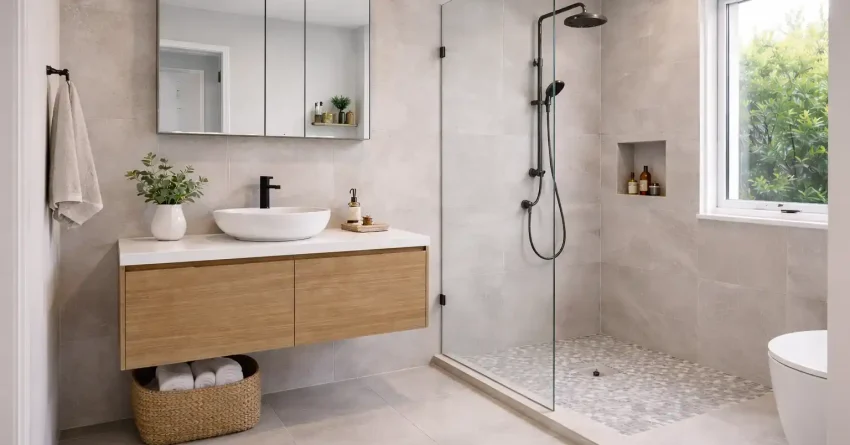
Your bathroom vanity is one of the hardest-working fixtures in the room, and in most Sydney renovations it accounts for 15% to 25% of the total bathroom budget. Getting this choice right affects everything from daily functionality to long-term property value.
Many homeowners rush the vanity decision, only to discover sizing issues, material failures, or unexpected installation costs weeks into their renovation. The wrong vanity blows your budget and delays your timeline.
This guide covers every decision you need to make: vanity types, sizing, materials, realistic Sydney pricing, style options, installation requirements, maintenance, and budgeting strategies to help you choose with confidence.
What Is a Bathroom Vanity?
A bathroom vanity is a cabinet unit that houses the basin (sink), conceals plumbing, and provides storage space. It typically includes a cabinet body, a benchtop surface, a basin, tapware, and hardware such as handles or knobs.
In Australian bathrooms, the vanity serves as the visual centrepiece of the room. It is the fixture you interact with most frequently, from morning routines to evening wind-downs. Unlike a pedestal basin or wall-mounted sink, a vanity combines function and aesthetics into a single unit.
Key Components of a Bathroom Vanity
Every vanity consists of several core components, and understanding each one helps you make smarter purchasing and budgeting decisions.
Cabinet (carcass): The structural body of the vanity. It is made from moisture-resistant MDF, plywood, solid timber, or PVC board. The cabinet determines durability, weight capacity, and how well the unit handles bathroom humidity over time.
Benchtop: The surface that sits on top of the cabinet. Common materials include engineered stone, natural stone, solid surface, laminate, and timber. Your benchtop choice affects both the look and the cost of the vanity significantly.
Basin: Either sits on top of the benchtop (above-counter), drops into it (inset), or is moulded as one piece with the benchtop (integrated). Basin style changes the overall profile and cleaning requirements.
Tapware: The tap or mixer that connects to your water supply. Wall-mounted, basin-mounted, and freestanding options each have different plumbing requirements and cost implications.
Hardware: Handles, knobs, soft-close hinges, and drawer runners. These small details affect daily usability and the overall style of the vanity.
Vanity vs Pedestal Basin: Which Is Right for You?
A pedestal basin sits on a freestanding column and has no storage. It suits very small powder rooms or heritage bathrooms where a furniture-free look is the priority. A vanity gives you concealed plumbing, a benchtop surface, and storage, making it the practical choice for any bathroom used daily.
For most Sydney homes, the vanity wins on function. The pedestal basin is a deliberate design choice, not a default. If storage is a genuine need, and in most bathrooms it is, a vanity delivers what a pedestal simply cannot.
Why Your Vanity Choice Matters in a Renovation
The vanity is not just a cosmetic decision. It directly impacts your plumbing layout, waterproofing requirements, storage capacity, and resale value.
Choosing the wrong size means replumbing waste lines. Selecting a material that cannot handle moisture leads to swelling, warping, and premature replacement. Picking a style that clashes with your bathroom’s proportions makes the entire space feel off.
For property investors, the vanity is one of the first things prospective tenants and buyers notice. A well-chosen vanity signals quality throughout the renovation, and a cheap or poorly fitted one raises questions about everything behind the walls.
Types of Bathroom Vanities
Selecting the right vanity type is your first major decision. Each type suits different bathroom layouts, budgets, and design preferences. Here is how they compare for Sydney homes.
Freestanding Vanities
Freestanding vanities sit directly on the floor. They are the most common type in Australian bathrooms and the easiest to install because they do not require wall-mounting brackets or structural reinforcement.
Best for: Standard-sized bathrooms, budget-conscious renovations, and rental properties where durability and simplicity matter most.
Pros: Wide range of sizes and price points. Simple installation. Easy to replace without wall damage. Conceals plumbing pipes behind the cabinet.
Cons: Harder to clean underneath. Makes small bathrooms feel heavier. The floor area beneath the cabinet is not accessible.
Freestanding vanities in Sydney typically range from 600mm to 1500mm wide, with 750mm, 900mm, and 1200mm being the most popular sizes for standard bathrooms.
Wall-Hung (Floating) Vanities
Wall-hung vanities are mounted directly to the wall with no contact with the floor. They create a floating effect that makes bathrooms feel more spacious and modern.
Best for: Small bathrooms, modern or minimalist designs, and homeowners who want easier floor cleaning.
Pros: Creates visual space beneath the unit. Makes the bathroom appear larger. Easier to mop and clean the floor. Height is customised during installation.
Cons: Requires solid wall framing or blocking for support. Installation is more complex and typically costs more. Weight capacity is limited by wall structure. Not ideal for heavy stone benchtops without proper reinforcement.
Wall-hung vanities have become increasingly popular in Sydney apartment renovations and new builds. They work particularly well in bathrooms under 4 square metres where every visual trick to create space counts.
Corner Vanities
Corner vanities are designed to fit into the corner of a bathroom, making use of space that would otherwise go unused. They are triangular or L-shaped and typically smaller than standard vanities.
Best for: Very small bathrooms, powder rooms, ensuites under 3 square metres, and awkward layouts where a standard vanity will not fit.
Pros: Maximises otherwise wasted corner space. Available in compact sizes from 400mm. Keeps the main bathroom area open.
Cons: Limited benchtop and storage space. Fewer style options available. Dated-looking models exist, so selection matters.
Corner vanities are a practical solution for many older Sydney homes, particularly Federation-era terraces and pre-war apartments in the Inner West and Eastern Suburbs where original bathroom footprints are tight and cannot be expanded without major structural work. Modern corner vanity designs have improved significantly, and wall-hung corner options now offer a cleaner, more contemporary profile than older freestanding models. If you are working with a genuinely constrained layout, a corner vanity is worth serious consideration rather than a last resort.
Custom Built-In Vanities
Custom vanities are designed and built to your exact specifications. A cabinetmaker or renovation contractor creates the unit to fit your precise measurements, material preferences, and design vision.
Best for: Unusual bathroom layouts, high-end renovations, homeowners who want a specific look that off-the-shelf products cannot deliver, and double-basin configurations.
Pros: Perfect fit for any space. Unlimited material and finish options. Integrates features like built-in laundry hampers, pull-out shelves, or specific storage configurations. Higher perceived value for resale.
Cons: Significantly higher cost. Longer lead times (typically 4 to 8 weeks for fabrication). Requires a skilled cabinetmaker. Harder to replace if damaged.
In Sydney, custom vanities typically start from $2,000 for the cabinet alone, before benchtop and basin costs. For a full custom double vanity with engineered stone benchtop, expect $4,000 to $8,000 or more depending on materials and complexity.
Double Vanity Configurations
A double vanity, whether custom-built or a wide off-the-shelf unit, suits master bathrooms and family bathrooms where two people share the space daily. Standard double vanity widths run from 1200mm to 1800mm, with two basins positioned to allow comfortable simultaneous use.
The key planning consideration is plumbing: a double vanity requires two waste connections and two sets of tapware supply points. In most Sydney bathrooms, this means the plumber needs to rough in additional supply lines before tiling. Factor this into your renovation timeline and budget early. A 1500mm double vanity with two above-counter basins and an engineered stone benchtop is one of the most popular configurations in Sydney master bathroom renovations right now.
How to Choose the Right Bathroom Vanity Size
Choosing the wrong vanity size is one of the most common and costly mistakes in bathroom renovations. A vanity that is too large overwhelms the room and blocks movement. One that is too small looks out of proportion and lacks storage.
Standard Vanity Dimensions in Australia
Australian bathroom vanities follow general sizing conventions, though exact dimensions vary by manufacturer.
| Vanity Width | Best Suited For | Basin Configuration |
| 600mm | Small ensuites, powder rooms | Single basin |
| 750mm | Standard ensuites | Single basin |
| 900mm | Standard bathrooms | Single basin |
| 1200mm | Family bathrooms | Single or double basin |
| 1500mm | Large bathrooms, master ensuites | Double basin |
| 1800mm+ | Luxury bathrooms | Double basin |
Standard vanity depth in Australia is between 450mm and 550mm. Height typically ranges from 800mm to 900mm from floor to benchtop, though wall-hung vanities allow you to set the height during installation.
For most Sydney bathrooms, a 900mm single-basin vanity is the most versatile choice. It provides adequate storage and benchtop space without dominating the room.
Measuring Your Bathroom Space
Before purchasing a vanity, measure these critical dimensions:
Wall width: Measure the wall where the vanity will sit. Allow at least 50mm clearance on each side for installation access and to prevent the vanity from looking cramped.
Door and shower clearance: Open your bathroom door fully and measure the clearance. Do the same for your shower screen. The vanity must not obstruct either.
Plumbing location: Note where your existing water supply points and waste pipe exit the wall or floor. Moving plumbing adds $500 to $1,500 or more to your renovation cost, so choosing a vanity that aligns with existing plumbing saves money.
Toilet proximity: Ensure at least 200mm between the edge of the vanity and the nearest side of the toilet for comfortable use and compliance with Australian standards for bathroom layout.
Ceiling height and mirror placement: If you plan to install a mirror cabinet above the vanity, ensure there is enough wall height between the benchtop and any obstructions like windows or exhaust fans.
Measure twice. Order once. A vanity that arrives and does not fit your space creates delays, return shipping costs, and frustration that is entirely avoidable with careful measurement upfront.
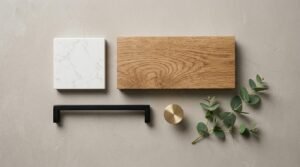
Bathroom Vanity Materials and Finishes
The materials you choose for your vanity cabinet, benchtop, and hardware determine how the unit looks, how long it lasts, and how much it costs. In a bathroom environment with constant moisture, steam, and temperature changes, material selection is critical.
Vanity Cabinet Materials
Moisture-Resistant MDF (MR MDF): The most common material for bathroom vanity cabinets in Australia. MR MDF is engineered to resist moisture better than standard MDF, though it is not waterproof. It accepts paint and laminate finishes well and offers a smooth, consistent surface.
Plywood: Stronger and more moisture-resistant than MDF. Marine-grade or birch plywood is preferred for bathroom applications. It holds screws better, resists swelling, and lasts longer in humid environments. It costs more than MR MDF but offers better long-term durability.
PVC Board (Polyvinyl Chloride): Completely waterproof. PVC board vanities will not swell, warp, or delaminate from moisture exposure. They are lighter than timber-based options and increasingly popular in Sydney bathrooms. The trade-off is a slightly less premium feel compared to solid timber or high-grade plywood.
Solid Timber: Beautiful and premium, but requires careful sealing and maintenance in a bathroom environment. Timber vanities warp or crack if not properly treated. Best suited for well-ventilated bathrooms or powder rooms with lower moisture exposure.
For most Sydney bathroom renovations, plywood or PVC board cabinets offer the best balance of durability, moisture resistance, and value.
Benchtop Options
Your benchtop is the most visible and most touched surface on your vanity. Here is how the main options compare:
| Material | Price Range (per linear metre) | Durability | Moisture Resistance | Maintenance |
| Laminate | $150–$400 | Moderate | Good (if edges sealed) | Low |
| Engineered Stone | $400–$900 | High | Excellent | Low |
| Natural Stone (Marble, Granite) | $600–$1,500+ | High | Good (requires sealing) | Medium |
| Solid Surface (Corian) | $500–$1,000 | High | Excellent | Low |
| Timber | $300–$800 | Moderate | Poor (requires sealing) | High |
| Porcelain | $400–$900 | Very High | Excellent | Very Low |
Engineered stone remains the most popular benchtop choice for Sydney bathroom vanities. It offers consistent colour, excellent durability, and strong moisture resistance at a mid-range price point. Brands like Caesarstone, Smartstone, and Essastone are widely available through Sydney stone fabricators.
For budget renovations, a high-quality laminate benchtop looks surprisingly good and lasts well if edges are properly sealed against water ingress.
Hardware and Fixtures
Hardware is the finishing touch that ties your vanity design together. Small details like handles, knobs, and hinges affect both the look and the daily experience of using your vanity.
Handles and knobs: Available in brushed nickel, matte black, brushed brass, chrome, and satin finishes. Matte black and brushed brass are currently the most popular choices in Sydney bathroom renovations. Match your handle finish to your tapware for a cohesive look.
Hinges: Soft-close hinges prevent doors from slamming and reduce wear on the cabinet over time. They cost marginally more but are worth the investment in every bathroom vanity.
Drawer runners: Full-extension, soft-close drawer runners allow you to access the entire depth of the drawer and close quietly. Ball-bearing runners are more durable than roller runners and handle heavier loads.
Tapware: Your tap or mixer finish should match your hardware finish: matte black tapware with matte black handles, brushed brass with brushed brass. Wall-mounted mixers suit modern and minimalist vanities and keep the benchtop surface clear. Basin-mounted mixers are the standard choice for freestanding vanities and work across all styles. In Sydney right now, matte black wall-mounted mixers are the most requested finish in apartment renovations, while brushed nickel and chrome remain the dominant choice in Hamptons and traditional bathrooms. Budget $150 to $600 for a quality basin mixer from brands like Sussex, ABI Interiors, or Meir.
Do not underestimate the impact of hardware. Upgrading from basic chrome handles to quality matte black or brushed brass hardware transforms a mid-range vanity into something that looks and feels premium, often for under $100 in total hardware cost.
Bathroom Vanity Costs in Sydney
Understanding realistic vanity costs helps you allocate your renovation budget accurately and avoid surprises. Prices in Sydney vary significantly based on vanity type, materials, size, and whether you choose off-the-shelf or custom.
Budget Vanity Options ($300–$800)
Budget vanities are typically freestanding units made from MR MDF with laminate finishes and ceramic basins. They are widely available from bathroom retailers and hardware stores across Sydney.
What you get: A functional, decent-looking vanity in standard sizes (600mm to 900mm). Basic hardware. Limited colour and finish options, usually white, woodgrain, or grey.
What to watch for: Cheaper vanities may use standard MDF rather than moisture-resistant MDF. Check the specifications. Thin benchtops, flimsy drawer runners, and poor edge sealing are common at this price point.
Best for: Rental properties, secondary bathrooms, powder rooms, and tight-budget renovations where function matters more than premium aesthetics.
At this price range, brands available in Sydney include Timberline’s entry-level range, Fienza, and various imported options from bathroom trade suppliers.
Mid-Range Vanity Options ($800–$2,000)
Mid-range vanities offer a significant step up in materials, finish quality, and design options. This is where most Sydney homeowners find the best value for owner-occupied homes.
What you get: Plywood or PVC board cabinets. Engineered stone or solid surface benchtops. Soft-close hinges and full-extension drawers. A wider range of sizes, colours, and configurations including wall-hung options.
What to watch for: Some mid-range vanities include the benchtop and basin in the price. Others price them separately. Always confirm what is included before comparing prices.
Best for: Owner-occupied homes, main bathrooms, ensuites, and renovations where you want quality that lasts 15 to 20 years without looking dated.
Popular mid-range brands in Sydney include Timberline, Rifco, ADP (Australian Designer Products), and Marquis.
Premium and Custom Vanities ($2,000–$5,000+)
Premium vanities use top-tier materials, offer bespoke sizing, and deliver a level of finish that elevates the entire bathroom.
What you get: Custom cabinetry built to your exact dimensions. Premium materials like solid timber, high-grade plywood with two-pack paint finishes, natural stone or premium engineered stone benchtops. Designer hardware. Double-basin configurations.
What to watch for: Lead times. Custom vanities in Sydney typically take 4 to 8 weeks to fabricate. Factor this into your renovation timeline. Also confirm whether the quoted price includes benchtop fabrication, basin cutouts, and installation.
Best for: Master bathrooms, high-end renovations, architecturally designed homes, and properties where bathroom quality directly impacts resale value.
At the premium end, Sydney cabinetmakers and renovation contractors create vanities that integrate seamlessly with your bathroom design, including features like recessed handles, integrated LED lighting, and custom storage solutions.
Installation and Labour Costs
The vanity itself is only part of the cost. Installation involves plumbing, mounting, sealing, and connecting tapware and waste.
| Installation Task | Typical Cost in Sydney |
| Standard vanity installation (freestanding) | $250–$500 |
| Wall-hung vanity installation (including wall blocking) | $400–$800 |
| Plumbing connection (basin, tapware, waste) | $300–$600 |
| Plumbing relocation (moving supply or waste points) | $500–$1,500 |
| Benchtop templating and installation (stone) | $300–$700 |
| Silicone sealing and finishing | Included in most installations |
For a straightforward replacement where the new vanity fits the existing plumbing layout, total installation costs in Sydney typically range from $550 to $1,100. If plumbing needs to be relocated, costs increase significantly.
Always get a detailed quote that separates the vanity supply cost from the installation cost. This transparency helps you compare quotes accurately and understand where your money is going. A full bathroom renovation in Sydney involves coordinating multiple trades beyond the vanity alone; understanding how each cost fits together prevents budget surprises at every stage.
Vanity Style Guide for Sydney Bathrooms
Your vanity style sets the design direction for the entire bathroom. It should complement your home’s architecture, suit your personal taste, and work within your budget. Here are the most popular vanity styles in Sydney right now.
Modern and Minimalist Vanities
Clean lines, flat-panel or handleless doors, and a restrained colour palette define the modern minimalist vanity. Wall-hung configurations are the most popular choice in this style.
Key features: Matte white or grey finishes. Integrated or thin-edge basins. Concealed handles or push-to-open mechanisms. Engineered stone benchtops in white, light grey, or concrete tones.
Works best in: New builds, apartment renovations, contemporary homes, and bathrooms where you want a spacious, uncluttered feel.
Tapware pairing: Matte black or chrome wall-mounted mixers complement this style perfectly.
Hamptons and Coastal Styles
The Hamptons look remains one of the most requested bathroom renovation styles in Sydney, particularly in the Eastern Suburbs, Northern Beaches, and Sutherland Shire. It combines classic elegance with a relaxed coastal sensibility.
Key features: Shaker-profile cabinet doors. White or soft grey painted finishes. Marble or marble-look engineered stone benchtops. Brushed nickel or polished chrome hardware. Above-counter basins in classic shapes.
Works best in: Freestanding homes, family bathrooms, and renovations where a timeless look is preferred over trend-driven design.
Tapware pairing: Chrome or brushed nickel basin mixers with cross-handle or traditional lever designs.
Traditional and Classic Vanities
Traditional vanities feature ornate detailing, raised panel doors, and a furniture-like quality. They suit period homes and bathrooms where character and warmth are priorities.
Key features: Raised or recessed panel doors. Turned legs or decorative feet on freestanding units. Natural stone or timber benchtops. Antique brass or oil-rubbed bronze hardware.
Works best in: Federation homes, Victorian terraces, and heritage properties across Sydney’s Inner West, Lower North Shore, and Eastern Suburbs.
Tapware pairing: Antique brass or aged bronze tapware with traditional profiles.
Traditional vanities in natural stone or solid timber require more maintenance than engineered alternatives; benchtops need periodic sealing and timber surfaces need regular oiling or lacquering to stay protected in a humid bathroom environment. The payoff is a warmth and character that engineered materials genuinely cannot replicate, and in the right home it adds real resale appeal.
Small Bathroom Vanity Ideas
Sydney is full of compact bathrooms, especially in apartments, terraces, and older homes. Choosing the right vanity for a small space requires balancing storage needs with visual openness.
Wall-hung vanities in 600mm to 750mm widths free up floor space and make the room feel larger. A slim-profile vanity with a depth of 400mm instead of the standard 460mm to 550mm makes a meaningful difference in tight layouts.
Consider a vanity with open shelving on one side instead of a fully enclosed cabinet. This provides storage without the visual weight of a solid unit.
Round or oval basins soften the look in small spaces and feel less imposing than rectangular options. Light colours especially matte white and pale timber tones, reflect more light and help small bathrooms feel brighter and more open.
Avoid vanities with protruding handles in tight spaces. Recessed handles or push-to-open doors prevent snagging and keep the profile clean.
Mirror and Storage Above the Vanity
The space above your vanity is as important as the vanity itself. A shaving cabinet or mirror cabinet adds concealed storage for toiletries, medications, and daily essentials without taking up floor or benchtop space.
Standard mirror cabinet depths run from 100mm to 150mm, shallow enough to sit flush against the wall without protruding into the room. For bathrooms with limited wall height between the benchtop and ceiling, a frameless mirror with a separate floating shelf below is a practical alternative.
Match the mirror frame finish to your tapware and hardware for a cohesive look. In modern bathrooms, frameless mirrors or thin black-framed mirrors are the dominant choice. In Hamptons and traditional bathrooms, a framed mirror in white, brushed nickel, or antique brass ties the design together.
Bathroom Vanity Installation: What to Expect
Understanding the installation process helps you plan your renovation timeline, coordinate trades, and avoid costly surprises. Vanity installation is not just about placing a cabinet against a wall.
Plumbing Considerations
Your vanity must connect to three plumbing points: hot water supply, cold water supply, and a waste (drain) pipe. In most Sydney bathrooms, these exit the wall behind where the vanity sits.
If your new vanity is the same size and configuration as the old one, existing plumbing points will likely align. If you are changing vanity size, switching from freestanding to wall-hung, or moving the vanity to a different wall, plumbing needs to be relocated.
Plumbing relocation must be done before waterproofing and tiling. This means it needs to be planned early in the renovation, not as an afterthought when the vanity arrives.
For wall-hung vanities, waste pipes often need to exit the wall at a specific height rather than from the floor. Confirm this requirement with your plumber before purchasing.
Waterproofing and Compliance in NSW
In New South Wales, bathroom waterproofing must comply with AS 3740-2021(Waterproofing of domestic wet areas). This is not optional. It is a legal requirement, and non-compliant waterproofing voids your home insurance and creates serious structural damage.
The area behind and beneath your vanity must be waterproofed if it falls within the designated wet area. Your waterproofing membrane must be applied by a licensed waterproofer, and a certificate of compliance should be issued before tiling begins.
If you are replacing a vanity as part of a broader bathroom renovation that involves removing tiles, the entire wet area needs to be re-waterproofed. This is one of the reasons a simple vanity swap escalates into a larger project.
For a straightforward vanity replacement where tiles and waterproofing remain intact, waterproofing is generally not disturbed. However, if any tiles behind the vanity are removed or damaged during installation, waterproofing integrity must be assessed.
DIY vs Professional Installation
A freestanding vanity replacement where plumbing points align is one of the few bathroom tasks a confident DIYer handles. It involves disconnecting old plumbing, removing the old vanity, placing the new one, and reconnecting supply lines and waste.
However, there are important caveats. Any plumbing work beyond basic like-for-like connections must be performed by a licensed plumber in NSW, as required under NSW Fair Trading licensing rules. This includes relocating pipes, installing new tapware with different connection types, or modifying waste configurations.
Wall-hung vanity installation requires structural knowledge. The vanity must be mounted to wall studs or purpose-installed blocking that supports the weight of the unit, benchtop, basin, and water. Incorrect mounting results in the vanity pulling away from the wall, causing water damage and potential injury.
For most renovation scenarios, professional installation is the safer and more cost-effective choice. The cost of fixing a poorly installed vanity, including water damage, replumbing, and retiling, far exceeds the cost of hiring a qualified installer from the start.
How to Clean and Maintain Your Bathroom Vanity
A quality vanity lasts 15 to 20 years with the right care. The materials that make vanities durable engineered stone, PVC board, plywood still need regular attention to perform at their best.
Cabinet Care
Wipe down cabinet doors and drawer fronts weekly with a damp cloth and a mild, pH-neutral cleaner. Avoid abrasive cleaners, bleach-based sprays, and anything with ammonia; these degrade laminate finishes and strip the protective coating from painted surfaces over time.
Check the base of the cabinet every few months for signs of moisture ingress, particularly around the waste pipe penetration and at the floor line. Early detection of swelling or discolouration prevents a small issue from becoming a full cabinet replacement.
Benchtop Maintenance
Engineered stone and solid surface benchtops need very little maintenance; a weekly wipe with a mild cleaner keeps them looking new. Natural stone benchtops (marble, granite, travertine) require resealing every 12 months to maintain their moisture resistance. Use a penetrating stone sealer rated for wet areas.
Laminate benchtops are low-maintenance but vulnerable at the edges. Reseal any exposed edge joins annually with a clear silicone bead to prevent water from tracking into the substrate.
Hardware and Tapware Upkeep
Wipe tapware dry after use to prevent mineral deposit build-up, particularly in Sydney’s harder water areas. Matte black and brushed brass finishes are more susceptible to water spotting than chrome; a weekly dry-off keeps them looking sharp.
Check soft-close hinges and drawer runners every 12 months. Most quality runners have an adjustment screw that corrects any sag or misalignment before it becomes a problem. Lubricate runners annually with a silicone-based spray never oil-based, which attracts dust and grime.
Common Bathroom Vanity Mistakes to Avoid
After years of completing bathroom renovations across Sydney, certain vanity mistakes come up repeatedly. Avoiding these saves you money, time, and frustration.
- Choosing style over function. A beautiful vanity that does not provide enough storage or does not fit your daily routine frustrates you every day. Prioritise practical storage, appropriate sizing, and ease of cleaning alongside aesthetics.
- Ignoring moisture resistance. Standard MDF swells and deteriorates in a bathroom. Always confirm that cabinet materials are rated for wet area use. PVC board and marine-grade plywood are the safest choices for longevity.
- Not checking plumbing alignment before purchasing. Measure your existing plumbing points and compare them to the vanity’s internal layout. Misalignment means plumbing modifications, which means additional cost and time.
- Forgetting about door and drawer clearance. Open every door and drawer on your vanity plan and check that nothing hits the toilet, shower screen, bathroom door, or towel rail. This is especially critical in small bathrooms.
- Underestimating installation costs. The vanity purchase price is not the total cost. Budget separately for installation, plumbing connection, benchtop fabrication (if stone), and any plumbing relocation.
- Choosing the wrong height. Standard vanity height is 850mm to 900mm. Taller users benefit from a higher vanity (up to 950mm) to reduce back strain. Wall-hung vanities let you set the exact height during installation.
- Skipping soft-close hardware. Soft-close hinges and drawer runners cost marginally more but prevent slamming, reduce wear, and make the bathroom quieter. Every vanity should have them.
- Selecting a benchtop that cannot handle the environment. Unsealed timber and certain natural stones stain and deteriorate quickly in bathrooms. If you want a natural material, commit to the maintenance schedule it requires or choose an engineered alternative that mimics the look.
How to Budget for a Bathroom Vanity in Your Renovation
Your vanity budget should be planned as part of your overall bathroom renovation budget, not as an isolated purchase. Understanding how the vanity fits into the bigger picture helps you allocate funds wisely.
What Percentage of Your Budget Should Go to the Vanity?
As a general guide, the vanity (including benchtop, basin, tapware, and installation) typically accounts for 15% to 25% of a total bathroom renovation budget in Sydney.
| Total Bathroom Renovation Budget | Suggested Vanity Allocation (15%–25%) |
| $15,000 | $2,250–$3,750 |
| $25,000 | $3,750–$6,250 |
| $35,000 | $5,250–$8,750 |
| $50,000+ | $7,500–$12,500+ |
These ranges include the vanity unit, benchtop, basin, tapware, and professional installation. If you are working with a tight budget, prioritise the cabinet quality and benchtop material over decorative features. A well-built vanity with a quality benchtop outlasts and outperforms a cheaper unit with expensive tapware.
Hidden Costs to Watch For
Several costs catch homeowners off guard when budgeting for a bathroom vanity.
Stone benchtop templating and fabrication. If you choose engineered or natural stone, the benchtop is typically templated on-site after the cabinet is installed, then fabricated off-site and returned for fitting. This process adds $300 to $700 to the benchtop cost beyond the material price.
Plumbing relocation. Moving water supply or waste points to accommodate a different vanity size or position adds $500 to $1,500 depending on complexity and access.
Wall reinforcement for wall-hung vanities. If your wall does not have adequate framing or blocking, a carpenter needs to open the wall, install timber blocking, and patch before the vanity is mounted. This adds $300 to $800.
Delivery and handling. Large or heavy vanities, especially those with stone benchtops, may require special delivery arrangements. Some Sydney suppliers charge $100 to $250 for delivery, and units going to upper-floor apartments may incur additional handling fees.
Waste disposal. Removing and disposing of your old vanity costs $100 to $200 if your renovation contractor does not include it in their scope.
Tap and mixer costs. Tapware is often priced separately from the vanity. A quality basin mixer in Sydney ranges from $150 to $600 depending on brand and finish. Budget brands start lower, but premium Australian brands like Sussex, ABI Interiors, and Meir command higher prices for superior build quality and finish durability.
Build a contingency of 10% to 15% into your vanity budget to absorb these extras without derailing your overall renovation finances.

Where to Buy Bathroom Vanities in Sydney
Sydney offers a wide range of options for purchasing bathroom vanities, from large retailers to specialist bathroom showrooms and direct-from-manufacturer suppliers.
Bathroom specialist showrooms like Reece, Highgrove Bathrooms, and E&S Trading offer curated ranges with knowledgeable staff who help you match vanity specifications to your renovation requirements. Showrooms let you see and touch materials, test drawer runners, and compare finishes in person.
Trade suppliers like Tradelink and Bathroom Warehouse cater to both trade professionals and retail customers. They often carry a broader range of mid-range and budget options and offer competitive pricing, especially if your renovation contractor has a trade account.
Online retailers provide convenience and sometimes lower prices, but you cannot inspect quality before purchasing. If buying online, check return policies carefully, read reviews from Australian buyers, and confirm that the vanity meets the requirements of the National Construction Code for bathroom products.
Custom cabinetmakers are the best option for bespoke vanities. Ask your renovation contractor for recommendations, as they know cabinetmakers whose quality and lead times are reliable. Getting a custom vanity through your contractor often streamlines coordination between the cabinetmaker, plumber, and tiler.
Hardware and home improvement stores like Bunnings carry entry-level vanities suitable for budget renovations and rental properties. Quality varies, so inspect units in-store before purchasing.
Whichever route you choose, always confirm lead times before committing. Stock vanities may be available within days, but popular models and custom orders take 4 to 10 weeks. Ordering your vanity early in the renovation planning phase prevents it from becoming a bottleneck that delays tiling and plumbing fit-off.
Conclusion
Choosing the right bathroom vanity involves balancing size, materials, style, and budget within the practical realities of your bathroom layout and renovation scope. From understanding the difference between freestanding and wall-hung options to knowing what engineered stone benchtops cost in Sydney, every decision you make at the vanity stage ripples through the rest of your renovation.
The key is planning early, measuring accurately, and budgeting honestly. Factor in installation, plumbing, and hidden costs from the start so your vanity choice enhances your bathroom rather than straining your finances. Whether you are renovating a compact ensuite in an Inner West terrace or fitting out a master bathroom in a new build, the right vanity delivers daily functionality and lasting value.
We help Sydney homeowners navigate these decisions every day. At Sydney Home Renovation, we combine transparent pricing with hands-on renovation expertise to ensure your vanity and your entire bathroom are built right, on budget, and on schedule. Contact us to discuss your bathroom renovation and get a detailed, no-obligation quote.
Frequently Asked Questions
What is the most popular bathroom vanity style in Sydney?
Wall-hung vanities with a modern minimalist design are currently the most popular choice in Sydney, particularly in apartment and ensuite renovations. Hamptons-style freestanding vanities with shaker doors remain a strong favourite in freestanding homes.
How much does it cost to install a bathroom vanity in Sydney?
A standard freestanding vanity installation in Sydney costs between $550 and $1,100, including plumbing connection. Wall-hung installations cost more due to wall blocking requirements, typically $700 to $1,400. If plumbing needs to be relocated, add $500 to $1,500 depending on complexity.
What size vanity fits a small bathroom?
For small bathrooms and ensuites, a 600mm to 750mm wide vanity works best. Wall-hung models with a slim depth of 400mm create more floor space and make the room feel larger. Avoid vanities wider than 900mm in bathrooms under 4 square metres unless the layout specifically accommodates it.
Are wall-hung vanities better than freestanding?
Neither is universally better. Wall-hung vanities make small bathrooms feel more spacious and are easier to clean beneath. Freestanding vanities are simpler to install, generally less expensive, and do not require wall reinforcement. Your choice depends on bathroom size, budget, and design preference.
What is the best benchtop material for a bathroom vanity?
Engineered stone is the best all-round choice for most Sydney bathrooms. It offers excellent moisture resistance, durability, low maintenance, and a wide range of colours and patterns. For budget renovations, high-quality laminate performs well when edges are properly sealed. Natural stone like marble looks stunning but requires regular sealing.
Can I install a bathroom vanity myself?
You can install a freestanding vanity yourself if the new unit aligns with existing plumbing points and you are comfortable with basic plumbing connections. However, any plumbing work beyond like-for-like replacement must be done by a licensed plumber in NSW. Wall-hung vanities should always be professionally installed to ensure safe, secure mounting.
How long does a bathroom vanity last?
A quality bathroom vanity with moisture-resistant materials lasts 15 to 20 years or more with proper care. PVC board and marine-grade plywood cabinets last the longest in humid bathroom environments. Cheaper MDF units show signs of moisture damage within 5 to 10 years, especially around basin cutouts and base edges.
How do I maintain a bathroom vanity?
Wipe cabinet surfaces weekly with a mild, pH-neutral cleaner. Reseal natural stone benchtops annually. Check the cabinet base every few months for moisture ingress. Dry tapware after use to prevent mineral deposits, and lubricate drawer runners annually with a silicone-based spray.


